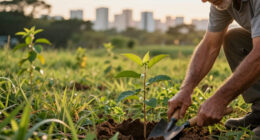
To move plants without shock in early spring, wait until soil warms to 55-65°F and nighttime temperatures stay above freezing. Harden off seedlings gradually over a week, exposing them to outdoor conditions before transplanting. Handle plants gently, keep roots moist, and avoid root disturbance. Prepare your garden site with well-draining, amended soil, and mulch to retain moisture. If you’re ready to facilitate a smooth transition, here’s how to make it happen effectively.
Key Takeaways
- Transplant when soil temperatures are consistently between 55°F–65°F and after the last frost date.
- Harden off seedlings gradually over a week to reduce transplant shock.
- Use well-prepared, moist soil with organic amendments for optimal root establishment.
- Handle plants gently, keeping roots moist and undamaged during transfer.
- Water deeply, mulch, and monitor for stress signs post-transplant to ensure healthy adaptation.
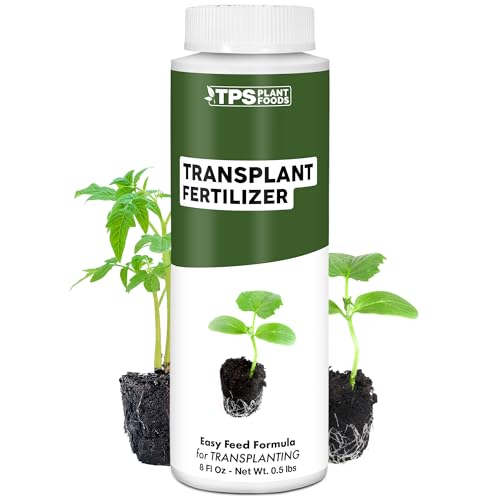
Transplant Fertilizer – Liquid Plant Food for Faster Root Establishment, Reduced Transplant Shock & Healthy New Growth, 8 oz
- Supports Root Development: Encourages strong root growth
- Aids Shock Recovery: Helps plants recover from transplant shock
- Versatile Use: Suitable for garden and container plants
As an affiliate, we earn on qualifying purchases.
As an affiliate, we earn on qualifying purchases.
Why Transplanting Early in Spring Reduces Plant Shock

Transplanting early in spring helps plants adjust gradually to their new environment, which minimizes shock. When you transplant during this period, root disturbance is less severe because plants haven’t yet fully developed their root systems for the season. Less root disturbance means the plant can recover faster, maintaining better stability and health. Additionally, early spring transplants have an advantage in nutrient uptake, as they can establish roots before the soil warms up significantly. This enables them to access essential nutrients more efficiently, supporting new growth. By avoiding the stress of extreme temperatures or drought, you give your plants a smoother transition. Overall, transplanting early helps preserve root integrity, enhances nutrient uptake, and reduces the risk of transplant shock. Root systems are less developed early in the season, which makes careful handling even more critical. Incorporating visual cues can assist in monitoring plant health during this delicate process. Moreover, understanding the science behind transplant timing can improve your success rate and reduce plant loss. Additionally, considering plant resilience during early spring can further increase transplant survival chances. Recognizing the importance of soil conditions during this period can also significantly influence transplant success.
When Is the Best Time to Transplant in Early Spring?

You should wait until the soil warms enough to support healthy root growth, but avoid transplanting too early when frost risks are high. Keep an eye on local frost forecasts and soil temperature readings to determine the right window. Also, make sure your plants are at the proper growth stage to handle transplanting without setbacks. Incorporating connected equipment can help monitor soil conditions and ensure optimal timing for transplantation, especially since soil temperature is a critical factor in successful plant moves. Additionally, utilizing recovery devices designed for soil and plant health can aid in minimizing transplant shock and promoting quicker establishment. Monitoring soil moisture levels can further optimize conditions for a successful transplant and reduce stress on the plants. Recognizing the importance of plant resilience can guide you in choosing the right practices to support your plants through the transplant process.
Soil Temperature Needs
Understanding soil temperature is vital for successful early spring transplants. Ideally, soil should be between 55°F and 65°F to promote healthy root growth and prevent shock. Use a soil thermometer to monitor conditions accurately. Before planting, incorporate compost amendments to improve soil warmth and fertility. Proper watering techniques are also essential; keep the soil consistently moist but not waterlogged, as dry or overly wet soil hampers root establishment. If soil temperatures are too cold, consider using row covers or cloches to raise the temperature slightly and protect young plants. Avoid transplanting when soil is still chilly, as cold soil can stunt growth or cause transplant shock. Regularly monitoring soil temperature helps determine the best time to transplant and ensures your plants settle in smoothly and thrive. Additionally, understanding soil thermal properties can help you better manage soil conditions during early spring planting. Being aware of soil heat retention can further aid in creating optimal conditions for transplant success. Recognizing how soil composition influences heat absorption can also improve your transplant timing and success rate.
Frost Risk Considerations
Timing your transplant in early spring requires careful attention to frost risks. Frost protection is essential, as unexpected cold snaps can damage young plants. Keep an eye on forecasted temperature fluctuations, especially overnight lows, which can drop suddenly and harm tender transplants. Wait until nighttime temperatures stay consistently above freezing, ideally around 35°F or higher, to reduce frost damage. Use frost blankets or row covers if a cold snap is predicted shortly after planting. Avoid transplanting during nights with rapid temperature drops, even if daytime temperatures seem suitable. By monitoring local weather patterns and understanding temperature fluctuations, you can choose a window when frost danger is minimal, giving your plants the best chance to settle in without shock. Understanding field‑of‑view and imaging‑scale can help you better assess environmental conditions and plan your transplant timing accordingly. Additionally, staying informed about local climate patterns can help you anticipate unusual cold events and adjust your schedule proactively, especially when considering frost susceptibility of different plant varieties. Being aware of microclimates in your yard can also provide opportunities for safer transplant timing, as certain areas may warm up faster or retain heat longer. Recognizing plant hardiness zones in your region further aids in selecting the optimal transplant window to prevent cold damage.
Plant Growth Stage
The ideal time to transplant in early spring occurs when seedlings have developed enough to withstand outdoor conditions but before they become too established to move easily. Recognizing the right growth stage is essential for transplant timing success. During this period, your plants are usually in the seedling or early vegetative stage—strong enough to survive, yet flexible enough for a smooth move. Watch for healthy, tender growth with sturdy stems. Being aware of plant growth stages helps ensure a successful transplant. Additionally, understanding the best transplant timing can significantly improve the survival rate and overall health of your plants. Knowing the impact of transplant shock can help you take additional measures to minimize stress on your plants during this critical period.
How to Prepare Your Plants and Garden Site for Transplanting

Before transplanting, make sure your soil is well-prepared by loosening it and enriching it with compost. Keep an eye on the weather forecast to choose a calm, mild day for planting. Timing your efforts correctly guarantees your plants settle in quickly and thrive.
Soil Preparation Techniques
Proper soil preparation is essential to guarantee your transplanted plants establish quickly and thrive. First, loosen compacted soil by tilling or turning it over to improve aeration and root growth. Second, test your soil for nutrient deficiencies and amend it with organic matter or compost to boost fertility. This step helps prevent stunted growth and weak plants. Third, make sure proper drainage by mixing in sand or organic matter if your soil retains too much water, reducing the risk of root rot. Additionally, understanding soil testing methods can help you more accurately determine your soil’s needs. By addressing compacted soil, correcting nutrient deficiencies, and improving drainage, you create an ideal environment for healthy transplant establishment. Taking these steps minimizes transplant shock and promotes vigorous growth from the start.
Timing and Weather Considerations
Timing and weather conditions play a crucial role in ensuring a successful transplant. Ideally, you should wait for consistent soil moisture levels—neither too dry nor waterlogged—to prevent stress on your plants. Check the weather forecast for the upcoming days; transplant during a period of mild, stable temperatures to avoid shock. Protect plants from wind, which can dry out soil and damage delicate stems, by setting up wind protection like screens or planting in sheltered areas. Avoid transplanting before a cold snap or heavy rain, as extreme weather can hinder root establishment. Planning your move on a calm, cloudy day helps your plants settle in gradually. Proper timing and weather awareness set the foundation for healthy growth and minimize transplant shock. Additionally, incorporating Free Floating landscaping techniques can help your garden adapt more smoothly to new plant placements.
How to Carefully Dig and Handle Your Transplants

To successfully transplant your seedlings, you need to handle them with care from the moment you dig them up. Proper plant handling minimizes root disturbance and ensures healthy growth. Follow these steps:
- Gently loosen the soil around the plant, keeping the root ball intact to prevent unnecessary root disturbance.
- Use a trowel or your hands to carefully lift the plant, supporting the root ball to avoid damage.
- Keep the roots moist during the transfer, and handle the plant by the root ball or foliage—not the stem—to prevent stress. Proper handling techniques are essential to reduce transplant shock and promote healthy establishment.
How to Harden Off Plants Before Moving Outdoors

Before transplanting your seedlings outdoors, it is vital to gradually expose them to natural conditions to reduce transplant shock. Start by placing your plants in a sheltered spot outside for a few hours daily, gradually increasing their time outdoors over a week. During this process, root pruning can help promote a stronger root system and prevent circling roots in containers. When selecting containers, choose ones with good drainage and enough space to encourage healthy root growth. Be gentle when handling your seedlings to avoid damaging roots, and consider root pruning if roots become densely packed. This careful transition helps plants adapt to outdoor conditions, making them more resilient and less prone to stress once they’re finally transplanted into the garden.
Transplanting Vegetables, Flowers, and Shrubs in Early Spring

Transplanting vegetables, flowers, and shrubs in early spring requires careful planning to guarantee successful establishment. Your first step is choosing the right location, considering sunlight and soil needs. Next, plan your garden layout to incorporate companion planting; pairing compatible plants can improve growth and deter pests. Finally, handle plants gently during transplanting, ensuring roots stay moist and undamaged.
Here are three key tips:
- Space plants appropriately to prevent overcrowding.
- Use mulch to retain moisture and regulate soil temperature.
- Water thoroughly after planting to reduce transplant shock.
Post-Transplant Care Tips to Help Plants Establish Quickly

Once you’ve transplanted your plants, providing proper post-transplant care is essential to help them establish quickly. Focus on maintaining root health by gently loosening the soil around the roots and avoiding disturbing them further. Ensure your plants receive adequate water management; keep the soil consistently moist but not waterlogged. Water deeply to encourage roots to grow downward and strengthen the plant’s foundation. Mulching around the base helps retain moisture, regulate soil temperature, and protect roots from temperature swings. Monitor your plants regularly for signs of stress or dehydration, and adjust watering as needed. Proper water management and supporting root health give your plants the best chance to settle in, grow strong, and thrive in the early spring.
Common Mistakes to Avoid When Transplanting in Early Spring (And How to Fix Them)

Even with the best intentions, it’s easy to make mistakes when transplanting in early spring that can stress or damage your plants. Common errors include:
- Causing root disturbance: Handle roots gently and avoid damaging the root ball, as excessive disturbance can slow recovery.
- Watering mistakes: Overwatering can lead to root rot, while underwatering leaves plants dehydrated; find a balance and keep soil consistently moist.
- Timing issues: Transplanting too early exposes plants to frost, stressing them out. Wait for stable temperatures before moving your plants outdoors.
Signs of Transplant Shock and How to Troubleshoot

After carefully transplanting your plants, it’s important to watch for signs that they’re experiencing stress, known as transplant shock. One key indicator is root damage, which can cause wilting, stunted growth, or yellowing leaves. Check if the roots are overly bound or torn during transplantation. Soil compaction is another culprit; if the soil around the plant feels hard or doesn’t drain well, roots struggle to access nutrients and water. You might notice slow growth or leaves turning brown. To troubleshoot, gently loosen compacted soil, avoid disturbing roots further, and ensure proper watering. Adding organic matter can improve soil structure. Monitoring these signs and responding promptly helps your plants recover quickly and thrive in their new environment.
Frequently Asked Questions
Can I Transplant Plants During Late Winter Instead of Early Spring?
Yes, you can transplant plants during late winter gardening if conditions are right. Winter transplanting is possible when the ground isn’t frozen solid and the weather is mild enough to avoid stressing plants. Focus on protecting roots from extreme cold and verify the soil is workable. Doing this in late winter allows your plants to establish early, giving them a head start before spring fully arrives.
What Soil Amendments Improve Transplant Success in Early Spring?
Did you know that adding compost can boost transplant success by up to 30%? To improve soil health during early spring, incorporate organic matter like compost or aged manure. These amendments enhance nutrient availability and water retention, helping your plants establish quickly. Ensuring your soil is rich and well-drained minimizes shock, making transplants thrive despite the cooler temperatures. Focus on organic matter to give your new plants a strong, healthy start.
How Do I Identify if a Plant Is Suffering From Transplant Shock?
You’ll notice plant stress signs like wilting, yellowing leaves, or slowed growth, indicating transplant shock. Check for soil drainage issues—waterlogged soil can worsen stress, so guarantee proper drainage. If your plant’s leaves droop despite watering, and new growth stalls, it’s likely suffering. Address these signs promptly by improving soil drainage and avoiding overwatering, helping your plant recover faster and minimize shock after transplanting.
Are There Specific Fertilizers Recommended After Early Spring Transplanting?
Don’t put all your eggs in one basket; after transplanting, choose a balanced, water-soluble fertilizer with equal parts nitrogen, phosphorus, and potassium. Apply it around the same time as the fertilizer timing, usually a week after planting, to give your plants the post transplant nutrients they need. This approach helps make certain of healthy growth without overwhelming delicate roots, supporting a smooth changeover into their new environment.
Can I Transplant Mature Plants, or Is It Only for Young Seedlings?
You can transplant mature plants, but it’s more challenging than relocating young seedlings. Large plant relocation requires careful planning, especially for mature plants, to minimize shock. You’ll want to dig a wide, deep hole around the root zone, keep the root ball intact, and transplant during cooler, cloudy days. Proper watering and post-transplant care are essential to help your mature transplant establish quickly and thrive in its new location.
Conclusion
By timing your transplant just right and handling plants with gentle care, you’re guiding them through a delicate dance from dormancy to vibrant growth. Think of yourself as a nurturing gardener, steadying a fragile butterfly on a blossom’s tip. With patience and attention, your early spring moves create a lush tapestry of thriving greenery, turning your garden into a living masterpiece that blossoms with resilience and beauty.