To keep your kitchen compost odor-free, use a small, airtight bin with a secure lid and guarantee proper aeration by turning the compost regularly. Balance green waste with dry browns like shredded paper, and avoid excess moisture. Cover the bin to contain smells and incorporate natural odor absorbers like baking soda, charcoal, or citrus peels. Consistent maintenance of these routines can make composting clean and fresh—continue exploring for more tips to perfect your process.

Get garden gear delivered free with Prime
- Fast, free delivery on millions of items
- Prime Video, Amazon Music and more included
- Member-only deals all year
Key Takeaways
- Use an airtight, vented compost bin and ensure a snug lid to contain odors and promote airflow.
- Balance green scraps with ample brown materials like shredded paper or dry leaves to absorb moisture and odors.
- Regularly turn and aerate the compost to prevent anaerobic bacteria and foul smells.
- Keep moisture levels optimal by adding dry browns and covering the compost to reduce excess wetness.
- Incorporate natural odor absorbers such as baking soda, dried herbs, or citrus peels for a fresh-smelling compost.
As an affiliate, we earn on qualifying purchases.
How Do You Set Up Your Kitchen for Odor-Free Composting?
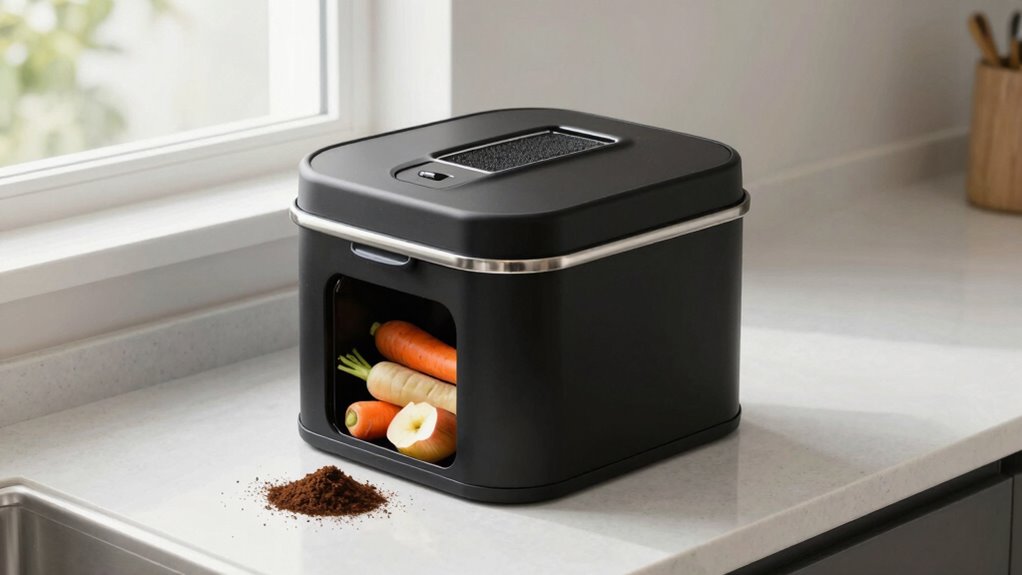
To set up your kitchen for odor-free composting, start by choosing a small, airtight container with a secure lid. This helps contain smells and prevents garden pests from getting in. Keep an eye on the compost temperature; maintaining it around 135-160°F (57-71°C) is vital to kill pathogens and reduce odors. Proper insulation, like adding a layer of newspaper or a breathable liner, can help regulate temperature and prevent pests. Avoid adding too much moisture, which can cause smells and attract pests, and balance green waste with browns like paper or dry leaves. Regularly empty the container and rinse it to prevent buildup. Maintaining proper compost temperature is essential for effective odor control and pathogen reduction. With these steps, you’ll create a clean, pest-free environment that keeps odors in check while promoting healthy composting.
Which Compost Bins Are Best for Keeping Smells Away?
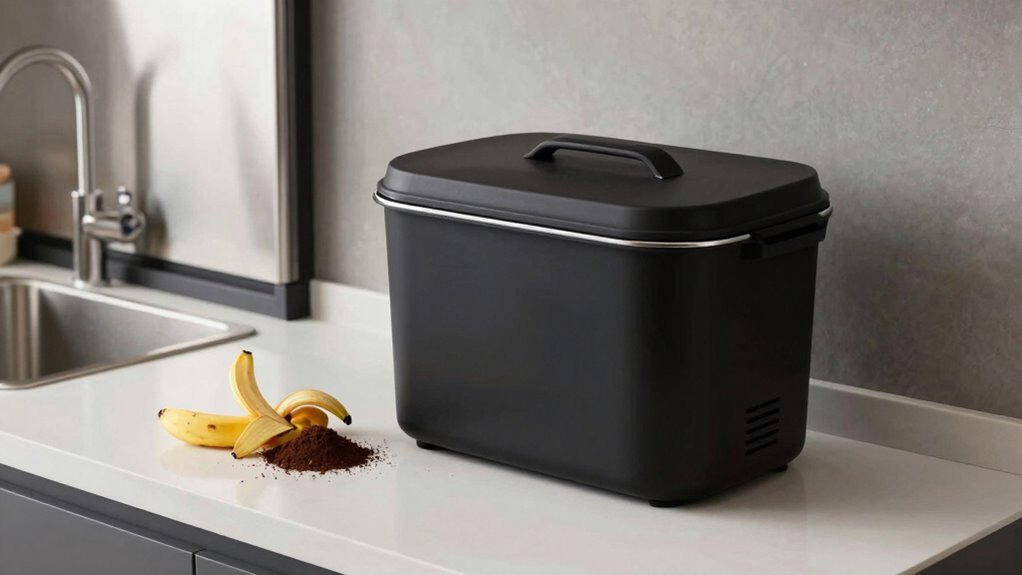
Choosing the right compost bin is crucial for keeping odors at bay. You want a container that promotes proper air circulation and features an effective lid design. Here are the top options:
- Vented Bins – These have built-in air holes that prevent odor buildup and ensure good airflow.
- Tight-Lid Bins – A secure lid minimizes smell escape, especially if it seals tightly.
- Roll-Top Bins – The rolling lid allows easy access while maintaining a good seal to contain odors.
- Stackable Bins – These often include venting options and secure lids, making them space-efficient and odor-resistant.
Look for bins with well-designed lids that discourage air leaks and promote airflow, keeping your kitchen fresh.
What Materials Help Keep Your Compost Smelling Fresh?
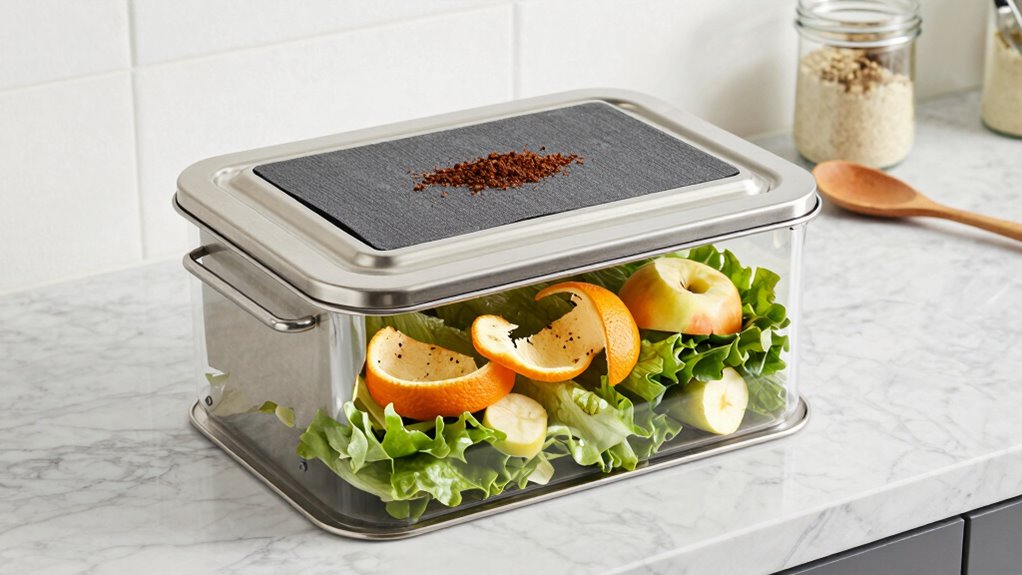
Using carbon-rich materials like dry leaves, paper, or straw can absorb excess moisture and odors in your compost. Proper layering, with browns on the bottom and greens on top, helps maintain airflow and prevents smells. Incorporating these materials and techniques keeps your compost fresh and odor-free. Additionally, incorporating aquatic exercise principles such as gentle water movement can help improve aeration in your compost bin.
Carbon-Rich Materials
When managing your compost, incorporating carbon-rich materials is essential for controlling odors and maintaining a fresh smell. These materials absorb moisture and help balance nitrogen-heavy scraps. To keep your compost smelling fresh, consider adding:
- Leaf mulch – a natural, readily available carbon source that breaks down slowly and absorbs odors.
- Charcoal filters – placed in compost bins to trap smells before they escape.
- Shredded paper or cardboard – helps balance the compost and adds carbon.
- Sawdust or wood chips – slow to decompose and excellent for odor control.
- Incorporating proper aeration techniques can also improve airflow, reducing anaerobic conditions that cause odors.
Using these materials creates a more stable environment, reducing smell and keeping your kitchen fresh. Incorporate them regularly to optimize your composting routine and enjoy odor-free composting.
Proper Layering Techniques
To keep your compost smelling fresh, layering materials correctly is key. Effective layering strategies involve alternating green and brown materials to promote proper compost stacking. Start with a layer of coarse materials like shredded newspaper or small sticks at the bottom to improve airflow and drainage. Follow with a layer of kitchen scraps, such as vegetable peels and coffee grounds, then cover it with a brown material like dried leaves or shredded paper. This cycle helps balance moisture and oxygen, preventing odors. Proper compost stacking ensures that bacteria decompose materials efficiently without creating a smell. Remember, maintaining consistent layers prevents the buildup of anaerobic conditions, which cause odors. By mastering layering techniques, you’ll keep your kitchen compost fresh and odor-free with minimal effort.
How Can You Manage Your Compost Routine to Prevent Odors?
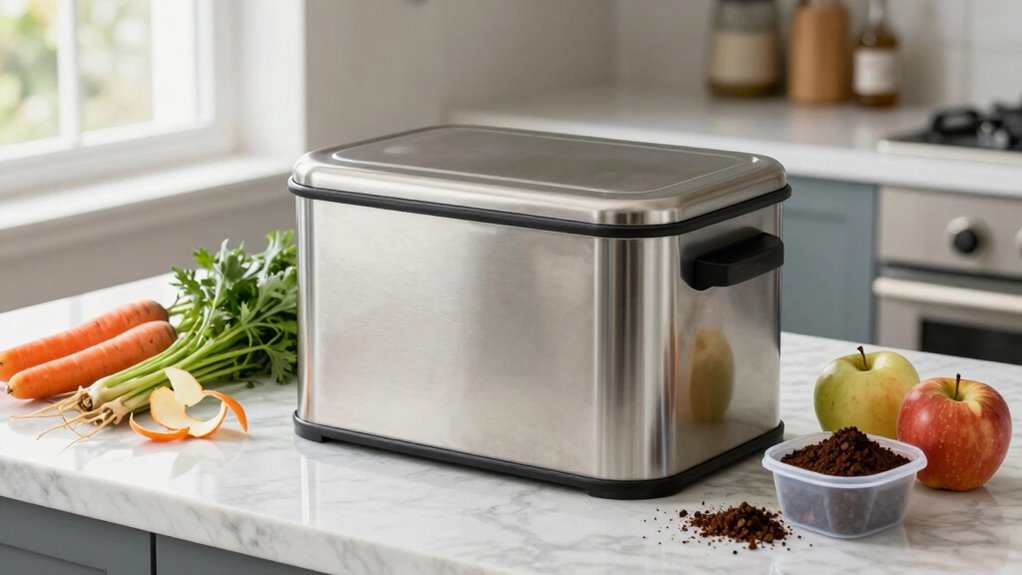
Managing your compost routine effectively is key to preventing unpleasant odors. Many people believe composting myths, but proper management is simple, especially in urban composting setups. To keep smells at bay, consider these tips:
- Regularly turn your compost to aerate it, reducing anaerobic bacteria that cause odors.
- Balance green and brown waste to avoid excess moisture and composting myths about overstuffing.
- Keep your compost covered with a lid or tarp to contain smells and prevent pests.
- Use a small amount of dry materials like sawdust or shredded paper to absorb excess moisture and odors.
- Proper fuel‑storage practices ensure your composting setup remains odor-free and safe.
Following these steps helps maintain a fresh-smelling compost, making urban composting practical and odor-free. Consistency is key to turning composting myths into a successful routine.
How Do You Balance Green and Brown Waste Effectively?
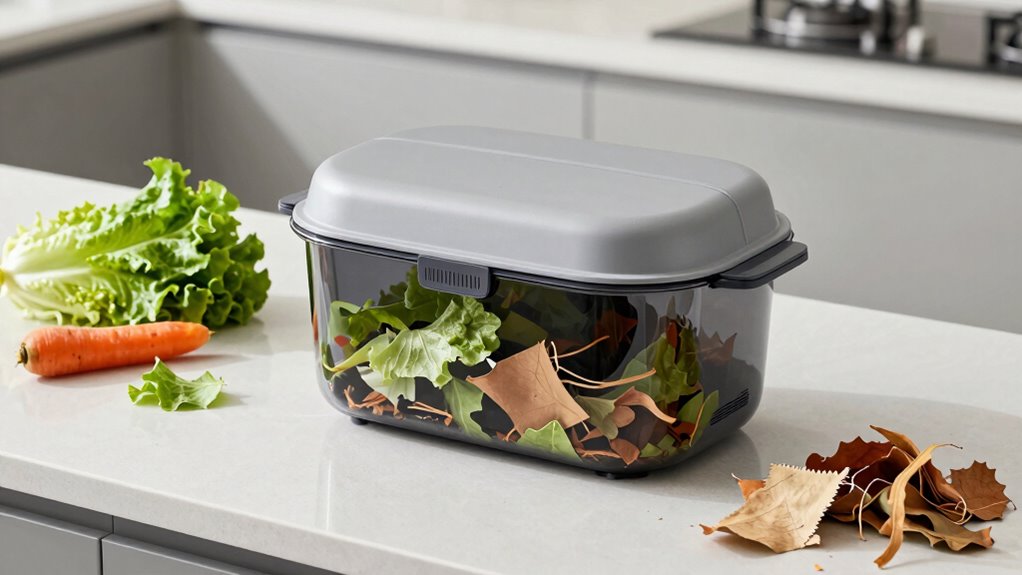
To keep your compost healthy and smell-free, you need to balance green and brown waste properly. Make sure you’re maintaining the right ratios and adding a variety of materials to encourage even decomposition. Keep an eye on your pile to see how it’s breaking down and adjust your inputs as needed. Incorporating energy-efficient systems can also optimize composting processes by reducing environmental impact.
Maintain Proper Ratios
Balancing green and brown waste is crucial for successful composting without odors. If the ratios are off, your compost can get too moist or smelly, especially when adding fruit scraps. Here’s how to maintain proper ratios:
- Add enough brown material, like shredded paper or dried leaves, to absorb excess moisture from fruit scraps.
- Aim for a 2:1 ratio of brown to green waste to keep compost temperature steady and prevent odors.
- Turn the pile regularly to aerate and promote even decomposition.
- Monitor moisture levels; if it’s too wet, add more brown materials to keep the compost healthy and smell-free. This balance ensures your compost heats up properly and breaks down efficiently.
Incorporate Diverse Materials
Incorporating a variety of green and brown materials guarantees your compost stays balanced and odor-free. Green materials like food scraps provide nitrogen essential for microbial activity, while brown materials such as dried leaves or paper add carbon, helping to absorb moisture and control odor. Many composting myths suggest you need perfect ratios, but mixing diverse materials naturally maintains balance. Avoid overloading your compost with only food scraps or green waste, which can cause foul smells. Instead, layer your kitchen scraps with browns to promote airflow and decomposition. Remember, a healthy mix prevents odors and speeds up composting. By intentionally including different materials, you create an environment where microbes thrive without producing unpleasant smells, making your composting routine easier and more effective. Understanding composting fundamentals helps you optimize your process for better results.
Monitor Decomposition Progress
Monitoring the decomposition process helps you keep the green and brown materials in check, ensuring your compost remains odor-free and breaks down efficiently. Keep an eye on the compost temperature; it should stay between 130°F and 160°F to boost microbial activity. Here are some tips:
- Check the temperature regularly to prevent overheating or cooling.
- Turn the compost every few days to aerate it and promote even decomposition.
- Observe the smell—if it’s sour or foul, add more brown materials.
- Adjust moisture levels by adding water or dry materials so microbes stay active without becoming waterlogged.
What Are the Best Ways to Seal and Ventilate Your Compost Bin?
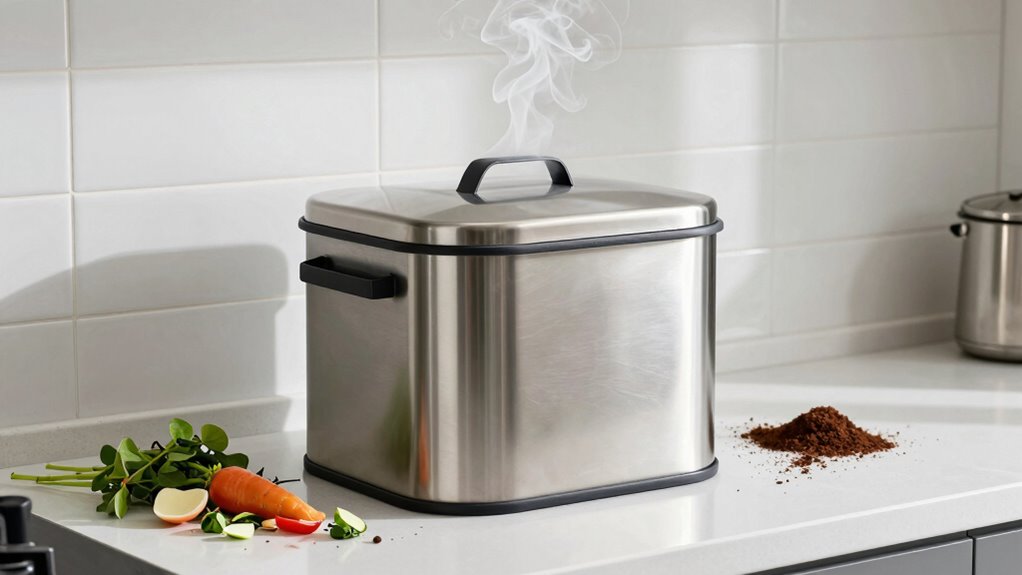
To keep odors at bay and guarantee proper airflow, sealing and ventilating your compost bin effectively is essential. You should ensure the lid fits snugly to prevent smells from escaping while allowing air circulation. Adding ventilation holes or small mesh vents promotes consistent airflow, helping to prevent moisture buildup that can cause odors. Use breathable materials like mesh or perforated lids to strike a balance between sealing and ventilation. Avoid sealing the bin completely airtight, as lack of air circulation can lead to anaerobic decomposition and unpleasant smells. Regularly check vents and lids for blockages, and adjust as needed to maintain optimal moisture control. Proper sealing and ventilation keep your compost fresh, odor-free, and decomposing efficiently. Effective airflow management is a key component of modern kitchen composting systems designed for odor control.
Troubleshooting: Why Is My Compost Smelling Bad, and How Do I Fix It?
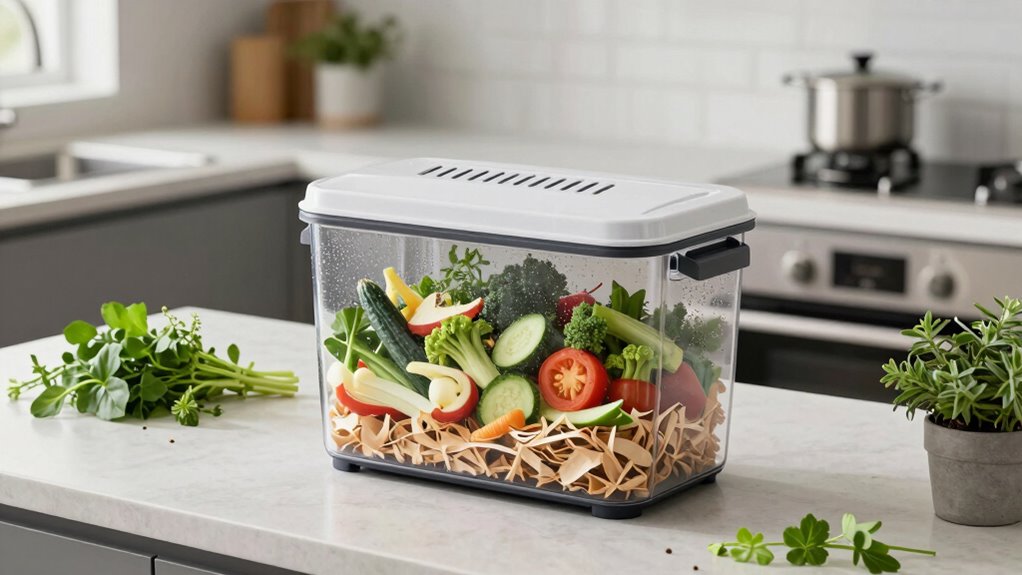
A foul smell in your compost usually means something’s off with the balance of moisture, oxygen, or the types of materials you’re adding. Many composting myths suggest that smell is inevitable, but that’s not true for indoor vs outdoor setups. To fix bad odors:
- Turn your compost regularly to increase oxygen flow and reduce anaerobic conditions.
- Add dry, carbon-rich materials like shredded paper or leaves to balance moisture and absorb excess liquids.
- Avoid overloading with wet kitchen scraps, which can cause odors and attract pests.
- Ensure proper ventilation, especially indoors, to prevent trapped smells and promote aerobic decomposition.
- Using an air purifier maintenance routine can help improve indoor air quality by reducing odors associated with composting.
Addressing these issues helps keep your compost odor-free and efficient, debunking common composting myths and making your routine more effective.
Which Natural Odor Absorbers Can Keep Your Compost Fresh?
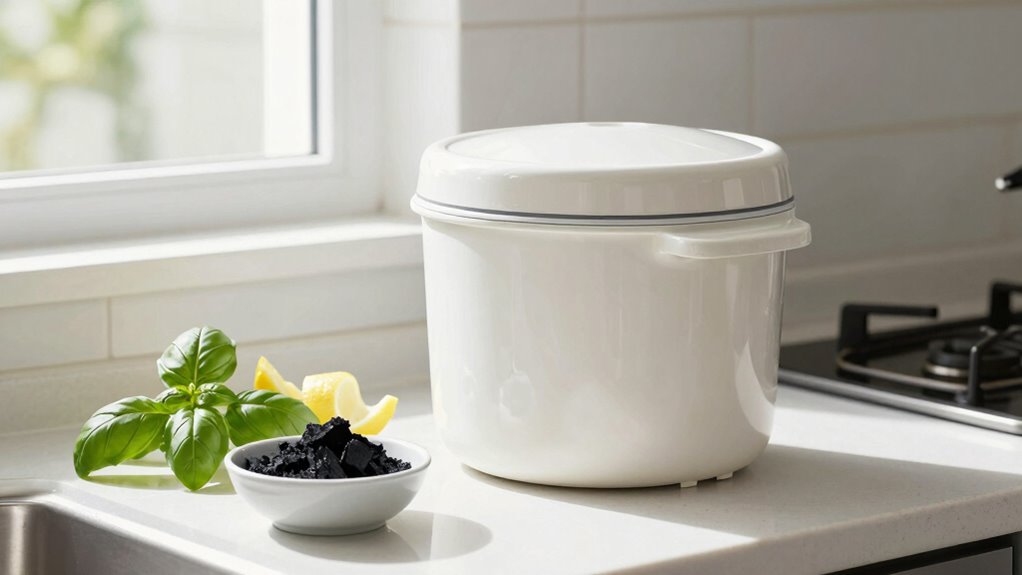
Using natural odor absorbers is a simple way to keep your compost smelling fresh without relying on chemical solutions. Plant-based additives like dried herbs, coffee grounds, or citrus peels absorb odors and add natural scent. Activated charcoal is especially effective, trapping smells and toxins without chemicals. Imagine this setup:
| Odor Absorber | Benefits | Best Use |
|---|---|---|
| Plant-based Additives | Natural, biodegradable, pleasant scent | Mix into compost or layer on top |
| Activated Charcoal | Highly porous, odor-neutralizing | Place in breathable bag and add to compost |
| Baking Soda | Readily available, inexpensive | Sprinkle lightly over compost |
| Coffee Grounds | Rich in nitrogen, odor control | Mix into compost regularly |
These natural options keep your compost fresh, odor-free, and environmentally friendly. Additionally, understanding composting best practices can further enhance your composting experience and reduce odors effectively.
How Do You Maintain Your Compost System for Odor Control Over Time?
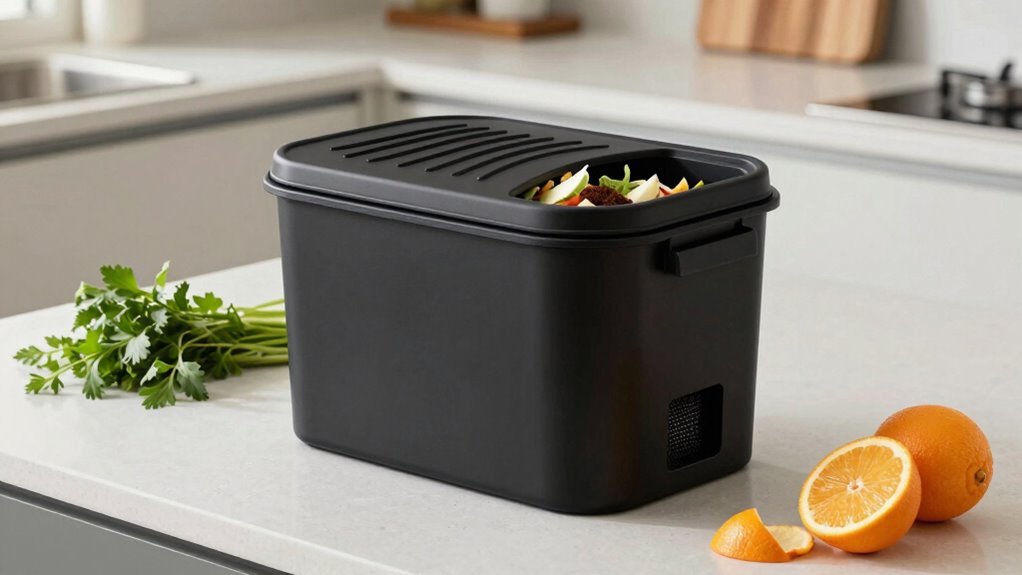
Maintaining your compost system for odor control over time requires regular monitoring and adjustments. Many composting myths suggest that you only need to toss scraps, but consistent care guarantees you maximize composting benefits and avoid unpleasant smells. Incorporating reliable, well-researched methods ensures you understand the “why” behind proper composting practices. To keep your system odor-free: 1. Balance greens and browns—adding dry materials like leaves prevents odor buildup. 2. Turn the compost regularly to aerate it, reducing anaerobic conditions that cause smells. 3. Cover fresh waste with a layer of compost or dry material to absorb moisture and odors. 4. Check moisture levels; too wet or dry can lead to odors. Sticking to these steps keeps your composting routine effective, debunks myths, and ensures your compost system remains odor-free over time.
Frequently Asked Questions
Can Composting Be Done Indoors Without Causing Odors?
Yes, you can compost indoors without causing odors by choosing the right container type and practicing odor control. Use sealed compost bins with airtight lids and charcoal filters to trap smells effectively. Keep the bin in a cool, well-ventilated spot, and avoid adding too much wet waste. Regularly empty and clean the container. This routine ensures your indoor composting stays odor-free and hassle-free.
How Often Should I Empty My Compost Bin to Prevent Smells?
You should empty your compost bin every 1 to 2 weeks to prevent odors. Regular compost bin maintenance helps keep smells at bay, so monitor the contents and remove buildup promptly. Use odor control techniques like adding dry, carbon-rich materials such as shredded paper or leaves after each use. Proper aeration and avoiding overfilling also help maintain freshness and prevent unpleasant smells, making indoor composting hassle-free.
Are There Specific Kitchen Appliances That Support Odor-Free Composting?
Yes, certain compost bin types support odor control better. Look for bins with airtight lids and charcoal filters, which help trap smells effectively. Some models even feature built-in odor control methods like active carbon filters or sealed compartments. These appliances make composting odor-free, so you can enjoy a fresh kitchen environment while composting effortlessly. Choose a bin designed for odor management, and you’ll keep smells at bay with minimal effort.
Does Composting Produce Any Unpleasant or Harmful Gases?
Composting can produce some gas emissions, like methane and carbon dioxide, but good odor control techniques help minimize any unpleasant smells. When you manage your compost bin properly—adding carbon-rich materials, turning it regularly, and avoiding overfeeding—you reduce harmful gases and prevent odors from escaping. Using sealed containers or compost bins with odor filters also helps keep any potential smells contained, making your composting experience odor-free and safe.
How Long Does It Take for Kitchen Compost to Become Usable Soil?
You’ll typically see compost maturity within 3 to 6 months, depending on your routine and materials. To determine soil readiness, check for a dark, crumbly texture and earthy smell. Regular turning speeds up composting, helping you get usable soil sooner. Once the compost is fully mature, it’s safe to use in your garden, enriching your soil and supporting healthy plant growth.
Conclusion
By following these simple routine tips, you’ll turn your kitchen into an odor-free composting paradise. With the right setup, materials, and maintenance, you can keep smells at bay and enjoy a fresh, eco-friendly space. Think of your compost bin as a tiny miracle worker—transforming waste into nourishing soil without a whiff of trouble. Stick to these steps, and you’ll master smell-free composting, making your kitchen smell fresher than a spring breeze.
Fall Picks
fall essentials
As an affiliate, we earn on qualifying purchases.