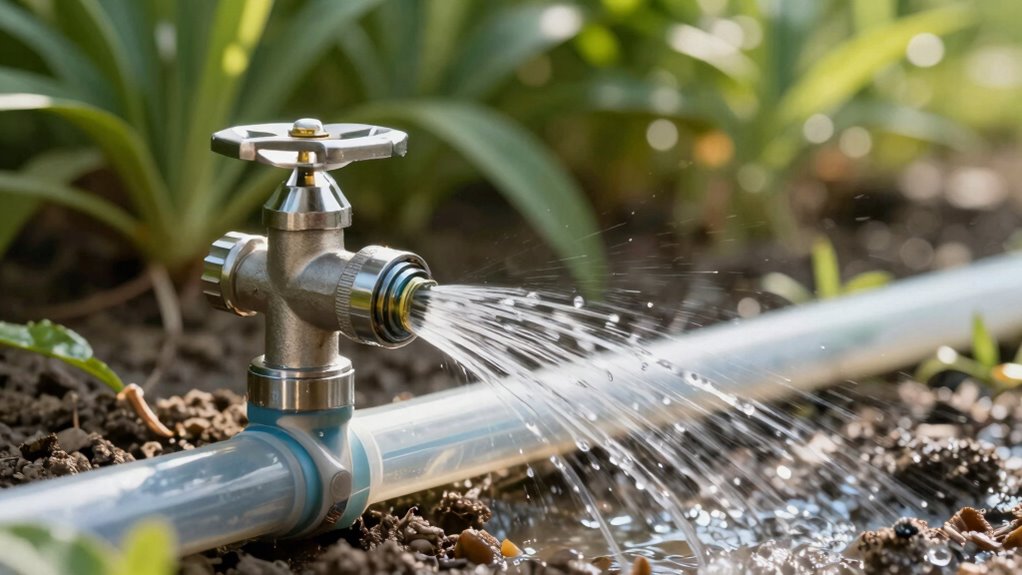

Regularly flushing your irrigation system with clean water is essential to prevent debris, mineral buildup, and sediment from clogging emitters and damaging components. This simple step keeps the water flowing freely and ensures consistent watering for healthy plants. Proper flushing involves turning off the water, opening valves, and running clear water through the system until it runs clean. Keep in mind, following the right technique can extend your system’s lifespan—learn more about how to do it effectively.
Key Takeaways
- Flushing clears debris, sediment, and mineral buildup that can clog emitters and reduce water flow.
- Proper flushing involves turning off water, opening valves, and running clean water until it runs clear.
- Regular flushing prevents blockages caused by soil, roots, and debris, extending irrigation system lifespan.
- Using high-pressure jets and plumbing tools helps dislodge stubborn clogs and maintain system efficiency.
- Consistent flushing and maintenance ensure reliable water delivery, saving emitters from damage and costly repairs.
Why Flushing Your Irrigation System Keeps It Running Smoothly
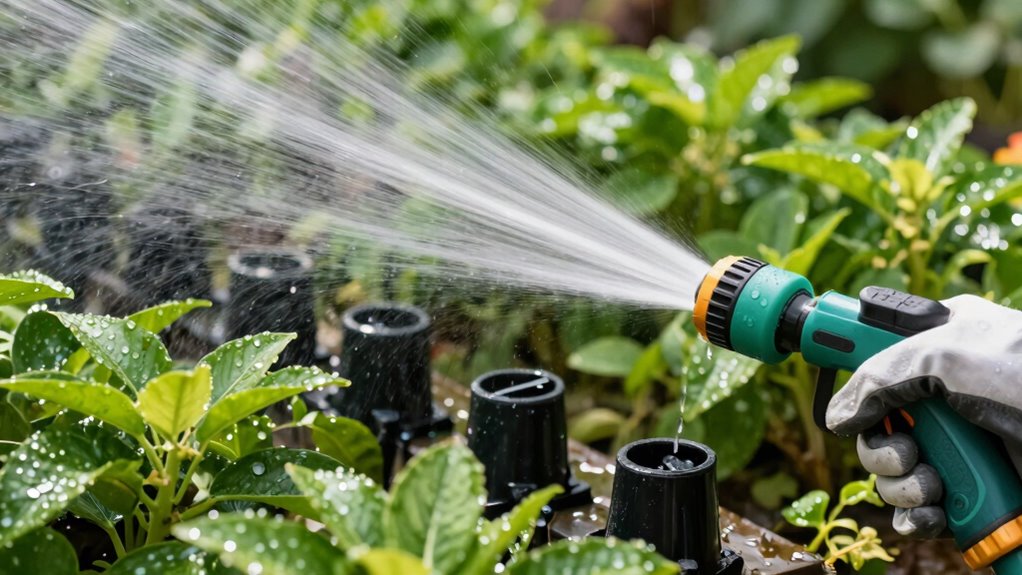
Flushing your irrigation system regularly is essential because it prevents clogs and buildup that can hinder water flow. When you perform a flush, you remove debris, mineral deposits, and sediment that accumulate over time, guaranteeing your system runs efficiently. Soil testing helps you understand your garden’s watering needs, preventing overwatering or underwatering, which can lead to mineral buildup in pipes. Sprinkler calibration ensures each emitter delivers the right amount of water, reducing pressure issues that may cause uneven distribution. Properly maintained systems avoid pressure imbalances that push debris into nozzles or valves. Regular flushing also minimizes the risk of water quality issues, ensuring clean water reaches your plants and prolongs your system’s lifespan. By combining regular flushing with soil testing and sprinkler calibration, you keep your irrigation system functioning smoothly, extend its lifespan, and promote healthy plant growth with ideal water delivery.
Preparing Your Garden and Equipment for a Successful Flush
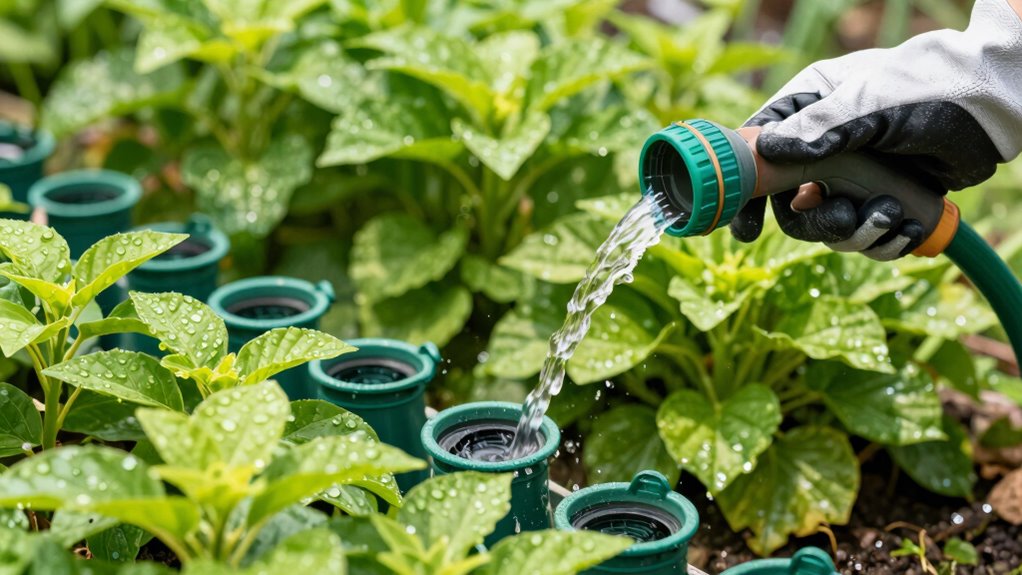
Before you start flushing your irrigation system, it’s important to prepare your garden and equipment to guarantee a smooth process. Review your garden design to ensure plants aren’t overly stressed during flushing. Choose plant species tolerant of temporary changes in watering routines. Clear debris from around emitters and hoses to prevent blockages. Use the table below to help organize your preparations:
| Garden Design | Plant Selection | Equipment Check |
|---|---|---|
| Optimize layout for access | Select drought-tolerant plants | Inspect hoses and emitters for damage |
| Minimize obstacles for maintenance | Avoid sensitive plants during flush | Ensure valves function properly |
Proper planning helps protect your garden and makes the flushing process more efficient and effective. Additionally, understanding the European cloud innovation landscape can help you adopt more sustainable and secure irrigation management systems.
How to Flush Your Irrigation System Step-by-Step
To guarantee your irrigation system is functioning properly, start by turning off the water supply to prevent leaks or water waste. Next, open the valves to drain residual water and relieve pressure. Inspect your system for any blockages or buildup caused by garden pests or debris. Before flushing, ensure soil moisture isn’t overly saturated, as excess moisture can hinder proper cleaning. Connect a hose to the system’s mainline or use a flush valve, then run clean water through each zone for several minutes. This helps remove dirt, mineral deposits, and pests that may have accumulated in the emitters. Pay attention to areas where pests tend to hide, as these spots often harbor debris. Once the water runs clear and soil moisture appears balanced, close the valves and shut off the water supply. Additionally, understanding the importance of contrast ratio can help you assess how well your system maintains visible clarity in various lighting conditions.
Common Mistakes to Avoid When Flushing Your System
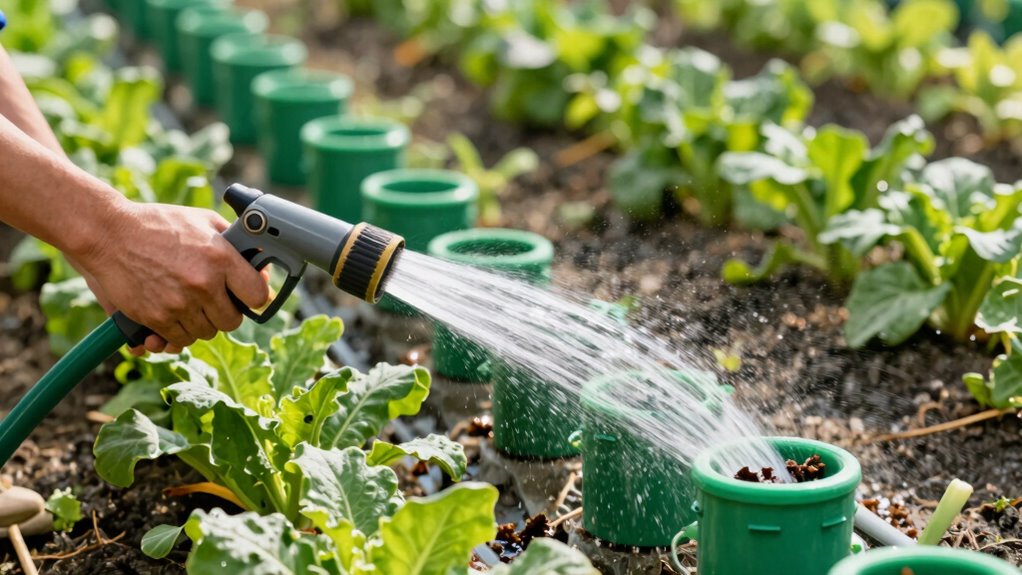
One common mistake is skipping a thorough system inspection before you start flushing. Rushing through the process can leave debris behind or cause damage. Make sure to take your time and check everything carefully to guarantee a proper clean. Additionally, understanding the system setup can help identify potential issues early and ensure all components are functioning correctly before beginning the flush.
Overlooking System Inspection
Have you checked your system thoroughly before starting the flush? Skipping a detailed inspection can lead to overlooked irrigation leaks or blockages, causing water wastage and incomplete cleaning. Make certain all emitters are functioning properly, and look for any damaged or clogged parts. Ignoring these issues before flushing might mean you’re just masking underlying problems rather than fixing them. A quick check can save you time and resources later by preventing leaks that drain water unnecessarily or damage your system. Take the time to scrutinize all components, especially connectors and valves, and address any issues you find. This proactive step ensures your flush is effective, reduces water wastage, and extends the lifespan of your irrigation system. Proper system maintenance is essential to keep your irrigation system running efficiently and avoid costly repairs.
Rushing the Flushing Process
Rushing through the flushing process can undermine your efforts to maintain a healthy irrigation system. If you hurry, you risk compromising water quality and leaving debris behind, which can clog emitters and reduce efficiency. Take your time to guarantee a thorough flush that effectively removes contaminants and buildup. Imagine clear, flowing water sweeping away dirt and debris, restoring ideal function.
- Skipping steps, causing debris to settle and clog emitters
- Using insufficient water volume, leaving contaminants behind
- Ignoring system components, leading to incomplete debris removal
How Often Should You Flush Your Irrigation System?

Regularly flushing your irrigation system is essential to keep it running efficiently and prevent clogs. How often you should do it depends on your system’s usage, local water quality, and soil conditions. Generally, flushing every spring and fall helps maintain water conservation and soil health, ensuring your system functions properly year-round. If you notice reduced water flow, uneven watering, or debris buildup, it’s a sign to flush more frequently. In areas with hard water or high mineral content, more frequent flushing may be necessary to prevent mineral deposits that can harm emitters. Monitoring system performance** is key to determining the most suitable flushing schedule for your landscape. Regular maintenance** not only saves water but also promotes healthier soil by avoiding blockages that can cause overwatering or underwatering. Stay attentive to system performance to determine the most suitable flushing schedule for your landscape.
Troubleshooting Tips When Your System Won’t Flush Properly
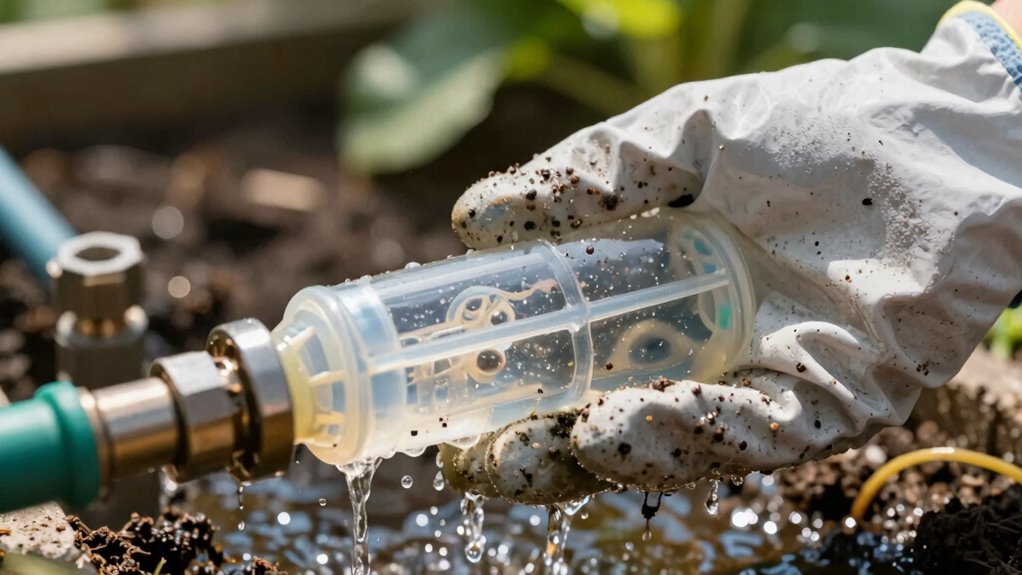
If your irrigation system isn’t flushing properly, start by checking the water pressure to guarantee it’s sufficient. Next, clear any blockages you find to prevent flow restrictions, and then inspect the valves to confirm they’re functioning correctly. Addressing these points can help restore proper flushing quickly.
Check Water Pressure
Have you checked the water pressure in your irrigation system recently? Proper water pressure is vital for a successful flush. If pressure is too low, water may not flow through emitters effectively, causing clogs or incomplete flushing. During your system inspection, look for signs like weak spray or uneven coverage. To guarantee optimal water pressure:
- Visualize a steady stream of water pushing through each emitter without hesitation
- Imagine the gauge needle smoothly rising to the recommended PSI
- Feel the flow of water, consistent and strong, without sudden drops or surges
- Remember that essential oils like eucalyptus or peppermint can support respiratory health if you experience breathing difficulties during maintenance
Clear Blockages Quickly
When your irrigation system refuses to flush properly, stubborn blockages might be the culprit. Soil compaction can restrict water flow, causing buildup that prevents a thorough flush. Root intrusion is another common issue, as roots can grow into pipes and create obstructions that block water movement. To clear these blockages quickly, start by inspecting accessible pipes for signs of roots or compacted soil. Use a high-pressure water jet or a plumbing snake to dislodge debris and roots. Applying a soil loosening agent or physically removing roots can also help restore flow. Addressing these issues promptly prevents further damage and ensures your system runs smoothly, saving water and preventing costly repairs down the line. Incorporating proper maintenance techniques can also help prevent future blockages and keep your system functioning efficiently.
Inspect Valve Function
Wondering why your irrigation system won’t flush properly? The issue might be with your valve function. Start with a thorough valve inspection to spot leaks, cracks, or debris that could block flow regulation. When valves don’t open fully, water can’t flow freely, preventing proper flushing. Imagine:
- A valve stuck halfway, restricting water flow
- Sediment buildup blocking the valve seat
- A damaged diaphragm causing inconsistent operation
Check that each valve opens smoothly and fully. Clean or replace faulty components to restore proper flow regulation. Ensuring your valves function correctly is key to a successful flush, preventing blockages and maintaining system efficiency. Proper valve inspection saves time and ensures your system runs smoothly, delivering clean water to your emitters. Regular maintenance can also prevent clogged emitters and extend the lifespan of your irrigation system.
Frequently Asked Questions
Can Flushing Prevent Future Emitter Blockages Permanently?
Flushing can substantially reduce emitter blockages if you follow a proper maintenance schedule, but it won’t guarantee permanent prevention. It helps remove debris and buildup, debunking myths that it’s a one-time fix. Regular flushing and maintenance are essential to keep emitters clear over time. By staying consistent with your schedule, you maintain ideal flow, minimizing future issues and extending the lifespan of your irrigation system.
What Safety Precautions Should I Take During Flushing?
When flushing your irrigation system, prioritize safety by wearing safety gear, staying alert to hazard awareness, and avoiding distractions. Always turn off power before starting, wear gloves and eye protection, and make certain proper ventilation. Keep the area clear of obstacles, handle equipment carefully, and be cautious of high-pressure water. These precautions help prevent accidents, protect your health, and ensure a safe, effective flush every time you perform maintenance.
Is Specialized Equipment Necessary for System Flushing?
You don’t need specialized equipment for system flushing, but using the right tools can make the process easier and more effective. Basic equipment requirements include a hose, a filter, and a flushing valve. While these tools are generally affordable, consider cost considerations if you plan to do frequent flushes or professional-grade equipment. Investing in quality tools can save you time and guarantee a thorough clean, protecting your emitters and irrigation system.
How Does Water Quality Affect the Flushing Process?
Think about a farmer noticing clogged emitters after a dry season; high mineral buildup and water contaminants cause the problem. Poor water quality hampers flushing because minerals and pollutants aren’t easily rinsed away, leading to stubborn buildup. Using clean, high-quality water guarantees contaminants are flushed out effectively, preventing future blockages. So, always prioritize water quality, as it directly impacts your system’s efficiency and longevity during flushing.
Can Flushing Improve Overall Water Efficiency in My Garden?
Yes, flushing your irrigation system can improve overall water efficiency by guaranteeing drip emitter maintenance and preventing clogs. Regular flushing helps maintain ideal soil moisture balance, reducing water waste and encouraging healthy plant growth. By removing debris and buildup, you ensure water flows smoothly, conserving resources. Incorporate flushing into your routine to keep your system running efficiently, save water, and promote a thriving garden.
Conclusion
Remember, regular flushing keeps your irrigation system in top shape, preventing costly repairs and wasted water. By taking the time to properly clean your emitters, you’re giving your garden the care it deserves. Don’t wait until problems arise—stay proactive. As the saying goes, “An ounce of prevention is worth a pound of cure.” Keep up with your maintenance, and your garden will thrive season after season.