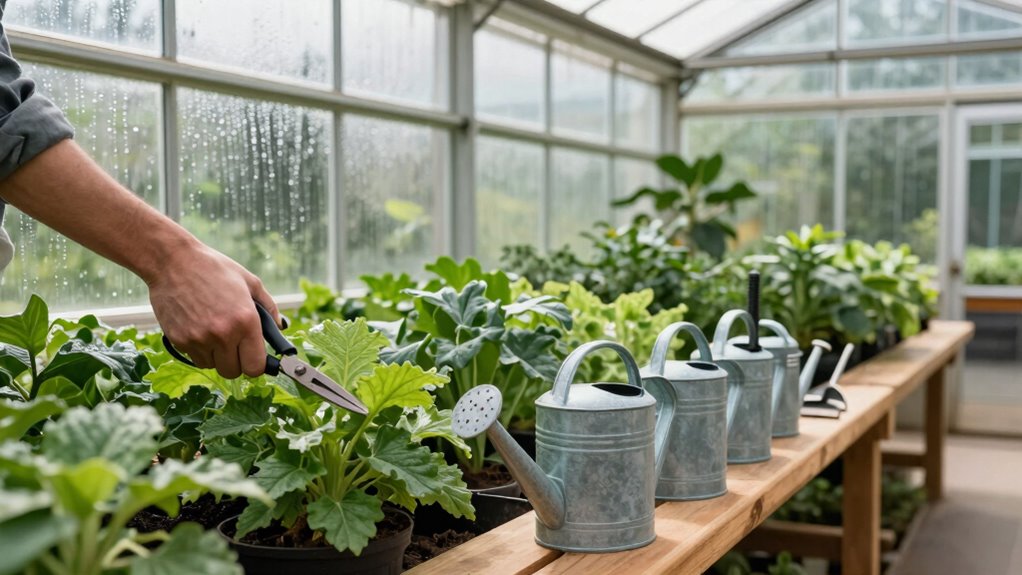
To help your greenhouse last longer, establish regular maintenance habits like inspecting for pests early and using natural controls. Keep vents and fans clean to guarantee good airflow and prevent moisture buildup. Regularly check for structural issues such as cracks or leaks, and tighten loose parts promptly. Routine cleaning, lubrication, and timely repairs help avoid costly damage. Stay proactive with these practices, and you’ll maintain a healthy environment — continue to discover more ways to protect your investment.

Get garden gear delivered free with Prime
- Fast, free delivery on millions of items
- Prime Video, Amazon Music and more included
- Member-only deals all year
Key Takeaways
- Conduct regular inspections to identify and address pests, structural issues, and damage early.
- Maintain proper ventilation by cleaning vents and fans to prevent moisture buildup and mold growth.
- Perform routine structural checks for cracks, leaks, rust, and seal openings to prevent water intrusion and deterioration.
- Schedule preventive maintenance such as lubrication, part replacements, and equipment checks to extend lifespan.
- Establish a consistent maintenance routine for cleaning, minor repairs, and monitoring to ensure long-term greenhouse health.
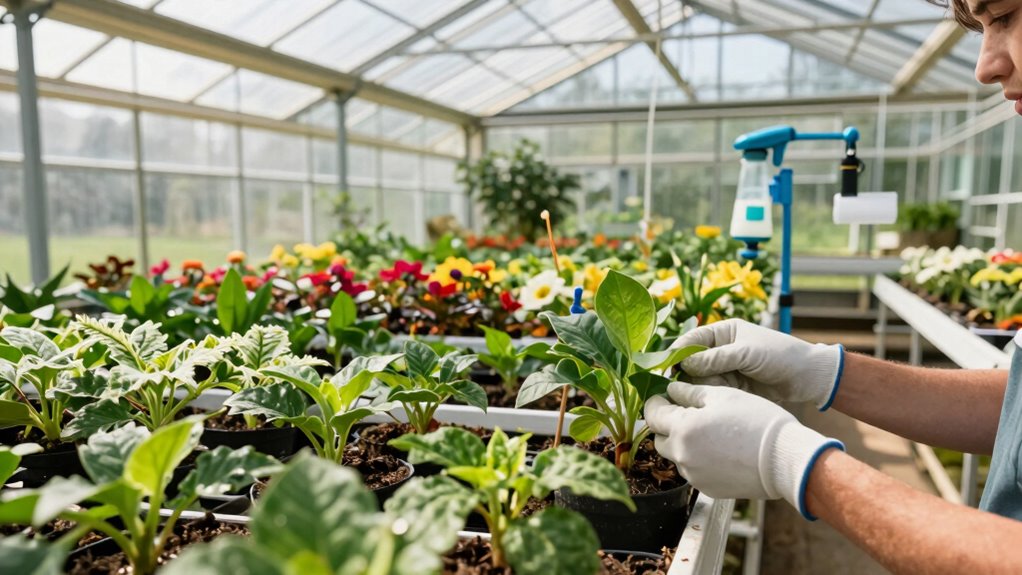
Maintaining your greenhouse regularly is vital to guarantee it lasts for years to come. A well-maintained structure not only protects your plants but also extends the lifespan of your investment. One of the most important aspects of upkeep involves pest control. Pests like aphids, whiteflies, and spider mites can quickly damage your plants and compromise the integrity of your greenhouse if left unchecked. Regular inspections help you catch infestations early, allowing you to take targeted action before pests cause significant harm. Use natural predators or organic pesticides to minimize chemical buildup, which can weaken the greenhouse materials over time. Consistent pest management prevents the need for extensive repairs and keeps your plants healthy, ensuring your greenhouse remains a productive environment for years.
Another key habit is maintaining ventilation efficiency. Proper airflow is vital for controlling humidity levels and temperature, both of which influence plant health and structural durability. Over time, vents and fans can become clogged with dust, debris, or even rust, reducing their effectiveness. Regularly check and clean these components to keep air circulating freely. When ventilation functions at its best, it prevents excess moisture buildup, which can lead to mold, mildew, or even corrosion of metal parts. Good ventilation also minimizes condensation on the greenhouse’s interior surfaces, reducing the risk of water damage and extending the life of framing materials. Additionally, well-ventilated spaces discourage pest and disease development, further supporting your pest control efforts. Regularly inspecting and maintaining ventilation systems ensures optimal airflow and prolongs the structure’s lifespan. Incorporating preventive maintenance practices such as routine lubrication and part replacements can further enhance the longevity of your ventilation equipment. Incorporating structural assessments into your routine can help identify early signs of wear or damage, preventing costly repairs down the line.
Beyond pest control and ventilation, routine maintenance includes inspecting the structure for signs of wear or damage. Look for cracks, leaks, or rust spots on the frame, and address these issues promptly. Tighten loose bolts or screws to guarantee stability, especially after storms or harsh weather. Regularly clean the glazing or plastic panels to maximize sunlight transmission and prevent deterioration caused by dirt or algae buildup. Proper sealing around windows and doors prevents water intrusion, which can erode the foundation or promote mold growth inside the structure. Scheduling these checks on a monthly basis keeps minor problems from escalating into costly repairs, preserving your greenhouse’s longevity.
In essence, consistent attention to pest control, ventilation efficiency, and structural integrity forms the foundation of long-lasting greenhouse maintenance. When you stay proactive, you reduce the likelihood of major repairs and guarantee your greenhouse remains a healthy, durable environment. The key is to establish a routine—regular inspections, cleaning, and quick fixes—that become part of your ongoing gardening habits. Over time, these practices will protect your investment, allowing you to enjoy a thriving, sustainable greenhouse for many years to come.
As an affiliate, we earn on qualifying purchases.
Frequently Asked Questions
How Often Should I Replace the Greenhouse’s Ventilation Filters?
You should replace your greenhouse’s ventilation filters every 6 to 12 months, depending on usage and environment. Regular replacement maintains ventilation efficiency, ensuring proper air circulation and healthy plant growth. Keep an eye on signs of dirt buildup or reduced airflow, which indicate it’s time for a change. Proper maintenance of filters extends their lifespan and keeps your greenhouse operating smoothly, preventing issues caused by poor ventilation.
What Are the Best Methods for Pest Prevention Outside Regular Maintenance?
You might think pest prevention is as simple as closing the door, but try biological controls and companion planting first. These methods act like secret agents, naturally warding off pests before they arrive. Use beneficial insects to keep harmful ones in check, and plant herbs or flowers nearby to repel unwelcome guests. It’s a clever, eco-friendly strategy that saves you from constant chemical battles and keeps your greenhouse thriving.
How Can I Improve Insulation Without Damaging the Structure?
To improve insulation without damaging your greenhouse structure, consider adding insulation materials like bubble wrap or foam panels that are lightweight and easy to install. These options won’t compromise structural integrity and can be removed or replaced easily. Seal any gaps with weatherstripping or caulking to enhance insulation efficiency. Regularly check your modifications to guarantee they stay secure and don’t cause stress on the frame, maintaining your greenhouse’s durability.
Are There Eco-Friendly Cleaning Products Recommended for Greenhouse Care?
Yes, you should opt for eco-friendly cleaning products for your greenhouse. Look for green house detergents that are biodegradable, non-toxic, and free from harsh chemicals. These eco-friendly cleaning options effectively remove dirt and algae without harming plants or the environment. Regularly using greenhouse detergents helps maintain a healthy, sustainable space, ensuring your greenhouse stays in top condition while protecting ecosystems and reducing chemical runoff.
What Are Signs of Structural Wear That Need Immediate Attention?
You should address signs of structural wear immediately, such as visible cracks, warping, or sagging frames, which indicate potential structural damage. Keep an eye out for material deterioration like rust, corrosion, or broken seals, as these compromise your greenhouse’s integrity. Promptly repairing or replacing compromised parts prevents further damage, guarantees safety, and prolongs your greenhouse’s lifespan. Regular inspections help catch these issues early before they escalate.
Conclusion
By adopting these maintenance habits, your greenhouse can stand the test of time like a sturdy oak tree. Regular inspections, prompt repairs, and proper cleaning keep it resilient against the elements and pests. Think of your greenhouse as a trusted partner in your gardening journey—nurturing it with care guarantees it remains a productive haven season after season. Stay proactive, and your greenhouse will continue to flourish long into the future.
Halloween Picks
halloween
As an affiliate, we earn on qualifying purchases.