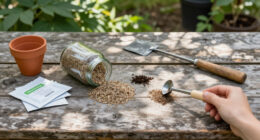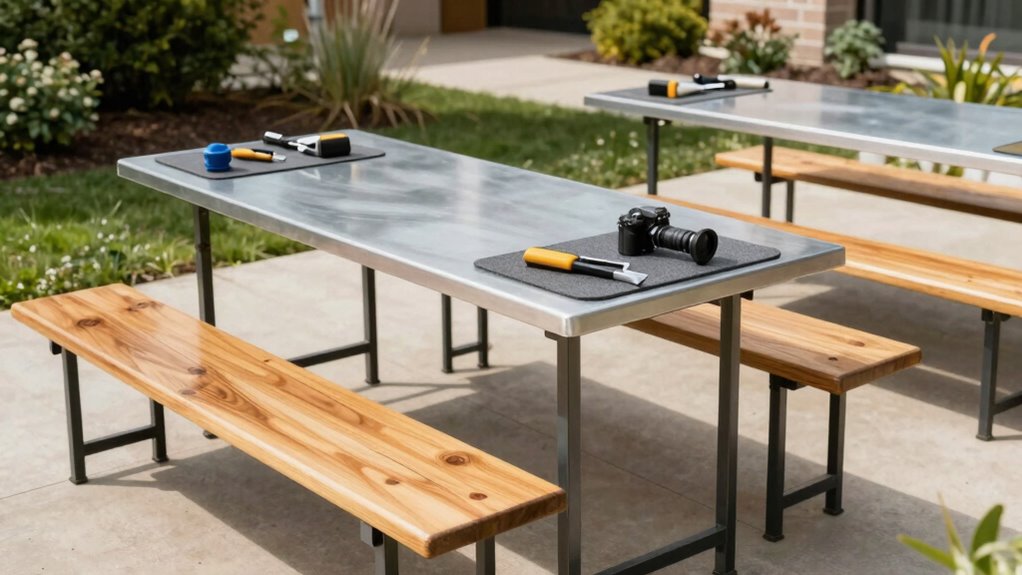

To keep your benches, tables, and work areas in top shape, regularly inspect for damage and clean off dirt and debris. Use appropriate treatments like sealing or staining wood and applying paint or protective coatings on metal surfaces to prevent rust and weather damage. Choosing weather-resistant materials helps reduce maintenance needs. Staying on top of these tasks can extend their lifespan and maintain a professional appearance. Keep going to discover more tips for long-lasting outdoor furniture.
Open a free Amazon Business account
Business pricing, bulk buying and tax-exempt orders.
As an affiliate, we earn on qualifying purchases.
Key Takeaways
- Regularly inspect for damage, wear, and stability to address issues early.
- Clean surfaces frequently to prevent dirt buildup and maintain appearance.
- Apply appropriate sealants, stains, or paint to protect against weather and corrosion.
- Use weather-resistant materials and coatings to enhance durability in outdoor conditions.
- Implement a scheduled maintenance plan to prolong the lifespan of outdoor furniture and work areas.
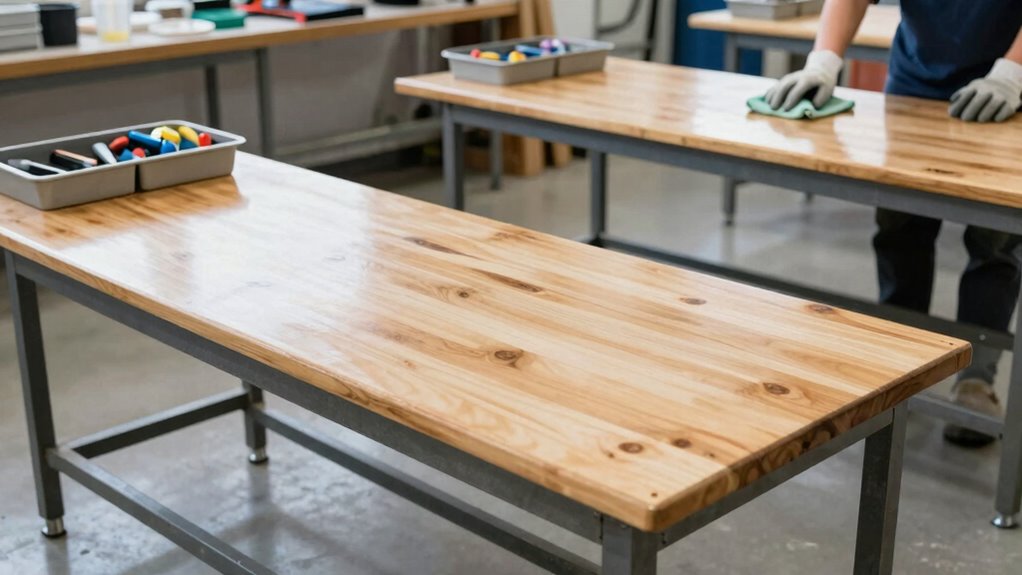
Maintaining benches, tables, and work areas in good condition is essential for safety, efficiency, and appearance. When it comes to outdoor maintenance, your focus should be on protecting these surfaces from weather and wear. Proper upkeep not only extends their lifespan but also keeps your environment looking professional and inviting. One of the most important steps is choosing the right materials during installation or replacement. Material selection plays a pivotal role in determining how well your outdoor furniture withstands the elements and how much maintenance it requires.
Choosing durable materials is key to long-lasting, low-maintenance outdoor furniture.
If you’re selecting materials, consider options like treated wood, metal, or composite materials designed for outdoor use. Treated wood, for example, resists moisture and decay but still needs regular sealing or staining to prevent cracks and splinters. Metal surfaces, such as aluminum or powder-coated steel, usually require less maintenance but can be prone to rust if not properly treated or if the coating wears off. Composite materials, made from a blend of plastic and wood fibers, offer durability and minimal upkeep, making them an excellent choice for high-traffic areas. Your choice of material influences how often you’ll need to perform outdoor maintenance tasks like cleaning, sealing, or repainting. Regular inspection and weather resistance are crucial to ensure longevity and reduce repair costs, especially if you select materials with inherent corrosion resistance.
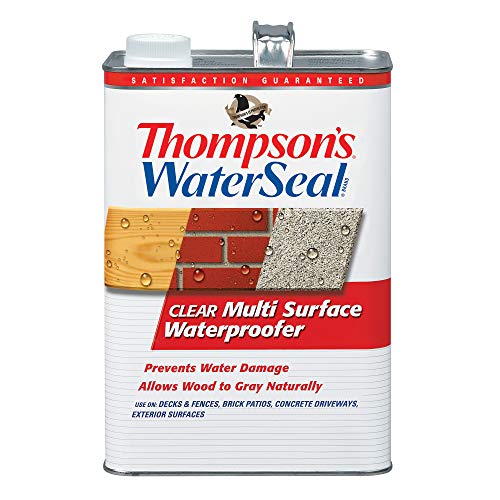
Thompson’s WaterSeal Multi-Surface Waterproofer Stain, Clear, 1 Gallon
- Waterproofs Multiple Surfaces: Concrete, brick, exterior wood, and more
- Clear Finish Enhances Natural Look: Hides grain, shows texture
- Fade-Resistant, UV Protection: Maintains color year-round
As an affiliate, we earn on qualifying purchases.
As an affiliate, we earn on qualifying purchases.
Frequently Asked Questions
How Often Should I Inspect My Work Area for Damage?
You should inspect your work area regularly, ideally following a weekly inspection schedule. Look for damage indicators like cracks, loose parts, or corrosion that could compromise safety or quality. Frequent checks help you catch issues early, preventing further damage or accidents. By staying proactive with inspections, you maintain your workspace in top condition, ensuring a safer and more efficient environment for everyone using it.
What Cleaning Products Are Safest for Different Materials?
You might worry about damaging your surfaces, but eco-friendly cleaners and non-abrasive solutions are safe choices for different materials. For wood, use gentle, plant-based cleaners; for metal, opt for mild soap and water. Glass surfaces respond well to vinegar and water. Always test a small area first, and avoid harsh chemicals, ensuring your work areas stay clean without risking damage or harmful residues.
How Can I Prevent Rust on Metal Surfaces?
To prevent rust on metal surfaces, you should apply protective coatings like paint or sealants that create a barrier against moisture. Using rust inhibitors can also be effective; they chemically prevent oxidation. Regularly clean and dry the surfaces, especially after exposure to water or humidity. Keep an eye out for any early signs of rust, and reapply coatings or inhibitors as needed to maintain protection and prolong the lifespan of your metal items.
What Tools Are Best for Minor Repairs?
Think of fixing your work area like tending a garden—you need the right tools to nurture growth. For minor repairs, choose repair kits tailored to your needs, like wood or metal fixes. Essential hand tools, such as screwdrivers, pliers, and a hammer, are your gardening tools—they help you prune, tighten, and mend effortlessly. With these, you can keep your benches, tables, and work areas in top shape, ready for new growth.
How Do I Organize Tools to Reduce Surface Clutter?
To reduce surface clutter, you should prioritize tool storage by investing in shelves, pegboards, or drawers that keep tools off your work surfaces. Regularly organize and return tools to their designated spots, ensuring everything has a specific place. This approach improves surface organization, making your work area safer and more efficient. Keep frequently used tools within easy reach, and discard or repair broken items to maintain a tidy, functional workspace.
Conclusion
By brushing, buffing, and barricading your benches, tables, and work areas, you bring brilliance back to your space. Consistent cleaning keeps clutter and corrosion at bay, while careful care creates a clean, enchanting workspace. Remember, regular maintenance maintains your materials’ magic and maximizes their longevity. So, stay steadfast with sweeping, scrubbing, and safeguarding—your surfaces will stay splendid, saving you stress, time, and trouble in the long run.
Back to school Picks
back to school
As an affiliate, we earn on qualifying purchases.