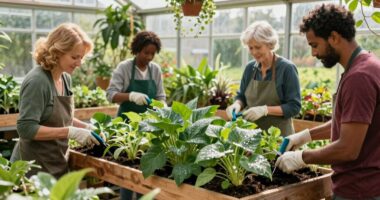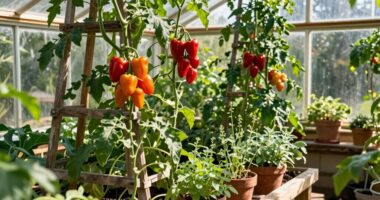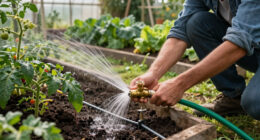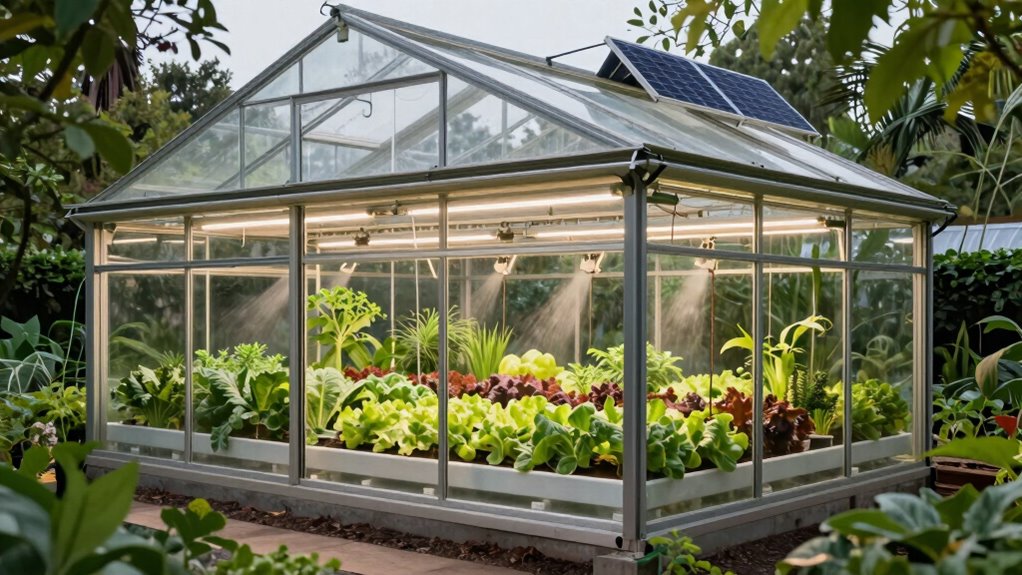

A greenhouse is a perfect example of smart, sustainable growing because it combines eco-friendly practices, renewable energy like solar and wind, and advanced automation to optimize crop production. You’ll see how it conserves water through hydroponic systems, reduces chemical use, and lowers its carbon footprint with sustainable methods. By integrating technology and eco-consciousness, greenhouses showcase innovative farming that benefits both the environment and your health. Keep exploring to discover more about this eco-friendly agricultural model.

Get garden gear delivered free with Prime
- Fast, free delivery on millions of items
- Prime Video, Amazon Music and more included
- Member-only deals all year
Key Takeaways
- Greenhouses utilize renewable energy sources like solar and wind, demonstrating eco-friendly and energy-efficient cultivation practices.
- Automated systems monitor and optimize water, nutrients, and climate, ensuring sustainable and precise plant growth.
- Hydroponic systems significantly reduce water use and enable crop production in water-scarce environments.
- Sustainable practices decrease chemical use, promoting healthier, chemical-free produce and environmental conservation.
- Integrated farming models maximize productivity while minimizing environmental impact, exemplifying smart, sustainable agriculture.
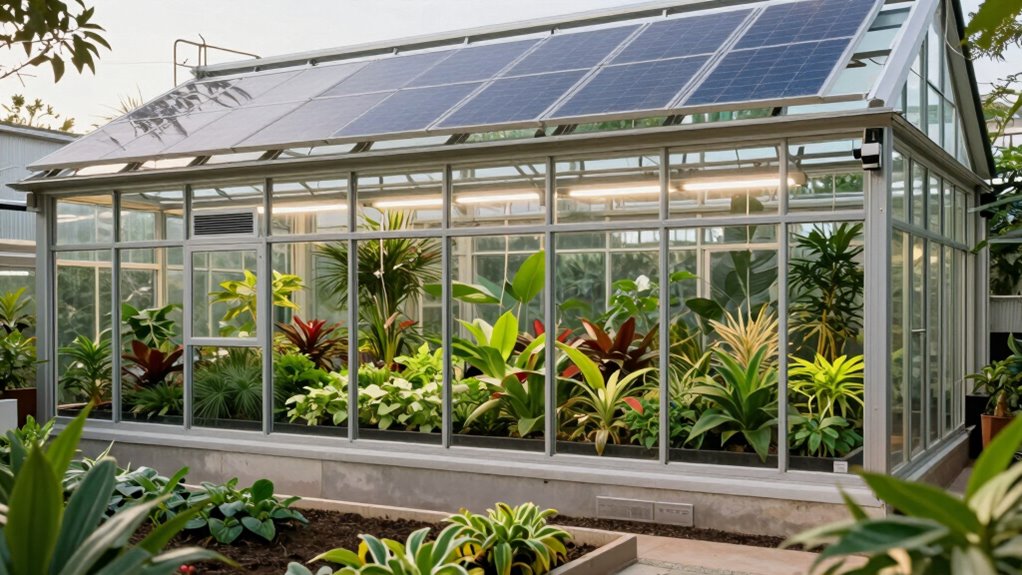
Greenhouses offer a sustainable way to grow crops year-round by efficiently managing resources and minimizing environmental impact. Inside these structures, you can implement innovative techniques like hydroponic systems, which allow plants to grow without soil by using nutrient-rich water. This method not only reduces water consumption but also accelerates plant growth, making your greenhouse more productive and eco-friendly. When combined with renewable energy sources such as solar panels or wind turbines, your greenhouse becomes a true example of sustainable farming. By harnessing natural energy, you lessen reliance on fossil fuels, cutting down on greenhouse gas emissions and lowering operational costs.
In this setup, you become proactive in conserving resources. Hydroponic systems use considerably less water than traditional soil-based agriculture because they recycle and recirculate water within the system. This means you can grow more with less, even in areas where water is scarce. Plus, because hydroponics provides precise control over nutrients and environment, you’re less likely to encounter pests and diseases, reducing the need for chemical pesticides and fertilizers. This creates healthier produce and a healthier planet. The integration of renewable energy further amplifies this sustainability, providing clean power for lighting, climate control, and automation systems. This also helps reduce the overall carbon footprint of your greenhouse operations.
You’ll find that managing a greenhouse with these technologies is straightforward once you understand the synergy between them. Automated systems can monitor water pH levels, nutrient concentrations, and climate conditions, adjusting operations automatically to optimize plant health. Using renewable energy to power these systems ensures continuous operation without the environmental costs associated with traditional energy sources. Incorporating renewable energy sources like solar and wind further enhances the ecological benefits of your greenhouse setup. Additionally, understanding the benefits of sustainable agriculture can help you maximize the positive impact of your eco-friendly practices. Embracing integrated farming systems can also increase overall efficiency and productivity in your sustainable greenhouse.
Furthermore, adopting these innovative practices allows you to contribute positively to environmental conservation efforts.
solar-powered greenhouse automation system
As an affiliate, we earn on qualifying purchases.
As an affiliate, we earn on qualifying purchases.
Frequently Asked Questions
How Does the Greenhouse Adapt to Climate Changes?
You see the greenhouse adapt to climate changes through built-in adaptive systems that enhance climate resilience. These systems automatically regulate temperature, humidity, and airflow, responding to external weather shifts. You can also implement smart technology, like sensors and automation, to optimize conditions in real-time. This proactive approach helps maintain ideal growing environments, ensuring your plants stay healthy and productive despite climate fluctuations.
What Are the Initial Setup Costs for a Smart Greenhouse?
You might find it surprising, but setting up a smart greenhouse can cost anywhere from a few thousand to over a hundred thousand dollars, depending on size and tech. Start with a thorough cost analysis to understand expenses and explore funding options like grants or loans. Think about investing in automation, sensors, and climate control systems upfront—these initial costs will pay off in sustainable, efficient growth later on.
How Is Data Collected and Used in the Greenhouse?
You collect data in the greenhouse through sensor integration, which tracks temperature, humidity, soil moisture, and light levels in real-time. You then use data analytics to interpret this information, helping you optimize growing conditions. This process allows you to make informed decisions, automate adjustments, and improve plant health and yield. By leveraging sensor data and analytics, you create a more efficient, sustainable, and productive greenhouse environment.
Can the Greenhouse Operate Off-Grid or With Renewable Energy?
Yes, you can operate the greenhouse off-grid using renewable energy sources like solar or wind power. By installing solar panels or wind turbines, you harness clean energy to run climate control systems, irrigation, and lighting. This setup allows off-grid operation, reducing reliance on traditional power grids, lowering carbon footprints, and enhancing sustainability. Proper energy storage solutions, like batteries, guarantee continuous operation even during low sunlight or calm wind periods.
What Crops Are Best Suited for a Sustainable Greenhouse?
You should choose crop varieties that thrive in controlled environments, like leafy greens, herbs, and tomatoes. These crops respond well to sustainable growing techniques such as hydroponics or aeroponics, which reduce water usage and eliminate soil dependency. By selecting suitable crop varieties, you optimize yields while maintaining sustainability. Implementing efficient growing techniques helps you create a resilient, eco-friendly greenhouse that produces fresh, healthy food year-round.
Conclusion
As you see, greenhouses show that with innovation and care, sustainable growth is possible. They serve as living proof that “a little knowledge is a dangerous thing,” reminding you to keep learning and adapting. By embracing smart, eco-friendly practices, you’re not just growing plants—you’re nurturing a healthier planet. So, take inspiration from these green havens and remember, the journey of a thousand miles begins with a single step toward sustainability.
Fall Picks
fall essentials
As an affiliate, we earn on qualifying purchases.