
To prepare your greenhouse for summer heat, focus on optimizing ventilation with clean, functioning exhaust fans and roof vents that open automatically based on temperature. Use shading cloths or retractable shading systems to reduce sunlight and heat stress. Position vents strategically to promote good airflow, creating natural drafts that remove hot air and bring in cooler air. Regularly monitor interior temperatures and adjust ventilation and shading as needed to keep conditions stable. Continue exploring these tips for a cooler, healthier environment.
Key Takeaways
- Install and maintain effective ventilation systems, including exhaust fans and roof vents, to improve airflow and heat removal.
- Use shading materials like shade cloths or retractable covers to reduce sunlight and heat gain inside the greenhouse.
- Position vents strategically—high for hot air escape and low for cooler air intake—to enhance natural airflow.
- Regularly monitor interior temperatures with reliable thermometers and adjust ventilation and shading accordingly.
- Incorporate additional fans or natural draft techniques to ensure consistent cooling during peak summer heat.

As summer approaches and temperatures rise, it is essential to prepare your greenhouse to withstand the heat. Your goal is to maintain a stable environment that prevents overheating, which can damage plants and reduce yields. One of the most effective ways to do this is by optimizing your ventilation systems. Proper ventilation helps circulate air, removing excess heat and humidity that build up during the hottest parts of the day. If your greenhouse has exhaust fans or roof vents, make sure they are clean, functional, and set to open automatically when temperatures reach a certain point. Installing additional fans can also improve airflow, especially if natural ventilation alone isn’t enough. Remember, good airflow not only cools the interior but also reduces the risk of fungal diseases that thrive in humid conditions.
Alongside ventilation, shading techniques play a critical role in protecting your plants from heat stress. Shade cloths are a popular choice because they can be easily installed over the roof or sides of your greenhouse. These cloths come in various densities, allowing you to control the amount of sunlight that penetrates, typically reducing direct sunlight by 30-50%. This reduction helps keep the interior temperature down while still providing sufficient light for photosynthesis. Alternatively, you can use retractable shading systems that can be adjusted based on the day’s weather forecast or the time of day. Combining shading techniques with your ventilation system creates a layered approach to cooling, ensuring your greenhouse stays comfortable even during peak summer heat.
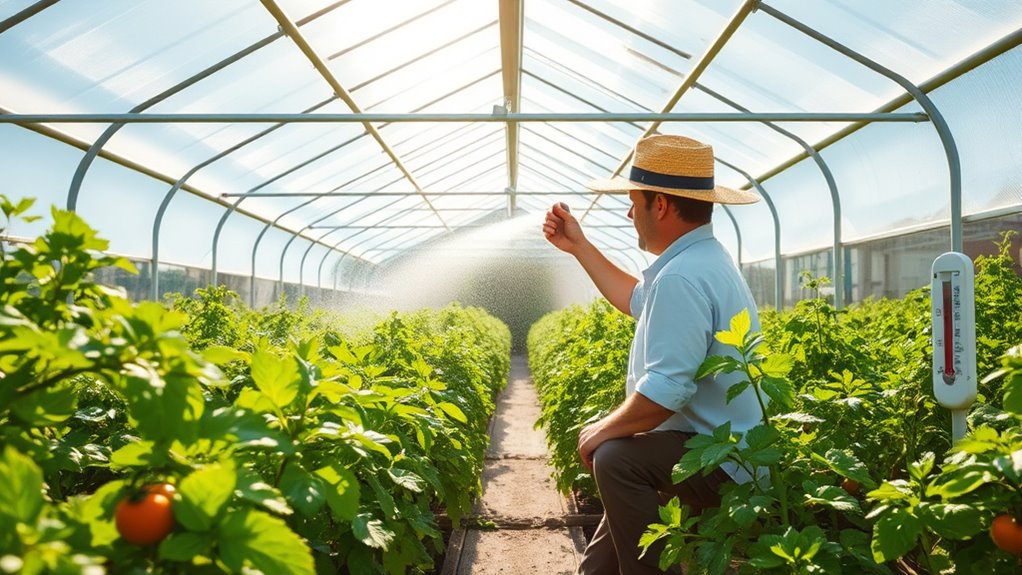
You should also consider the placement of your ventilation outlets and inlets to maximize airflow. High vents facilitate the escape of hot air, while lower vents or windows allow cooler air to enter, creating a natural draft. Opening these during the hottest parts of the day can considerably reduce internal temperatures. Additionally, if your greenhouse is located in a particularly hot or sunny area, strategic shading and ventilation can work together to prevent overheating and protect your plants. Regularly monitor the temperature inside your greenhouse with a reliable thermometer, and adjust your shading and ventilation accordingly. Ensuring that your ventilation equipment is compatible with your greenhouse design can significantly enhance airflow efficiency and performance.
Preparing your greenhouse for summer heat isn’t just about installing equipment; it’s about creating a balanced environment that responds dynamically to changing conditions. By paying attention to your ventilation systems and employing effective shading techniques, you give your plants the best chance to thrive throughout the hottest months. Properly managed, your greenhouse can stay cooler, healthier, and more productive, even when the outdoor temperatures soar.
Frequently Asked Questions
How Can I Reduce Humidity Inside My Greenhouse During Summer?
You can reduce humidity in your greenhouse by using desiccant dehumidifiers, which absorb excess moisture effectively. Avoid humidifier use during hot summer days, as it adds more moisture to the air. Improving ventilation with exhaust fans or open vents also helps to circulate air and lower humidity. Combining these methods guarantees a drier environment, promoting healthier plant growth and preventing mold or mildew buildup during summer heat.
What Are the Best Shade Options for Large Greenhouse Windows?
Think of your greenhouse windows as a summer sun beating down; you need a shield. Shade cloths are your best armor, blocking out intense rays while letting in light. Reflective films work like a mirror, bouncing heat away from your greenhouse. For large windows, opt for heavy-duty shade cloths or reflective films that are easy to install and remove, ensuring your plants stay cool and healthy all summer long.
How Often Should I Check and Adjust Ventilation Systems?
You should check and adjust your ventilation systems at least once a week during summer to ensure ideal airflow. Regular ventilation maintenance helps prevent overheating, and system calibration ensures vents open and close correctly. Keep an eye on temperature and humidity levels, and make adjustments as needed. Consistent checks allow you to catch any malfunctions early, keeping your greenhouse environment stable for your plants to thrive.
Are There Eco-Friendly Cooling Methods Suitable for Greenhouses?
Yes, there are eco-friendly cooling methods suitable for greenhouses. You can use natural cooling techniques like shading, ventilation, and evaporative cooling to maintain ideal temperatures. Incorporate sustainable practices such as installing reflective roof coatings or using compost-based insulation to reduce heat buildup. These methods minimize energy use, promote environmental health, and keep your greenhouse cool naturally, ensuring plants thrive during hot summer days without relying on energy-intensive systems.
How Can I Prevent Heat Stress in My Plants During Heatwaves?
Think of your plants as delicate singers, vulnerable to the scorching sun’s roar. To prevent heat stress during heatwaves, you should water your plants early in the day to keep their roots cool and use shade cloths to block out excessive heat. Regularly monitor humidity levels and ventilation, ensuring your plants stay comfortable and thrive despite the heat’s fierce performance.
Conclusion
As you get your greenhouse ready for summer, remember that proper ventilation and shading can prevent overheating and protect your plants. Some believe that plants naturally adapt to heat, but studies show that proactive measures substantially boost their resilience. By implementing these strategies, you create a healthier environment and guarantee your plants thrive all season long. So, don’t wait—prepare now to enjoy a lush, productive summer in your greenhouse.