

A weekly greenhouse reset helps you catch small issues early, preventing bigger problems later. By inspecting for pests, removing debris, and testing soil health, you keep your plants strong and reduce disease risks. Regular sanitation and soil amendments support healthy growth, while early pest control keeps infestations at bay. Staying consistent saves time and money, ensuring a productive greenhouse. Keep going to uncover more tips that can help you maintain a trouble-free environment.

Get garden gear delivered free with Prime
- Fast, free delivery on millions of items
- Prime Video, Amazon Music and more included
- Member-only deals all year
Key Takeaways
- Regular soil testing and amendments prevent nutrient imbalances that can hinder plant growth.
- Weekly pest inspections catch infestations early, reducing the risk of widespread damage.
- Routine sanitation minimizes pest and disease buildup, maintaining a healthy greenhouse environment.
- Consistent soil aeration and pH monitoring promote optimal root health and plant resilience.
- Combining soil health checks with pest control creates a preventative approach that avoids costly future problems.
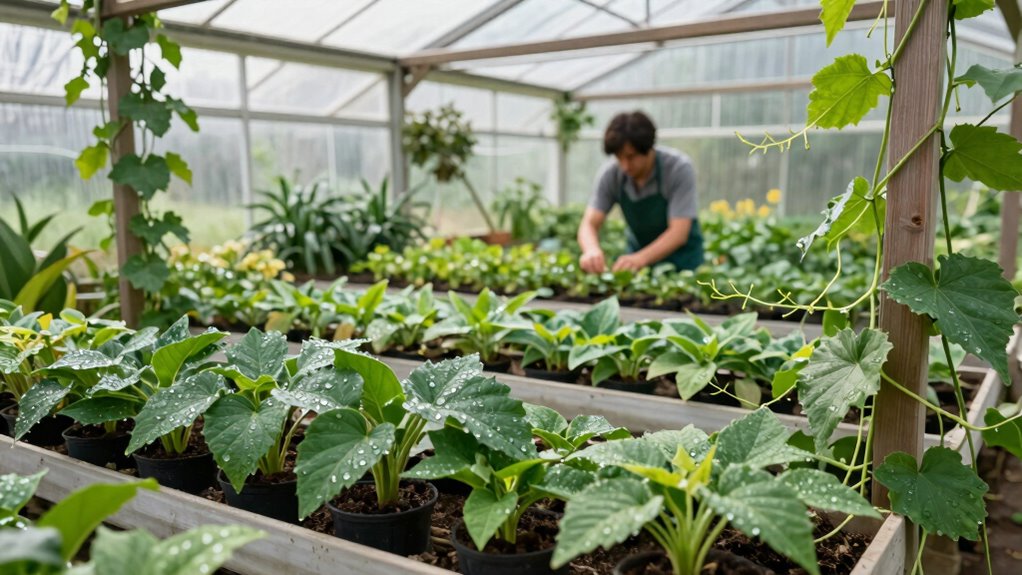
Ever wonder how to keep your greenhouse thriving week after week? The key lies in a simple yet effective routine: the weekly reset. This practice isn’t just about watering and pruning; it’s about maintaining ideal soil health and staying ahead of pest management issues. When you dedicate time each week to these tasks, you prevent small problems from snowballing into bigger, more costly challenges down the line. Incorporating soil testing into your routine can help you better understand your soil’s needs and address imbalances early on. Regular soil testing also allows you to tailor your fertilization plan more precisely, promoting healthier plant growth.
Start by examining your soil. Healthy soil is the foundation of a productive greenhouse. Each week, check for signs of nutrient depletion or imbalance, like uneven plant growth or yellowing leaves. To boost soil health, consider adding compost or organic amendments that replenish essential nutrients and improve soil structure. Aerate the soil gently if it feels compacted, ensuring roots can breathe and absorb nutrients efficiently. Keeping the soil in top condition means your plants are better equipped to fend off pests naturally and grow vigorously. Regularly monitoring soil pH can further optimize plant health and growth. Implementing soil health practices can significantly enhance your overall plant productivity.
Pest management is another critical aspect of your weekly reset. Even if you don’t see obvious pests, it’s wise to inspect plants thoroughly. Look under leaves, along stems, and in crevices for early signs of trouble. Catching pests early makes them easier to control and reduces the likelihood of infestations spiraling out of control. Use targeted methods like neem oil, insecticidal soaps, or biological controls to keep pests at bay without harming beneficial insects or your plants. Regular monitoring and prompt action are your best defenses against larger infestations that could weaken your crops or spread diseases. Maintaining a sanitation routine further minimizes the risk of pest and disease buildup.
Integrating pest management into your routine means you’re proactive rather than reactive. Keep your workspace clean, removing fallen leaves, debris, and any plant material that could harbor pests or pathogens. Rotate crops or plant varieties to prevent pest populations from settling in one spot. Proper sanitation and vigilant inspection help maintain a healthy, resilient environment, making pests less likely to establish a foothold. A comprehensive approach that combines soil health and pest control fosters a balanced ecosystem within your greenhouse, supporting long-term productivity.
Combining soil health checks with pest management during your weekly reset creates a cycle of preventative care. This routine not only saves you time and money but also ensures your plants stay strong, healthy, and productive. When you stay on top of these essential tasks, you’re effectively reducing the risk of disease, improving plant growth, and setting your greenhouse up for long-term success. In the end, consistent weekly maintenance is your best strategy to cultivate a thriving, trouble-free greenhouse year-round.
As an affiliate, we earn on qualifying purchases.
Frequently Asked Questions
How Long Should Each Greenhouse Reset Take?
You should aim for each greenhouse reset to take about 30 minutes to an hour. During this time, focus on inspecting plant health closely, removing any dead or diseased material, and checking for pests to maintain effective pest control. This routine helps prevent bigger problems later, ensuring your plants stay healthy and pest-free. Consistency is key, so setting aside this time each week keeps your greenhouse thriving.
What Tools Are Needed for the Weekly Reset?
You’ll need basic tools like pruning shears, a hand rake, and a spray bottle for the weekly reset. These help you inspect plant health closely, prune dead or diseased foliage, and remove debris that could harbor pests. Using gloves and a disinfectant spray guarantees pest prevention and keeps your greenhouse hygienic. Regularly checking and maintaining your tools also helps prevent the spread of pests and promotes overall plant health.
Can I Automate the Greenhouse Reset Process?
Yes, you can automate the greenhouse reset process with automated systems. While some worry that automation might reduce control, setting up reset scheduling guarantees consistency and saves time. You can program your systems to perform routine resets, keeping your greenhouse in ideal condition without manual effort. This way, you’ll prevent bigger problems later and maintain a healthy environment for your plants, all while streamlining your workflow.
How Do I Track the Effectiveness of Resets?
You can track the effectiveness of resets by monitoring plant health and pest control over time. Keep detailed records of plant growth, color, and vigor after each reset, noting any improvements or issues. Use pest monitoring tools or visual inspections regularly, and compare results before and after resets. This helps you identify patterns, ensuring your resets effectively promote healthier plants and better pest control, preventing larger problems later.
What Signs Indicate a Reset Is Urgently Needed?
You’ll know a reset is urgently needed if pests start to become resistant despite pest control efforts, or if plant nutrition shows signs of deficiency like yellowing leaves or stunted growth. Persistent pests can undermine plant health, while poor nutrition weakens plants’ defenses. Regularly monitoring these signs helps you catch issues early, ensuring your greenhouse remains healthy and productive, and preventing bigger problems later.
Conclusion
By committing to a weekly greenhouse reset, you prevent bigger problems down the line. Imagine a small farm that ignored regular checks—over time, pests took over, risking the entire crop. Now, picture your greenhouse, thriving because you stayed proactive. Just like that farm, your consistent effort today safeguards your future harvest. Don’t wait for disaster; reset weekly, and keep your green oasis healthy and productive for years to come.
Fall yard work Picks
leaf blowers
As an affiliate, we earn on qualifying purchases.