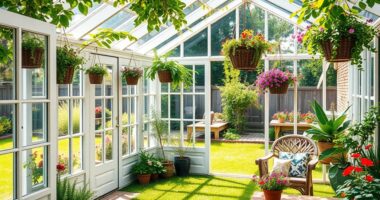
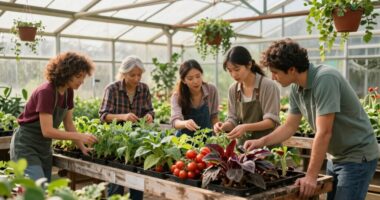
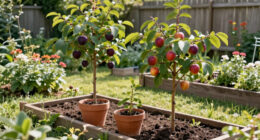
Inclusive greenhouse gardening involves designing spaces with accessible features like wide pathways, adjustable workstations, and ergonomic tools that enable everyone to participate comfortably. By incorporating adaptive elements such as raised beds and non-slip surfaces, you can create a welcoming environment for people of all abilities. Community programs and educational workshops further support participation and skills development. Keep exploring to discover how these thoughtful designs and initiatives can help you make your greenhouse more inclusive and engaging for all.

Get garden gear delivered free with Prime
- Fast, free delivery on millions of items
- Prime Video, Amazon Music and more included
- Member-only deals all year
Key Takeaways
- Incorporate adaptive tools like raised beds and ergonomic implements to accommodate diverse physical and mobility needs.
- Design wide, non-slip pathways and adjustable workstations to ensure safe, easy access for all users.
- Engage communities through workshops, volunteer programs, and partnerships with organizations serving diverse populations.
- Offer educational programs demonstrating accessible planting, maintenance, and harvesting techniques with adaptive tools.
- Promote inclusive environments that foster participation, community building, and therapeutic benefits for people of all abilities.
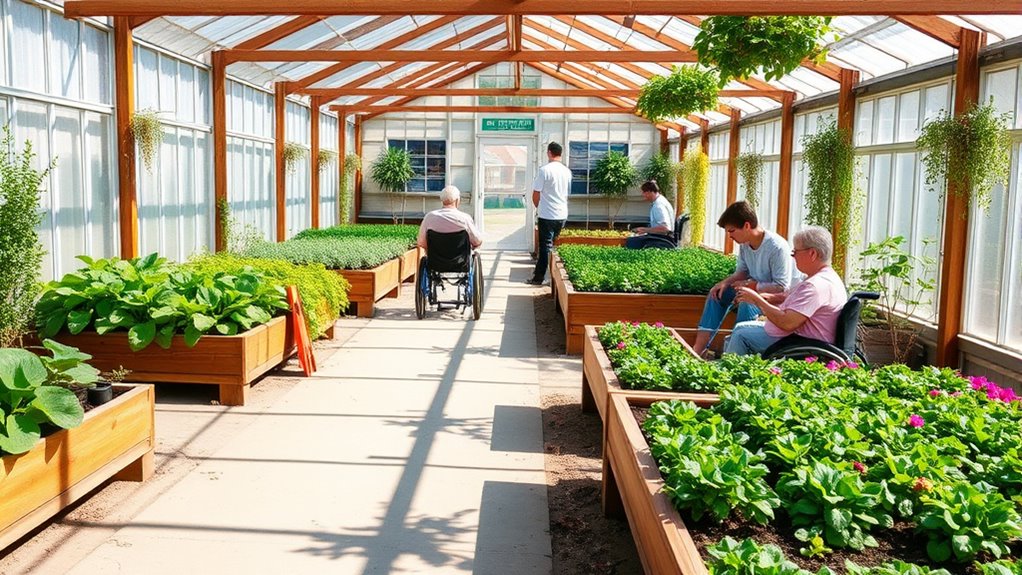
Inclusive greenhouse gardening opens up opportunities for everyone to enjoy and benefit from growing plants, regardless of physical ability or experience level. When designing accessible gardens, incorporating adaptive tools becomes essential. These tools are specifically created to meet diverse needs, making tasks like planting, watering, and harvesting easier for individuals with mobility challenges or other physical limitations. For example, raised beds reduce the need for bending, while ergonomic tools minimize strain. By integrating adaptive tools, you guarantee that each person can participate comfortably and confidently, fostering a sense of accomplishment and independence. Additionally, selecting appropriate tools that suit different needs further enhances participation and reduces barriers to gardening. Community outreach plays a crucial role in expanding the reach of inclusive greenhouse programs. By actively engaging local residents, schools, senior centers, and organizations serving people with disabilities, you create a supportive environment that encourages participation. Outreach efforts can include workshops demonstrating adaptive gardening techniques, volunteer opportunities, and partnering with local agencies to identify those who can benefit most. These initiatives not only promote awareness but also help build a sense of ownership and pride within the community. When people see that the garden is designed with their needs in mind, they’re more likely to join and stay involved. Designing an inclusive greenhouse involves thoughtful planning. You want to ensure pathways are wide enough for wheelchairs or walkers, and incorporate non-slip surfaces to prevent accidents. Adjustable workstations and seating options allow users to customize their gardening experience. Lighting should be sufficient and glare-free to accommodate those with visual impairments. Every feature should aim to reduce physical barriers, making it possible for individuals of all ages and abilities to participate fully. These modifications don’t just benefit people with disabilities—they also create a more flexible, welcoming space for everyone, including parents with young children or those recovering from injuries. Fostering community outreach helps spread awareness about the benefits of inclusive gardening and encourages broader participation. It also provides opportunities to educate the public about adaptive tools and how they can be used effectively. Educational programs can focus on demonstrating accessible planting techniques, maintenance, and harvesting, empowering participants to take ownership of their garden space. When communities come together around a shared goal of inclusivity, you cultivate not just plants but a stronger, more connected neighborhood. By prioritizing adaptive tools and outreach, you guarantee that your greenhouse becomes a space where everyone can grow, learn, and enjoy the therapeutic benefits of gardening.
As an affiliate, we earn on qualifying purchases.
Frequently Asked Questions
How Can I Fund Accessible Greenhouse Projects?
You can fund accessible greenhouse projects by exploring grant opportunities from local government agencies, nonprofits, and environmental organizations that support inclusive initiatives. Additionally, launching crowdfunding campaigns on platforms like GoFundMe or Kickstarter helps rally community support and raise funds quickly. Combining these strategies increases your chances of securing the necessary resources to create accessible greenhouses, ensuring everyone can enjoy and benefit from sustainable gardening spaces.
What Training Is Available for Inclusive Greenhouse Gardening?
You can find training through inclusive workshops that focus on adaptive tools and techniques for accessible greenhouse gardening. These workshops often cover designing for various abilities, using adaptive tools, and creating inclusive environments. Look for local community centers, horticultural organizations, or online programs that specialize in accessible gardening. Participating in these workshops will equip you with practical skills and strategies to make greenhouse gardening more inclusive for everyone.
How Do I Involve Local Communities in Design?
You involve local communities in design by actively engaging them through community engagement initiatives and participatory planning processes. Host workshops and listening sessions to gather input, ensuring diverse voices are heard. Collaborate with community members to co-create design ideas, making sure their needs and preferences shape the project. This approach fosters ownership, inclusivity, and sustainable solutions, creating a greenhouse space that truly serves and reflects the community’s unique culture and environment.
What Safety Measures Are Essential for Accessible Greenhouses?
You should prioritize hazard prevention by installing non-slip flooring and securing all pathways to prevent falls. Make certain emergency protocols are clear, with accessible exits and easy-to-reach emergency equipment like fire extinguishers and first aid kits. Regularly train everyone on safety procedures, and keep pathways free of obstacles. Conduct routine safety audits to identify and fix potential hazards, creating a secure environment where everyone can garden confidently and safely.
How Can Technology Improve Accessibility in Greenhouses?
Technology can markedly improve accessibility in greenhouses by incorporating smart automation and adaptive tools. You can use smart systems to control lighting, watering, and climate, making it easier for everyone to manage plants. Adaptive tools, like adjustable shelves and ergonomic tools, allow you to work comfortably regardless of physical ability. These innovations help create an inclusive environment, ensuring all gardeners can participate and thrive in greenhouse activities.
Conclusion
By embracing inclusive greenhouse gardening, you open doors to everyone—regardless of ability—creating a space that’s both accessible and vibrant. It’s about blending thoughtful design with community spirit, breaking down barriers while building connection. In this way, accessibility and growth stand side by side, nurturing not just plants but also confidence and inclusion. Together, you transform a simple greenhouse into a sanctuary where everyone can thrive, learn, and flourish.
Fall yard work Picks
leaf blowers
As an affiliate, we earn on qualifying purchases.