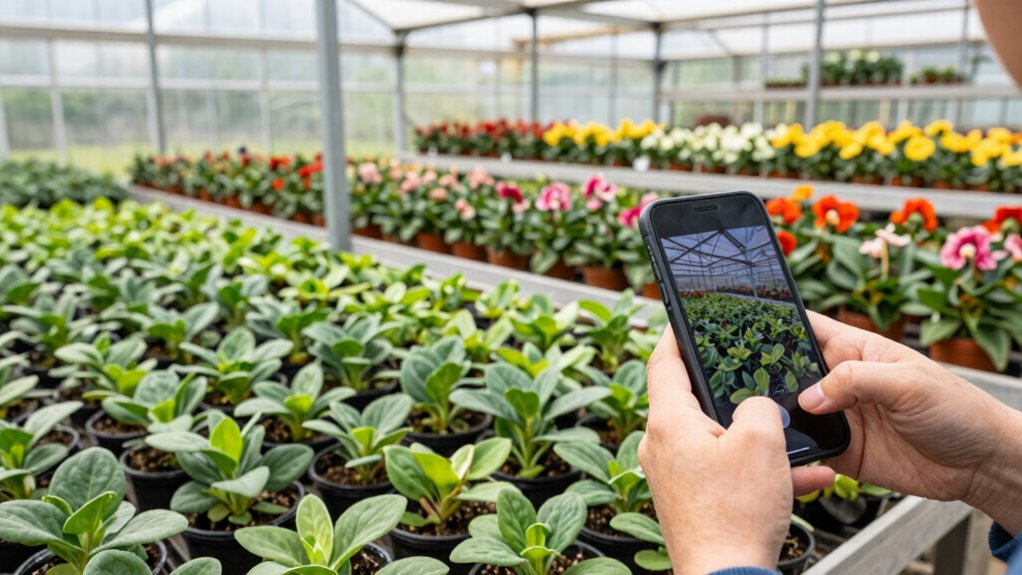
To effectively document your greenhouse progress, take clear, consistent photos at key stages like planting, sprouting, flowering, and fruiting. Use a tripod, set your camera with proper lighting, and keep angles uniform for easy comparison. Organize your images with labels and folders, then regularly review them to identify plant health, growth rates, or issues like pests and diseases. Continuing will reveal expert tips to make your photos truly helpful.
Key Takeaways
- Capture consistent photos at the same time daily with steady angles and lighting for accurate growth comparison.
- Label and organize images by date, stage, or plant type using clear naming conventions for easy retrieval.
- Include visual cues like soil moisture, plant size, and health indicators to track development and identify issues.
- Use tools like tripods, macro lenses, and diffusers to enhance image stability and lighting quality.
- Regularly review and compare photos to monitor progress, diagnose problems early, and refine greenhouse practices.
Identify the Key Moments to Photograph in Your Greenhouse

Capturing the key moments in your greenhouse helps document its progress and highlights growth milestones. Focus on photographing plant growth at different stages, from seedlings to full maturity, to track development over time. Pay attention to the greenhouse layout, capturing how plants are spaced and organized, which can reveal successful arrangements or areas needing adjustment. Key moments include planting day, when seedlings are first introduced, and when plants start flowering or bearing fruit. Regularly photographing these milestones provides a visual timeline of your greenhouse’s evolution. These images help you assess growth patterns, identify issues early, and celebrate successes. By documenting these significant points, you create a useful record that guides future plant care and layout planning. Incorporating energy-efficient technology in your greenhouse can also be reflected visually, showcasing the integration of sustainable practices. Tracking environmental conditions and climate control systems through photos can further enhance your understanding of what supports optimal growth. Additionally, capturing images of lighting setups can help optimize light distribution for different plant needs. Observing plant health indicators visually over time can help quickly identify problems such as pests or diseases before they become severe. Taking photos of watering and fertilization routines can provide insight into how your maintenance practices impact plant health and growth.
Choose the Right Equipment and Camera Settings for Clear Photos
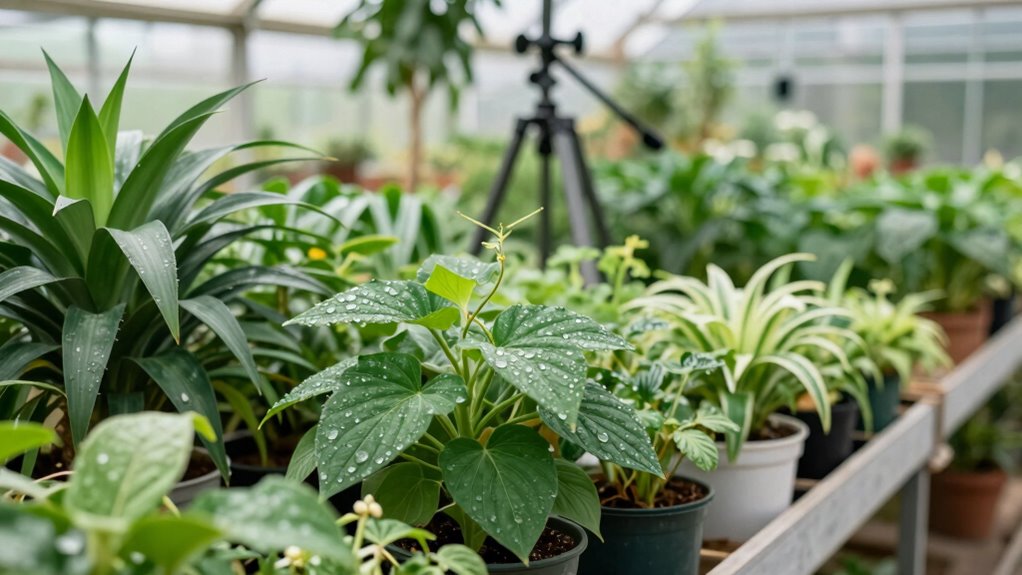
Choosing the right equipment and camera settings is vital for capturing clear, detailed photos of your greenhouse. Use quality camera accessories like tripods and macro lenses to enhance stability and detail. Adjust your camera settings for ideal results: set a low ISO to reduce noise, choose a wider aperture for depth of field, and guarantee proper shutter speed to prevent blurriness. Lighting techniques are essential—capture photos during natural light or use reflectors and diffusers to minimize shadows. Here’s a quick guide:
| Equipment | Settings | Lighting Techniques |
|---|---|---|
| Tripod | Low ISO, wide aperture, fast shutter speed | Use diffusers for even light |
| Macro lens | Manual focus | Reflectors to brighten shadows |
| Extra batteries | Adjust white balance | Position for ideal sunlight |
| Remote shutter | Use aperture priority mode | Avoid direct midday sun |
| Smartphone adapters | Focus lock | Capture during golden hour |
Additionally, experimenting with white balance adjustments can significantly improve color accuracy in your greenhouse photos. Being aware of natural lighting conditions during different times of the day can also help optimize your photo quality. Understanding how camera settings influence image clarity is crucial for making consistent improvements. Furthermore, understanding how lighting conditions impact your photos will help you adapt your techniques to different environmental situations. Incorporating environmental awareness into your photography routine can lead to more consistent and stunning results.
Take Consistent Photos to Track Your Greenhouse’s Progress
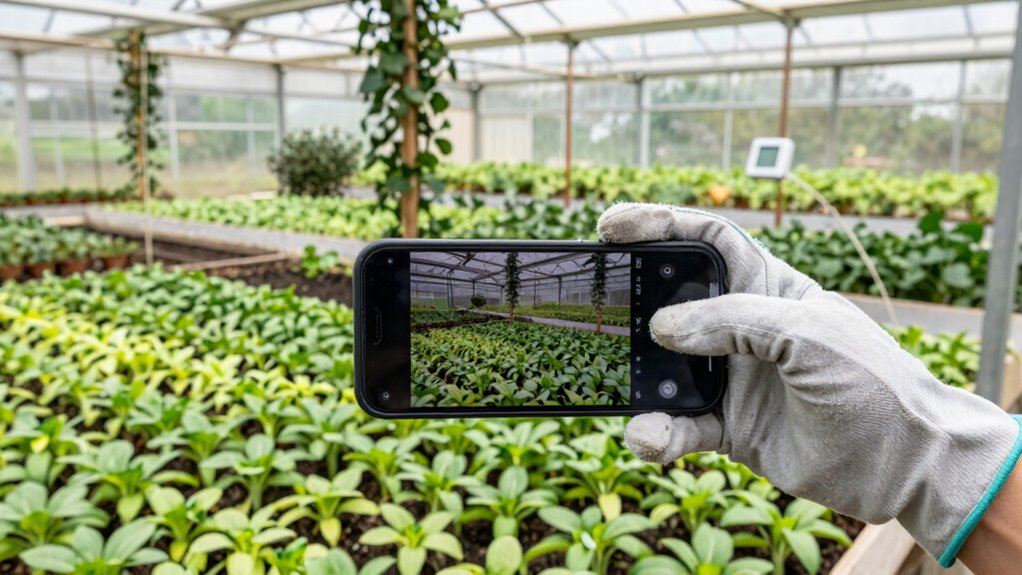
To effectively monitor your greenhouse’s progress over time, maintaining consistency in your photos is essential. Start by taking photos at the same time of day to ensure lighting stays uniform, which helps in accurately comparing growth. Use a fixed camera position or tripod to keep angles consistent. Regularly calibrate your sensors to ensure measurement accuracy, especially for environmental factors influencing plant growth. Organize your images with clear labels and dates, and establish a dedicated photo storage system to prevent loss and make reviewing easier. Consistent photos will reveal subtle changes and help you identify patterns or issues early. Implementing simple document management techniques can further streamline your record-keeping process. This disciplined approach guarantees your documentation is reliable, making it easier to track progress and make informed decisions for your greenhouse.
Organize and Store Your Photos for Easy Access and Review
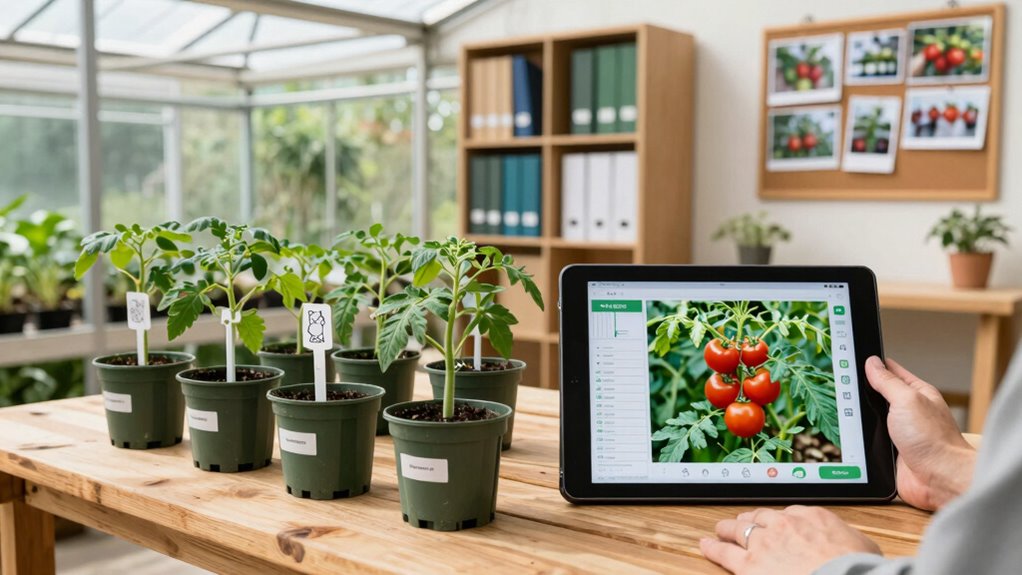
Organizing and storing your photos systematically guarantees you can easily access and review them whenever needed. Proper photo organization, especially through digital storage, ensures your progress is well-documented and ready for reference. To achieve this, consider these steps:
Systematic photo organization ensures easy access and thorough progress documentation.
- Create clearly labeled folders by date, plant type, or growth stage.
- Use consistent naming conventions for quick searchability.
- Regularly back up your digital storage to prevent data loss.
- Incorporate digital organization techniques to streamline photo management and enhance retrieval efficiency. Additionally, applying metadata tagging can further improve your ability to locate specific photos quickly. Understanding digital literacy helps you adopt effective tools and practices for maintaining your photo collection securely and efficiently. For example, learning how to manage digital files effectively can save you time and prevent misplacement.
- Utilizing file management software can help automate some of these processes and keep your collection organized over time.
Use Photos to Monitor Plant Growth and Detect Health Issues
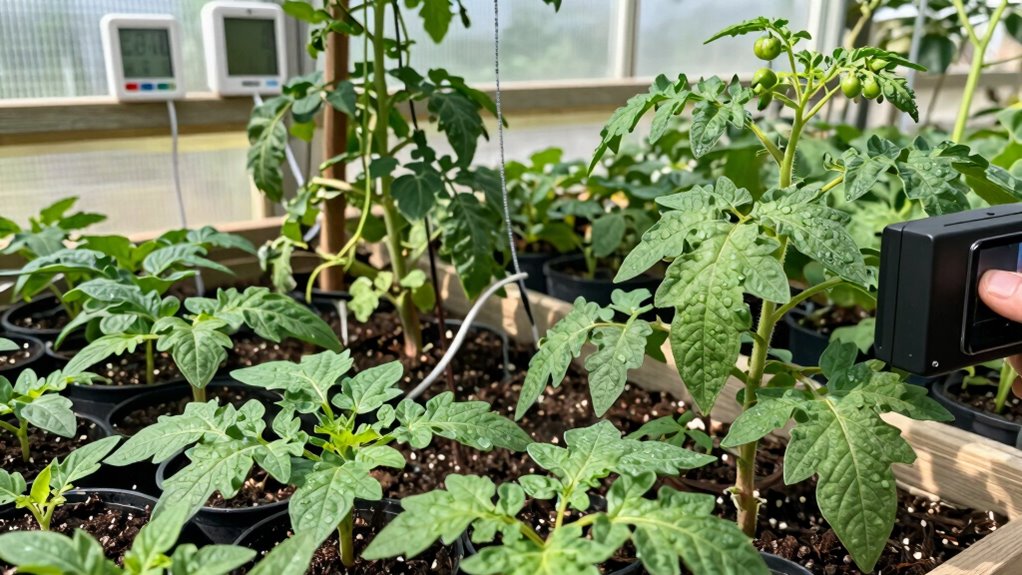
Taking regular photos of your plants helps you track their growth milestones and see how they develop over time. These images also make it easier to spot early signs of disease or pest issues before they spread. By paying close attention to these visual cues, you can take action quickly to keep your greenhouse healthy. Incorporating natural filtration systems into your setup can further support a healthy environment by maintaining water quality without chemicals. Additionally, implementing secure data storage ensures your monitoring information remains protected and easily accessible whenever you need it. Proper networking hardware can also help you organize your monitoring system seamlessly, ensuring your data is accessible whenever you need it. Regularly updating your monitoring practices can improve your ability to respond promptly to plant health issues. Staying informed about emerging technologies in plant monitoring can also provide new tools to enhance your greenhouse management.
Plant Development Milestones
Regularly capturing photos of your plants allows you to track their development over time and spot early signs of health issues. Monitoring plant development milestones helps you understand growth patterns and identify potential problems. For example, you can observe when seedlings develop true leaves or when flowering begins. To enhance your documentation: 1. Track changes in soil moisture levels by comparing photos during different watering stages. 2. Notice growth rates and stem strength to determine if pruning techniques are effective. 3. Observe leaf color and size to detect deficiencies or stress early. Consistent photos provide visual proof of progress, making it easier to adjust watering routines or pruning strategies, ultimately fostering healthier plant growth and preventing issues before they escalate. Additionally, understanding the growth cycle of your plants can help you anticipate future care needs and optimize your gardening schedule. Recognizing plant developmental stages through photos can also guide timely interventions and improve overall plant health. Being familiar with these growth patterns enables you to better plan and manage your gardening activities throughout each season, and noting seasonal growth variations can help you adapt your care routines effectively.
Spotting Disease Signs
How can you quickly identify early signs of plant diseases? The key is monitoring leaf discoloration and spotting patterns. Take regular photos of your plants to catch subtle changes. Look for uneven leaf color, such as yellowing or browning, which may indicate stress or disease. Spotting patterns—irregular spots, halos, or lesions—are often signs of fungal or bacterial infections. Comparing recent images with earlier ones helps you detect issues early. Pay attention to the size, shape, and distribution of spots or discoloration. Prompt identification allows you to act quickly, whether by adjusting watering, improving airflow, or applying treatments. Consistent photo documentation makes it easier to track progression and effectiveness of your interventions, keeping your greenhouse healthy and thriving.
Identify and Troubleshoot Pests or Diseases Using Your Photos

By reviewing your photos, you can spot early signs of pests or diseases before they spread. Tracking how these issues develop helps you understand their progression and effectiveness of treatments. Comparing healthy plants to affected ones enables you to identify problems quickly and take targeted action.
Spot Early Signs
Have you ever noticed unusual spots or damage on your plants but wondered if they’re signs of pests or diseases? Early detection is key, and your photos can help. Look for patterns, such as irregular leaf spots or discoloration, which may indicate disease. When reviewing images, consider environmental factors like soil moisture and sunlight exposure, as these influence plant health. Here are some tips to spot early signs:
- Examine leaf color and texture for subtle changes.
- Check for small pests or webbing that might be overlooked.
- Observe plant overall condition, noting wilting or stunted growth.
Consistently documenting these signs helps you recognize patterns over time, enabling quicker troubleshooting before issues escalate. Your photos become a valuable tool in maintaining a healthy, thriving greenhouse.
Track Disease Progression
Tracking the progression of pests or diseases through your photos allows you to catch changes early and adjust your treatment plan accordingly. Regularly documenting symptoms helps with accurate plant disease identification, making it easier to distinguish between different issues. Pay attention to subtle shifts in leaf discoloration, spots, or wilting, and note when they appear or worsen. Comparing photos over time creates a visual timeline of disease progression, revealing whether treatments are effective or if the problem is spreading. Clear, detailed images assist in understanding the severity and scope of the issue. Consistent symptom documentation ensures you don’t overlook early signs and provides valuable reference points for troubleshooting and refining your pest or disease management strategies.
Compare Healthy vs. Affected
Comparing photos of healthy plants to those showing signs of pests or diseases helps you quickly identify issues and determine their severity. Look closely at leaf color, texture, and overall vigor. Poor soil quality or improper water management can make plants more vulnerable, so note these conditions in your photos. To troubleshoot effectively:
- Check for discoloration, spots, or wilting that indicate pests or disease.
- Evaluate soil conditions, such as compaction or nutrient deficiencies, which may contribute to plant stress.
- Observe watering patterns, ensuring plants aren’t over- or under-watered, as this can exacerbate health issues.
Create Timelapse Videos and Before-and-After Comparisons
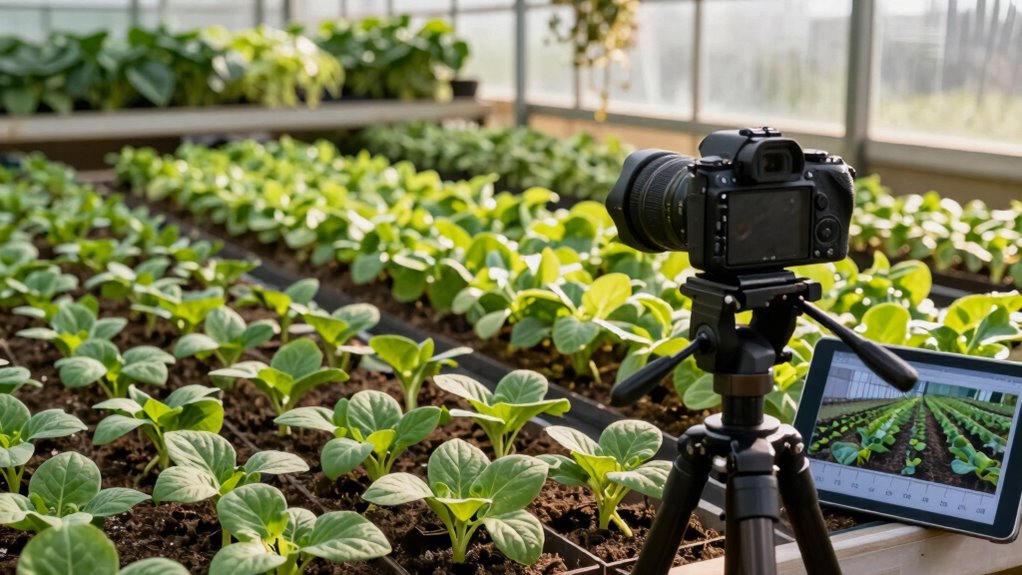
Creating timelapse videos and before-and-after comparisons can powerfully showcase your greenhouse’s progress over time. To do this effectively, focus on lighting techniques that highlight growth and changes clearly, avoiding shadows or uneven illumination. Consistent lighting guarantees your footage remains easy to interpret. Choose camera angles that capture key areas of your greenhouse, such as plant beds or new installations, from stable viewpoints. Use a tripod or fixed mounting point to keep angles steady across shots. When compiling your videos or images, select frames that best illustrate growth stages and improvements. These visual tools not only motivate you but also provide compelling evidence of your efforts, helping you track progress and share it with others in a clear, engaging way.
Maintain Consistent Lighting and Angles for Better Results
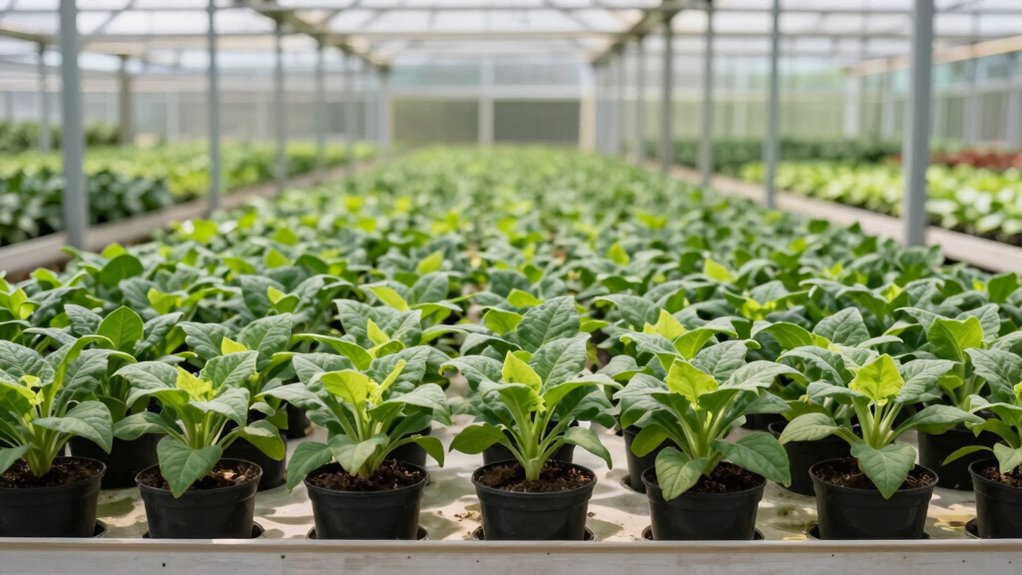
To assure your greenhouse progress is accurately documented, maintaining consistent lighting and camera angles is key. Lighting consistency ensures that each photo reflects true growth without shadows or color shifts, making comparisons reliable. Angle uniformity helps track subtle changes and prevents misleading perspectives. To achieve this:
Consistent lighting and camera angles ensure accurate, reliable greenhouse progress documentation.
- Use the same time of day for each shoot to maintain consistent lighting conditions.
- Set your camera at a fixed position and height to keep angles uniform.
- Use a tripod or stable surface to prevent accidental shifts in your camera’s placement.
Review Your Photos to Celebrate Successes and Plan Next Steps

Reviewing your photos regularly allows you to see how your greenhouse is progressing and identify your successes. Keep your photo organization system simple, so you can easily compare images over time. Look for signs of healthy plant growth, pest control, and effective use of space. Celebrating these successes boosts your motivation and confirms what’s working. Use your photos to pinpoint areas needing improvement or adjustment. Planning your next steps becomes easier when you have a clear visual record. By regularly analyzing your photos, you stay focused on your goals and track progress objectively. This habit helps you stay motivated, refine your techniques, and celebrate every milestone along the way, making your greenhouse journey more rewarding and efficient.
Frequently Asked Questions
How Often Should I Take Photos of My Greenhouse?
You should take photos of your greenhouse weekly to maintain timing consistency and track progress effectively. Regular photos help you notice changes and catch issues early. Keep your images organized in clearly labeled folders, so you can easily compare growth over time. Consistency is key, so try to photograph under similar lighting conditions and angles. This routine will give you a clear visual record and help you make informed decisions for your greenhouse.
What Types of Lighting Are Best for Clear Greenhouse Photos?
Think of your greenhouse like a painter’s palette—lighting sets the mood. For clear photos, use LED lighting, which provides consistent, bright illumination, or shoot in natural sunlight, ideally during the golden hour for warm, even light. Avoid harsh midday sun or fluorescent lights, as they can cast unflattering shadows or distort colors. Balancing these lighting sources helps your photos capture the true beauty of your greenhouse.
How Can I Ensure Photos Accurately Reflect Plant Health?
To guarantee your photos accurately reflect plant health, start with proper color calibration on your camera or phone to capture true colors. Keep your framing consistent in each shot to make comparisons easier over time. Avoid harsh or uneven lighting that can distort color and detail. By calibrating colors and maintaining uniform framing, your photos will provide a reliable visual record of your greenhouse progress.
What Are the Best Ways to Back up and Secure My Photos?
You should back up your photos using cloud storage services like Google Drive or Dropbox to make sure they’re safe and accessible. Organize your images with clear labels and folders to keep track of different plant stages or dates. Regularly update backups and use strong passwords to secure your account. This way, your greenhouse progress photos stay protected, easy to find, and ready whenever you need them.
How Can I Use Photos to Identify Early Signs of Plant Stress?
Think of your photos as a detective’s magnifying glass, revealing hidden clues like plant stress indicators. Use close-up shots to capture leaf discoloration, wilting, or spots, and take consistent photos from the same angle and lighting. Photo documentation techniques help you compare images over time, spotting subtle changes early. This visual record becomes your early warning system, empowering you to act swiftly before stress turns into damage.
Conclusion
By capturing consistent, clear, and carefully curated photos, you’ll create a compelling chronicle of your greenhouse’s growth. Remember to monitor milestones, troubleshoot troubles, and celebrate successes through stunning snapshots. With organized images and ongoing observation, you’ll optimize your plant progress, prevent problems, and perfect your planting prowess. Keep capturing, comparing, and celebrating—your green thumb’s growth is guaranteed to grow with each great photo you take!