
To make your greenhouse less attractive to pests, use companion planting with pest-repelling plants like basil and marigolds, and incorporate natural repellents such as mint, lavender, or neem. Maintain good sanitation by removing debris and weeds regularly, and guarantee proper air circulation to prevent dampness. Managing humidity and controlling the environment helps deter pests naturally. Keep pests at bay by adopting these eco-friendly strategies—stick around to find out how you can strengthen your defenses even further.

Get garden gear delivered free — and shop member deals
- Fast, free delivery on millions of items
- Access to Prime Big Deal Days deals on October 6–7
- Prime Video, Amazon Music and more included
Key Takeaways
- Implement companion planting with pest-repellent plants like marigolds and basil throughout the greenhouse.
- Use natural repellents such as neem oil, garlic spray, and fragrant herbs to deter pests.
- Enhance airflow and ventilation to reduce humidity and eliminate pest-friendly stagnant conditions.
- Regularly clean and remove debris, weeds, and fallen leaves to eliminate breeding grounds.
- Introduce beneficial insects and biological controls to naturally manage and suppress pest populations.

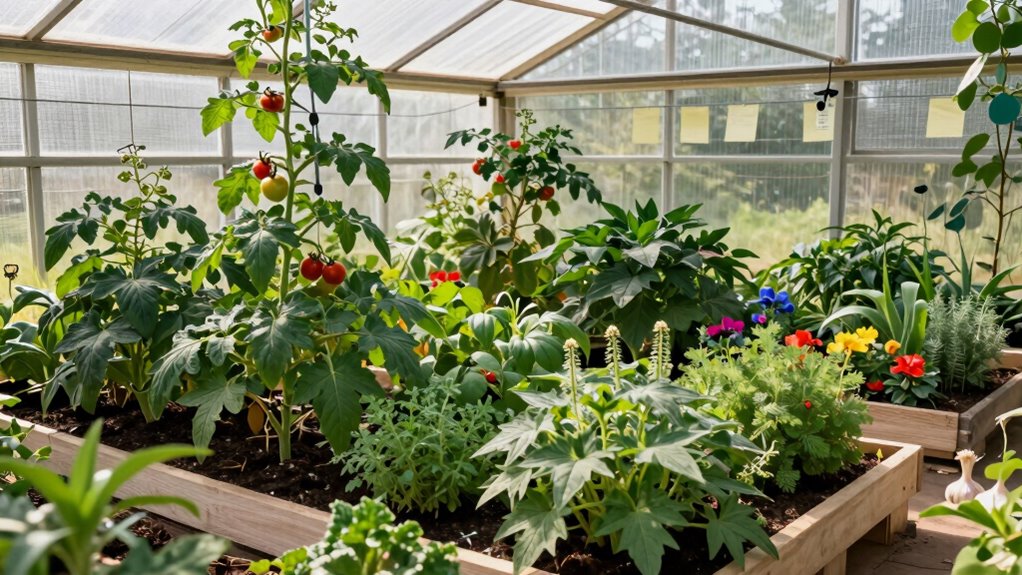
Greenhouses offer a controlled environment for plants, but they can also attract pests if you’re not careful. To keep unwanted critters at bay, it’s essential to create a habitat that’s less appealing to pests and more inviting to beneficial insects. One effective strategy is companion planting. By carefully choosing plant combinations, you can naturally deter pests while promoting healthy growth. For example, planting basil near tomatoes can repel whiteflies, and marigolds scattered throughout your greenhouse can discourage nematodes and aphids. These companion plants emit scents or chemicals that pests find unpleasant, reducing the need for chemical pesticides and fostering a balanced ecosystem.
Companion planting naturally deters pests and promotes healthy greenhouse growth.
Alongside companion planting, using natural repellents can markedly decrease pest pressure. Many herbs and flowers release strong aromas that pests dislike, making them excellent choices for your greenhouse. Consider planting mint, lavender, or neem around your crops. These natural repellents not only deter a range of pests but also add a pleasant fragrance to your growing space. You can also make homemade sprays using garlic, chili, or neem oil to apply directly to plants, creating an additional barrier against pests. Regularly rotating these repellents and keeping the greenhouse clean ensures pests don’t get comfortable or develop resistance. Incorporating biological control methods like beneficial insects can further enhance pest management strategies, helping to maintain a healthy balance. Understanding pest behavior can guide you in timing your interventions more effectively. Additionally, practicing proper environmental management can help reduce pest habitats and limit their spread. Maintaining optimal air circulation within the greenhouse is also crucial, as it helps prevent conditions that pests favor, such as damp and stagnant areas.
Maintaining proper sanitation is another key step in making your greenhouse less attractive to pests. Remove fallen leaves, plant debris, and weeds promptly, as these can serve as breeding grounds for insects. Ensure your watering practices don’t create overly damp conditions, which can attract fungus gnats and other pests. Keeping the environment dry and well-ventilated discourages many common greenhouse pests from establishing themselves. Additionally, inspecting plants regularly for early signs of pests allows you to act quickly before infestations become severe. Implementing integrated pest management strategies encourages a holistic approach to pest control, reducing reliance on chemical solutions and supporting biodiversity.
As an affiliate, we earn on qualifying purchases.
Frequently Asked Questions
How Do Pests Typically Find Their Way Into Greenhouses?
Pests usually find their way into your greenhouse through various pest entry points, like open vents, gaps, or damaged screens. They often hitch a ride on new plants, tools, or even on your clothing from nearby outdoor areas. To prevent this, inspect all potential pathways regularly, seal any gaps, and quarantine new plants. Being vigilant about greenhouse pest pathways helps keep pests from establishing a foothold inside.
Are There Natural Predators to Control Greenhouse Pests?
Imagine armies of tiny warriors battling pests—biological control uses predator species to fight off invaders naturally. Yes, there are natural predators, like ladybugs and predatory mites, that can keep pests in check. By introducing these beneficial predator species into your greenhouse, you harness nature’s own pest control system, reducing the need for chemicals and creating a balanced, healthier environment for your plants to thrive.
What Are Common Signs of Pest Infestation?
You’ll notice tiny holes, sticky residue, or webbing on leaves, which are signs of pest infestation. Keep an eye out for discolored or wilting plants too. Beneficial insects can help control pests naturally, reducing the need for chemicals. Additionally, planting pest-resistant plants can prevent infestations altogether. Regular inspection and early detection are key to managing pests effectively and keeping your greenhouse healthy and thriving.
How Often Should I Inspect My Greenhouse for Pests?
Think of your greenhouse as a fortress needing constant guard. You should inspect it at least once a week to catch pests early. Regular Pest prevention and Pest exclusion measures help keep invaders at bay and prevent infestations from gaining ground. Frequent checks allow you to spot issues before they spread, ensuring your plants stay healthy. Consistent inspections are your best armor against pests sneaking in unnoticed.
Can Certain Plants Attract More Pests Than Others?
Yes, certain plants attract more pests than others. To minimize this, you can use companion planting with pest-resistant varieties that deter pests naturally. Some plants, like marigolds and basil, repel specific pests, reducing overall attraction. Avoid planting highly susceptible species together, and instead, mix in pest-resistant varieties to create a natural barrier. This strategy helps keep your greenhouse healthier and less appealing to pests.
Conclusion
By taking these steps, you’re building a fortress that pests can’t easily breach. Think of your greenhouse as a garden’s castle, with strong walls and vigilant guards. Keep it clean, monitor regularly, and seal every tiny crack. When you act like a vigilant knight, pests will find it too tough to invade your lush sanctuary. Soon, your plants will thrive happily, safe within your well-defended green haven.
Fall Picks
fall essentials
As an affiliate, we earn on qualifying purchases.