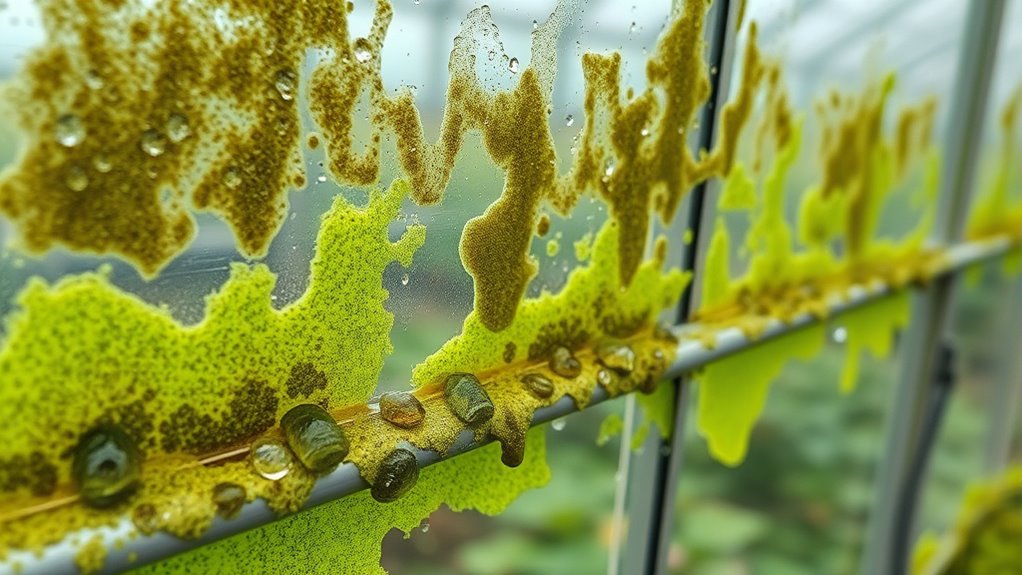

To keep your greenhouse surfaces clean and prevent mold and algae, regularly inspect and remove any visible growth. Start with thorough sanitation by cleaning surfaces to eliminate spores, then apply appropriate fungicides as needed, following instructions carefully. Maintain a dry, well-ventilated environment to discourage fungal development. Consistent environment management and surface maintenance help prevent outbreaks before they start. Stay with us to discover more effective strategies for maintaining a healthy, fungus-free greenhouse.
Key Takeaways
- Regularly inspect surfaces for mold and algae growth to enable early detection and prompt treatment.
- Clean surfaces thoroughly to remove existing mold, algae, and spores before applying fungicides.
- Use appropriate fungicides following manufacturer instructions to effectively suppress and prevent fungal growth.
- Manage environmental conditions, such as humidity and airflow, to create an inhospitable environment for fungi.
- Maintain a cleaning schedule and address issues promptly to prevent extensive contamination on porous surfaces.
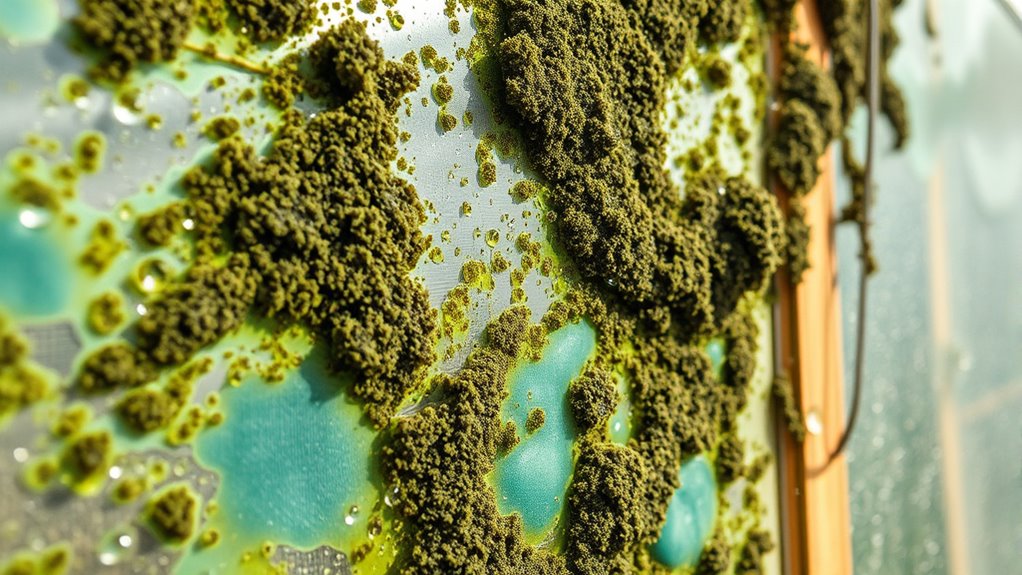
Fungus control isn’t just about cleaning; it’s about creating an inhospitable environment for these organisms. After surface sanitation, consider applying fungicides that are suitable for greenhouse use. These products can suppress existing mold and algae growth while preventing new colonies from forming. Always follow the manufacturer’s instructions carefully to avoid damaging your plants or harming beneficial microorganisms. Combining proper surface sanitation with targeted fungicide treatments ensures you stay ahead of potential problems, maintaining a clean and healthy growing space. Regularly inspecting surfaces for signs of growth and addressing issues promptly can also help prevent extensive contamination, especially on porous materials that can harbor spores for effective fungus control.
Frequently Asked Questions
How Often Should I Clean My Greenhouse Surfaces to Prevent Mold?
You should clean your greenhouse surfaces at least once a week to prevent mold buildup. Maintain a regular cleaning schedule and focus on high-touch areas and moist surfaces. Use a mild disinfectant to wipe down benches, shelves, and windows, ensuring proper surface maintenance. Consistent cleaning not only keeps mold at bay but also promotes a healthier environment for your plants. Stay vigilant with your cleaning routine for ideal greenhouse health.
Can DIY Solutions Effectively Eliminate Persistent Mold and Algae?
Yes, DIY solutions like homemade remedies and natural fungicides can effectively eliminate persistent mold and algae. You can make a solution with vinegar, baking soda, or hydrogen peroxide to treat affected surfaces. Apply these remedies regularly and thoroughly, ensuring you reach all mold-prone areas. While natural fungicides work well for minor infestations, severe cases might require stronger treatments or professional advice to fully eradicate the mold and algae.
Are There Eco-Friendly Products Safe for Delicate Greenhouse Plants?
Yes, eco-friendly products like biodegradable cleaners and plant-safe disinfectants are safe for your delicate greenhouse plants. You can use these solutions to clean surfaces without risking damage to your plants. They effectively eliminate mold and algae while being gentle and environmentally friendly. Always follow the manufacturer’s instructions, and test a small area first to verify compatibility. This way, you protect your plants and maintain a healthy greenhouse environment.
How Do Temperature and Humidity Levels Affect Mold Growth?
Think of your greenhouse like a delicate balance beam—when temperature and humidity levels get out of sync, mold can quickly take hold. High humidity creates a lush environment for mold spores to thrive, while fluctuating temperatures can weaken plant defenses. By practicing effective humidity control and temperature regulation, you keep mold at bay, ensuring your plants stay healthy and your greenhouse remains a thriving oasis of growth.
What Are the Signs That Mold or Algae Are Harming My Plants?
You’ll notice plant stress, like wilting or yellowing leaves, when mold or algae harm your plants. Surface discoloration, such as dark spots or fuzzy growths on leaves and surfaces, also signals trouble. These signs indicate that mold or algae may be blocking essential nutrients or moisture, weakening your plants’ health. Act quickly to clean affected areas and adjust your greenhouse environment to prevent further damage.
Conclusion
Now that you know how mold and algae can sneak onto your greenhouse surfaces, it’s essential to stay vigilant. A small oversight could lead to bigger problems down the line, threatening your plants’ health and your greenhouse’s integrity. Are you prepared to take the necessary steps to keep these unwanted visitors at bay? Remember, prevention is your best defense—don’t let mold and algae catch you off guard. Stay alert, and your greenhouse will thrive.