To prevent and remove snails and slugs in your greenhouse, look for signs like ragged leaves, slimy trails, and small holes. Practice companion planting with herbs and marigolds to deter pests naturally, and attract beneficial predators like beetles and nematodes. Regularly inspect plants and remove pests by hand at night. Setting bait traps with beer or yeast can also help. Implementing these eco-friendly strategies is key—there’s more to learn if you keep going.
Key Takeaways
- Implement companion planting with herbs and trap crops to repel or attract snails and slugs away from main plants.
- Promote natural predators like predatory beetles and nematodes to control pest populations organically.
- Regularly inspect plants and soil, removing snails and slugs by hand during evening hours for immediate relief.
- Use bait traps with beer or yeast near vulnerable plants to attract and trap pests effectively.
- Maintain a healthy, balanced greenhouse environment to support beneficial insects and reduce pest infestations naturally.

If you’ve noticed small holes in your greenhouse plants or slimy trails on the soil surface, chances are snails and slugs are to blame. These pests can quickly damage your plants, leaving ragged leaves and stunted growth. To combat them effectively, you should consider integrating companion planting and encouraging natural predators into your pest management plan. Companion planting involves growing certain plants alongside your vegetables or flowers that repel snails and slugs. For example, herbs like rosemary, thyme, and sage emit strong scents that these pests dislike, acting as a natural barrier. Marigolds and nasturtiums can also serve as trap crops, luring slugs away from your valuable plants. By strategically planting these companions, you create a less inviting environment for snails and slugs, reducing their numbers without resorting to chemical controls.
In addition to companion planting, fostering natural predators within your greenhouse offers a sustainable way to keep snail and slug populations in check. Predatory beetles, ground beetles, and certain nematodes feed on these pests and can considerably lower their numbers over time. Introducing or encouraging these beneficial insects creates a balanced ecosystem that naturally controls pests without harming your plants. You can attract these predators by providing habitats such as leaf litter or small piles of bark near the greenhouse. Avoid using broad-spectrum pesticides, which can kill both harmful pests and their beneficial predators. Instead, focus on creating an environment that supports these natural enemies, and they’ll do much of the work for you.
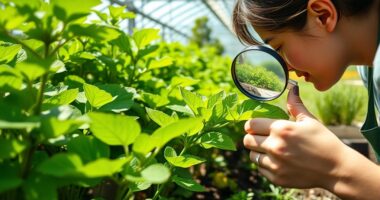
Regular inspection is also essential in preventing severe infestations. Check the undersides of leaves, soil surface, and hidden corners of your greenhouse daily. Removing slugs and snails by hand during evening hours, when they’re most active, can be effective and immediate. You might also set up shallow dishes filled with beer or a yeast solution near plants; snails and slugs find the bait irresistible and will crawl in, making it easier to remove them. Combining these physical removal methods with your companion planting and natural predator strategies creates an extensive approach that minimizes pest damage while promoting a healthy, eco-friendly environment.
Frequently Asked Questions
Are Snails and Slugs Harmful to All Greenhouse Plants?
Yes, snails and slugs can be harmful to all greenhouse plants because their pest behavior causes plant damage. They feed on leaves, stems, and roots, which weakens your plants and hampers growth. While some plants are more vulnerable, no plant is truly safe from their appetite. Regular monitoring and prevention help protect your greenhouse, ensuring your plants stay healthy and thrive without the threat of snail and slug damage.
What Environmental Conditions Attract Snails and Slugs Indoors?
You attract snails and slugs indoors when moisture levels are high, creating a damp environment they love. They also enter through small entry points like cracks, gaps around windows, and doorways. To prevent them, reduce excess moisture, fix any entry points, and keep your greenhouse dry. Removing debris and ensuring proper drainage discourages these pests from settling in, helping you protect your plants effectively.
Can Natural Predators Help Control Snail and Slug Populations?
You can indeed use natural predators to keep snail and slug populations in check, but they’re not a silver bullet. Introducing natural predators is a biological control method that can help, yet it’s like putting all your eggs in one basket. For best results, combine predator introduction with other control strategies. This way, you create a balanced ecosystem, reducing pests without relying solely on nature’s helpers.
How Often Should I Check for Snails and Slugs in My Greenhouse?
You should check your greenhouse for snails and slugs at least once a week. Regular monitoring helps you catch any pests early and maintain good garden hygiene, preventing infestations from spreading. During your inspection, look under pots, in corners, and around moist areas where these pests hide. Staying vigilant allows you to take prompt action, keeping your plants healthy and free from damage caused by snails and slugs.
Are Chemical Repellents Safe for Greenhouse Plants and Humans?
Chemical repellents can be safe if you choose products labeled for greenhouse use and follow the instructions carefully. You don’t want to risk your plants or human health—think of it as protecting your green sanctuary from a tiny invasion that’s more persistent than a marathon. Always check for chemical safety, wear protective gear, and ventilate well. When used responsibly, these repellents keep your greenhouse safe and thriving, not hazardous.
Conclusion
By staying vigilant and implementing these prevention tips, you’ll keep your greenhouse snail and slug problem under control. Remember, these pests can multiply faster than rabbits and cause chaos in your prized plants. Regularly inspect, maintain cleanliness, and set simple traps to catch them early. With consistent effort, you’ll be the hero saving your plants from these sneaky invaders. Don’t let snails and slugs turn your greenhouse into a battleground — take action now and enjoy thriving, pest-free plants!