To prevent spider mites before webbing appears, regularly inspect your plants, especially the undersides of leaves, for tiny specks or mottling. Keep plants healthy with proper watering, good soil aeration, and avoid overcrowding. Use natural repellents like neem oil or introduce beneficial insects such as ladybugs. Spot early signs—yellowing or stippling—and act quickly by removing affected leaves or applying organic treatments. Continuing this approach helps catch problems early before visible webbing shows up.

Get garden gear delivered free with Prime
- Fast, free delivery on millions of items
- Prime Video, Amazon Music and more included
- Member-only deals all year
Key Takeaways
- Regularly inspect leaves, especially undersides, for tiny specks or early signs of stippling.
- Maintain proper soil moisture and good air circulation to prevent mite-friendly conditions.
- Use natural repellents like neem oil or garlic spray proactively to deter spider mite infestations.
- Keep plants healthy with proper watering, fertilization, and pruning to strengthen defenses.
- Introduce beneficial predators such as ladybugs or predatory mites as a biological control measure.
As an affiliate, we earn on qualifying purchases.
What Are Spider Mites and Why Are They a Threat to Your Plants?
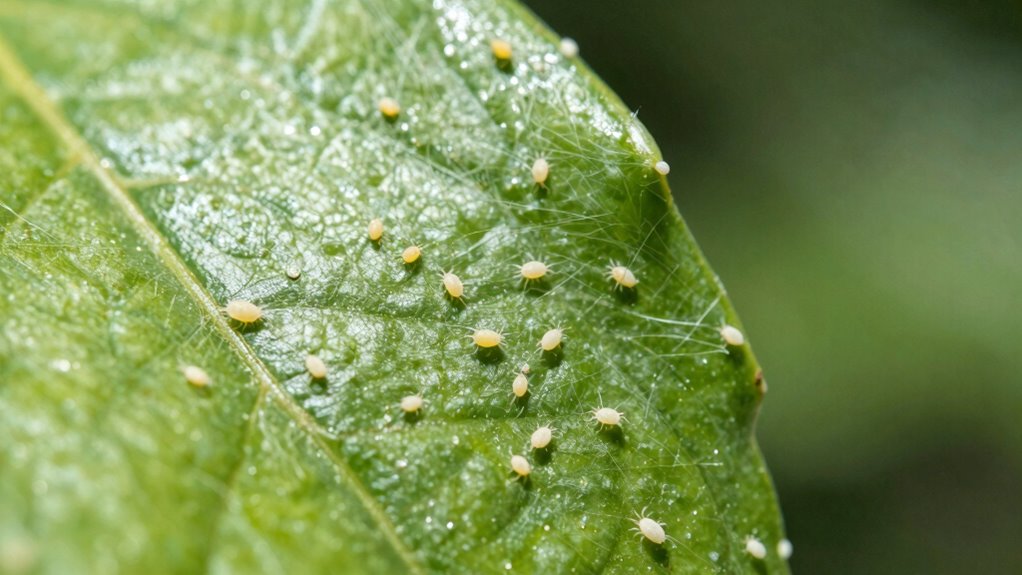
Spider mites are tiny pests that can quickly damage your plants if left unchecked. They feed on plant sap, which disrupts plant nutrition and weakens growth. When these pests infest, they pierce the plant’s tissues, causing yellowing and stippling on leaves. Poor soil aeration often worsens the problem because compacted soil limits root health, making plants more vulnerable to pests like spider mites. Healthy, well-aerated soil helps plants resist infestations by strengthening their natural defenses. These mites thrive in hot, dry environments, and their rapid reproduction can lead to exponential damage. Recognizing early signs of infestation and maintaining good soil aeration are key to preventing spider mite problems and ensuring your plants stay strong and healthy. Additionally, using proper watering techniques can help create an inhospitable environment for spider mites and support overall plant resilience.
What Environment Attracts Spider Mites?
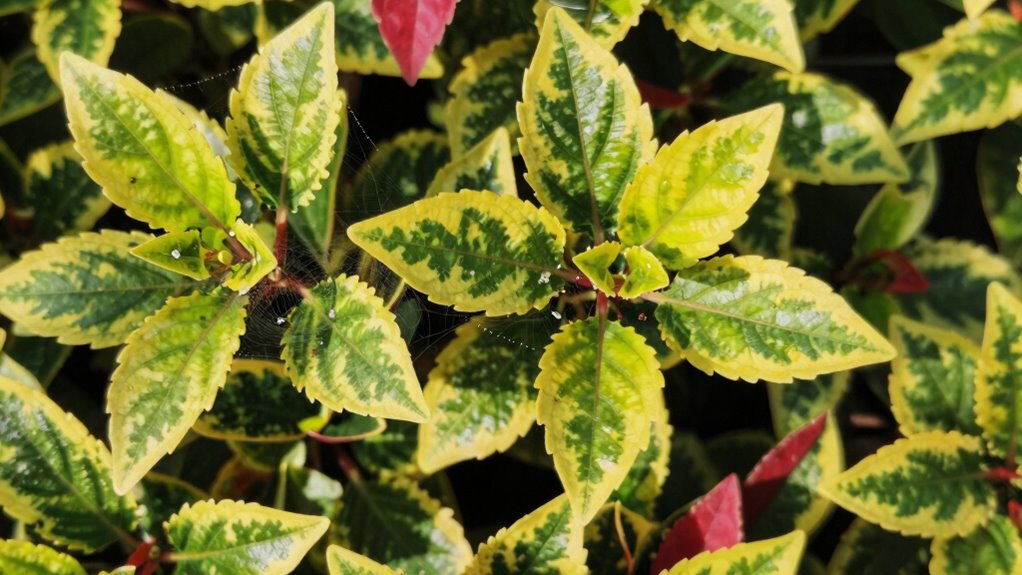
Warm, dry conditions create the perfect environment for spider mites to thrive. Low soil moisture can stress plants, making them more vulnerable to infestations. When soil is too dry, plants weaken, and spider mites are attracted to their stressed foliage. Good air circulation is equally important, as stagnant air creates a humid microclimate that spider mites dislike, but poor airflow can trap heat and humidity around plants, encouraging mite populations to grow. If your plants are in enclosed or crowded spaces with limited airflow, you’re more likely to see spider mites taking hold. Keep humidity balanced and ensure proper air movement around your plants to make your environment less inviting for these pests. Proper watering and spacing can help prevent mite infestations before they start. Additionally, monitoring environmental factors and maintaining optimal conditions can prevent infestations more effectively.
Which Plants Are Most Susceptible to Spider Mite Infestations?

Tender leafy greens are prime targets for spider mites, especially when kept in warm, dry conditions. Fruit trees can also become heavily infested, often showing tiny specks on leaves and fruit. Indoor plants are at risk too, particularly if they’re stressed or lack proper humidity. Proper brewing methods can help maintain healthy plants by avoiding overly dry environments that attract pests.
Tender Leafy Greens
If you’re growing leafy greens, certain varieties are more vulnerable to spider mite infestations. Spinach, lettuce, and Swiss chard are prime targets, especially in dry, warm conditions. To protect these tender greens, consider companion planting with herbs like marigolds or basil, which act as natural repellents. These plants help deter spider mites and reduce the need for chemical controls. Additionally, using natural repellents such as neem oil or insecticidal soaps can further safeguard your greens. Keep your plants healthy and well-watered, as stressed leaves attract pests more easily. Regular inspection is key, so check your greens often for signs of trouble before webbing appears. Early prevention is your best defense against a full-blown infestation.
Fruit Tree Vulnerability
Certain fruit trees are more prone to spider mite infestations, especially those with thin, tender leaves that provide an ideal environment for mites to thrive. These trees often have weaker pest resistance, making them more vulnerable. Poor soil health can exacerbate this vulnerability, as nutrient-deficient soil weakens the tree’s overall defenses. Maintaining healthy soil through proper composting and fertilization boosts the tree’s resilience against mites. Additionally, stressed trees with compromised pest resistance are more likely to develop infestations quickly. Regular inspections, especially during dry, warm conditions, help catch problems early. Choosing hardy varieties and improving soil health are key to reducing the risk of spider mite attacks on your fruit trees. Proper soil management can significantly enhance the plant’s natural defenses against pests.
Indoor Plant Risks
Indoor plants with fine, hairy, or soft foliage are especially vulnerable to spider mite infestations because these characteristics make it easier for mites to cling and feed. These plants often struggle with inadequate plant nutrition, which weakens their defenses against pests. To minimize risk, focus on pest prevention through proper care. Incorporating color accuracy in your plant lighting can help maintain healthy, vibrant foliage that is less attractive to pests. Consider these vulnerable plants:
- Fiddle Leaf Fig – its tender leaves attract spider mites more easily.
- Peace Lily – soft foliage provides a perfect feeding ground.
- Spider Plant – its fine, thin leaves are ideal for mite attachment.
Maintaining ideal plant nutrition strengthens your plants, making them less attractive to pests. Regular inspection and ensuring proper watering and fertilization help prevent infestations before they start.
How to Recognize the Early Signs of Spider Mites Before Webbing Appears

Keep an eye out for tiny spotting on your leaves, which can be an early sign of spider mites. You might also notice leaf damage or subtle discoloration before webbing appears. Sometimes, sticky residue on your plants hints that mites are beginning to infest. Additionally, being aware of free floating mite populations can help you identify infestations early before they become severe.
Tiny Spotting Signs
Before spider mites start weaving their webbing, they often reveal themselves through tiny, almost imperceptible spots on your plants. These spots are early warning signs that pest activity has begun. Look closely at your plant’s leaves; the first signs may include:
- Small, speckled discolorations, often yellow or bronze, indicating compromised plant nutrition.
- Fine, stippled spots on leaf surfaces, where mites feed on plant cells.
- Slight mottling or uneven color, suggesting soil aeration issues that weaken plants and make them more vulnerable.
- Regular inspection and integrated pest management strategies can help catch these signs early and prevent full infestations.
These tiny spots are easy to miss but vital for early detection. Improving soil aeration and ensuring proper plant nutrition can help prevent infestations before webbing appears. Stay vigilant and inspect your plants regularly.
Leaf Damage Indicators
Spotting early leaf damage is one of the best ways to catch spider mite infestations before they develop into full-blown webbing. Look for foliage discoloration, which often appears as tiny yellow or bronze spots on the leaves. These spots are early signs that spider mites are feeding on your plants. Additionally, you might notice leaf curling or distortion, as the mites damage the plant’s tissue. This curling usually starts at the edges and becomes more pronounced over time. If you observe these symptoms, act quickly to inspect your plants closely. Early detection allows you to address the problem before the mites multiply and webbing appears. Recognizing these leaf damage indicators is essential for effective, proactive pest management. Understanding visual damage signs can help you identify infestations even before webbing becomes visible.
Sticky Residue Clues
Have you noticed a thin, sticky residue on your plant’s leaves or stems? That’s often an early sign of spider mite infestation. This sticky residue is caused by the mites’ feeding, which releases plant stress and causes a buildup of sap and mite excrement. Recognizing this residue can help you catch trouble early before webbing appears. Additionally, inspecting your plants regularly and understanding their clean-home systems can aid in early detection and prevention.
Here are some clues to look for:
- A shiny, sticky film coating the leaves or stems, especially on the undersides.
- Leaves feeling tacky or greasy to the touch.
- A dull or discolored appearance, indicating plant stress due to mite activity.
Paying attention to sticky residue can save your plant from further damage and help you take swift action.
How to Inspect Your Plants for Spider Mites and Other Early Symptoms
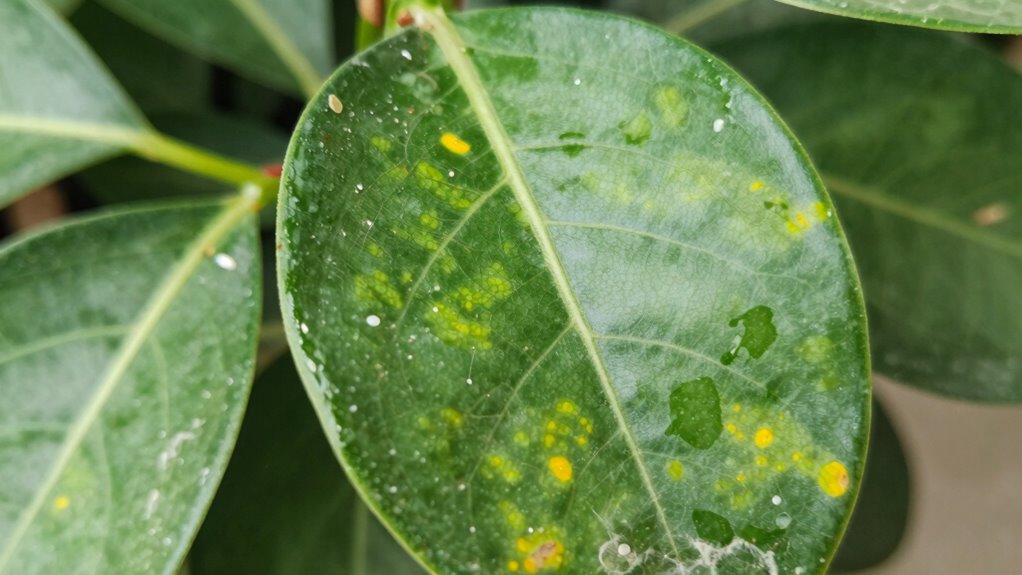
Inspecting your plants regularly is essential for catching spider mites and other early symptoms of infestation. Use thorough inspection techniques by examining both the tops and undersides of leaves, where mites often hide. Look for tiny specks, lighter-colored spots, or a fine webbing that might indicate early trouble. Gently shake or tap leaves over a white piece of paper to dislodge pests, making pest identification easier. Pay close attention to stressed or damaged areas, as spider mites tend to concentrate there. Consistent inspections allow you to spot problems early, before infestations become severe. By staying vigilant and familiar with what spider mites and their early signs look like, you can act quickly to prevent widespread damage. Understanding the history of pinball machines can also remind us of how long pests have been a challenge in various environments, emphasizing the importance of early detection.
How to Tell Spider Mites Apart From Other Pests

Since many pests can cause similar symptoms on your plants, learning to distinguish spider mites from other common pests is essential. Proper pest identification helps you address the problem effectively and maintain plant health. To tell spider mites apart, look for these clues:
- Appearance: Spider mites are tiny, often less than 1mm, with eight legs and sometimes visible moving specks on leaves.
- Damage Signs: They cause stippling or speckled discoloration, unlike larger pests that chew or tunnel into leaves.
- Webbing: Fine silk webbing near leaf undersides is a hallmark of spider mite activity, not typical for other pests.
Recognizing these features ensures you target the right pest early, protecting your plants’ health.
Preventive Measures to Keep Spider Mites Away Naturally
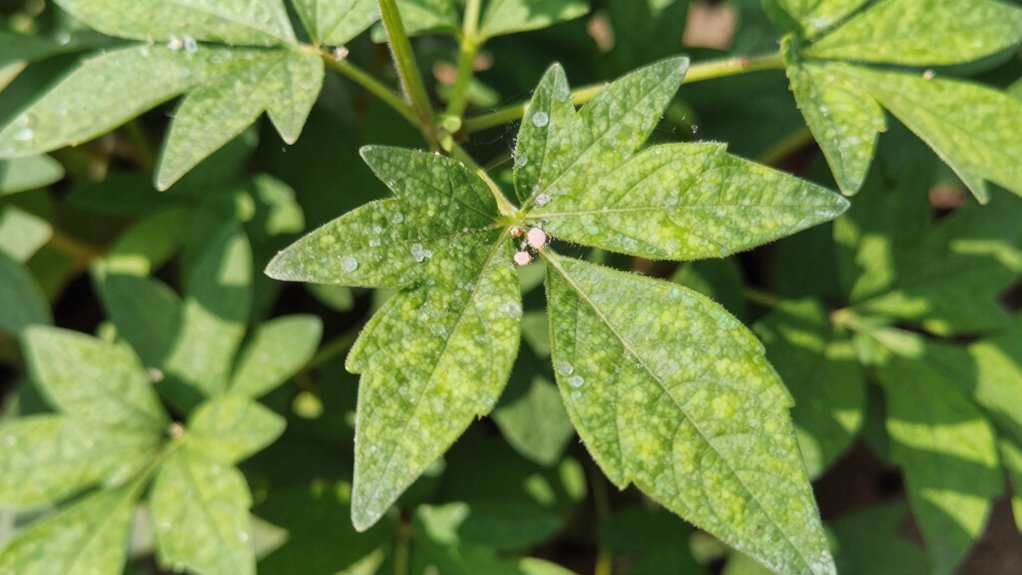
To prevent spider mites naturally, maintaining a healthy and balanced environment for your plants is essential. You can do this through companion planting, which involves growing certain plants together to deter pests. For example, marigolds and basil repel spider mites and other harmful insects, creating a natural barrier around your garden. Additionally, using natural repellents like neem oil or garlic spray can help keep mites at bay before they become a problem. Regularly inspect your plants and remove any heavily infested leaves promptly. Keep humidity levels moderate and avoid over-fertilizing, as lush growth attracts pests. Combining these practices helps create an inhospitable environment for spider mites, reducing the likelihood of an infestation without relying on chemical treatments.
Using Organic Remedies to Address Early Signs of Spider Mites
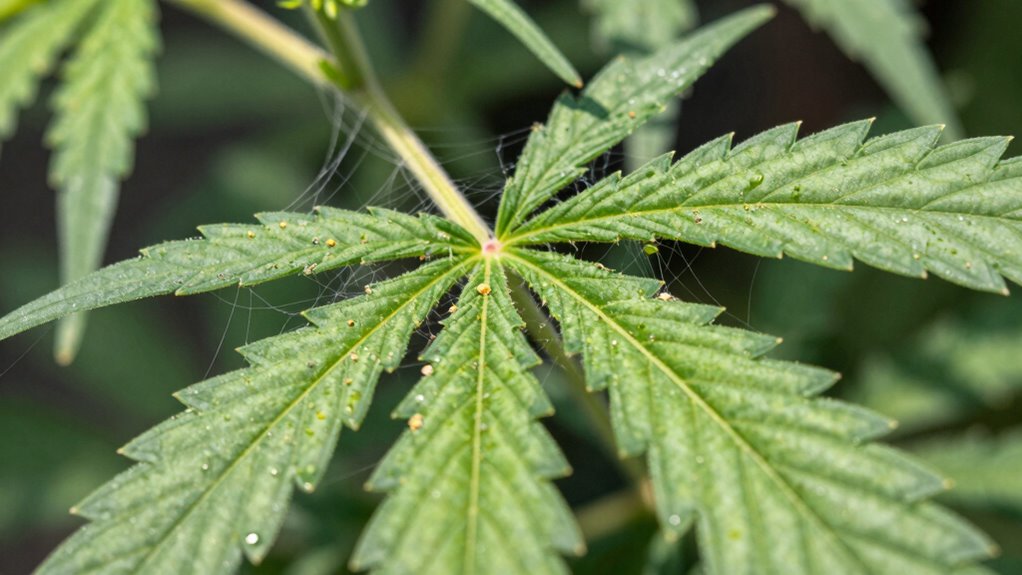
When you notice early signs of spider mites, acting quickly with organic remedies can prevent a full-blown infestation. Here are effective approaches:
- Release natural predators like ladybugs or predatory mites to keep spider mite numbers in check.
- Use insecticidal soap or neem oil spray directly on affected leaves, ensuring thorough coverage to dislodge mites.
- Incorporate companion planting by adding marigolds or garlic near your plants, which naturally repel spider mites and attract beneficial insects.
These methods work together to create a balanced ecosystem. Natural predators help control pests organically, while companion planting enhances your defenses without chemicals. Regularly monitor your plants and apply these remedies at the first sign of trouble to keep spider mites at bay. Acting early with organic solutions is your best strategy to maintain healthy, pest-free plants.
What Actions Should You Take When You See Symptoms but No Webbing Yet?

Noticing early symptoms of spider mite damage without webbing can be unsettling, but it’s a crucial moment to act before the infestation worsens. Start by inspecting your plants closely to identify affected areas. Adjust your watering schedule to promote healthy plant nutrition, which helps plants resist pests. Ensuring proper hydration keeps leaves vigorous and less vulnerable. Use a gentle stream of water to dislodge mites from the undersides of leaves. Consider natural predators or organic insecticidal soaps if needed.
| Action | Purpose |
|---|---|
| Improve plant nutrition | Strengthens plant defenses against mites |
| Adjust watering schedule | Maintains healthy, resilient foliage |
| Manual removal | Reduces mite population physically |
| Use organic insecticides | Targets early mite presence effectively |
Frequently Asked Questions
How Quickly Can Spider Mite Populations Grow on Affected Plants?
Spider mite populations can grow rapidly, leading to a swift population explosion on affected plants. Under ideal conditions, such as warm temperatures and dry air, they can reproduce every 3 to 5 days. This means a small infestation can turn into a rapid infestation in just a week or two. It’s essential to act quickly once you notice signs of spider mites to prevent their population from spiraling out of control.
Are Spider Mites Harmful to Indoor Versus Outdoor Plants Differently?
Indoor plants often suffer more from spider mites than outdoor ones because they’re less resilient and more susceptible to damage. While outdoor plants can sometimes withstand natural predators, indoor plants lack these defenses, making pesticide effects more critical. You need to monitor plant susceptibility closely, as indoor environments can accelerate mite infestations. Regular inspection and careful pesticide use help protect your indoor greenery without unintended harm.
Can Natural Predators Control Spider Mite Infestations Effectively?
Yes, natural predators can effectively control spider mite infestations. Biological control involves introducing predator insects like ladybugs or predatory mites, which target spider mites specifically. You need to guarantee predator effectiveness by releasing them early and in proper numbers. This eco-friendly approach reduces chemical use and keeps your plants healthy. Regular monitoring helps confirm predator activity, making biological control a sustainable way to manage spider mite populations.
What Are the Best Environmental Adjustments to Prevent Spider Mite Outbreaks?
To prevent spider mite outbreaks, focus on fostering favorable environments by managing moisture and maximizing movement. Maintain humidity control to keep conditions less appealing for mites while ensuring good air circulation reduces stagnant spots that attract them. Regularly inspect plants, prune overcrowded foliage, and avoid dry, dusty conditions. These environmental adjustments create a hostile habitat for spider mites, helping you keep your plants healthy and pest-free.
How Often Should I Inspect My Plants for Early Signs of Spider Mites?
You should inspect your plants weekly to catch early signs of spider mites. Regular plant care and pest prevention are key, so make it a habit to closely examine the undersides of leaves and new growth. Look for tiny specks, webbing, or discoloration. Being vigilant helps you spot problems early, making it easier to treat infestations before they become severe. Consistent inspections are your best defense against spider mites.
Conclusion
By staying vigilant and catching spider mites early, you can nip problems in the bud before they get out of hand. Regular inspections and preventive measures are your best defense—think of it as hitting two birds with one stone. Don’t wait until the webbing appears; act now to protect your plants and keep them healthy. Remember, an ounce of prevention is worth a pound of cure—stay proactive and your plants will thank you!
Fall yard work Picks
leaf blowers
As an affiliate, we earn on qualifying purchases.