
To support faster growth without pushing your plants too hard, focus on maintaining healthy soil with good aeration and organic matter like compost. Carefully prune roots to encourage strong development and prevent root-bound issues. Water moderately, keeping soil moist but not soaked, and use organic fertilizers sparingly. Prioritize creating a balanced environment that promotes steady growth and resilience, rather than rushing it. For more tips on nurturing healthy plants without overdoing it, keep exploring these essential practices.

Get garden gear delivered free with Prime
- Fast, free delivery on millions of items
- Prime Video, Amazon Music and more included
- Member-only deals all year
Key Takeaways
- Ensure proper soil aeration to promote oxygen access and healthy root development.
- Regularly prune roots to prevent tangling and stimulate robust growth.
- Maintain balanced, nutrient-rich soil with organic amendments for steady plant health.
- Water consistently, avoiding overwatering or underwatering, to keep roots moist but not waterlogged.
- Support sustainable growth by creating a healthy environment rather than excessive fertilization or light.

If you want your plants to grow faster, it’s tempting to push them with extra fertilizer or intense light, but doing so can do more harm than good. Instead, focus on creating a healthy environment that encourages steady, sustainable growth. One of the key factors is ensuring proper soil aeration. When soil is compacted, roots can’t access oxygen effectively, which slows down their growth and hampers nutrient uptake. You can improve soil aeration by gently loosening the soil around your plants or incorporating organic matter like compost or perlite. These additions help create tiny air pockets, giving roots the oxygen they need to thrive. Good aeration also prevents waterlogging, which can lead to root rot and weaken your plants over time. Additionally, avoiding over-fertilization is crucial, as excess nutrients can disrupt soil balance and harm plant health.
Proper soil aeration promotes healthy roots, prevents waterlogging, and supports sustainable plant growth.
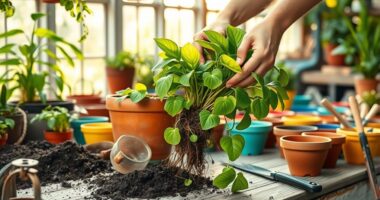
Another technique to support healthy root development is root pruning. It sounds counterintuitive, but carefully trimming the roots can stimulate new, stronger growth. When you prune roots, you encourage the plant to develop a more extensive and efficient root system, which in turn supports faster overall growth. It’s best to do this during the plant’s dormant period or when repotting. Use clean, sharp tools to cut dead or overly tangled roots, and avoid removing more than a third of the root mass at once. After pruning, give your plant some time to recover, and make sure to water it thoroughly. This process not only promotes healthier roots but also prevents the plant from becoming root-bound in containers. Additionally, proper soil management is essential for maintaining healthy roots and encouraging growth. Maintaining a balanced and nutrient-rich environment can also enhance soil health, further supporting root development. Moreover, integrating soil aeration techniques can significantly improve root access to oxygen and nutrients.
Beyond soil aeration and root pruning, you should also pay attention to watering habits and soil health. Overwatering can drown roots and create anaerobic conditions, while underwatering stresses the plant and stunts growth. Aim for a balance, keeping the soil moist but not soaked. Regularly check soil moisture levels and adjust watering accordingly. Using organic fertilizers in moderation can also promote steady growth without overwhelming the plant’s delicate root system. Avoid the temptation to constantly feed your plants with high doses of fertilizer, as this can lead to salt buildup and damage roots. Additionally, maintaining soil health through organic practices supports the overall biodiversity of your garden, leading to healthier, more resilient plants.
As an affiliate, we earn on qualifying purchases.
Frequently Asked Questions
What Are Signs of Overfeeding Plants?
If you notice your plants developing yellowing leaves, curled edges, or stunted growth, you might be overfeeding them. These are signs of nutrient imbalance, often caused by excess fertilizer. Overfeeding can also harm root health, leading to root burn or rot. To prevent this, monitor your feeding schedule carefully, use balanced nutrients, and observe your plants closely. Proper feeding encourages healthy growth without risking damage.
How Often Should I Check Soil Nutrient Levels?
Ever wonder if you’re giving your plants just the right nutrients? You should check soil nutrient levels every 2 to 4 weeks using soil testing kits. Regular testing helps you fine-tune your nutrient management, preventing deficiencies or overfeeding. Consistent monitoring ensures your plants grow strong without stress. By staying on top of soil health, you support ideal growth and healthy development—making your gardening efforts truly rewarding.
Can Growth Stimulants Harm My Plants?
Growth stimulants, like plant hormone applications and organic growth boosters, can harm your plants if overused or applied incorrectly. They may cause excessive or uneven growth, stress, or nutrient imbalances. Always follow package instructions and consider using organic options carefully. Moderation is key—using these stimulants responsibly helps promote healthy, faster growth without risking damage, ensuring your plants thrive without unnecessary stress.
What’s the Best Way to Balance Light and Nutrients?
Balancing light and nutrients is like mastering a symphony—you need perfect timing and attention. You should optimize light management by providing consistent, adequate light without overexposure. Simultaneously, fine-tune nutrient timing, feeding plants just before their peak growth phases, not excessively. This harmony guarantees rapid growth without overstressing your plants, keeping them healthy and vigorous. Remember, less is often more—listen to your plants’ cues and adjust accordingly.
How Do Environmental Factors Influence Growth Speed?
Environmental factors like climate considerations and soil composition directly influence your plants’ growth speed. Warmer temperatures and adequate humidity speed up development, while poor soil can stunt growth. Ensuring your plants are in a climate suitable for their species and enriching the soil with proper nutrients help promote faster growth without stress. Regularly monitor these factors, making adjustments as needed to maintain ideal conditions for healthy, rapid growth.
Conclusion
By nurturing your plants with patience and care, you can encourage rapid growth without overwhelming them. Remember, overdoing it can turn your thriving garden into a fragile illusion, easily shattered. Balance is key—provide proper nutrients, water, and light, but listen to your plants’ signals. With this gentle approach, you’ll see your garden flourish faster than you ever imagined—like a wildfire of green energy, unstoppable and awe-inspiring. Keep nurturing, and success will follow.
Columbus Day / Indigenous Peoples' Day Picks
long weekend sales
As an affiliate, we earn on qualifying purchases.