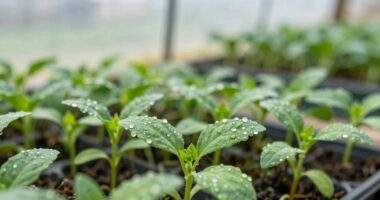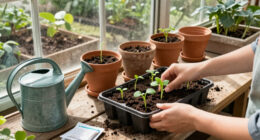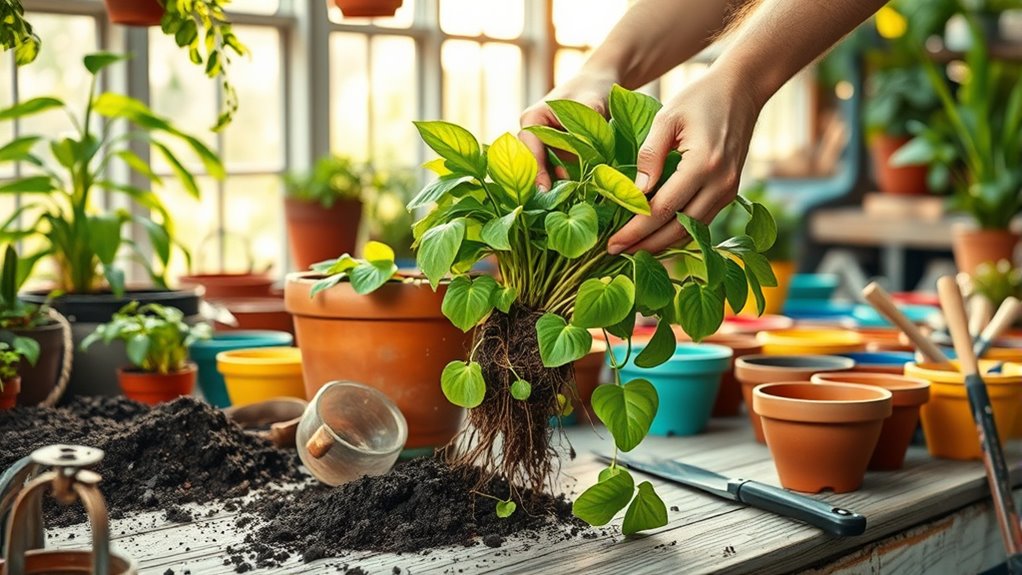

To guarantee healthy growth, choose a high-quality, well-draining potting mix suited to your plants, and select containers with appropriate drainage holes and sizes 1-2 inches larger than your current pots. Clean and disinfect containers before reuse, carefully remove plants, and position them so roots sit slightly below the rim. Fill with prepared soil, firm gently, and water thoroughly. For detailed tips to master potting and repotting, continue exploring these best practices.

Get garden gear delivered free with Prime
- Fast, free delivery on millions of items
- Prime Video, Amazon Music and more included
- Member-only deals all year
Key Takeaways
- Select a container with proper drainage and slightly larger than the current pot to prevent over-crowding.
- Use high-quality, well-draining soil tailored to the specific plant’s needs for optimal growth.
- Carefully remove plants, loosen roots, and position them slightly below the container rim during repotting.
- Thoroughly clean containers before reuse to prevent disease and pest transfer.
- Gently firm soil around roots, ensuring proper stability and drainage for healthy root development.

Whether you’re welcoming a new plant into your home or giving an established one a fresh start, potting and repotting are vital tasks for healthy growth. The first step involves soil preparation, which is essential for providing the right environment for your plant’s roots. You want to choose a high-quality potting mix that offers good drainage while retaining enough moisture. Avoid garden soil, as it can be too heavy or contain pests and diseases. Instead, opt for a mix tailored to your plant’s needs, whether it’s cacti, tropicals, or herbs. You can enhance the mix by adding perlite or bark to improve aeration and drainage, ensuring the roots don’t sit in water, which can cause rot.
Container selection is equally important. When choosing a pot, consider the size, material, and drainage capabilities. A container that’s too small can restrict root growth, while one too large might retain excess moisture, leading to problems like root rot. For most plants, select a pot that’s one to two inches larger in diameter than the current container. Ensure it has drainage holes at the bottom to facilitate excess water escape. Materials like terracotta or ceramic are porous, helping to wick moisture away from roots, but they can also dry out faster. Plastic or resin pots retain moisture longer, which is beneficial for plants that prefer consistent soil moisture. Whatever material you choose, make sure the container is stable and free of cracks or damage.
Before potting or repotting, clean the container thoroughly to prevent disease transmission. If reusing a pot, scrub it with soap and water, then rinse well. Once your container is ready, carefully remove the plant from its current pot, gently loosening the root ball if it’s densely packed. Position the plant in the new container so that the top of the root ball sits slightly below the rim, allowing space for watering. Fill around the roots with your prepared soil mix, gently firming it to eliminate air pockets. Proper soil preparation and thoughtful container selection set the foundation for your plant’s success, helping it establish quickly and thrive in its new environment.
Frequently Asked Questions
How Often Should I Repot My Plants for Optimal Growth?
You should repot your plants based on their size and growth rate, typically every one to two years. Timing considerations are important; do it in early spring or when your plant outgrows its current container. If roots are circling the surface or pressing against the sides, it’s a sign you need to repot. Regular repotting fosters healthy growth, prevents root binding, and ensures your plant has enough space to thrive.
What Are Signs That a Plant Needs Repotting?
Imagine your plant struggling to thrive—signs like root crowding and soil compaction tell you it’s time to repot. When roots circle the pot’s edges or soil feels dense and hard, your plant needs more space and fresh soil. These indicators show growth is stunted, and it’s ready for a larger container. Don’t ignore these signals; timely repotting encourages healthy roots and vibrant growth.
Can I Reuse Potting Soil From Previous Plants?
You can reuse potting soil from previous plants, but you should first sterilize it to eliminate pests and diseases. Spread the soil in a thin layer and bake it at 180°F for 30 minutes or use a microwave. Verify your container has proper drainage to prevent waterlogging. Reusing soil saves resources, but always check for signs of compaction or nutrient depletion, and refresh with compost if needed.
What Tools Are Essential for Repotting Process?
Your repotting toolkit is your secret weapon—without it, you’re just a gardener lost in a jungle! Essential tools include garden trowels for digging and transplanting, and drainage tools to guarantee proper soil aeration. These tools help you handle plants gently, prevent root damage, and create the perfect environment for growth. Keep them handy, and your repotting process becomes smooth, efficient, and almost effortless.
How Do I Prevent Root Rot During Repotting?
To prevent root rot during repotting, you should focus on improving soil drainage and adjusting your watering frequency. Use well-draining soil mixes to avoid waterlogged roots and water only when the top inch of soil feels dry. Ensuring proper drainage helps roots breathe and prevents excess moisture buildup, which is key to avoiding root rot. Regularly monitoring your plants’ watering needs also keeps them healthy and resilient.
Conclusion
Now, imagine your plants nestled comfortably in fresh soil, their roots reaching out enthusiastically, basking in the renewed energy of their new home. With each potting and repotting session, you’re giving them a fresh start—like planting seeds of growth and vitality. Feel the satisfaction as your green friends thrive, their leaves dancing in sunlight. With these best practices, you’ll create a vibrant, flourishing oasis that’s a true reflection of your care and attention.
Fall Picks
fall essentials
As an affiliate, we earn on qualifying purchases.