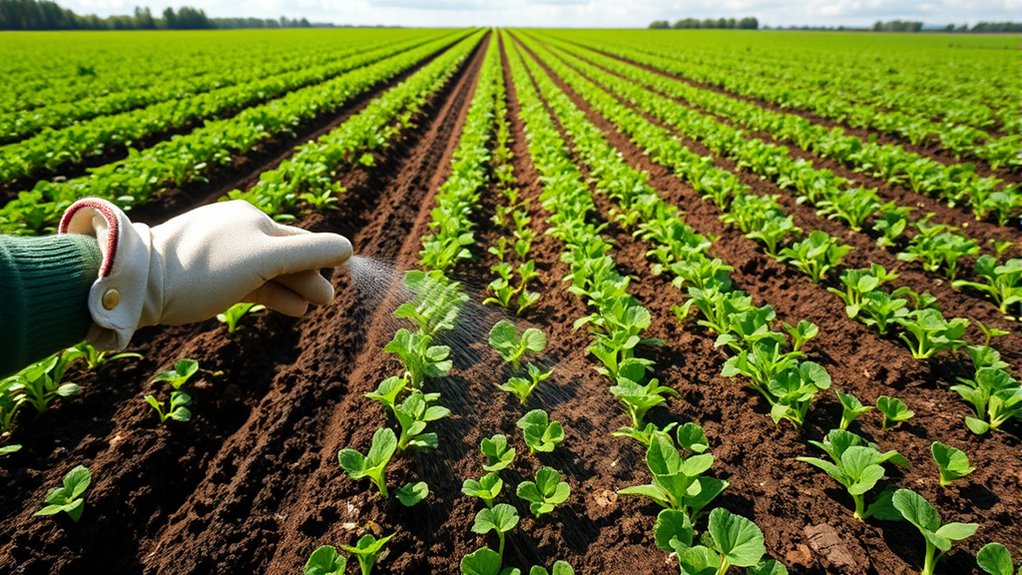

To support soil health under cover, focus on a well-planned crop rotation schedule that alternates legumes with nutrient-consuming crops, replenishing soil nutrients naturally. Incorporate cover crops like clover or rye to protect against erosion, improve soil structure, and boost microbial activity. Proper bed care, including avoiding compaction and managing residues, enhances these benefits. Continuing to explore these strategies reveals how they work together to maintain fertile, resilient soil for sustainable growth.

Get garden gear delivered free with Prime
- Fast, free delivery on millions of items
- Prime Video, Amazon Music and more included
- Member-only deals all year
Key Takeaways
- Implement crop rotation to prevent nutrient depletion and maintain soil fertility over time.
- Use cover crops like clover and rye to protect soil from erosion and improve structure.
- Incorporate nitrogen-fixing crops to naturally boost soil nutrient levels for subsequent plantings.
- Schedule planting and bed care practices to align with crop cycles, enhancing soil vitality.
- Regularly add organic matter and manage soil compaction to sustain healthy, resilient beds.
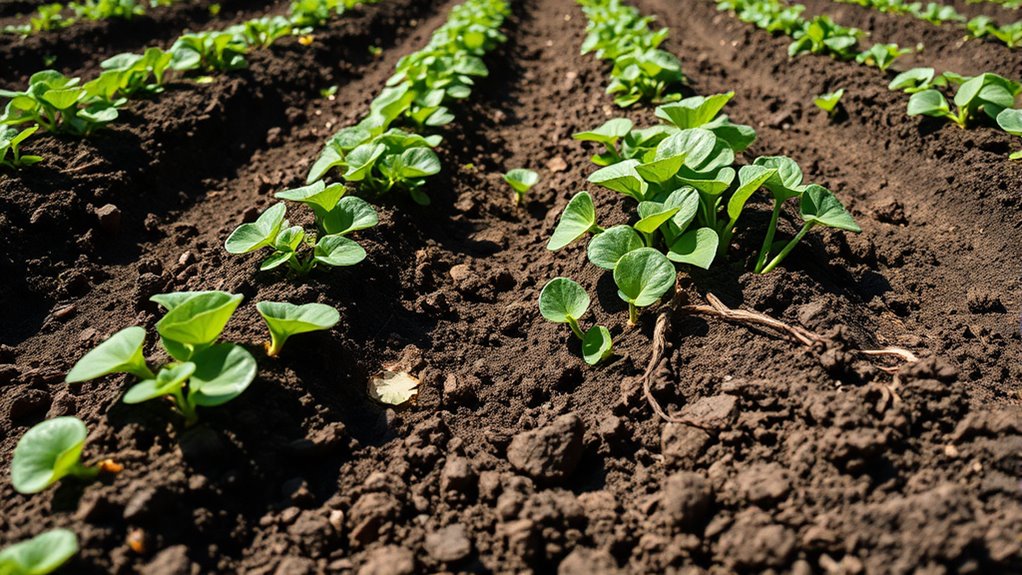
Have you ever wondered how farmers keep their soil healthy and productive year after year? One key method they use is crop rotation, which involves scheduling different crops to grow in the same field over time. This practice offers numerous cover crop benefits, helping maintain soil vitality and reduce the need for chemical inputs. By carefully planning rotation scheduling, farmers guarantee that each crop’s specific needs are met and that the soil remains fertile and resilient.
Cover crop benefits are substantial. When you plant cover crops such as clover, vetch, or rye, you protect the soil from erosion, suppress weeds, and improve its structure. These crops help break pest and disease cycles, creating a natural barrier that minimizes the reliance on pesticides. Additionally, cover crops add organic matter to the soil as they decompose, boosting microbial activity and nutrient availability. This organic matter increases the soil’s capacity to retain moisture, which is essential during dry spells, and enhances aeration, promoting healthy root development. Incorporating soil health practices like cover cropping can lead to long-term sustainability and improved crop yields. Maintaining soil fertility is crucial for supporting healthy plant growth and ensuring consistent harvests.
Implementing effective rotation scheduling is essential to maximizing these benefits. You want to alternate between crops that fix nitrogen, like legumes, and those that consume it, such as grains. This approach prevents nutrient depletion and maintains a balanced soil profile. For instance, planting a nitrogen-fixing cover crop after a heavy-feeding crop like corn can replenish essential nutrients, reducing the need for synthetic fertilizers. Proper scheduling also involves timing the planting and termination of cover crops to fit your crop cycle, ensuring that each crop’s growth stage aligns with soil health goals. Moreover, integrating crop diversity into rotation planning can further strengthen soil resilience and pest management. Adding crop rotation practices can also improve soil structure and reduce compaction over time, creating better conditions for roots to grow. Recognizing the importance of payment security and adopting modern payment systems can further support farmers in maintaining sustainable practices and financial stability.
Frequently Asked Questions
How Often Should Crop Rotation Be Changed for Optimal Soil Health?
You might wonder about crop rotation frequency and its impact on soil health. Typically, changing crops every 3 to 4 years helps maintain soil vitality, prevents pest buildup, and reduces disease risks. By rotating crops regularly, you guarantee nutrients are balanced and soil structure improves. Staying consistent with this schedule maximizes soil health benefits, keeping your land productive and resilient over time.
What Cover Crops Are Best Suited for Specific Soil Types?
You might think choosing cover crops is straightforward, but selecting the right ones depends on your soil type. For sandy soils, legumes like clover boost soil nitrogen, while for clay soils, deep-rooted cover crops like radishes improve drainage and aeration. Proper cover crop selection enhances soil health by addressing specific needs, ensuring your soil stays fertile and resilient. Tailoring your choices helps you maximize benefits for your unique soil conditions.
How Does Bed Care Influence Long-Term Crop Yield?
You can boost long-term crop yield by paying attention to bed care, as it directly impacts soil structure and microbial diversity. Proper bed maintenance improves aeration, drainage, and nutrient availability, creating a healthy environment for roots. When you regularly care for your beds, you foster beneficial microbial activity, which enhances soil fertility and resilience. This sustainable approach ultimately leads to higher, more consistent crop yields over time.
Can Cover Crops Eliminate the Need for Chemical Fertilizers?
You wonder if cover crops can replace chemical fertilizers, and the answer isn’t straightforward. While cover crop selection and effective soil nutrient management boost soil health naturally, they might not fully eliminate the need for fertilizers, especially in nutrient-depleted soils. Cover crops can considerably reduce chemical input, but depending on your soil’s condition, some supplementation may still be necessary for ideal crop growth.
What Are the Signs of Declining Soil Health Under Cover Crop Systems?
You might notice signs of declining soil health under cover crop systems like increased soil compaction, which makes root growth difficult, or nutrient depletion, leading to poorer crop yields. You may see reduced plant vigor, uneven germination, or slower growth rates. These indicators suggest your soil isn’t healthy enough to support ideal plant development, signaling you should assess your cover crop practices and consider amendments or rotation to restore soil vitality.
Conclusion
By adopting crop rotation and proper bed care, you can truly boost your soil health. Some might think it’s too much effort or complicated, but once you see healthier crops and richer soil, you’ll realize it’s worth it. These simple steps prevent pests, reduce the need for chemicals, and keep your soil fertile. So, give it a try—your plants will thank you, and your garden will thrive with less fuss in the long run.
Halloween Picks
halloween
As an affiliate, we earn on qualifying purchases.