
Growing microgreens in a greenhouse with a fast harvest system helps you attain high-quality, nutrient-rich yields without mold or spoilage. By controlling temperature, humidity, and airflow, you create an ideal environment for quick, healthy growth. Proper lighting and careful watering prevent mold buildup and ensure vibrant microgreens. Implementing these strategies consistently allows you to maximize yield and flavor. Keep exploring to discover more tips for a successful, mold-free microgreen operation.

Get garden gear delivered free with Prime
- Fast, free delivery on millions of items
- Prime Video, Amazon Music and more included
- Member-only deals all year
Key Takeaways
- Maintain humidity between 40-60% and proper airflow to prevent mold formation in greenhouse microgreen environments.
- Use controlled lighting and consistent watering practices to promote healthy growth and reduce moisture buildup.
- Implement the Fast Harvest System’s precise environmental regulation for rapid, mold-free microgreen production.
- Regularly sanitize trays, tools, and monitor for pests or mold signs to ensure a clean, healthy cultivation space.
- Adjust temperature, humidity, and ventilation promptly to troubleshoot issues and sustain high-quality, mold-resistant microgreens.
microgreen growing trays with drainage
As an affiliate, we earn on qualifying purchases.
As an affiliate, we earn on qualifying purchases.
What Are Microgreens and Why Grow Them in a Greenhouse?

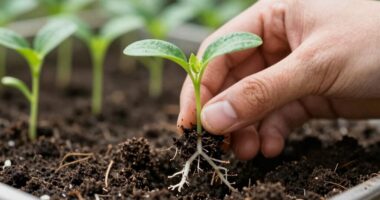
Microgreens are young, edible plants harvested just after the first true leaves appear, typically within two weeks of germination. They come in a variety of microgreen varieties, each offering unique flavors and textures. Growing microgreens in a greenhouse allows you to control environmental factors, ensuring consistent quality and quick harvests. These tiny greens are packed with nutrient profiles that surpass mature vegetables, providing essential vitamins, minerals, and antioxidants in concentrated form. By choosing specific microgreen varieties, you can tailor your harvest to boost health benefits or enhance culinary dishes. Their rapid growth cycle makes them an ideal crop for small spaces and year-round cultivation, especially in a greenhouse setting where conditions stay excellent. This setup maximizes yield and minimizes risks like mold or pests. Environmental control in a greenhouse plays a crucial role in preventing mold growth and maintaining healthy microgreen crops.
How to Create the Perfect Environment for Microgreens in Your Greenhouse
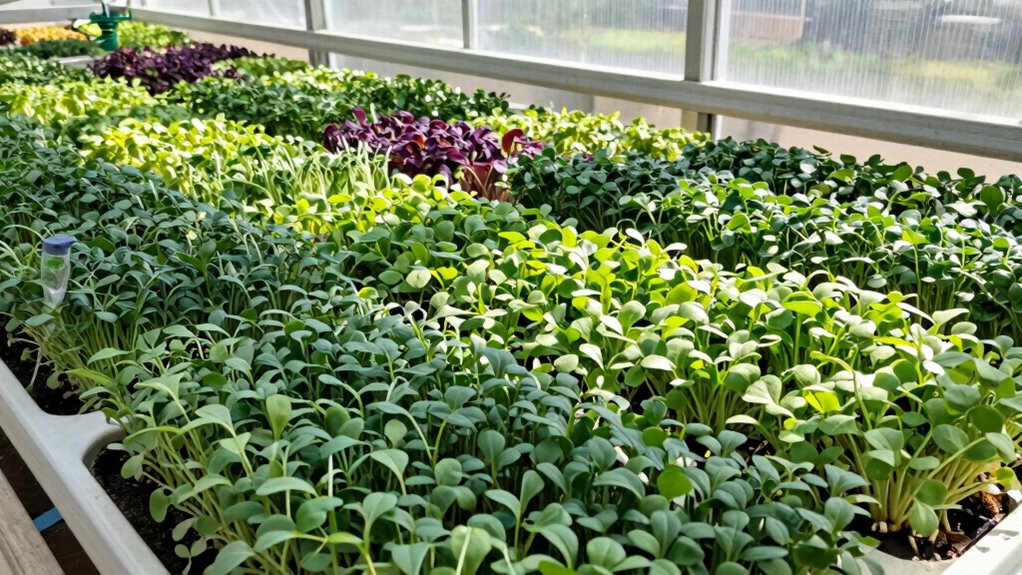
To create the ideal environment for your microgreens, you need to keep the temperature steady and within the right range. Controlling humidity levels guarantees your microgreens stay healthy and grow evenly. Additionally, providing ample light exposure is essential for vibrant, vigorous growth. Incorporating precious metal investments can also help fund greenhouse upgrades, ensuring optimal conditions for your microgreens.
Optimal Temperature Maintenance
Maintaining the right temperature is essential for healthy microgreens growth in your greenhouse. Consistent warmth encourages rapid germination and strong development. Aim for a temperature range between 65-75°F (18-24°C), adjusting as needed for your specific seed selection. Proper temperature control minimizes stress on your microgreens and reduces the risk of mold. Keep an eye on pest management, as pests thrive in fluctuating or excessively warm environments. Using fans or heaters helps stabilize temperatures, preventing cold drafts or overheating. Efficient temperature maintenance also supports ideal seed selection, ensuring your microgreens sprout uniformly. By creating a stable environment, you’ll promote vigorous growth and minimize issues related to mold or pests, resulting in healthier, faster-harvesting microgreens. Additionally, air quality plays a vital role in preventing mold formation and ensuring optimal growth conditions.
Proper Humidity Control
Have you ever noticed how humidity levels can make or break your microgreens’ growth? Maintaining proper humidity is essential for healthy development and mold prevention. If humidity is too high, excess moisture creates a perfect environment for mold to thrive, risking crop loss. Conversely, too low humidity can cause microgreens to wilt and stunt their growth. To create the ideal environment, aim for humidity levels between 40-60%. Use a hygrometer to monitor moisture consistently and adjust with a humidifier or dehumidifier as needed. Proper airflow also helps regulate humidity, preventing stagnant, damp conditions. Regularly check your greenhouse’s humidity, especially during sensitive growth stages, to guarantee your microgreens stay healthy, vibrant, and mold-free.
Adequate Light Exposure
Making sure your microgreens receive enough light is vital for vibrant growth and healthy development. You should provide ample sunlight exposure by positioning your greenhouse where it gets direct light for several hours daily. If natural sunlight is limited, supplement with LED grow lights to maintain consistent illumination. LED grow lights are energy-efficient and can be customized to deliver the ideal spectrum for microgreen growth. Place the lights close enough to avoid stretching but not so close that they cause heat stress. Maintaining proper light exposure encourages lush, uniform greens and speeds up harvest times. Regularly monitor light levels to ensure your microgreens aren’t stretching for light or becoming scorched. Adequate lighting is key to creating a thriving, mold-free microgreen environment. Proper light management is essential for preventing issues like mold and ensuring healthy microgreen development.
How the Fast Harvest System Accelerates Microgreen Growth in Greenhouses
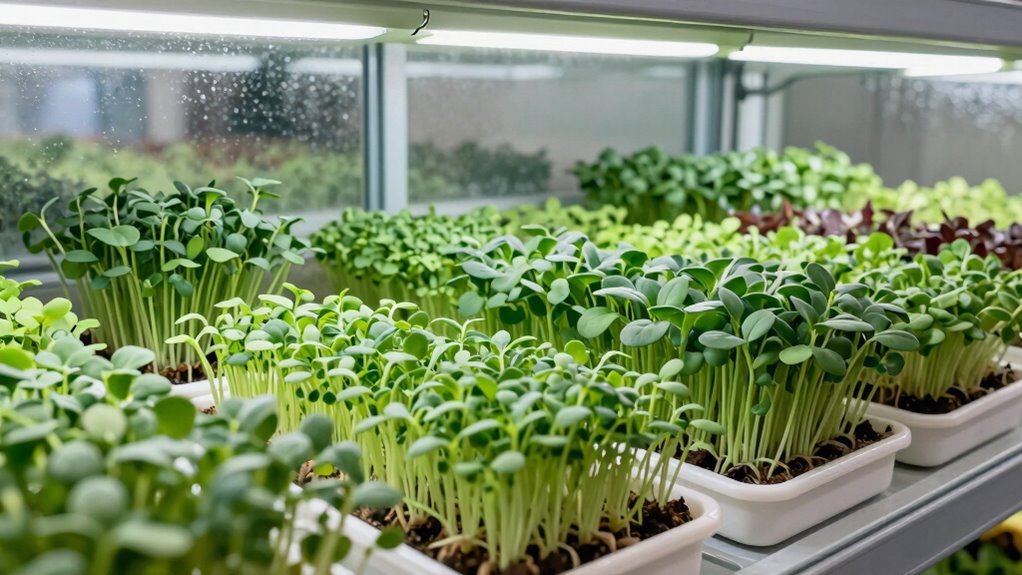
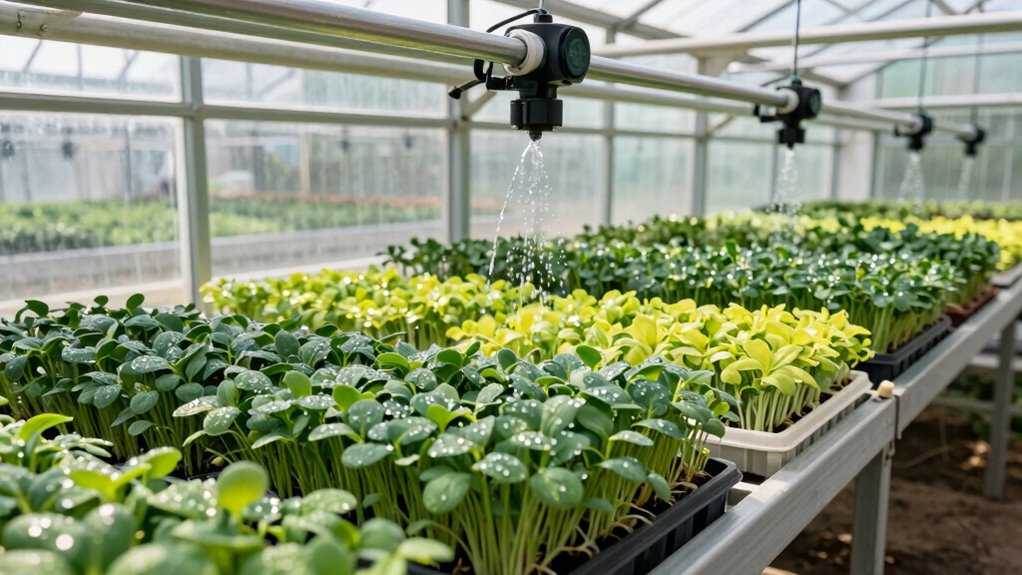
The Fast Harvest System considerably speeds up microgreen growth in greenhouses by enhancing environmental conditions and streamlining the planting process. It guarantees that soil nutrients are delivered efficiently, promoting rapid seed germination and healthy development. By controlling humidity, temperature, and airflow, the system creates an ideal environment that accelerates growth without risking mold or disease. Pest management becomes easier because the controlled environment minimizes pest access and reduces the need for chemical interventions, allowing for healthier, faster crops. Additionally, the system’s precise watering methods prevent overwatering or drying out, maintaining ideal moisture levels. Incorporating smart environmental controls further optimizes conditions and monitors environmental parameters in real-time. Overall, you’ll see quicker harvests and higher yields, all while maintaining the quality and freshness that microgreens need to thrive.
How to Prevent Mold and Spoilage in Your Microgreen Setup
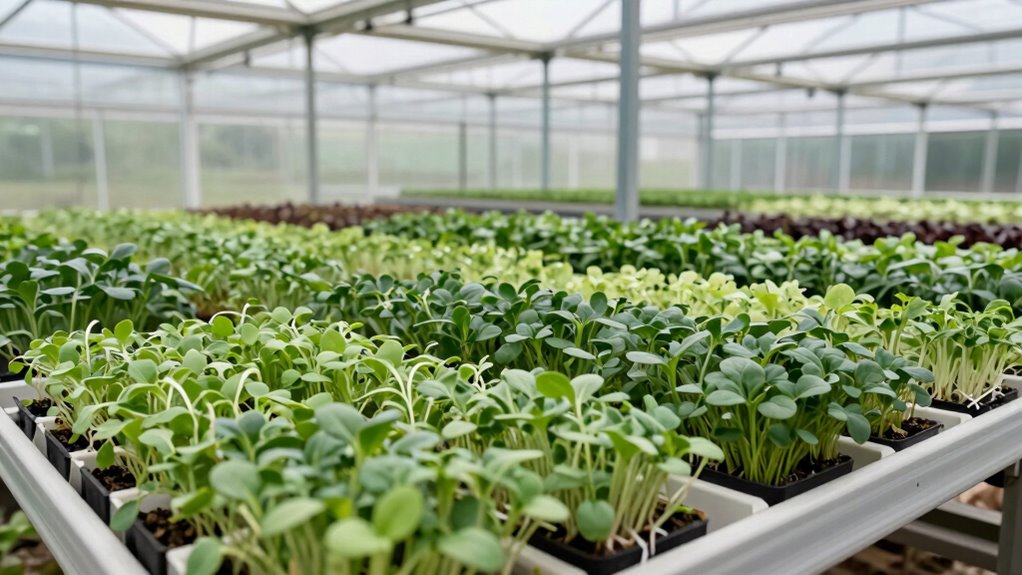
To prevent mold and spoilage in your microgreen setup, maintaining ideal environmental conditions is essential. Mold prevention starts with controlling humidity; keep it between 40-60% to inhibit mold growth. Ascertain proper airflow by using fans or ventilation systems, which helps reduce excess moisture and prevents stagnation. Regularly monitor temperature; aim for 65-75°F to support healthy growth while discouraging mold development. Water your microgreens carefully—avoid overwatering, which can lead to spoilage. Use clean, sanitized trays and tools to minimize contamination. Consistent cleaning and drying of your setup help control mold spores and prevent spoilage. Additionally, appropriate humidity levels are crucial for microgreens’ health and mold prevention. By keeping these factors in check, you enhance spoilage control and create a healthier environment for your microgreens to thrive without mold issues.
Tips to Maximize Yield and Flavor in Your Greenhouse Microgreens

Maximizing your microgreens’ yield and flavor starts with giving them the right light conditions. Ensuring they get enough, but not too much, light helps them grow strong and vibrant. Pairing this with proper watering techniques keeps your microgreens healthy and packed with flavor. Additionally, maintaining optimal humidity levels can prevent mold growth and promote healthy development.
Optimal Light Conditions
Achieving ideal light conditions is crucial for boosting both the yield and flavor of your greenhouse microgreens. Using LED lighting allows you to control light spectrum, intensity, and duration, ensuring plants get the optimal energy for growth. Position your LEDs to provide even coverage, avoiding shadows and uneven development. Proper nutrient management works hand-in-hand with lighting; healthy, well-fed microgreens respond better to light, enhancing flavor and size. Keep the light cycle consistent—generally 12-16 hours per day—so plants can develop properly. Avoid overexposure, which can cause stress, or underexposure, which stunts growth. By fine-tuning your LED setup and managing nutrients effectively, you’ll maximize both the yield and quality of your microgreens. Incorporating controlled environment agriculture techniques can further optimize light and climate conditions for even better results.
Proper Watering Techniques
Proper watering is essential for growing vibrant, flavorful microgreens in your greenhouse. To avoid mold and ensure healthy growth, you need to find the right watering frequency—usually, watering once or twice daily is sufficient, depending on humidity and temperature. Use effective watering methods like misting or gentle spray to keep the soil moist without oversaturating it. Avoid overwatering, which can lead to mold and root rot, and underwatering, which causes stress and poor flavor development. Keep your microgreens consistently moist but not soaked. Observe the soil’s surface; it should stay damp but not muddy. Adjust your watering techniques based on the microgreens’ stage of growth and environmental conditions for the best yield and flavor. Additionally, monitoring air quality considerations such as humidity levels can help prevent mold growth in your greenhouse microgreens.
Troubleshooting Common Microgreen Growing Issues and Maintaining Quality
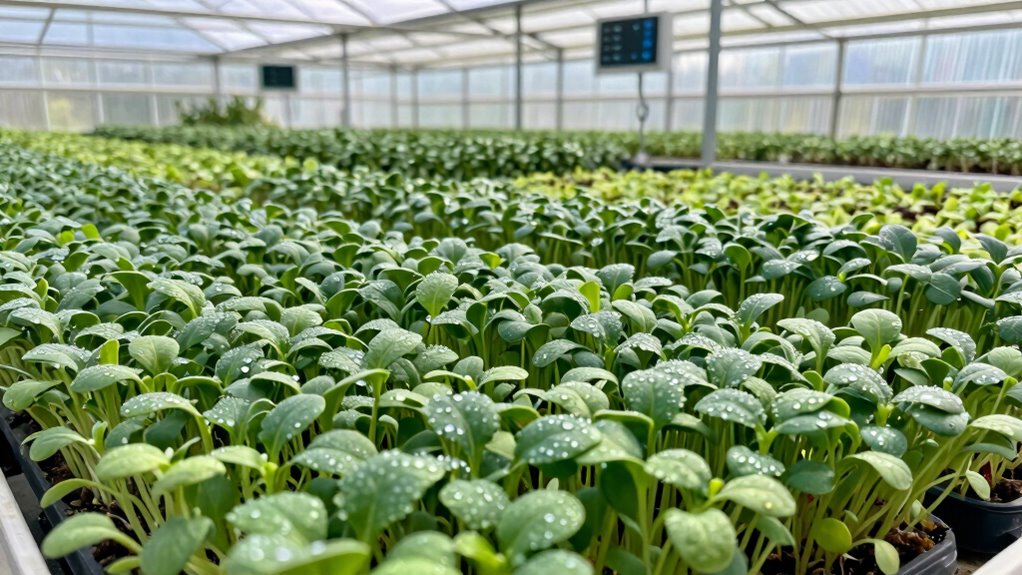
Even with the best setup, microgreens can face common issues that affect their growth and quality. Pest control is essential; inspect your trays regularly for insects or mold, and use gentle, organic solutions when needed. Poor soil amendments can lead to weak seedlings or uneven growth, so make certain your soil is well-drained and nutrient-rich. If you notice yellowing or stunted plants, consider adjusting your soil composition or adding organic amendments to boost nutrients. Overwatering can cause mold, so stick to proper watering techniques discussed earlier. Maintain good airflow and sanitation to prevent mold buildup. Keep a close eye on your microgreens, and promptly address issues like pests or soil deficiencies to sustain healthy, vibrant growth. Proper filtration and air circulation are also crucial in preventing mold development in a greenhouse environment.
Frequently Asked Questions
What Are the Best Microgreen Varieties for Greenhouse Growing?
You should try the best microgreen varieties like sunflower, basil, radish, and pea shoots, as they thrive in greenhouses. These microgreens offer diverse flavor profiles, from spicy and peppery to sweet and aromatic, appealing to various tastes. Their quick growth cycle and robust flavors make them ideal for greenhouse cultivation, ensuring you get fresh, flavorful microgreens with minimal risk of mold or spoilage.
How Often Should I Harvest Microgreens in a Greenhouse Setup?
You should harvest microgreens when they reach the ideal growth stage, usually 7 to 14 days after planting. Keep an eye on growth timing and stages—harvest too early for tender flavor and too late when they become overcrowded. Regular harvesting encourages healthy growth and prevents mold. Typically, you can harvest every few days, depending on the variety and your greenhouse conditions, ensuring fresh, vibrant microgreens at their peak.
Can Microgreens Be Grown Year-Round Indoors?
Did you know microgreens can be grown indoors year-round with proper setup? You can definitely grow microgreens indoors using hydroponic systems, which save space and water. Your success depends on seed selection—choose fast-germinating, disease-resistant varieties. With consistent lighting and temperature control, you can harvest fresh microgreens anytime, making indoor cultivation a reliable, sustainable way to enjoy nutritious greens regardless of the season.
What Lighting Options Improve Microgreen Growth in a Greenhouse?
You should use LED grow lights to enhance microgreen growth in your greenhouse, especially during shorter days or cloudy periods. These lights provide the full spectrum needed for healthy development. Additionally, maximize natural sunlight by positioning your microgreens where they receive direct light for several hours daily. Combining LED grow lights with natural sunlight ensures consistent, vibrant growth and quicker harvests, even during less sunny seasons.
How Do I Prevent Pests Without Chemicals in Greenhouse Microgreens?
To prevent pests without chemicals, you should use companion planting to attract beneficial insects and deter pests naturally. Incorporate biological controls like ladybugs or predatory mites to keep pest populations in check. Regularly inspect your microgreens and maintain cleanliness to reduce pest habitats. Creating a balanced environment with these natural methods helps protect your microgreens effectively while avoiding harmful chemicals, ensuring healthy, pesticide-free harvests.
Conclusion
Imagine your greenhouse as a bustling bakery, where every microgreen is a perfect, fresh loaf. With the fast harvest system, you can turn out these “breads” quickly and consistently, avoiding mold like a seasoned chef avoiding burnt bread. When you master the environment and prevent spoilage, your microgreens flourish—delivering vibrant flavor and abundant yields. Keep refining your techniques, and soon, you’ll have a thriving green oasis, just like a bakery that never runs out of fresh loaves.
Halloween Picks
halloween
As an affiliate, we earn on qualifying purchases.