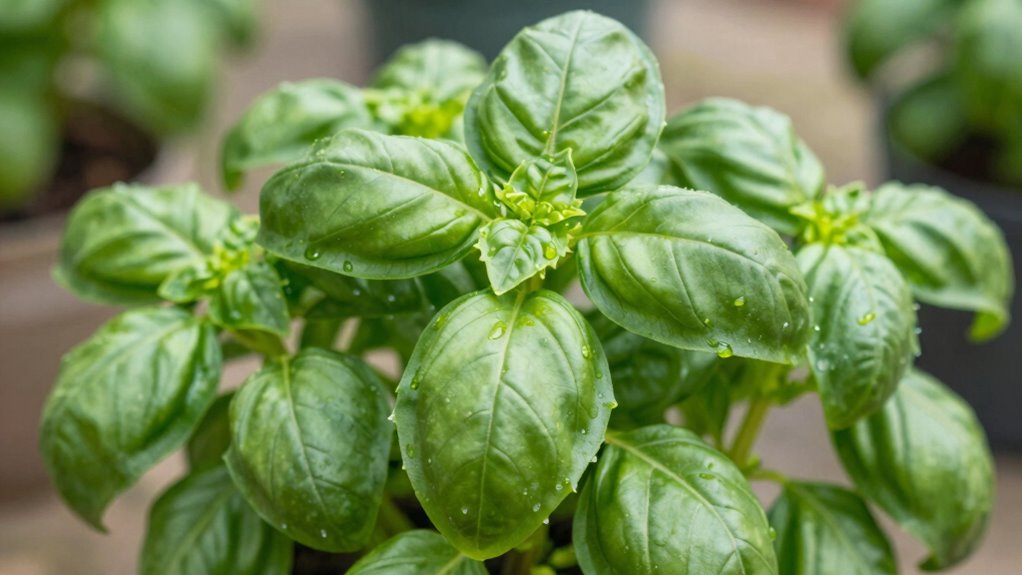

To keep your basil thriving and turning into a bush, regularly pinch just above leaf nodes when it reaches about 4-6 inches tall. This encourages the plant to grow side stems, making it fuller and healthier. Be consistent with your pinching every 1-2 weeks and avoid over-pruning or damaging the main stem. Proper technique and timing are key—if you want lush, continuous harvests, there’s more to learn to perfect your approach.
Key Takeaways
- Regularly pinch basil above leaf nodes when the plant reaches 4-6 inches to encourage bushy, dense growth.
- Use clean, sharp scissors or fingers to precisely remove growth, promoting lateral branching.
- Pinch every 1-2 weeks during the growing season to prevent legginess and maintain a full, bushy shape.
- Ensure adequate sunlight, proper watering, and healthy soil alongside pinching for optimal, persistent growth.
- Watch for signs like leggy stems or flower buds to time pinching and sustain a vigorous, productive basil plant.

Fiskars 6" Steel Micro-Tip Pruning Scissors, Garden Snips for Small Plants
- Ideal for Gardening Tasks: Cuts flower stems, herbs, and small plants
- Precise Micro-tip Blades: Ensures clean, healthy cuts to the tip
- Durable Stainless Steel Blades: Maintains sharpness through heavy use
As an affiliate, we earn on qualifying purchases.
As an affiliate, we earn on qualifying purchases.
Why Pinching Makes Your Basil Bushier and Healthier
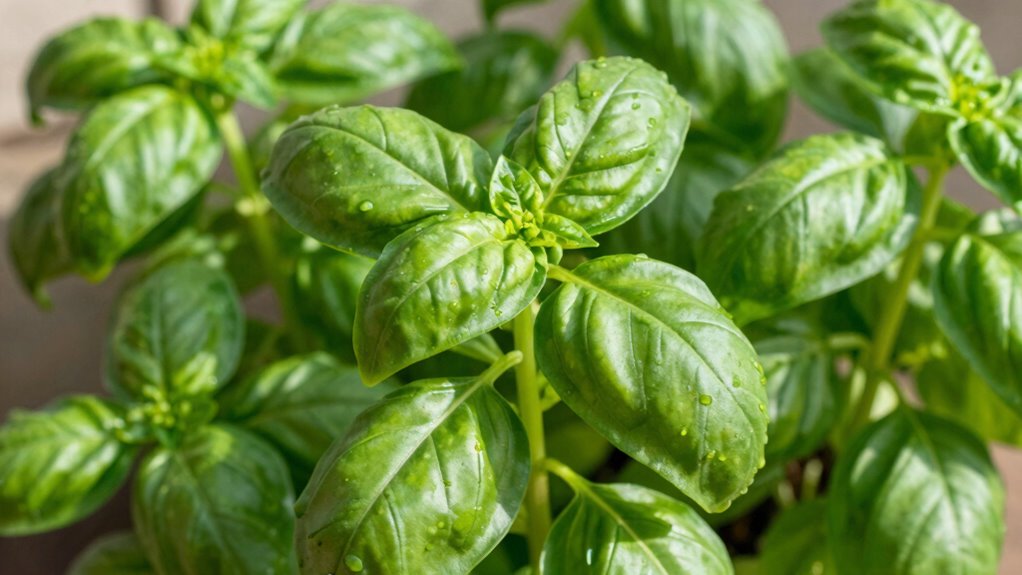
Pinching your basil plants encourages them to grow fuller and healthier by stimulating new growth. This simple herb maintenance technique prevents the plant from becoming leggy and promotes a dense, bushy appearance. When you pinch, you’re removing the apical meristem, which signals the plant to produce multiple side stems. This process not only enhances the plant’s structure but also improves its overall health. A well-maintained basil plant is less susceptible to diseases and pests, as airflow and light reach more parts of the plant. Proper pruning techniques can further support a vigorous and productive basil. Regular pinching keeps your basil vigorous and productive, ensuring a steady supply of fresh leaves. By prioritizing this step, you support the plant’s natural growth cycle and foster a lush, resilient herb that thrives throughout the season.
When and How Often Should You Pinch Basil?
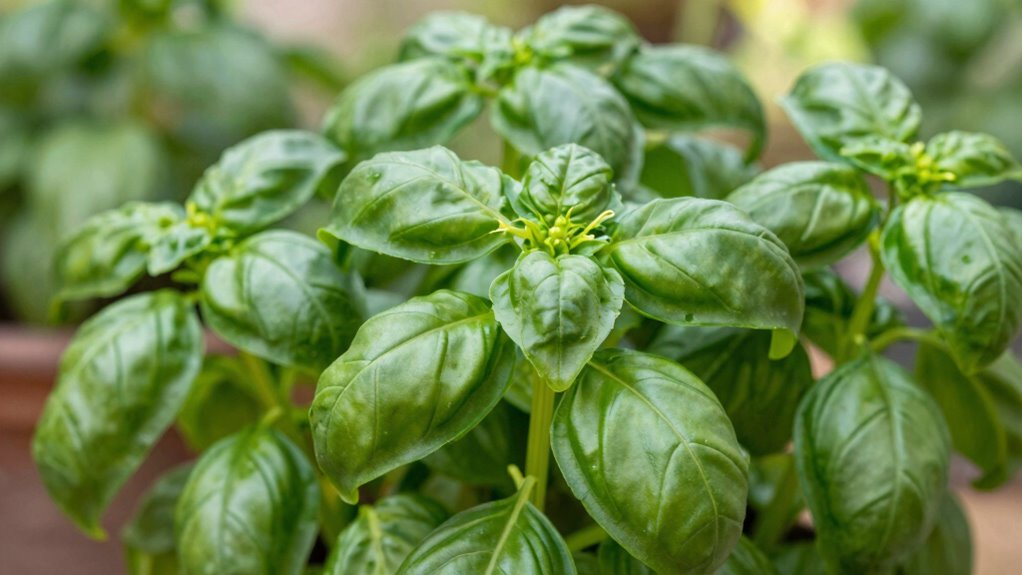
You should pinch basil when the plant is about 4-6 inches tall to encourage bushiness. Typically, pinch every few weeks or when new growth appears to maintain healthy development. Look for signs like elongated stems or sparse leaves to know it’s time to pinch again. Regular pinching can also help prevent the plant from becoming leggy and promote a fuller, more productive basil growth habit.
Best Pinching Times
Wondering when to pinch basil for the best growth? The ideal time is when your plant reaches about 4-6 inches tall and shows two sets of true leaves. Pinching at this stage encourages bushier growth and prevents the plant from becoming leggy. To maximize plant spacing and pest prevention, pinch just above a leaf node to promote lateral branches. Avoid pinching during flowering, as it can inhibit leaf production. Regular pinching every 1-2 weeks helps maintain a healthy, compact plant. Remember, consistent pinching not only boosts growth but also reduces pest hiding spots by keeping the plant dense. Proper plant maintenance through timely pinching also enhances overall vigor and yield. Timing your pinches correctly guarantees your basil stays lush, healthy, and productive throughout the season.
Frequency of Pinching
To achieve the ideal basil growth, it’s important to pinch regularly, typically every 1 to 2 weeks during the growing season. Consistent pinching encourages healthy pruning techniques that promote bushier, more productive plants. Don’t wait too long between sessions; overgrown basil becomes leggier and less flavorful. Regular pinching also helps maintain superior plant nutrition by preventing the plant from directing energy into tall, spindly stems instead of leaf production. When you pinch, target new growth tips just above a set of leaves to stimulate branching. This routine ensures continuous growth and prevents flowering, which can diminish leaf flavor. Stick to this schedule, and your basil will stay lush, full, and ready for harvest.
Signs to Pinch
Knowing when to pinch basil is key to maintaining healthy, vigorous growth. Look for these signs:
- Leggy stems—tall, spindly growth indicates it’s time to pinch to encourage bushiness.
- New growth slowing down—pinching stimulates fresh, tender leaves and improves harvesting techniques.
- Pest signs—removing new shoots can prevent pests from nesting and spreading.
- Flower buds forming—pinch early to delay flowering, which boosts leaf production and pest prevention.
- Understanding plant development—regular pinching influences plant architecture and promotes a more productive, fuller basil bush.
Pinching regularly encourages a fuller plant and better harvests. It also helps avoid pest issues by removing potential hiding spots. Knowing these signs guarantees you pinch at the right time, promoting continuous, healthy growth.
How to Properly Pinch Basil for the Best Growth
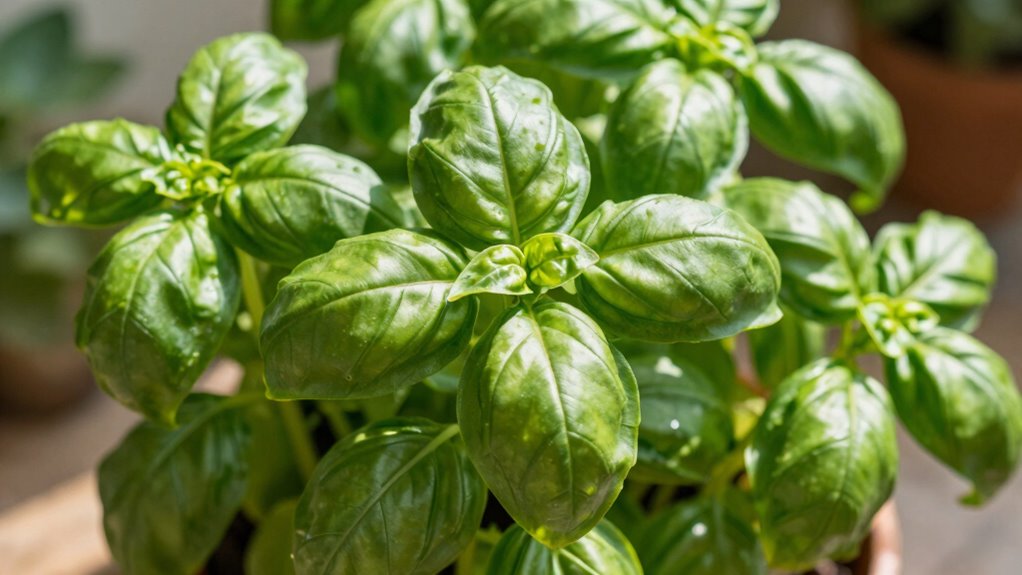
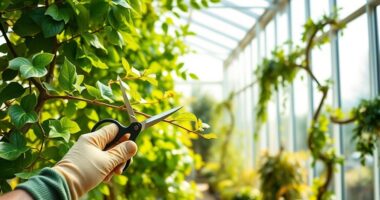
Properly pinching basil encourages bushier growth and prevents it from becoming leggy. To do this, use clean, sharp scissors or your fingers to pinch just above a set of leaves, ideally where two new stems emerge. Make the cut at a 45-degree angle to promote healthy healing and reduce the risk of plant disease. Regular pinching also helps with pest control, as a dense, healthy plant is less attractive to pests. Avoid damaging the main stem, which can lead to plant stress or disease susceptibility. Consistent pinching encourages the plant to produce more side shoots, creating a fuller, more productive basil bush. Remember to monitor your plant for signs of pests or disease after pinching, and keep tools sanitized to prevent issues. Incorporating essential oils for plant health into your gardening routine can provide natural protection and promote overall vitality.
Common Mistakes to Avoid When Pinching Basil
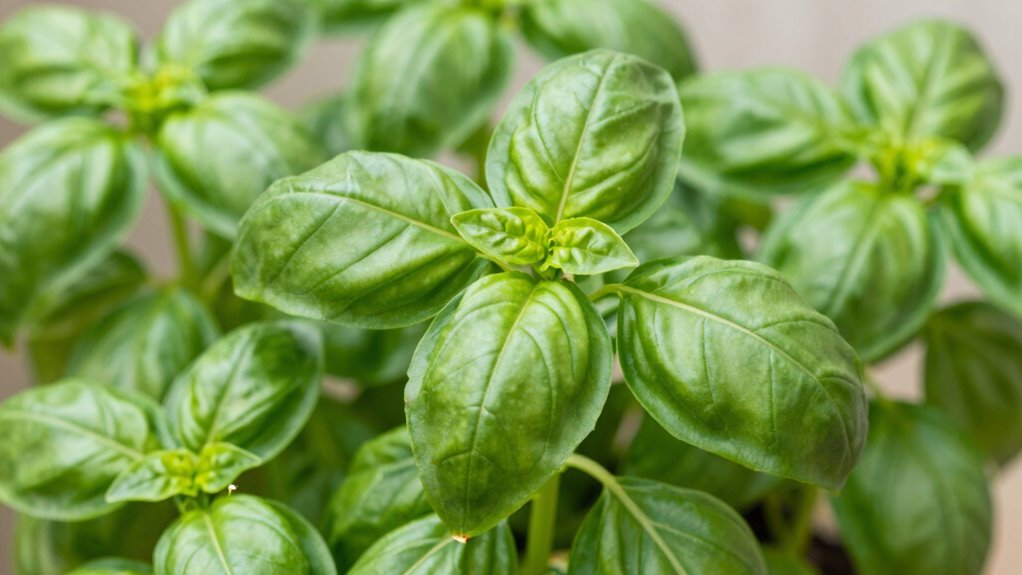
One common mistake when pinching basil is removing too much foliage at once, which can stress the plant and inhibit healthy growth. Avoid over-pruning, as it can lead to pruning mistakes that stunt development. Be careful not to pinch too low on the stem, risking damage to the main plant. Additionally, neglecting proper watering can cause overwatering issues, weakening the plant’s resilience to pruning. Proper upkeep practices are essential for maintaining healthy basil. Here are some mistakes to watch out for:
- Removing more than a third of the plant at a time
- Pinching without sterilized tools, risking disease
- Pruning during stressful weather conditions
- Overwatering, which hampers recovery and growth
Stay attentive to these pitfalls to keep your basil healthy and thriving.
Extra Tips for Growing a Full, Lush Basil Plant

To grow a full, lush basil plant, focus on proper pruning techniques to encourage bushier growth. Make sure your plant gets plenty of sunlight each day and stick to a consistent watering schedule to keep the soil moist but not waterlogged. These simple tips will help you achieve a healthier, more vibrant basil plant. Additionally, understanding plant growth factors can help you optimize your care routine for even better results.
Proper Pruning Techniques
Ever wondered how to encourage your basil plant to grow fuller and more lush? Proper pruning is key. First, always use clean, sharp scissors or pruning shears to avoid disease. Second, prune just above a leaf node to promote bushier growth. Third, regularly remove the top growth to encourage branching, creating a fuller plant. Fourth, consider companion planting with herbs like oregano or thyme to improve soil aeration and promote healthy roots. Proper pruning not only shapes your basil but also boosts airflow and reduces disease risk. Keep soil well-drained and aerated to support vigorous growth. Additionally, understanding the importance of wood movement can help you plan your gardening or woodworking projects for long-term success. Remember, consistent pinching and trimming are essential to turn a single basil into a lush, productive bush.
Optimal Sunlight Exposure
For your basil plant to thrive into a full, lush bush, providing the right amount of sunlight is fundamental. Basil needs about 6 to 8 hours of direct sunlight daily, especially during its early growth stages. During the seedling and vegetative phases, consistent sunlight encourages strong stems and healthy leaves. As the plant matures, maintaining this light exposure helps it develop a dense, bushy shape. Too little sunlight results in leggy, weak growth, while too much can scorch the leaves. If growing indoors, place your basil near a south-facing window or use grow lights to mimic natural sunlight. Adjust the light intensity and duration based on the plant’s growth stage, ensuring it gets ideal sunlight to flourish into a vibrant, full bush.
Consistent Watering Schedule
Maintaining a consistent watering schedule is essential for growing a full, lush basil plant. Proper watering ensures ideal soil moisture, which promotes healthy growth and prevents stress. To achieve this, consider these tips:
- Water when the top inch of soil feels dry to the touch.
- Adjust watering frequency based on weather; more frequent during hot, dry periods.
- Use a gentle stream to avoid disturbing the soil or leaves.
- Check soil moisture daily, especially in container-grown basil, to prevent overwatering or underwatering.
- Remember that consistent watering supports overall plant health, similar to how well-maintained pinball machines maintain high replay value and user satisfaction. soil moisture helps basil develop strong stems and prevents wilting. Remember, irregular watering can weaken the plant and affect its ability to produce aromatic leaves, so stay attentive to soil moisture levels for the best results.
Troubleshooting: What to Do If Your Basil Isn’t Responding

If your basil isn’t responding to care, the first step is to identify potential issues. Check if pests are present, as they can stunt growth and damage leaves. Make certain your soil nutrition is adequate; lacking nutrients can lead to weak stems and poor health. Also, verify that your basil gets enough light and proper watering. To troubleshoot effectively, consider this table:
| Issue | Symptoms | Solution |
|---|---|---|
| Pest problem | Chewed leaves, tiny insects | Use pest prevention methods |
| Poor soil nutrition | Yellowing leaves, stunted growth | Enrich soil with balanced fertilizer |
| Insufficient light | Leggy, elongated stems | Move to a sunnier spot |
Addressing these factors helps your basil respond better and encourages healthy growth. Ensuring proper soil health can make a significant difference in plant vitality.
Benefits of Pinching Basil for Continuous Herb Harvests
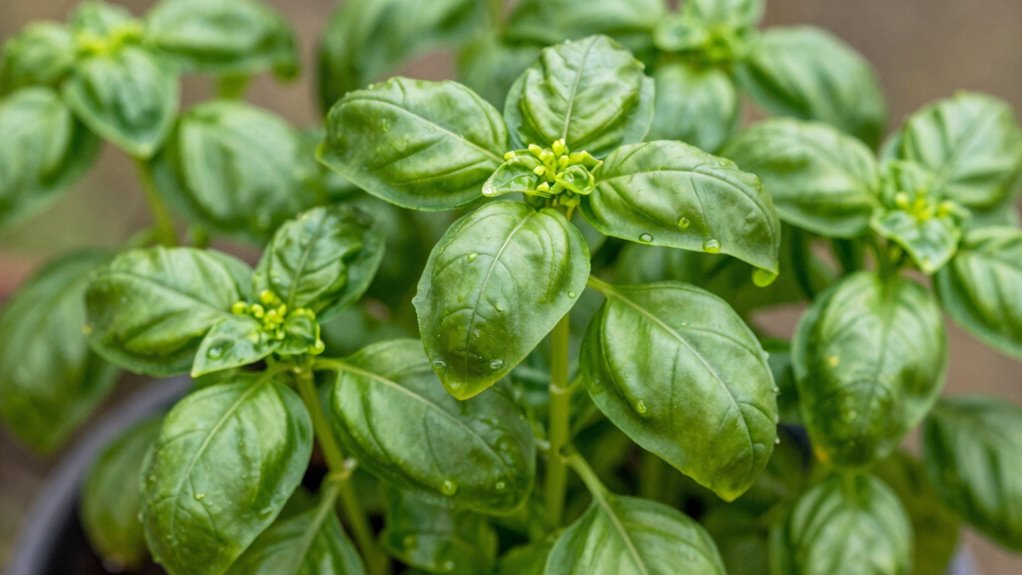
Pinching basil encourages the plant to grow fuller and produce more leaves, which is essential for a continuous herb harvest. This method promotes a bushier plant, increasing your yield over time. Benefits include better companion planting, as a full basil plant attracts beneficial insects that help pollinate nearby crops and repel pests. Regular pinching also helps prevent pest infestations by removing vulnerable, tender growth that pests target. Additionally, pinching encourages new, tender growth, ensuring a steady supply of flavorful leaves. It can extend your harvesting season and keep your basil healthy and productive. By maintaining a lush, dense plant, you’ll enjoy fresh herbs longer and create a thriving garden ecosystem. Keep pinching to reap these continuous harvest benefits.
Frequently Asked Questions
Can Pinching Basil Reduce Its Overall Flavor Intensity?
Pinching basil with the pinching technique doesn’t reduce its overall flavor intensity; instead, it encourages bushier growth. While some worry about flavor dilution, proper pinching actually promotes stronger, more vibrant leaves by preventing the plant from flowering early. You’ll get a fuller, more flavorful basil plant, perfect for harvesting. Just remember to pinch regularly and avoid overdoing it, so the plant stays healthy and flavorful.
Is There an Ideal Time of Day to Pinch Basil?
You should pinch basil during its active growth stages, ideally in the morning when the plant’s energy is high. This promotes healthy basil pruning and encourages bushier growth. Avoid pinching late in the afternoon or during stressful weather; instead, focus on early stages to maximize plant growth. Regular pinching helps control size and promotes new, flavorful leaves, ensuring your basil stays lush and productive throughout the season.
Can You Over-Pinched Basil Plants? What Happens Then?
You can definitely over-pinched basil, turning your lush plant into a sad, leggy mess. Over-pruning during harvest timing weakens the plant, making it struggle to recover. Use sharp pruning tools carefully to avoid tearing stems, and don’t go overboard—your basil needs leaves, not a bald patch. Remember, a little pinch fosters growth, but too much will leave your plant begging for mercy and fewer flavorful leaves.
Does Pinching Basil Help Prevent Flowering and Seed Production?
Pinching basil is an effective way to control flowering and seed production through basil pruning. When you pinch the tops of your basil, it encourages bushier growth and delays flowering, keeping your plant productive longer. Regular pruning prevents the plant from going to seed too early, ensuring lush, flavorful leaves. Just be careful not to over-pinched, as excessive pruning can stress your basil and reduce overall health.
How Does Pinching Basil Affect Pest and Disease Resistance?
Pinching basil boosts pest resistance and disease prevention by encouraging a healthier, more vigorous plant. When you pinch regularly, you promote dense foliage that makes it harder for pests to find access points. Plus, it improves airflow, reducing the chances of fungal diseases. By maintaining strong, bushy growth through pinching, you create an environment less inviting to pests and diseases, helping your basil stay healthier longer.
Conclusion
By pinching your basil regularly, you encourage fuller growth, prevent legginess, and enjoy continuous harvests. By staying consistent, avoiding mistakes, and caring for your plant, you turn a single basil into a lush, bushy herb. Keep pinching, keep nurturing, and keep enjoying fresh basil in every meal. With patience and practice, you’ll see your basil thrive, flourish, and reward you with abundant, fragrant leaves season after season.