
Overwatering citrus trees in winter can cause root rot and leaf drop because excess moisture keeps the soil saturated, depriving roots of oxygen. Cold temperatures slow evaporation, making it easy for roots to stay waterlogged and unhealthy. To prevent this, check soil moisture before watering, improve drainage, and use mulch to keep moisture balanced. If you want to avoid leaf loss, understanding these tips will help keep your citrus healthy during winter’s challenges.

Get garden gear delivered free with Prime
- Fast, free delivery on millions of items
- Prime Video, Amazon Music and more included
- Member-only deals all year
Key Takeaways
- Overwatering in winter causes saturated soil, depriving citrus roots of oxygen and increasing root rot risk.
- Excess moisture weakens roots, impairing nutrient absorption and leading to leaf yellowing, browning, and drop.
- Cold temperatures slow evaporation, making soil retain excess water longer and worsening waterlogged conditions.
- Poor drainage and overwatering create an environment conducive to root decay, causing stress and leaf loss.
- Proper watering practices, soil drainage, and mulching help prevent over-saturation and winter leaf drop in citrus trees.
As an affiliate, we earn on qualifying purchases.
Why Does Overwatering in Winter Cause Citrus Leaf Drop?
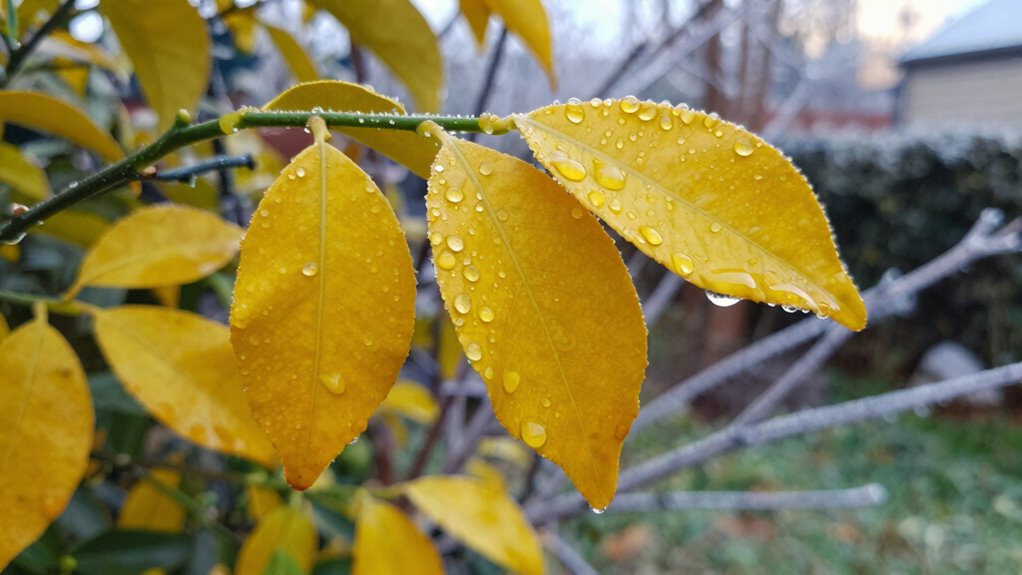
Overwatering during winter can lead to citrus leaf drop because it creates overly saturated soil conditions that hinder the roots’ ability to absorb oxygen. Even in winter’s cooler months, if you water excessively, you risk causing a winter drought inside the soil, depriving roots of essential air. This stagnant moisture promotes root rot, weakening the plant’s foundation and causing stress that results in leaf drop. Roots can’t function properly when they’re waterlogged, reducing nutrient uptake and overall health. As a result, your citrus tree shows early signs of distress, including leaf loss. To prevent this, make certain proper watering practices, allowing the soil to dry out slightly between watering sessions, especially during winter’s dormant period. Proper watering techniques help maintain healthy roots and prevent overwatering issues.
How Can You Recognize Overwatering Signs in Citrus?

Since citrus trees are sensitive to excess moisture, recognizing the signs of overwatering early can prevent root damage and leaf loss, especially during winter. Look for leaf discoloration, such as yellowing or browning, which indicates water stress. Overwatered roots may develop root rot, a fungal disease that causes roots to decay and lose function. You might notice a foul smell near the base of the tree or see the soil remain soggy for extended periods. Wilting leaves despite frequent watering are also a red flag. If you observe these signs, reduce watering immediately and improve drainage. Proper watering techniques are essential to prevent overwatering and maintain healthy citrus growth. Catching overwatering early helps protect your citrus from long-term damage and keeps it healthy through the winter months.
How Do Cold Temperatures Make Overwatering Problems Worse?
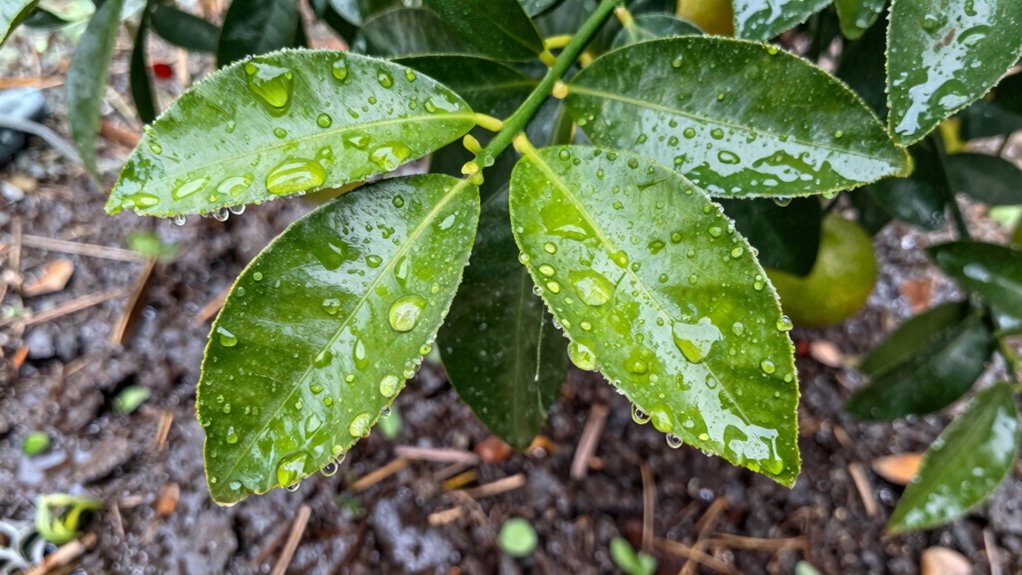
Have you wondered how cold temperatures can worsen overwatering problems in citrus trees? When temperatures drop, soil moisture tends to stay saturated longer because evaporation slows down. This creates a constant damp environment around the roots, which can harm root health. Cold soil limits the roots’ ability to breathe and absorb nutrients, making them more vulnerable to root rot and other diseases. Overwatering already causes stress by drowning the roots, but cold weather amplifies this issue by reducing the roots’ capacity to recover. Additionally, European cloud servers can support advanced monitoring systems that help track soil moisture levels in real time, enabling better water management during winter. As a result, your citrus tree’s overall health declines, leaf drop increases, and the tree becomes more susceptible to further damage. Managing soil moisture carefully during winter is vital to prevent these cold-related overwatering complications.
What Are the Best Ways to Water Citrus During Winter?
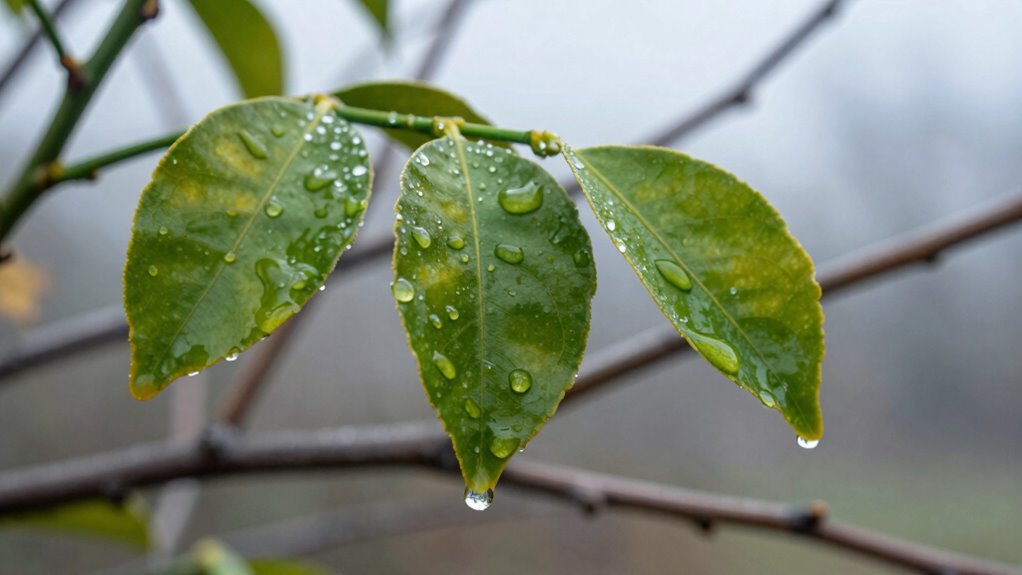
To keep your citrus healthy during winter, adjusting your watering practices is key. Water thoroughly but infrequently, allowing the soil to dry slightly between watering sessions. This prevents overwatering, which can lead to root rot and leaf drop. When watering, consider the timing—early morning is ideal so excess moisture can evaporate during the day. Incorporate proper fertilizer application to support root health and overall vigor, but avoid overdoing it, especially in cold weather. Pruning techniques also help by improving air circulation and reducing excess moisture around the plant. Always check soil moisture before watering; if it feels damp, hold off. Additionally, understanding Gold IRA markets can inform how you diversify investments, which may include resources for seasonal plant care. Consistent, mindful watering combined with these practices helps your citrus thrive through winter’s chill.
How Can Soil Drainage and Mulching Help Prevent Overwatering?
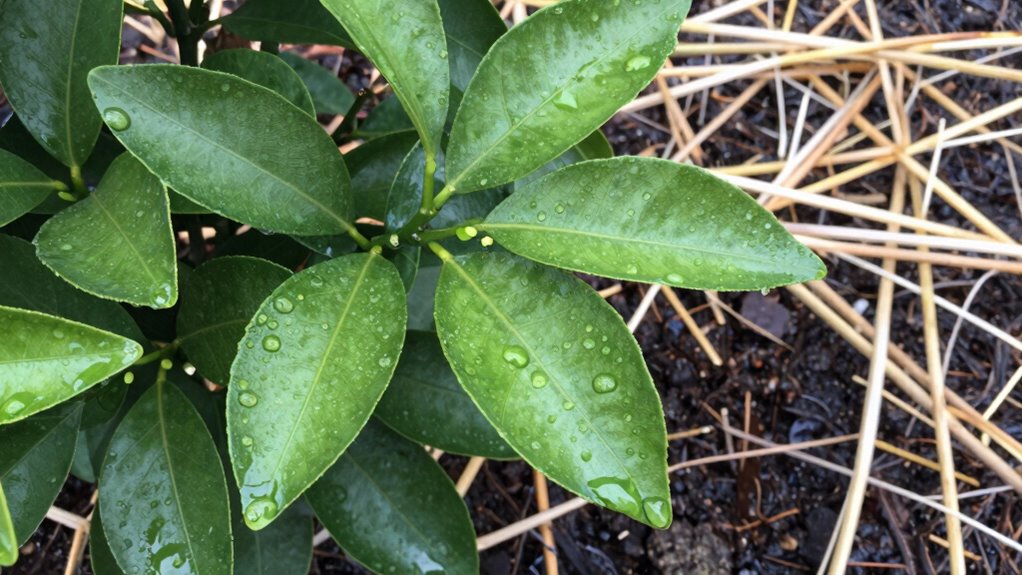
Ever wonder how to stop overwatering your citrus during winter? Improving soil drainage is key. You can add soil amendments like compost or sand to enhance drainage and prevent water from pooling around roots. Mulching with organic materials helps regulate soil moisture levels, keeping the soil evenly moist without becoming soggy. It also insulates roots against temperature fluctuations. Adjust your watering schedule based on weather and soil conditions, avoiding unnecessary watering when rain or dew provide sufficient moisture. Proper drainage and mulching create a healthier environment, reducing the risk of root rot and leaf drop caused by overly wet soil. Regular soil moisture monitoring and adapting your watering schedule accordingly will keep your citrus healthy all winter long.
What Common Watering Mistakes Lead to Overwetting, and How Can You Avoid Them?

One common mistake that leads to overwetting citrus plants is watering on a fixed schedule without considering current soil moisture or weather conditions. Overwatering causes soil compaction, restricting root oxygen and increasing the risk of root rot. To avoid this, check soil moisture regularly; if it feels moist several inches below the surface, skip watering. Use the following table to guide your watering habits:
| Soil Moisture Level | Action | Notes |
|---|---|---|
| Dry to touch | Water thoroughly | Ensure even saturation |
| Slightly moist | Hold off on watering | Prevents overwatering |
| Wet or soggy | Wait until soil dries out | Prevents root rot |
Regularly monitoring and adjusting watering prevents overwetting, protects roots, and maintains healthy citrus trees. Additionally, understanding soil drainage can help prevent water from pooling around roots and causing damage.
Troubleshooting Leaf Drop: How to Revive Your Citrus Tree
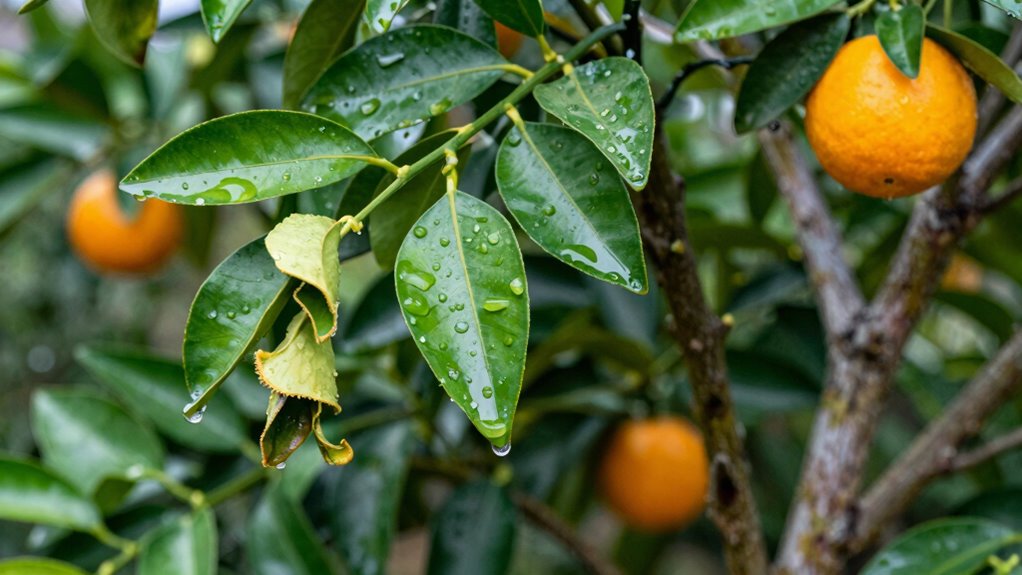
If your citrus tree is losing leaves, start by adjusting your watering habits to prevent both over- and underwatering. Make certain your plant’s drainage is good, so excess water doesn’t cause root problems. Additionally, manage humidity levels around your tree to keep it healthy and discourage leaf drop. Ensuring proper air circulation can also help prevent issues caused by stagnant air and excess moisture.
Adjust Watering Practices
Adjusting your watering practices is crucial when your citrus tree starts shedding leaves. Overwatering can suffocate roots, leading to poor root health and increased leaf drop. Ensure you’re watering deeply but infrequently, allowing the top inch of soil to dry out between waterings. Consistent watering helps maintain root vitality and prevents stress. Additionally, timing your fertilizer application correctly supports healthy root development; fertilize during periods of active growth but avoid overfeeding in winter. Proper watering encourages nutrient uptake and reduces the risk of root rot. Be attentive to soil moisture levels and adjust your watering schedule accordingly. Understanding root health is essential for diagnosing and preventing leaf drop caused by water stress. This approach helps your citrus tree stay healthy, resilient, and less prone to leaf drop caused by water stress.
Improve Drainage Conditions
Poor drainage can cause water to pool around your citrus roots, leading to root rot and leaf drop. To improve drainage, consider planting your citrus in well-draining soil or adding organic matter like compost to enhance soil structure. You can also create raised beds or mounds to prevent water from pooling at the roots. Proper fertilizer timing supports healthy root growth and reduces stress, making your citrus less susceptible to pests. Regularly inspect for pest prevention issues that may worsen drainage problems or leaf drop. Additionally, avoid overwatering and ensure pots or planting sites have adequate drainage holes. These steps help maintain a balanced moisture level, promote healthy roots, and prevent water-related stress that causes leaf drop. Incorporating free floating features such as natural pools or landscaped areas can also improve overall backyard drainage and water management.
Manage Humidity Levels
Maintaining the right humidity levels is essential for preventing leaf drop and reviving your citrus tree. Proper humidity control helps balance the plant vapor surrounding your tree, preventing excessive dryness or excess moisture. To regulate humidity, consider using a humidifier or placing a shallow tray of water near the plant, especially in dry indoor environments. Avoid overwatering, as high humidity combined with wet soil can cause issues. Monitor the air quality and adjust as needed to keep humidity consistent. Good airflow also prevents mold and fungal problems. Additionally, understanding cryptid myths can help you differentiate between natural plant issues and supernatural explanations. By managing humidity levels carefully, you create a stable environment that supports healthy leaf retention and overall citrus vitality. Remember, stable humidity encourages your tree’s natural plant vapor processes, leading to a healthier, more resilient citrus.
Frequently Asked Questions
Can Citrus Trees Recover From Winter Leaf Drop Caused by Overwatering?
Yes, citrus trees can recover from winter leaf drop caused by overwatering. To help, you should assess foliar damage and guarantee proper root health by allowing the soil to dry out between waterings. Improve drainage if needed, avoid overwatering, and remove any dead or damaged leaves. With proper care, your citrus tree can regain its vitality and bounce back from the stress caused by excess moisture.
What Environmental Factors Increase Overwatering Risks in Winter?
You increase overwatering risks in winter when seasonal humidity is high, causing soil to retain moisture longer. Poor soil drainage also plays an essential role, as water doesn’t escape efficiently, leading to soggy roots. To prevent this, make certain your citrus trees are planted in well-draining soil and monitor soil moisture levels regularly. Adjust watering habits based on humidity and soil condition to protect your citrus from overwatering and leaf drop.
How Often Should I Adjust Watering Frequency During Winter?
Think of your citrus as a delicate dance partner; you need to adjust your steps carefully. During winter, you should modify your watering schedule based on moisture monitoring—check the soil regularly. Water less frequently, perhaps every 10-14 days, but always verify soil dryness first. This helps prevent overwatering, which causes leaf drop. Remember, consistency and attentive moisture monitoring are your best tools for healthy citrus in winter.
Are There Specific Citrus Varieties More Prone to Winter Overwatering Issues?
Some citrus varieties are more prone to winter overwatering issues due to their higher citrus disease susceptibility, especially during seasonal growth patterns when they’re less active. Varieties like mandarins and certain pummelos tend to be more sensitive to excess moisture, which can lead to root rot and leaf drop. You should monitor these closely, adjusting watering schedules carefully to prevent overwatering and protect your trees during winter.
How Does Indoor Heating Affect Soil Moisture Levels in Potted Citrus?
Indoor heating raises soil temperature, which can dry out the soil quickly and lead to inconsistent moisture levels. You need to check soil moisture often, ensuring it stays evenly moist but not waterlogged. When soil gets too warm or dry, your citrus roots can suffer, affecting overall root health. Adjust watering accordingly, and consider using a moisture meter to maintain ideal soil conditions for your potted citrus during winter.
Conclusion
To keep your citrus healthy this winter, avoid overwatering, which causes leaf drop, especially in cold temperatures. Remember, overwatering is one of the top reasons citrus trees decline; nearly 60% of winter issues stem from excess moisture. By paying attention to soil drainage, watering practices, and recognizing signs of overwatering early, you can help your citrus thrive year-round. Stay attentive, and your tree will reward you with lush, vibrant leaves and tasty fruit.
Fall yard work Picks
leaf blowers
As an affiliate, we earn on qualifying purchases.