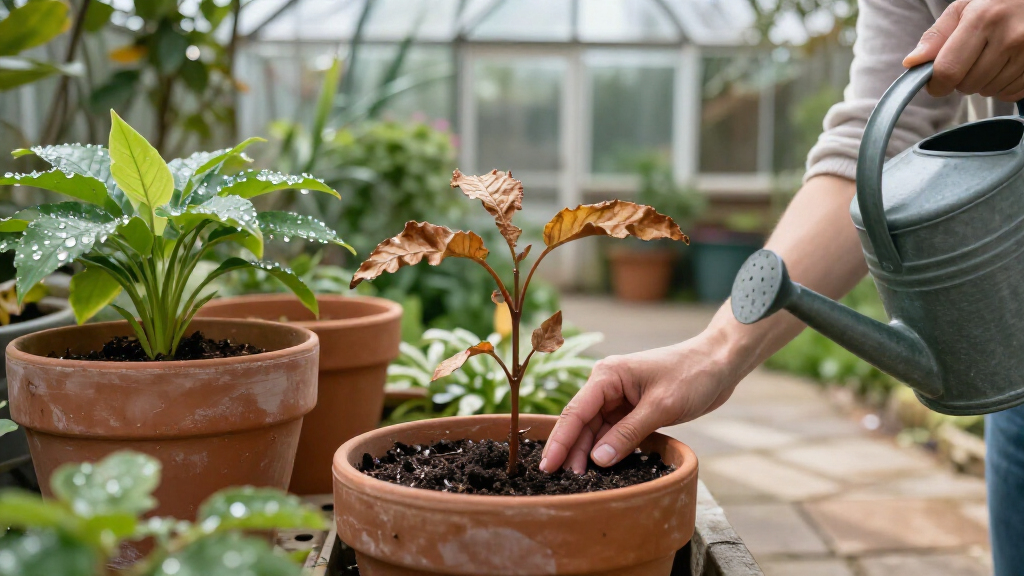
TL;DR
Brown leaf edges alone are not a reliable reason to water a deciduous tree, and green leaves in late fall do not automatically signal a problem. Check soil around the roots first; water only when it is dry, unfrozen, and able to drain, and seek local advice if damage spreads.
Brown leaf edges do not automatically mean a deciduous tree needs water, and leaves that remain green in late fall are not, by themselves, a reason to reach for the hose. Planet Natural’s article on green leaves and brown edges recommends inspecting the whole tree and checking soil near its roots before watering, because browning can have several causes and leaf appearance cannot establish whether the root zone is dry.

Get garden gear delivered free with Prime
- Fast, free delivery on millions of items
- Prime Video, Amazon Music and more included
- Member-only deals all year
Start by looking at the whole canopy, not only the most damaged leaf. Note whether browning affects leaf edges or entire leaves, whether it is scattered or concentrated on one branch, and whether leaf loss is early or spreading. Planet Natural’s guidance says a prolonged dry spell can contribute to brown edges and early leaf drop, but neither symptom alone proves drought. Photos of both the full tree and the affected leaves can help track changes.
When the ground is workable and unfrozen, move mulch aside and check soil below the surface with a hand trowel. Feel the soil itself rather than the mulch, and note whether it is dry, damp, or soggy. Soil type matters: sandy soil can crumble even when damp. For a newly planted tree, check the original root ball separately from the surrounding ground; for an established tree, inspect more than one spot beneath the canopy and away from the trunk. These checks reflect Planet Natural’s practical guidance and are not a diagnosis of a particular tree.
Water only when the soil in the area to be watered is dry and unfrozen, the site drains, and local weather guidance and watering rules permit it. Apply water slowly and stop if it pools or runs off. Leave the hose off if the soil is soggy, water is standing, or the ground is frozen. If the root ball of a new tree is already damp, do not soak it just because nearby soil feels dry.
Brown leaf edges Water now or wait?
Brown edges and green late-fall leaves do not show by themselves whether a tree needs water. Check the soil near its roots before deciding.
Read the whole tree
Look for where browning or leaf loss appears and whether it is spreading.
Check the canopy
Note whether damage is scattered, concentrated on one branch, or affecting whole leaves or shoots.
Green leaves can remain
Green leaves in late fall do not automatically signal a problem or a need to water.
Brown edges are not a diagnosis
A dry spell can contribute, but leaf appearance alone cannot confirm drought.
Check below the surface
Move mulch aside and feel the soil itself when the ground is workable and unfrozen.
Use a hand trowel to assess whether soil below the surface is dry, damp, or soggy.
For a new tree, check the root ball and surrounding soil separately. For an established tree, check more than one spot under the canopy, away from the trunk.
Recent rain, snowmelt, heat, wind, and frozen ground can affect what the soil check shows.
Water or wait?
Use root-zone moisture and drainage to guide the decision.
- The soil in the area is dry and unfrozen.
- The site drains and local guidance permits watering.
- You can apply water slowly and stop if it pools or runs off.
- Soil is damp or soggy, water is standing, or the ground is frozen.
- A new tree’s root ball is already damp.
- A warm surface may hide frozen ground below.
Track changes and seek advice
Notes and photos can help you compare symptoms and explain what you observed.
- Record the damage pattern, soil checks, recent weather or watering, and any action taken.
- Recheck after conditions change, such as after a thaw.
- Contact a local Extension service or qualified arborist if browning or leaf loss spreads quickly, affects much of the canopy, or reaches whole shoots or branches.
- Ask about drainage if water repeatedly pools.
Soil Checks Prevent Misguided Watering
The decision matters because watering based on leaf color alone can miss what is happening around the roots. Planet Natural advises checking soil before watering: damp soil may not need more water, while standing water or soggy ground is a reason to stop rather than add more. Checking conditions below the surface gives gardeners a better basis for deciding whether to water, wait, or seek advice.
Seasonal conditions complicate the call. Recent rain, snowmelt, or watering may have supplied moisture, while heat and wind can dry soil. A warm afternoon may thaw only the surface, leaving the ground below frozen. A simple record of weather, soil checks, and symptoms can help distinguish a new change from damage that was already present.
Products Worth Considering

EGO POWER+ 21-Inch Self-Propelled Cordless Lawn Mower Kit (LM2135SP)

Orbit B-hyve 12-Zone Indoor/Outdoor Wi-Fi Sprinkler Controller

Greenworks 40V Cordless Chainsaw Kit with 12-Inch Bar, 2Ah Battery and Charger
As an affiliate, we earn on qualifying purchases.
Reading Fall Leaves Alongside Soil
In late fall, a deciduous tree can still have green leaves without that fact alone showing that it needs intervention. Similarly, brown margins and early leaf drop may accompany a dry spell but are not a diagnosis. Planet Natural recommends considering the pattern across the tree while also checking root-zone moisture; leaf appearance alone cannot establish soil conditions.
Where to check depends on the planting. A new tree’s root ball may hold moisture differently from the soil around it, so each should be felt separately. For an established tree, several checks under the canopy are a better starting point than examining only the ground beside the trunk. These locations are guides, not a fixed sampling pattern; tree roots can extend beyond the outer branches.
What Leaf Browning Cannot Confirm
The precise cause of brown edges cannot be determined from the symptom alone. Drought is one possibility, not a confirmed diagnosis, and a close-up of a leaf does not reveal whether soil around the roots is dry, damp, or soggy. Planet Natural’s article offers general guidance and does not identify a particular tree, location, or specific cause for any individual case.
How much and where to water also depend on local weather, watering restrictions, site drainage, soil conditions, and the tree’s planting history. If the soil is frozen, a check may need to wait for a thaw. Rapidly spreading browning, unusual leaf loss across much of the canopy, or damage involving whole shoots or branches calls for a local assessment rather than repeated watering as a test.
Track Changes and Seek Local Advice
Record the date, the location and pattern of leaf damage, the spots where soil was checked, recent weather or watering, and what action followed. Waiting is worth recording too: a later check can show whether the damage is spreading or whether a patch simply went unnoticed earlier. Take pictures of the canopy and affected leaves for comparison.
If browning or leaf loss spreads quickly, affects much of the canopy, or reaches entire shoots or branches, share those notes and photos with a local Extension service or a qualified arborist. If water repeatedly pools, ask about drainage before adding more. Recheck soil when conditions change, particularly after a thaw, and follow local guidance and watering rules.
Source: Planet Natural
Key Questions
Should I water a tree as soon as its leaf edges turn brown?
No. Brown edges alone do not confirm drought. Planet Natural recommends checking soil below the surface near the roots and considering the damage pattern before deciding.
What if the soil feels damp or soggy?
If root-zone soil is damp and symptoms are mild and not spreading, wait and watch. If the soil is soggy or water is standing, leave the hose off.
Where should I check the soil around a tree?
For a newly planted tree, check the original root ball separately from the surrounding soil. For an established tree, check more than one spot beneath the canopy, away from the trunk.
What should I do if the ground is frozen?
Do not water when the soil you need to check is frozen. Wait for a thaw, then assess moisture below the surface rather than relying on a warm, thawed top layer.
When should I ask for a diagnosis?
Contact local Extension or a qualified arborist if browning or unusual leaf loss is spreading quickly, affects much of the canopy, or involves whole shoots or branches. Seek advice about drainage if water keeps pooling.
Source: planetnatural.com