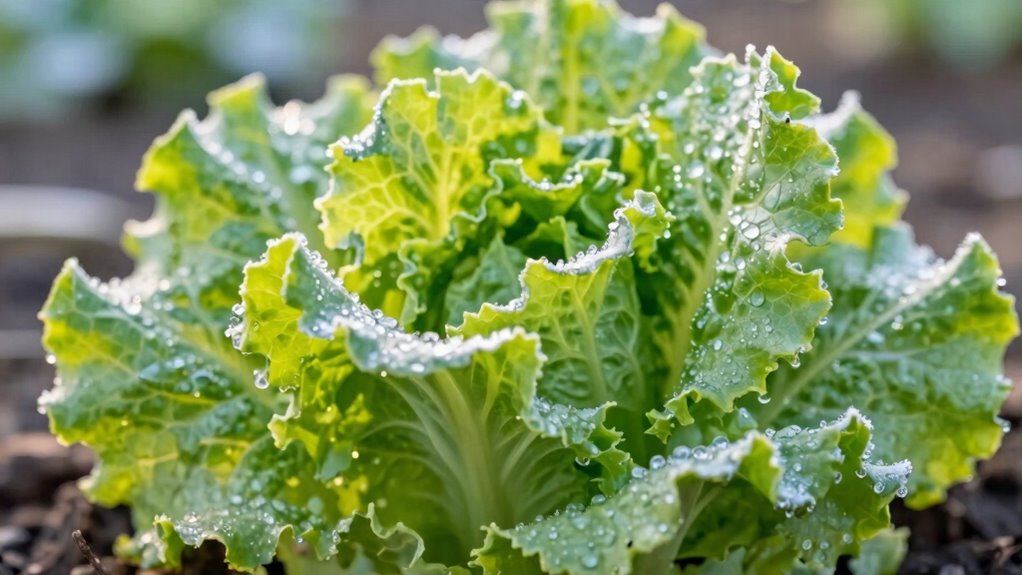
To keep winter lettuce crisp and sweet with no bitterness, harvest early in the morning when leaves are moist. Rinse gently, then dry thoroughly before storing loosely wrapped in a damp cloth or in perforated containers in your fridge. Protect plants with row covers or cold frames during cold snaps. Want to learn the full trick to consistently enjoy crisp, flavorful winter lettuce? Keep going for all the tips and secrets you need.
Key Takeaways
- Harvest lettuce early in the morning when leaves are most tender and moist for maximum crispness.
- Use cold frames or row covers to protect plants from frost and cold winds, preventing bitterness and limpness.
- Select cold-hardy varieties like romaine, butterhead, or oak leaf for better winter resilience.
- Rinse, dry thoroughly, and store leaves in perforated containers or loosely wrapped in damp cloth to maintain freshness.
- Incorporate proper soil preparation and crop rotation to boost plant health and reduce environmental stress that causes bitterness.
Why Cold Weather Turns Lettuce Bitter and Limp: and How to Prevent It
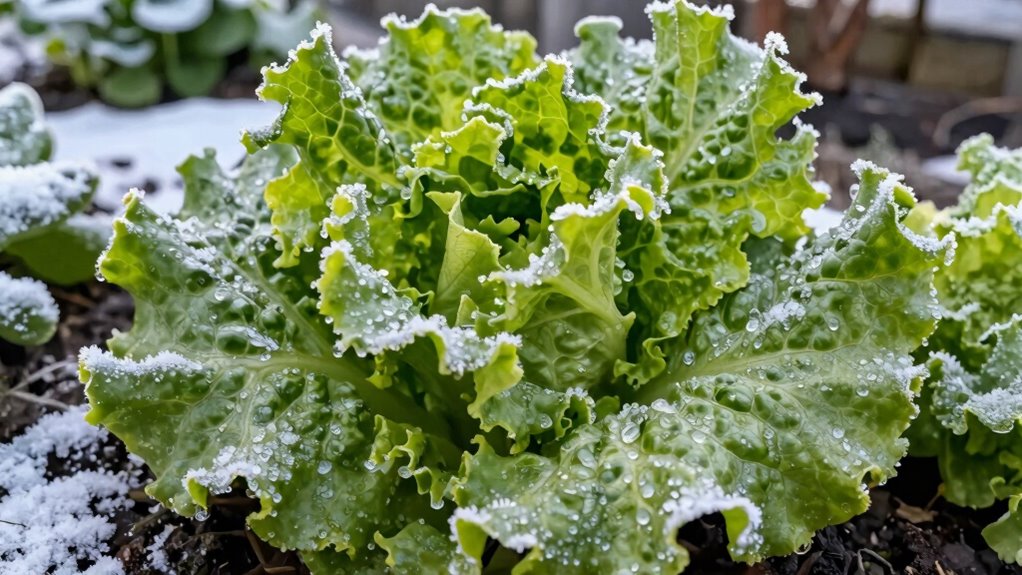
Cold weather can cause lettuce to become bitter and limp because low temperatures trigger stress responses in the plant. When it’s chilly, your lettuce struggles to maintain its internal balance, leading to bitterness and a droopy texture. To prevent this, focus on pest control, as pests can weaken plants, making them more susceptible to cold damage. Using the right fertilizer choices also helps, especially those rich in potassium and calcium, which strengthen plant cell walls and improve cold tolerance. Avoid over-fertilizing with nitrogen, as it can promote lush, tender growth that’s more vulnerable to cold stress. Proper plant nutrition is essential for enhancing cold resilience and maintaining crispness in winter. Additionally, selecting cold-hardy lettuce varieties can naturally improve your crop’s winter performance. By managing pests effectively and choosing appropriate fertilizers, you give your lettuce a better chance to withstand winter’s chill and stay crisp and flavorful. Incorporating appropriate fertilization practices can further bolster the plants’ ability to endure cold conditions. Ensuring proper soil health also supports overall plant vigor and cold tolerance, and understanding the plant’s stress responses can help tailor more effective winter protection strategies.
The Easy Trick to Keep Your Winter Lettuce Crisp and Sweet

To keep your winter lettuce crisp and sweet, soaking the leaves in ice water for about 10 to 15 minutes is a simple and effective trick. This method refreshes the leaves, restores turgor, and halts any ongoing bitterness caused by cold stress. Proper storage methods also help maintain freshness; keep lettuce in a perforated container or loosely wrapped in a damp cloth in the fridge. Additionally, using the right harvesting techniques ensures you pick leaves at peak quality, minimizing damage and spoilage. Here’s a quick comparison:
| Harvesting Technique | Storage Method | Result |
|---|---|---|
| Gentle plucking | Keep in perforated container | Maintains crispness |
| Cutting at base | Wrap in damp cloth | Preserves sweetness |
| Harvest early morning | Cool, consistent fridge | Extends freshness |
| Avoid bruising | Avoid airtight sealing | Prevents bitterness and limpness |
Being mindful of mental wellbeing can also support overall vitality and resilience during seasonal changes. Incorporating mindfulness practices may further enhance your ability to adapt to seasonal shifts and maintain your health.
How to Harvest and Handle Winter Lettuce for Maximum Freshness
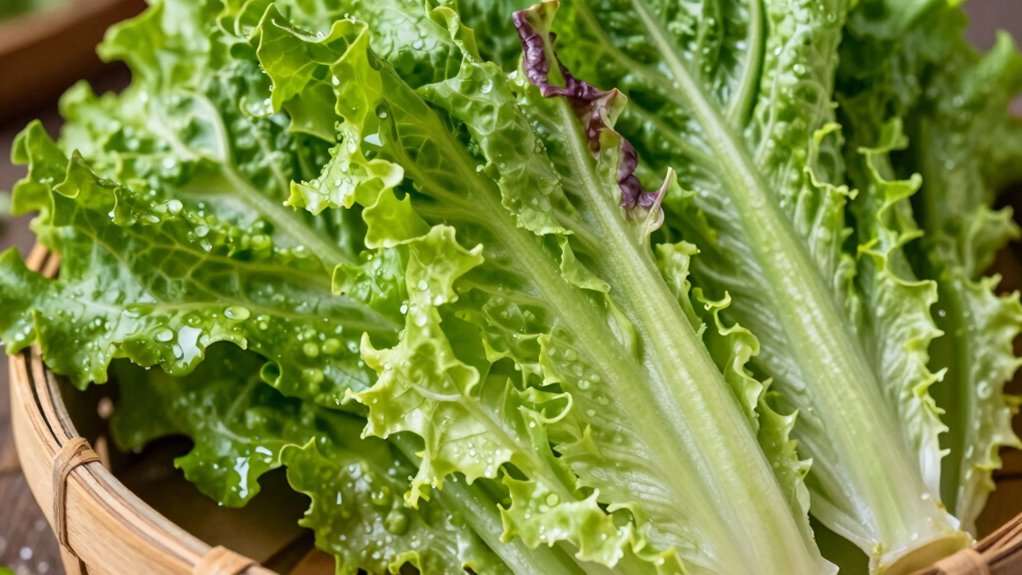
Harvesting winter lettuce at its peak guarantees you get the freshest, most flavorful leaves. When using hydroponic systems, timing is key—pick the leaves early in the morning when they’re most tender and moist. Handle your lettuce gently to avoid bruising, using sharp scissors or pruning shears to cut just above the root zone. Proper seed selection is vital; choose cold-tolerant varieties that mature quickly and resist bitterness. After harvesting, immediately rinse leaves with cold water to remove dirt and residual nutrients. Dry them thoroughly using a salad spinner or patting with a clean towel. Store your lettuce in a breathable container or perforated bag in the fridge, ensuring it stays crisp and fresh longer. Proper handling preserves flavor, texture, and maximum freshness during winter. Additionally, understanding how water quality impacts crop health can help you optimize your growing conditions for better winter harvests and maintain the overall plant vitality. Recognizing the importance of nutrient management can further enhance crop quality and resilience in cold conditions.
Tips for Growing and Protecting Lettuce During Cold Months
To keep your lettuce thriving in cold weather, consider using cold frames to shield your plants from harsh temperatures. Selecting hardy varieties that tolerate winter conditions can also bolster your success. These simple steps help guarantee your lettuce stays healthy and crisp all season long.
Use Cold Frames
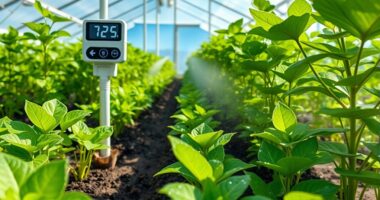
Cold frames are an effective way to protect your lettuce from harsh winter weather and extend the growing season. They create a microclimate control zone, helping you maintain consistent temperatures and humidity levels. This shields your plants from frost and cold winds, ensuring healthier, crisper leaves. Additionally, cold frames aid in pest prevention by acting as a physical barrier against insects and critters that can damage your crops. To maximize their benefits, consider these tips:
- Use ventilated lids to regulate airflow and prevent overheating
- Place cold frames on well-drained, sunny spots for ideal light exposure
- Regularly check for pests and remove any debris or pests that may find refuge inside
- Incorporate power tools like drills or saws for assembling or repairing your cold frames efficiently
- Ensure proper ventilation to balance temperature and humidity levels inside the cold frame
- Remember to monitor your climate control to keep conditions optimal for lettuce growth during winter
With proper use, cold frames make winter lettuce growing more successful and less stressful.
Choose Hardy Varieties
Choosing hardy lettuce varieties is essential for successful winter cultivation. Opt for resistant cultivars and focus on leaf selection to ensure your plants withstand cold temperatures. Hardy varieties like romaine, butterhead, and oak leaf are better suited for winter growth. Selecting resistant cultivars reduces the risk of disease and cold damage, giving you a healthier harvest. Consider the table below to understand the resilience of different lettuce types:
| Lettuce Type | Cold Tolerance | Best for Winter | Leaf Texture |
|---|---|---|---|
| Romaine | High | Yes | Crispy, thick |
| Butterhead | Moderate | Sometimes | Soft, tender |
| Oak Leaf | High | Yes | Curled, robust |
| Iceberg | Low | No | Crunchy, dense |
| Loose Leaf | Moderate to high | Yes | Varied, delicate |
Pick the right resistant cultivars for winter success. Additionally, understanding the Gold IRA markets can help diversify your investment portfolio during the winter months. Incorporating cold-hardy crops into your gardening plan is a smart strategy for year-round harvests, especially when considering the advantages of electric bikes for eco-friendly transportation and errands during the off-season. To further improve your winter gardening success, consider plant protection techniques to shield your crops from unexpected cold snaps. Proper soil preparation is also key to supporting healthy growth in cold weather.
Common Winter Lettuce Problems and How to Fix Them

Winter can bring specific challenges to your lettuce, like leaf browning and cold stress. To keep your plants healthy, you need to guarantee these issues and improve soil conditions. Addressing these common problems ensures your lettuce stays crisp and vibrant all season long. Additionally, understanding soil health fundamentals can help you optimize growing conditions and prevent some winter-related problems. Incorporating natural remedies like essential oils with antimicrobial and anti-inflammatory properties can also support plant health and deter pests naturally. Maintaining proper soil moisture levels is also crucial for preventing stress and promoting healthy leaf development during colder months. Recognizing the importance of soil aeration can further improve root health and resilience against winter stress. Enhancing soil structure through organic matter addition can further promote healthy root systems and better nutrient uptake during winter.
Preventing Leaf Browning
To prevent leaf browning in your winter lettuce, maintaining proper watering and avoiding overexposure to harsh conditions is essential. Consistently keep the soil moist but not soggy, and shield your plants from direct, intense sunlight during the coldest parts of the day. Proper leaf storage after harvest helps reduce browning and extends freshness; keep leaves cool and dry until use. Using gentle harvesting techniques also minimizes stress, preventing damage that can lead to browning. To further protect your lettuce, consider these tips:
- Cover plants with row covers during extreme weather
- Water early in the day to avoid night-time moisture buildup
- Store harvested leaves in perforated containers in the fridge to maintain crispness and prevent browning
- Regularly monitor plant health, as watering techniques and overall plant care play a crucial role in preventing issues like leaf browning during colder months.
Managing Cold Stress
Cold stress is one of the most common challenges when growing lettuce in winter, and it can cause leaves to wilt, turn yellow, or develop frost damage. To manage cold stress, you should protect your plants with row covers or cloches, which trap heat and preserve the seasonal flavor. Additionally, avoid planting lettuce in the same spot each year; rotating crops helps prevent disease buildup and improves winter resilience. Proper spacing also reduces moisture buildup, minimizing frost damage. Use the table below to identify common problems and solutions:
| Problem | Cause | Solution |
|---|---|---|
| Wilting leaves | Cold exposure | Cover with blanket or cloche |
| Frost damage | Prolonged freezing | Use row covers or mulch |
| Yellowing leaves | Nutrient deficiency or stress | Implement crop rotation practices |
This approach keeps your lettuce healthy and flavorful all winter.
Improving Soil Conditions
Healthy soil is the foundation of thriving winter lettuce. To improve soil conditions, focus on adding the right soil amendments and applying compost regularly. Proper amendments enhance drainage, aeration, and nutrient availability, preventing root rot and bitterness. Compost application boosts organic matter, enriching the soil with essential nutrients and beneficial microbes. This creates a healthier environment for your lettuce, reducing common winter problems like poor growth and bitter leaves. To maximize results, test your soil first to identify deficiencies. Incorporate compost into the topsoil and mix in amendments like calcium or magnesium if needed. Consistent soil improvement guarantees your winter lettuce develops crisp, tender leaves without bitterness.
- Selecting the right soil amendments
- Regular compost application
- Monitoring soil health for ideal growth
Simple Ways to Incorporate Fresh Winter Lettuce Into Salads
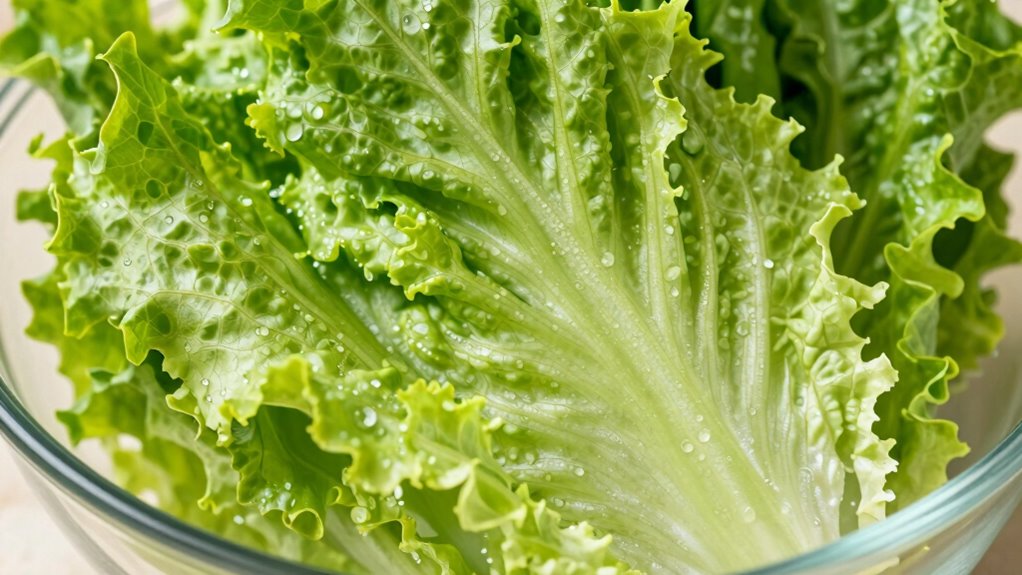
Winter lettuce can be a crisp, invigorating addition to your salads, even when it’s chilly outside. To maximize flavor and nutrition, try pairing it with various salad dressing options like vinaigrettes or creamy dressings. Incorporate it into your meals by adding slices to grain bowls, wraps, or as a topping for soups. Fresh lettuce boosts lettuce nutrition, providing vitamins and fiber. Here’s a quick way to vary your salads:
| Salad Ideas | Dressing Options |
|---|---|
| Lettuce and citrus slices | Balsamic vinaigrette |
| Mixed greens with nuts | Lemon-tahini dressing |
| Lettuce with cherry tomatoes | Honey mustard |
| Spinach and lettuce mix | Yogurt-based dressings |
| Lettuce with shredded cheese | Classic ranch |
This approach keeps your salads exciting and healthful all winter.
Frequently Asked Questions
Can Planting Lettuce Varieties Affect Winter Leaf Bitterness?
Yes, planting different lettuce varieties can affect winter leaf bitterness. Your choice of plant selection and understanding varietal differences play a key role. Some varieties naturally develop less bitterness, especially when grown in cooler weather, while others tend to be more bitter regardless of season. By selecting the right varieties suited for winter, you can enjoy crisp, mild-tasting lettuce leaves without the unwanted bitterness.
What Are the Best Indoor Lighting Options for Winter Lettuce Growth?
Forget the winter blues—your lettuce craves the spotlight! You should invest in quality grow light options like LED grow lights or full-spectrum bulbs, which mimic sunlight perfectly. Pair these with hydroponic systems for lush, crisp leaves. Don’t settle for dim, flickering lights; instead, use energy-efficient, high-intensity options to keep your greens thriving and bitter-free all season long. Your indoor garden’s greatness depends on it!
How Does Soil Type Influence Lettuce Sweetness in Winter?
You’ll find that soil type greatly influences lettuce sweetness in winter. Loamy soil, rich in nutrients, boosts flavor, while well-draining soil prevents overwatering and bitterness. Additionally, soil with good moisture retention keeps roots consistently moist, enhancing sweetness. Avoid overly sandy or compacted soils, which can stress plants and reduce sugar production. By choosing the right soil, you guarantee your lettuce stays tender, sweet, and crisp even in cold months.
Are There Natural Remedies to Enhance Lettuce Flavor During Cold Months?
Sure, just ignore the bitter cold and frost—who needs winter worries? To naturally boost flavor, try companion planting with herbs like mint or basil, which can subtly improve taste. Additionally, soil amendments like compost or kelp add nutrients that enhance lettuce’s natural sweetness. These easy tricks work like a charm, transforming dull winter greens into flavorful bites, all while giving your garden an ironic boost of energy amidst the cold.
How Long Can Winter Lettuce Be Stored Before It Loses Freshness?
You can store winter lettuce for about 7 to 10 days before it starts losing freshness. To maximize storage duration, follow refrigeration tips like keeping it in a perforated bag or container with a paper towel to absorb excess moisture. Guarantee your refrigerator is set at around 32-40°F, and avoid crushing the leaves. Proper storage helps maintain crispness and flavor during those cold months.
Conclusion
So there you have it—your secret weapon against winter lettuce betrayal. With these tips, you’ll enjoy crisp, sweet leaves that defy the cold and bitter taste. No more sad, limp greens drowning in the winter gloom. Just remember, a little cold weather tricks and a dash of humor will keep your salads fresh and your spirits high. Who knew saving lettuce could be so glamorous? Stay frosty, and keep those greens crisp!