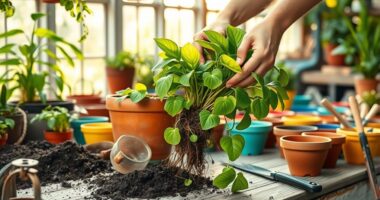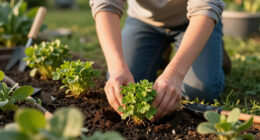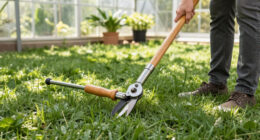

To encourage nonstop harvests, prune your herbs correctly by removing dead, damaged, or overgrown stems promptly after flowering. Cut just above leaf nodes to promote new, vigorous growth and avoid over-pruning, which weakens plants. Use sharp tools for clean cuts, and prune during ideal times like early morning or late afternoon. Regular pruning directs energy into lush, bushy foliage and speeds up regrowth. Keep learning to master the perfect technique for your herbs’ health and productivity.
Key Takeaways
- Prune herbs immediately after blooming to stimulate new growth and prolong harvest periods.
- Make clean cuts above leaf nodes to encourage bushier, faster regrowth.
- Avoid over-pruning; remove no more than one-third of the plant at a time for optimal recovery.
- Use sharp, sterile tools to prevent damage and reduce disease risk during trimming.
- Regularly trim to remove dead or damaged stems, promoting continuous, vigorous herb production.

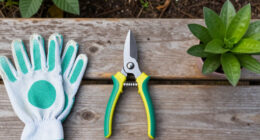
Fiskars 6" Pruning Scissors for Flower Stems, Herbs, Buds, and Small Plants, Garden Snips with Stainless Steel Blades, Gardening Trimmers with Comfortable Handle
- Ideal for Gardening Tasks: Cuts flower stems, herbs, and small plants
- Precise Micro-tip Blades: Ensures clean, healthy cuts to the tip
- Durable Stainless Steel Blades: Maintains sharpness through heavy use
As an affiliate, we earn on qualifying purchases.
As an affiliate, we earn on qualifying purchases.
Why Is Pruning Essential for Continuous Herb Growth?

Pruning is essential for keeping your herbs healthy and encouraging ongoing growth. By applying effective herb pruning techniques, you remove dead or overcrowded stems, which helps direct energy to healthy new growth. Regular pruning prevents your herbs from becoming leggy and ensures they stay bushy and productive. Using common pruning tools like sharp scissors or pruning shears makes clean cuts that minimize plant stress and reduce the risk of disease. When you prune properly, you stimulate the plant to produce more leaves and branches, leading to a fuller, more vigorous herb. Proper pruning also influences light penetration, which is vital for photosynthesis and overall plant health. This not only enhances your harvest but also keeps your herbs resilient throughout the season. In short, proper pruning is key to maintaining healthy, continuously productive herbs.
When Is the Best Time to Prune Your Herbs?
The best time to prune your herbs depends on their growth cycle and flowering stage. Timing matters because pruning too early or late can affect growth and flavor. Pruning right after blooming can encourage new growth and improve your herbs’ overall health. Additionally, understanding the specific stages of herb development can help optimize results, similar to how speech therapy techniques are tailored to individual needs for maximum effectiveness personalized intervention strategies.
Timing Matters for Pruning
Timing is essential when it comes to pruning your herbs, as doing it at the right time can promote healthy growth and a bountiful harvest. Knowing when to prune helps you avoid damaging the plant and encourages rapid regrowth. Here are key tips to time your pruning correctly:
- Prune in the early morning or late afternoon for less stress on the plant.
- Use sharp pruning tools to make clean cuts, reducing injury.
- Prune regularly, but avoid overdoing it—adjust pruning frequency based on herb type.
- Wait until herbs have fully established new growth before trimming again.
Post-Bloom Pruning Benefits
After you’ve established a regular pruning schedule, focusing on the period right after your herbs bloom can boost their health and productivity. Pruning at this stage encourages new growth, leading to a more vigorous plant. It also helps with companion planting, as healthier herbs attract beneficial insects and deter pests naturally. Additionally, removing spent blooms reduces pest attraction and prevents disease. Post-bloom pruning keeps your herbs bushy and full, making harvesting easier and more frequent. This practice can improve pest control by minimizing vulnerable, overgrown areas that pests target. Furthermore, energy-efficient practices in gardening can enhance sustainability and reduce resource use. Overall, timing your pruning after flowering maximizes plant resilience, supports continuous harvests, and enhances your herb garden’s ecological balance.
How Can You Recognize the Correct Pruning Cuts for Common Herbs?
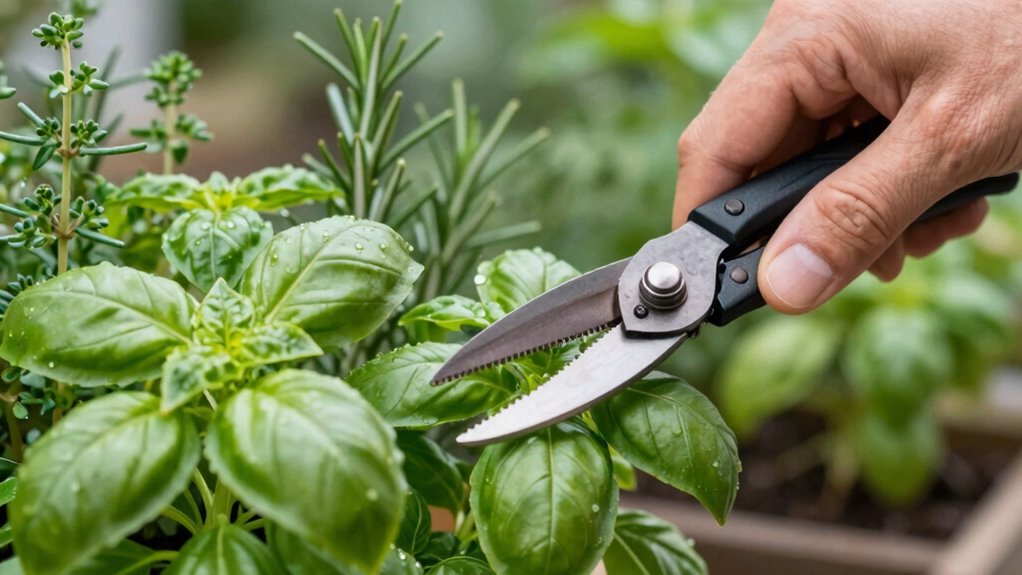
To recognize the correct pruning cuts for common herbs, you need to learn how to identify the right spots to trim without damaging the plant. Proper cutting techniques ensure healthy regrowth and prevent disease. Use sharp pruning tools to make clean cuts. Focus on these key points:
Identify the right spots to prune herbs for healthy growth and disease prevention.
- Look for new growth or soft, flexible stems to prune.
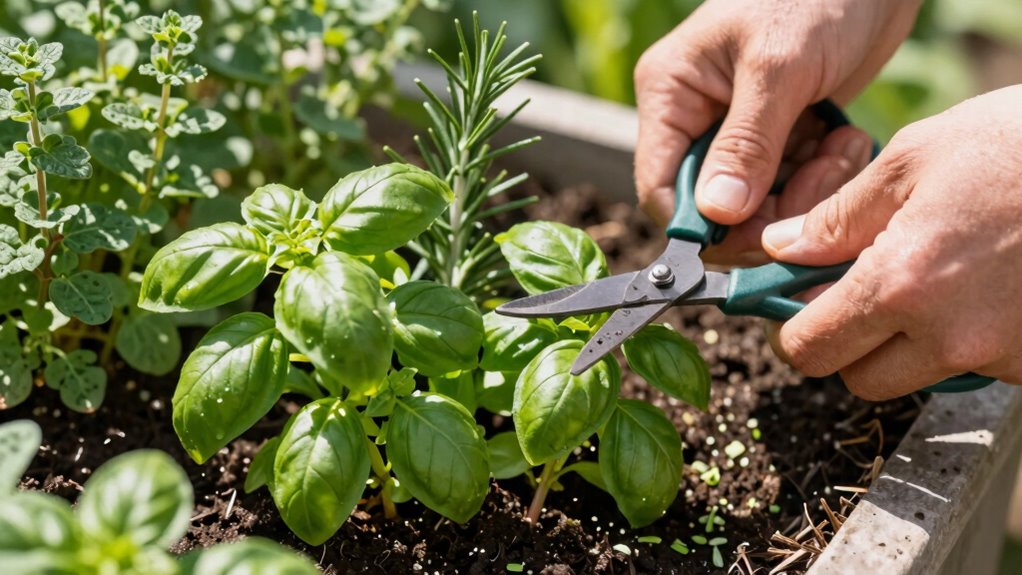
- Cut just above a leaf node or set of leaves to encourage branching.
- Remove any dead, damaged, or diseased stems immediately.
- Avoid cutting into old, woody parts that won’t recover easily.
- Understanding best pruning practices helps maintain plant health and encourages continuous harvests.
How Do You Properly Prune Your Herbs Step by Step?
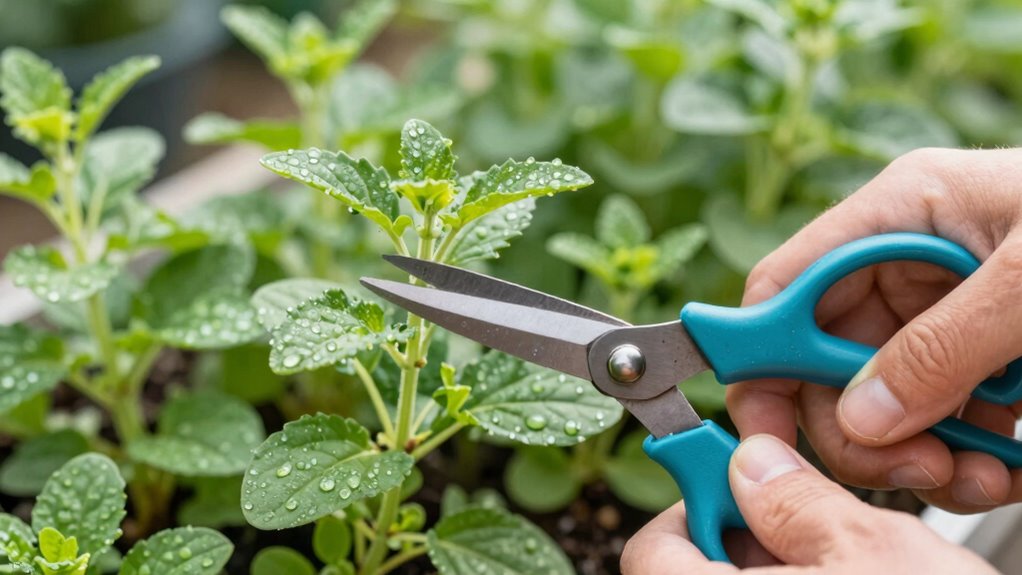
Pruning your herbs correctly starts with preparing the right tools and selecting the best time to prune. Use sharp pruning tools, like scissors or pruning shears, to make clean cuts that minimize damage. Begin by removing any dead, diseased, or yellowing leaves to promote healthy growth. Next, identify the main stems or branches to cut back, usually just above a set of healthy leaves or buds. When practicing herb pruning techniques, make your cuts at a 45-degree angle to encourage quicker healing. Always prune lightly at first, avoiding over-pruning, which can stress the plant. Regularly check your herbs and prune as needed to maintain shape, stimulate growth, and prevent bolting. Proper pruning sets the stage for nonstop harvests and vigorous regrowth. Understanding plant health and proper pruning techniques can help keep your herbs thriving and productive throughout the season.
What Are the Biggest Mistakes to Avoid When Pruning Herbs?

One common mistake is over-pruning, which can weaken your herbs and reduce their growth. Ignoring your plants’ signals, like wilting or slow recovery, can lead to unnecessary damage. To keep your herbs healthy, pay close attention and prune only what’s necessary. Understanding the “why” behind food helps you make informed decisions about plant care and encourages sustainable growth.
Over-Pruning Risks
Over-pruning can severely weaken your herbs and reduce their ability to produce flavorful leaves. When you prune too much, especially with harsh pruning, you risk stunting the plant’s growth. Using improper tools can cause damage, making plants more vulnerable to disease. To avoid these mistakes, keep in mind:
- Removing more than one-third of the plant at a time
- Using dull or inappropriate tools that crush stems
- Pruning during the wrong season or at the wrong time
- Cutting into old, woody stems instead of healthy growth
Additionally, understanding the importance of Free Floating in maintaining healthy plant growth can help guide your pruning practices.
Over-pruning can lead to stress and slow recovery. Be gentle, use sharp, proper tools, and prune strategically to keep your herbs healthy and productive.
Ignoring Plant Signals
Ignoring the natural signals your herbs send can lead to improper pruning and harm the plant’s health. Plants communicate their needs through growth signals, such as new leaf development or changes in stem structure. By disregarding these cues, you risk causing plant stress, which weakens their energy and slows regrowth. For example, pruning too early or too late can disrupt flowering or reduce yield. Pay attention to indicators like healthy new growth or signs of overgrowth. When your herbs show vibrant shoots, it’s a sign they’re ready for pruning. Conversely, neglecting these signals may leave the plant vulnerable to disease or stunted growth. Recognizing growth signals helps ensure you prune at the optimal time, promoting healthier and more abundant harvests. Always observe your herbs closely, pruning when they’re naturally ready to recover quickly and continue producing abundant harvests.
How Can You Encourage Faster Regrowth After Pruning?
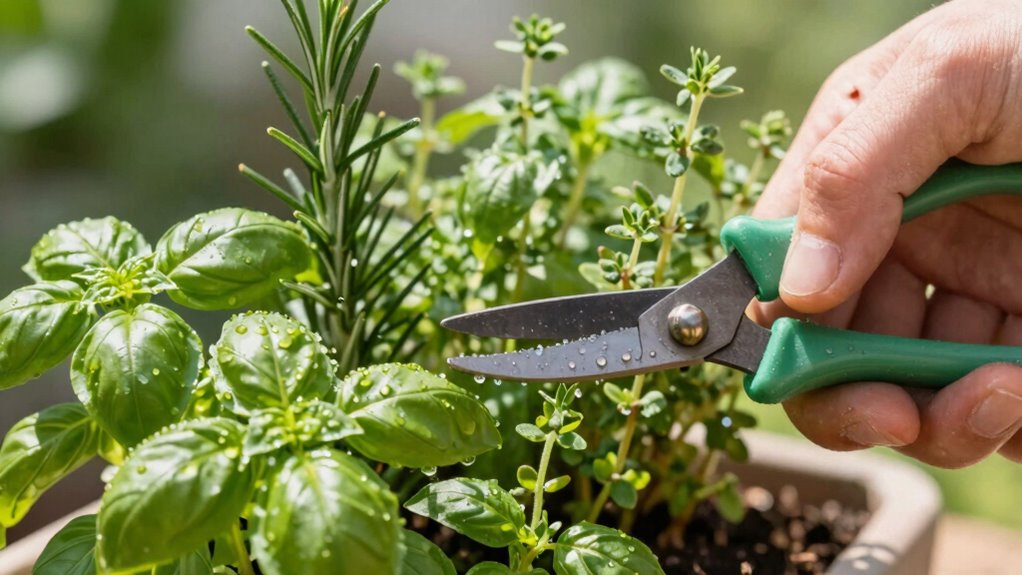
After pruning your herbs, providing ideal conditions can greatly boost their regrowth. To encourage faster herb rejuvenation, focus on smart pruning techniques and excellent care. Here are 4 ways to speed up regrowth:
Boost herb regrowth after pruning with proper watering, rich soil, balanced fertilizer, and ample sunlight.
- Ensure proper watering—keep soil consistently moist but not waterlogged.
- Use high-quality, well-draining soil to promote healthy root development.
- Apply a balanced fertilizer to supply essential nutrients for quick recovery.
- Position your herbs in full sun to maximize photosynthesis and growth.
- Incorporate professional services to optimize your garden setup and ensure your herbs receive tailored care.
How Does Regular Pruning Improve Herb Health and Flavor?
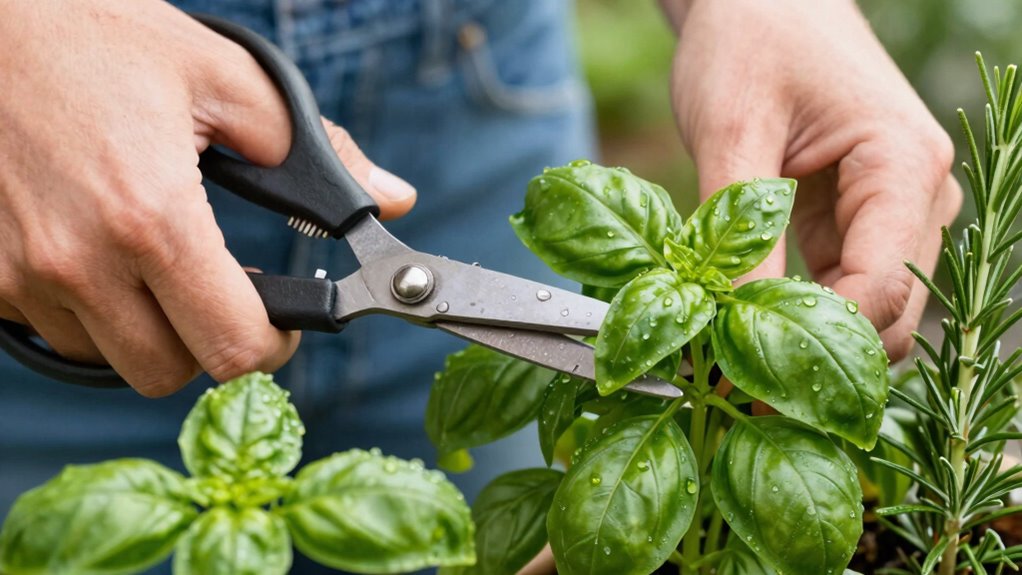
Regular pruning keeps your herbs healthy by removing dead or diseased stems, which helps prevent the spread of pests and illnesses. When you cut back old growth, you encourage better plant nutrition by allowing nutrients to focus on the healthy parts. This enhances overall vigor and prevents weak spots that pests target. Additionally, regular pruning promotes airflow through the foliage, reducing humidity and decreasing the risk of fungal infections. As a result, your herbs remain healthier and less prone to disease. Plus, pruning stimulates new, tender growth that boosts flavor by increasing essential oil production. The fresh leaves are more aromatic and potent, making your herbs tastier and more enjoyable in your culinary creations. Proper pruning truly supports both the health and flavor of your herbs. Power tools and equipment can make pruning easier and more precise, ensuring your herbs are cut correctly for optimal growth.
Troubleshooting Your Herb Pruning: When to Seek Expert Advice
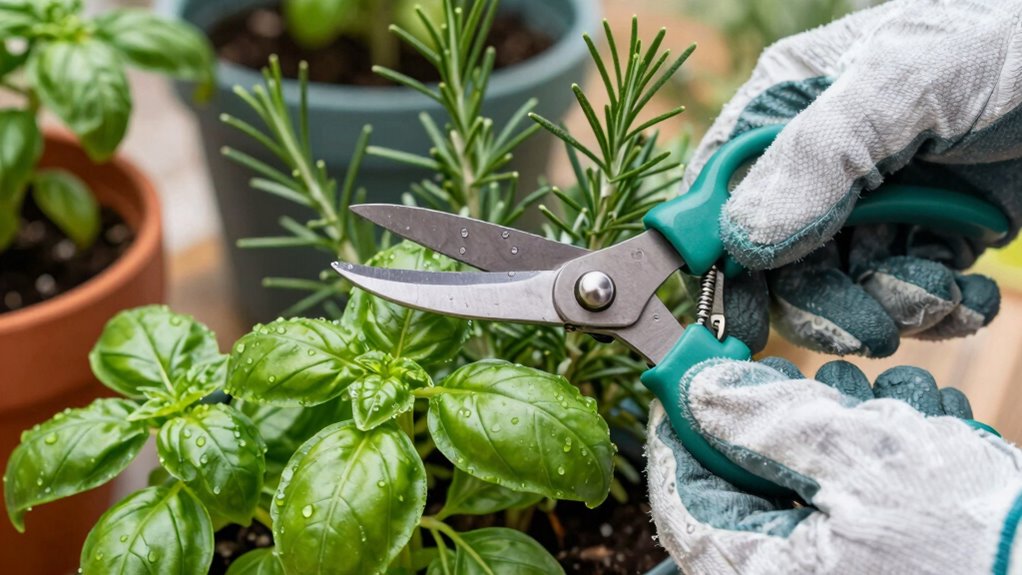
While many herb pruning issues can be managed at home, there are times when seeking expert advice becomes essential. If you notice persistent herb disease, unusual pest activity, or signs of severe damage, it’s time to consult a professional. They can help identify underlying problems and recommend effective solutions. Here are four signs to watch for:
- Unexplained wilting or yellowing of leaves
- Rapid spread of pest infestations or damage
- Signs of fungal or bacterial infections
- Herb disease symptoms that worsen despite your efforts
Addressing pest management and herb disease promptly can prevent long-term damage and promote healthy regrowth. Knowing when to seek expert advice ensures your herbs stay vigorous and productive.
Frequently Asked Questions
Can Pruning Help Herbs Resist Pests and Diseases?
Yes, pruning can help herbs resist pests and diseases by improving air circulation and reducing excess moisture, which are key factors in pest prevention and disease management. When you regularly prune, you remove dead or diseased leaves, making it harder for pests and fungi to thrive. Plus, healthy, well-maintained herbs are naturally more resilient, helping you keep pests at bay and maintain robust growth.
What Tools Are Best for Precise Herb Pruning?
For precise herb pruning, you should use sharp scissors or bypass pruners. Sharp scissors are perfect for delicate, small cuts on herbs like basil or cilantro, giving you control and a clean cut. Bypass pruners work better for thicker stems, such as rosemary or sage, ensuring you don’t damage the plant. Both tools help you prune accurately, promoting healthy growth and a tidy appearance in your herb garden.
How Often Should Herbs Be Pruned During Peak Season?
During peak season, you should prune your herbs every 2 to 3 weeks to support healthy growth cycles. Regular pruning encourages new growth, keeps the plants from becoming woody, and guarantees a continuous harvest. Pay attention to your herbs’ specific needs, as some may require more frequent trimming. Consistent pruning not only boosts growth but also helps prevent disease, keeping your herbs thriving throughout the season.
Does Pruning Affect Herb Seed Production?
Pruning can influence herb seed production, but it depends on how you do it. When you prune properly, you encourage healthy growth, which can boost your herb seed yield. However, excessive or improper pruning might reduce seed production, so using effective seed production techniques is vital. By balancing pruning with seed collection, you ensure your herbs stay productive and your seed supply remains abundant throughout the season.
Are There Herbs That Should Not Be Pruned?
Some herbs, like basil and mint, thrive with regular pruning, but others, such as lavender and rosemary, are more sensitive to herb pruning myths and pruning misconceptions. You should avoid pruning herbs that are woody or have not yet established a strong structure, as over-pruning can stunt their growth. Think of pruning as a delicate dance—knowing when to step back guarantees your herbs grow resilient and lush without harm.
Conclusion
By mastering proper pruning techniques, you’ll keep your herbs thriving like a well-tuned garden symphony. Regularly trimming encourages faster regrowth, healthier plants, and richer flavors, turning your herb garden into a nonstop harvest. Think of pruning as giving your herbs a gentle nudge to grow stronger and more vibrant. With patience and practice, you’ll enjoy bountiful, flavorful herbs season after season—like a steady heartbeat fueling your culinary creations.