To create watering schedules that truly work, you should match your plant’s watering needs with the amount of natural light they receive, not just a calendar. Observe how much sunlight each plant gets throughout the day and adjust watering frequency accordingly—more light typically means more frequent watering. Consistently monitor soil moisture and watch for signs of over or underwatering. Keep these natural cues in mind to help your plants thrive; you’ll discover more effective tips ahead.
Key Takeaways
- Adjust watering frequency based on natural light exposure and plant transpiration rates, rather than strict calendar schedules.
- Monitor soil moisture and plant response to seasonal and daily light changes to tailor watering needs.
- Increase watering during periods of bright, direct sunlight when transpiration is higher, and reduce in low-light conditions.
- Use natural light patterns to observe growth and hydration cues, aligning watering routines with environmental cues.
- Incorporate seasonal light variations into watering strategies for healthier plants and better resilience.
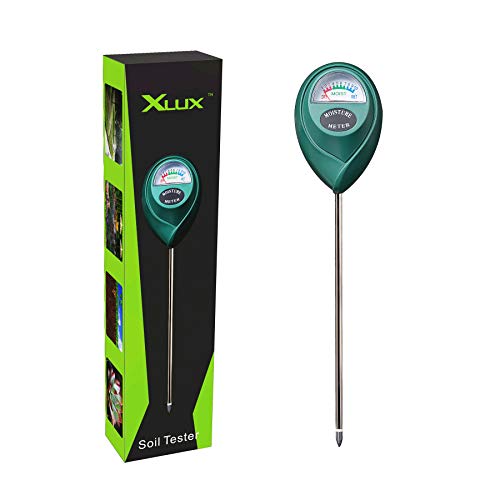
XLUX Soil Moisture Meter (Since 2015) – Durable 304 Stainless Steel Probe & Virgin ABS – Instant Read Hygrometer for Garden, Indoor & Outdoor Plants (Upgraded Design)
Trusted Since 2015: Become one of the many plant lovers who rely on the proven accuracy of XLUX….
As an affiliate, we earn on qualifying purchases.
As an affiliate, we earn on qualifying purchases.
Why Watering Plants Based on Light Exposure Is More Effective Than a Calendar

While using a fixed watering schedule might seem simple, watering plants based on light exposure actually leads to healthier, more resilient growth. When you adjust watering frequency to the amount of light your plants receive, you help them develop stronger root systems and overall better plant growth. Light levels influence how quickly plants use water; sunnier conditions mean faster water uptake. Relying solely on a calendar can cause overwatering or underwatering, which stresses your plants and hampers growth. By observing light exposure, you tailor watering to your plants’ real needs, promoting consistent, healthy growth. This approach guarantees your plants aren’t deprived or drowned, making your watering routine more effective and supporting their long-term vitality. Monitoring plant water needs based on light exposure can further optimize watering practices and improve plant health.
indoor plant grow light
As an affiliate, we earn on qualifying purchases.
As an affiliate, we earn on qualifying purchases.
How to Accurately Assess Your Plants’ Light Levels
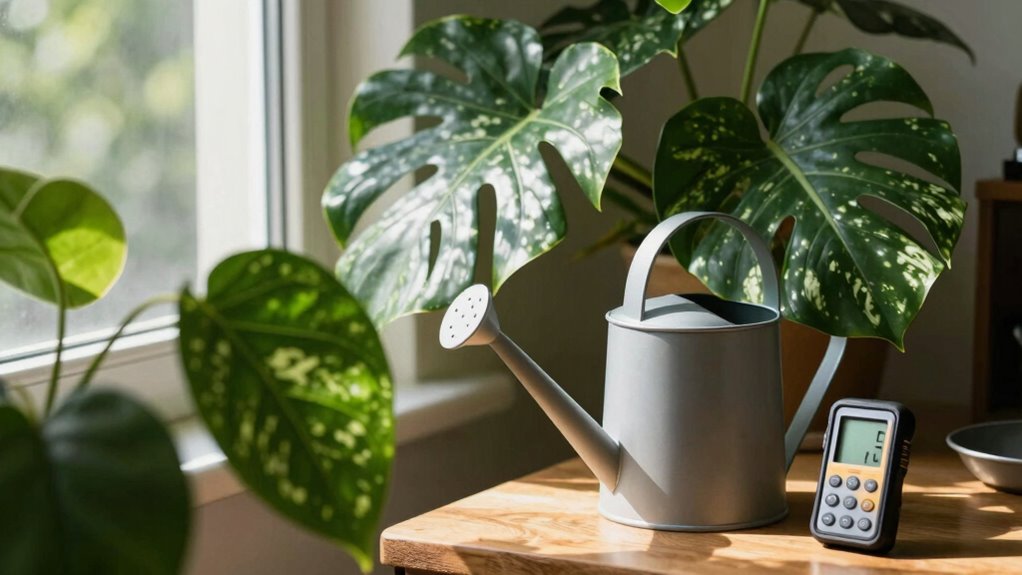
To accurately assess your plants’ light levels, start by observing how much natural light they receive throughout the day. Note whether they’re in direct sunlight or shaded areas, and track changes over different times. Healthy soil aeration is essential, as compacted soil can hinder root growth and affect how plants respond to light. If you notice roots are tightly packed or circling, root pruning can help improve root spread and overall plant health, making it easier to gauge light needs. Proper soil aeration can enhance root development and make light exposure more effective. By understanding how light interacts with your plants’ environment and ensuring good soil conditions, you can better match watering schedules to their actual light exposure. This clear assessment helps prevent overwatering or underwatering, promoting healthier, more resilient plants.

Automatic Plant Waterer Indoor Self Watering System for 15 Potted Plants, Auto Drip Irrigation Kit Programmable Water Timer with Smart Humidity Detection
Butler-grade watering system – You're unlocking the freedom to embark on journeys with your loved ones, cherishing moments…
As an affiliate, we earn on qualifying purchases.
As an affiliate, we earn on qualifying purchases.
How Light Intensity Affects When and How Much You Water

Understanding how light intensity impacts your plants helps you tailor watering schedules more effectively. When light intensity is high, photosynthesis rates increase, causing your plants to use water more quickly. This means they may need more frequent watering, especially during peak sunlight hours. Conversely, in low-light conditions, photosynthesis slows down, and plants require less water, reducing the risk of overwatering. Light diffusion also plays a role; in diffused light environments, plants receive more evenly distributed light, which can influence their water needs. Too much direct light can lead to faster soil drying, while indirect or diffused light may slow water consumption. Additionally, energy-efficient cloud solutions can help monitor environmental conditions more precisely, allowing for smarter watering decisions. Paying attention to how your plants respond to different light levels enables you to water more accurately, promoting healthy growth without over or underwatering.
plant light meter
As an affiliate, we earn on qualifying purchases.
As an affiliate, we earn on qualifying purchases.
How to Adjust Your Watering Routine for Different Light Conditions
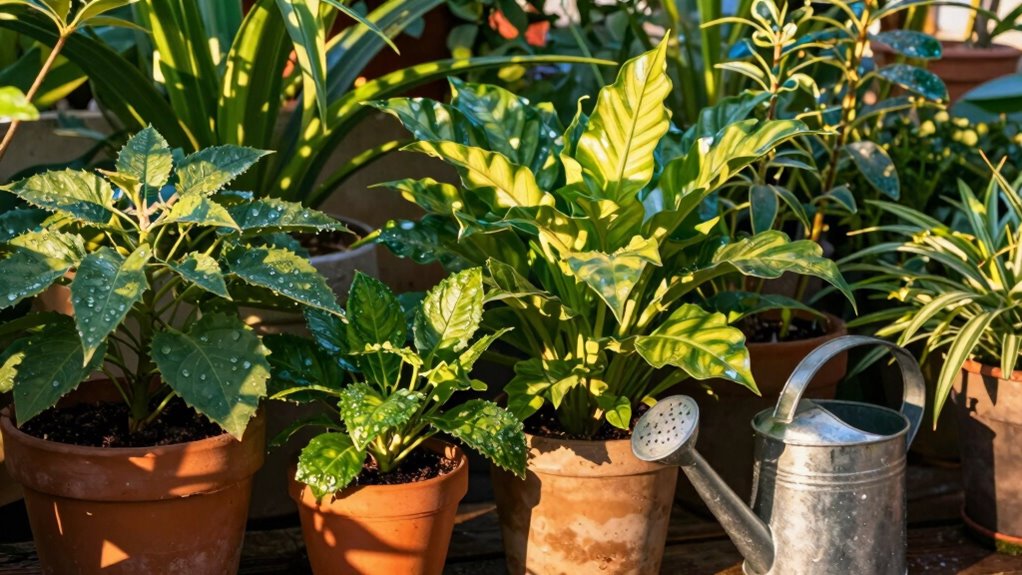
Adjusting your watering routine based on light conditions is essential for maintaining healthy plants. When your plants adapt to brighter light, they typically need more frequent watering because they lose moisture faster through increased transpiration. Conversely, in lower light, they require less watering to prevent overwatering. Observe how your plants respond; if they show signs of light adaptation, adjust your watering frequency accordingly. For example, move from a routine based on a fixed schedule to one that considers the light environment. Consistently monitor soil moisture, and be ready to modify your watering routine as light conditions change. This approach guarantees your plants receive ideal hydration, promoting healthy growth without risking over- or underwatering. Additionally, understanding the plant’s natural growth patterns and their light needs can help tailor your watering schedule more effectively.
How to Spot Overwatering or Underwatering Signs Related to Light
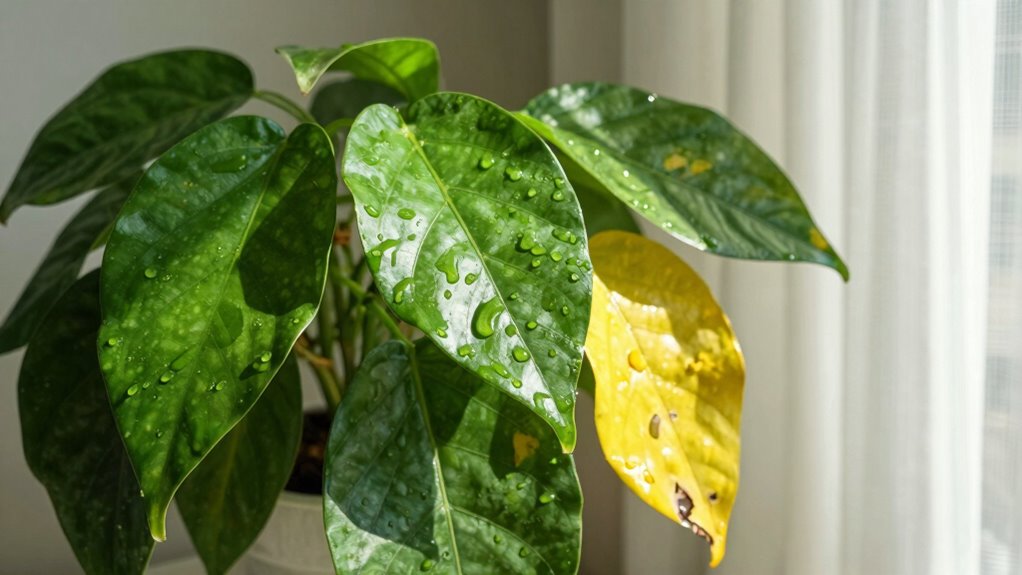
Pay attention to your plant’s wilting leaves, especially when the light levels change, as this can signal over- or underwatering. Check the soil moisture regularly—wet soil may mean overwatering, while dry soil suggests underwatering. Also, look for leaf color shifts, like yellowing or browning, which often relate to watering issues influenced by light conditions. Incorporating comprehensive architectural solutions can help create optimal environments that reduce such issues.
Wilting Leaves and Light
Wilting leaves can signal issues with light exposure that often relate to watering problems. When your plant shows leaf wilting, it might be experiencing light stress, which can mimic overwatering or underwatering signs. To determine if light stress is the cause, look for specific clues:
- Pale or bleached leaves, indicating too much light
- Dark, dull foliage suggesting insufficient light
- Uneven leaf wilting, often on the side facing the light source
These signs can lead to leaf wilting even if watering practices are correct. Recognizing the connection between light and leaf wilting helps you adjust your plant’s environment effectively, preventing unnecessary watering or neglect. Proper light conditions support healthy growth and reduce watering-related stress. Understanding plant light requirements is essential for maintaining healthy foliage and overall plant vitality.
Soil Moisture Changes
When your plant’s leaves show signs of stress, examining soil moisture can reveal whether overwatering or underwatering is at play. Overwatering often causes the soil to stay too wet, leading to poor soil aeration and root rot, while underwatering results in dry, compacted soil lacking moisture. Check the soil’s moisture level by feeling it with your finger; if it’s consistently wet, you may be overwatering, especially if the plant receives less light. Conversely, if the soil feels dry, underwatering could be the issue. Additionally, consider soil pH balance—imbalances can hinder water absorption, exacerbating stress symptoms. Adjust watering frequency based on light exposure, aiming to keep the soil moist but not waterlogged, ensuring ideal soil conditions for healthy growth. Recognizing natural soil moisture fluctuations influenced by landscaping can help optimize watering routines.
Leaf Color Variations
Have you noticed changes in your plant’s leaf color that might indicate watering issues related to light? Variations in leaf pigmentation often reveal underlying problems. Overexposure to intense light can cause leaves to fade or develop a yellowish hue due to chlorophyll decline, signaling stress. Conversely, insufficient light may lead to dull, pale leaves as chlorophyll production drops. Watch for these signs:
- Pale or yellowing leaves indicating chlorophyll decline from overexposure
- Dark, vibrant leaves but with poor growth, suggesting inadequate light and watering imbalance
- Uneven leaf coloration, pointing to inconsistent light or watering issues affecting pigmentation
- Recognizing the importance of consistent storytelling can help reinforce healthy plant care routines and prevent confusion caused by inconsistent symptoms
Understanding these cues helps you adjust watering schedules to match light conditions, ensuring healthy leaf color and overall plant robustness.
Practical Tips for Tracking Light and Water Needs Year-Round
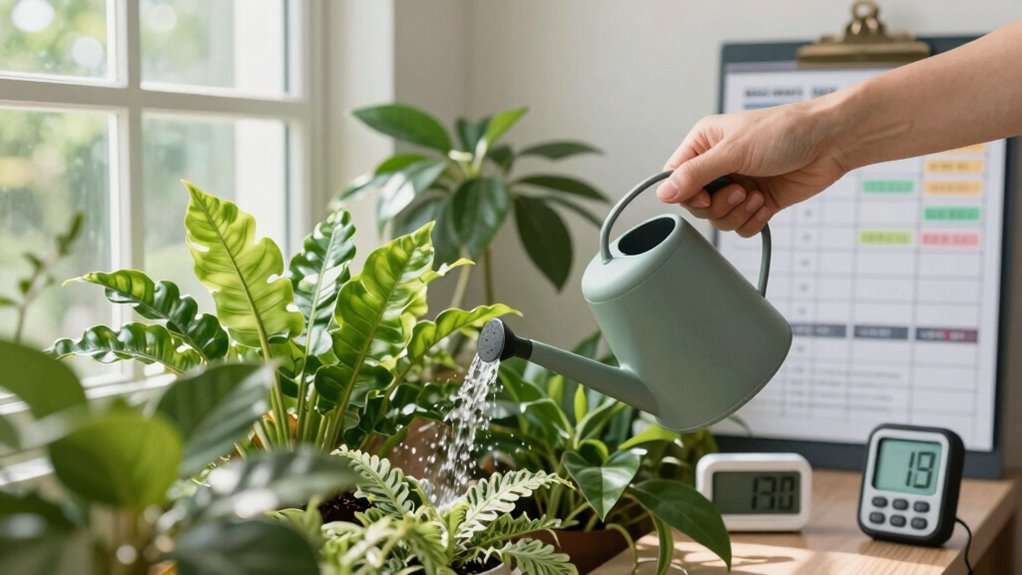
To effectively track your plants’ light and water needs throughout the year, start by observing their natural growth patterns and seasonal changes. Pay attention to how their growth accelerates or slows, which indicates when they need more or less water and light. Regularly check the soil moisture level, feeling for the right balance—not too wet or dry. Notice changes in root development; healthy roots are a good sign, while slowed or stunted roots suggest adjustments are needed. Keep a simple journal or notes to record seasonal variations in light exposure and watering frequency. This practice helps you develop an intuitive understanding of your plants’ evolving needs, ensuring they thrive year-round without relying on a fixed calendar. Additionally, understanding the specific watering schedules suited for different types of planters and plant varieties can further enhance your care routine.
Common Mistakes When Watering on a Calendar Instead of According to Light

Relying solely on a fixed watering schedule without considering your plants’ natural light patterns often leads to overwatering or underwatering. When you ignore light intensity, you risk misjudging the ideal watering frequency, which varies with sunlight exposure. For example, plants in bright light need more frequent watering, while those in lower light require less. Common mistakes include:
Avoid overwatering by adjusting your watering schedule to changing light conditions.
- Watering on a set calendar regardless of changing light conditions
- Ignoring fluctuations in light that affect water needs
- Overwatering during periods of low light, leading to root rot
These errors can cause stress and health issues for your plants. Instead, observe how light varies throughout the day and adjust your watering accordingly. Light exposure significantly influences water requirements, so matching watering to light intensity ensures your plants stay healthy and thrive naturally.
Frequently Asked Questions
Can Watering Needs Change With Seasonal Light Variations?
Yes, watering needs do change with seasonal light fluctuations. As days get shorter or longer, plants may require less or more water to stay healthy. You should adjust your watering consistency accordingly, giving less water during darker, cooler months and more when the light increases in spring and summer. Paying attention to these natural changes helps prevent overwatering or underwatering, ensuring your plants thrive year-round.
How Do Indoor and Outdoor Light Differences Affect Watering Schedules?
Imagine your plant as a traveler adjusting its pace based on the journey’s brightness. Indoors, lower light intensity means soil moisture stays longer, so water less often. Outdoors, abundant sunlight quickly dries the soil, requiring more frequent watering. By paying attention to soil moisture and light differences, you’ll match watering needs precisely, helping your plant thrive whether in cozy indoors or bright outdoor settings.
What Tools Are Best for Measuring Light Exposure in Plants?
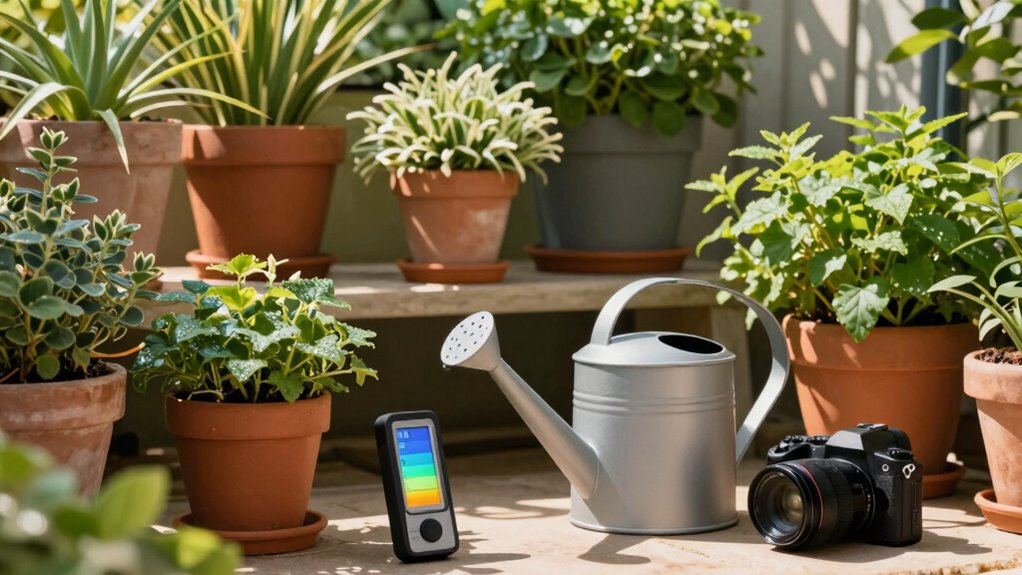
You should use light meters or light sensors to measure your plants’ exposure accurately. Light meters provide precise readings of light intensity, helping you determine if your plants get enough sunlight or need supplemental lighting. Light sensors can be placed in your plant’s environment to monitor light levels continuously. These tools give you real-time data, so you can adjust watering and lighting schedules effectively, ensuring healthy growth.
Do Plant Species Respond Differently to Light-Based Watering?
Think of your plants like characters from a Shakespeare play—each with unique light tolerances that influence watering needs. Different species respond differently to light exposure, affecting their watering frequency. For example, sun-loving plants may need more frequent watering, while shade-tolerant ones require less. By understanding each plant’s light tolerance, you can tailor watering schedules, ensuring healthy growth without overwatering or underwatering.
How Long Should I Observe Light Patterns Before Adjusting Watering?
You should observe your plant’s light patterns for at least one to two weeks before making any watering adjustment. During this time, track changes in sunlight exposure, such as intensity and duration. This light observation helps you understand your plant’s needs better, ensuring you match watering to light rather than a fixed schedule. Once you notice consistent patterns, you can confidently adjust your watering, promoting healthier growth.
Conclusion
If you ignore your plants’ light and stick to a boring calendar, don’t be surprised when your lush green jungle turns into a droopy, sad disaster. By matching watering to light, you’ll transform your plants into thriving, envy-inducing beauties that practically thank you every day. Say goodbye to soggy roots or crispy leaves—embrace the power of light-based watering and watch your indoor garden become the envy of every plant lover out there!