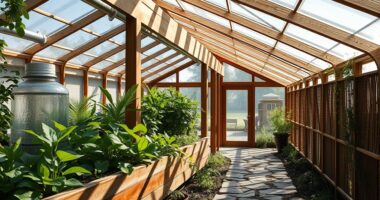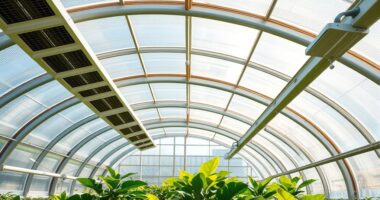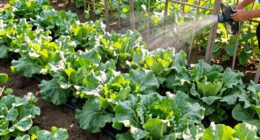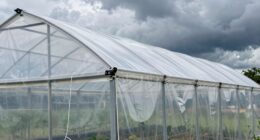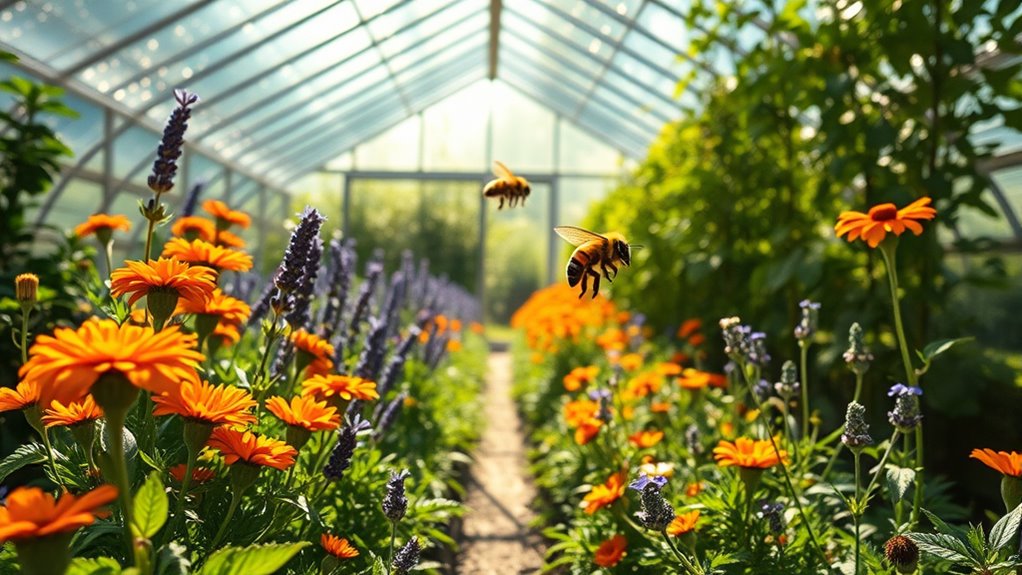

To support pollinators in your greenhouse, choose native flowering plants, herbs like lavender and mint, and vegetables such as squash that attract bees year-round. Avoid chemical pesticides and use organic methods for pest control. Create nesting spaces like bee hotels and provide continuous bloom spaces with diverse plants. Incorporating these practices boosts pollinator health and benefits your crops. Keep exploring ways to make your greenhouse more bee-friendly and promote biodiversity for a thriving garden.
Key Takeaways
- Plant native, flowering plants and herbs that bloom year-round to provide continuous nectar and pollen sources.
- Avoid chemical pesticides; use organic pest management methods to protect pollinators’ health.
- Incorporate habitats like bee hotels, wildflower strips, and nesting sites within the greenhouse.
- Provide shallow water sources with pebbles or stones for pollinator hydration and safety.
- Educate yourself on pollinator needs and adapt practices to support biodiversity and ecosystem health.
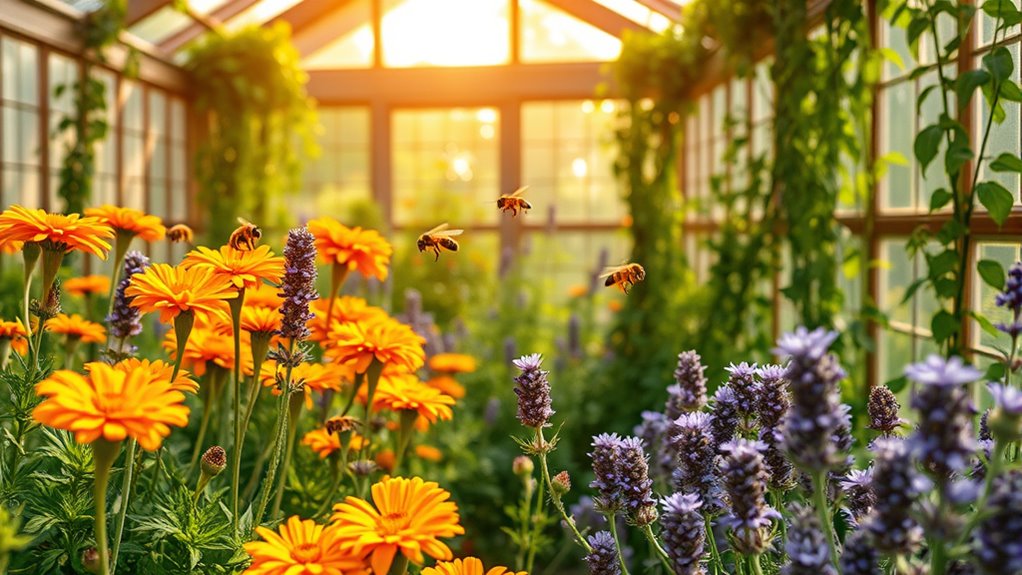
Creating a bee-friendly greenhouse is a rewarding way to support pollinators while enjoying fresh, homegrown produce year-round. When you design your greenhouse with pollinator habitats in mind, you provide essential resources that help sustain bee populations, which are crucial for healthy plant growth and crop yields. Incorporating sustainable practices into your gardening routine not only benefits the environment but also creates a thriving ecosystem within your space. By focusing on these aspects, you can cultivate a productive, eco-friendly environment that benefits both you and local pollinators.
Start by selecting plants that attract bees and other pollinators. Native flowering plants, herbs like lavender, thyme, and mint, and flowering vegetables such as squash and cucumbers are excellent choices. These plants provide nectar and pollen, which are critical food sources for pollinators. Make sure your greenhouse layout offers a variety of flowering plants that bloom at different times of the year, creating continuous pollinator habitats. This diversity helps maintain healthy bee populations and encourages pollination of your crops. You’ll notice increased fruit and vegetable production as a result.
Choose native flowers and herbs like lavender and thyme to attract and support pollinators year-round.
Implement sustainable practices throughout your greenhouse operations. Avoid using chemical pesticides, which can be harmful to bees and other beneficial insects. Instead, opt for organic pest management methods, such as introducing natural predators or manually removing pests. Maintain soil health by composting organic waste and using natural fertilizers, which promote robust plant growth without risking pollinator safety. Incorporate water sources like shallow dishes with pebbles or birdbaths to provide hydration for bees without creating breeding sites for mosquitoes. These small steps help create a safe, sustainable environment that supports pollinator health. Additionally, choosing pesticide-free options is essential for protecting pollinators from exposure to harmful chemicals.
Creating diverse pollinator habitats inside your greenhouse encourages bees to thrive. Include features like bee hotels, native wildflowers in pots, or wildflower strips along the edges. These elements serve as nesting sites and resting areas for bees, increasing their chances of survival and encouraging them to frequent your greenhouse regularly. Remember, providing shelter and food sources year-round is key to maintaining healthy pollinator populations. Your efforts will result in more effective pollination, higher yields, and healthier plants.
Finally, educate yourself about the needs of pollinators and stay updated on sustainable practices. The more you learn, the better you can adapt your greenhouse to support pollinator health and biodiversity. By intentionally creating pollinator habitats and embracing sustainable practices, you’re not only enhancing your gardening success but also contributing to the conservation of essential bee populations. This holistic approach ensures that your greenhouse remains a productive, eco-friendly haven that benefits nature and your harvest equally.
Frequently Asked Questions
How Can I Attract Native Pollinators to My Greenhouse?
You can attract native pollinators to your greenhouse by creating native bee habitats, such as planting native flowering plants that bloom throughout the season. Incorporate a diverse array of flowering plant species to provide pollen and nectar sources, encouraging pollinator visits. Avoid pesticides, and add features like bee hotels or undisturbed areas for nesting. These efforts will support native pollinators and improve your greenhouse’s overall health and productivity.
What Are the Best Plants for Supporting Pollinator Health Indoors?
You might be surprised that native plants like bee balm, coneflowers, and milkweed make perfect indoor choices for supporting pollinator health. When you incorporate native plant selection into your greenhouse, you create a pollinator habitat creation that naturally attracts and sustains bees, butterflies, and other pollinators. This cozy habitat encourages your pollinators to thrive, ensuring your plants get the pollination they need to flourish indoors, just like in nature.
How Do I Balance Pest Control With Pollinator Safety?
To balance pest control with pollinator safety, you should rely on chemical safeguards that are targeted and minimal, avoiding broad-spectrum pesticides. Opt for pest-resistant crops and integrated pest management techniques to reduce chemical use. Always choose natural or organic solutions whenever possible, and apply treatments during times when pollinators are less active. This approach helps protect your pollinators while effectively managing pests inside your greenhouse.
Are There Specific Greenhouse Designs That Enhance Pollinator Activity?
You might be surprised to learn that greenhouse designs emphasizing vertical integration and passive ventilation can boost pollinator activity. These features create a more natural environment, improving airflow and light, which attract bees and other pollinators. By minimizing artificial barriers and maintaining a stable climate, your greenhouse encourages pollinator visits, ultimately enhancing plant pollination and productivity. Designing with these elements in mind makes your greenhouse a thriving pollinator-friendly space.
Can I Grow Pollinator-Friendly Plants Year-Round Indoors?
Yes, you can grow pollinator-friendly plants year-round indoors by selecting seasonal plants that bloom at different times. Create indoor pollinator habitats with diverse flowering species, ensuring continuous nectar sources. Use grow lights to mimic natural sunlight, and maintain proper humidity and temperature. This approach keeps pollinators active and healthy year-round, supporting their essential role while beautifying your indoor space. Regularly rotate plants to sustain ongoing pollinator activity.
Conclusion
By choosing bee-friendly plants and avoiding harmful chemicals, you can create a thriving greenhouse oasis that supports pollinators. Some might worry it’s complicated or risky, but it’s actually easy and rewarding. Plus, you’ll enjoy healthier, more vibrant plants and the satisfaction of helping bees survive. So go ahead—embrace eco-friendly practices and watch your greenhouse flourish with buzzing life and beauty. It’s a simple step that makes a big difference for pollinators and your garden’s future.