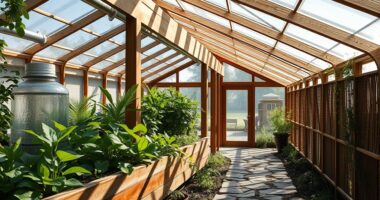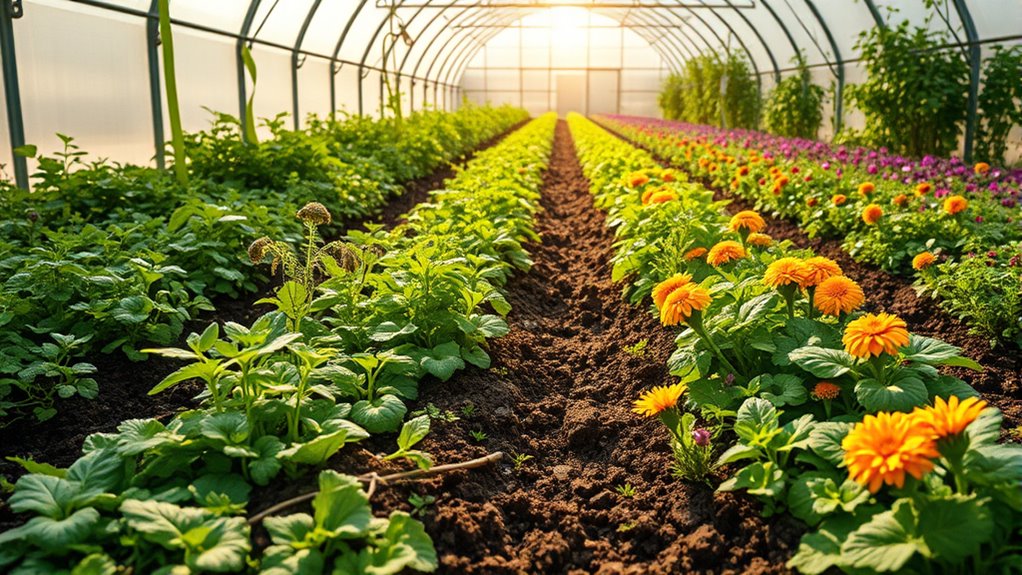

Living mulch and cover crops in your greenhouse can boost soil health, improve nutrient cycling, and reduce erosion. They attract beneficial insects, naturally control pests, and create a healthier environment for your crops. By choosing the right species and managing their growth, you can cut down on chemical use and promote sustainable farming. Keep exploring how these practices can transform your greenhouse into a resilient, productive ecosystem.
Key Takeaways
- Living mulch and cover crops improve soil health, structure, and fertility, promoting sustainable greenhouse cultivation.
- They attract beneficial insects, reducing the need for chemical pest control and supporting biological pest management.
- Cover crops protect against soil erosion, moisture loss, and temperature extremes, creating a stable environment for main crops.
- Proper selection and management of species enhance microbial diversity and suppress diseases in the soil ecosystem.
- Implementing living mulch contributes to a resilient, eco-friendly greenhouse system with long-term productivity benefits.
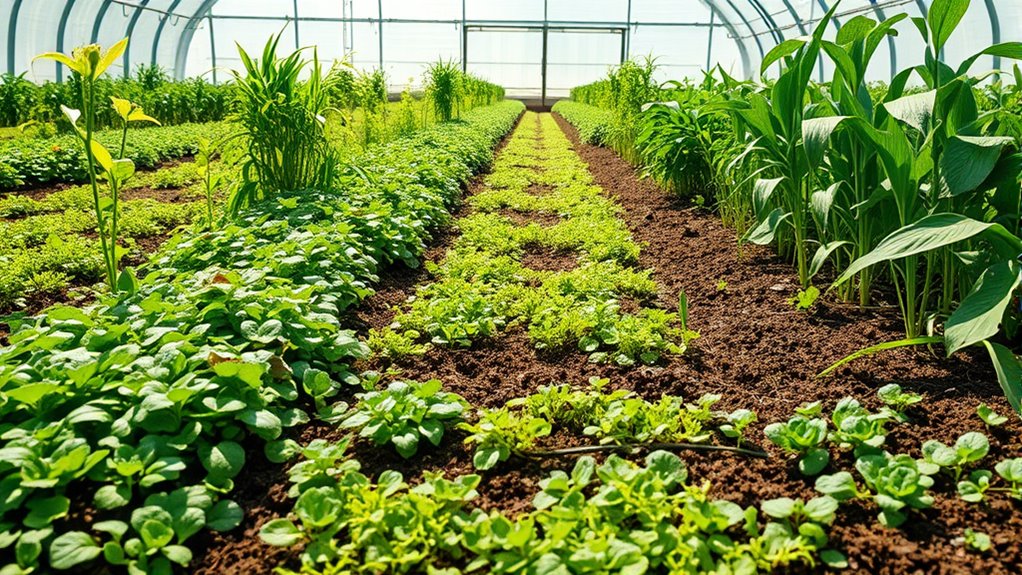
Have you ever considered using living mulch and cover crops to improve your greenhouse environment? These strategies can considerably boost soil health and enhance pest management—two critical factors for a thriving greenhouse. Living mulch involves planting ground cover plants alongside your main crops, creating a living barrier that benefits the soil and reduces pest issues. Cover crops, on the other hand, are grown specifically to cover the soil during off-season periods, providing similar advantages. Both practices help maintain and improve soil structure, fertility, and microbial activity, which are essential for healthy plant growth.
Using living mulch and cover crops enhances soil health and natural pest control in greenhouses.
In a greenhouse setting, soil health is often overlooked, but it’s fundamental to achieving consistent yields and plant vitality. When you introduce living mulch or cover crops, you promote a diverse microbial ecosystem that naturally suppresses disease-causing organisms and enhances nutrient cycling. These plants help prevent soil erosion, retain moisture, and reduce compaction, ensuring that your main crops have access to a stable, nutrient-rich environment. By using living mulch, you create a living weed barrier, diminishing the need for chemical weed control and reducing soil disturbance. This continuous cover shields the soil from temperature extremes and moisture loss, fostering a healthier root zone. Payment processing insights show that protecting payment data is essential for business integrity, similar to how maintaining soil integrity is crucial for plant health.
Pest management is another area where living mulch and cover crops excel. Certain cover crops, such as clover or buckwheat, attract beneficial insects like predatory beetles and parasitic wasps that feed on common greenhouse pests. This biological control decreases your reliance on chemical pesticides, making your operation more sustainable and less risky for plant health. Additionally, a dense cover crop or living mulch can physically block pests from reaching your main crops, acting as a barrier that disrupts pest movement and oviposition. Some cover crops even release natural compounds that repel pests or disrupt their lifecycle, further reducing infestations.
Implementing living mulch and cover crops is straightforward, but it requires planning. You need to select species compatible with your main crops, considering factors like growth habit, water needs, and potential allelopathic effects. Proper timing ensures that cover crops are terminated or integrated into your main planting schedule without hindering growth. Regular monitoring and adjusting your approach can maximize the benefits, creating a resilient, self-sustaining greenhouse environment.
Incorporating living mulch and cover crops isn’t just about sustainability; it’s about creating a balanced ecosystem that supports your plants from the ground up. By enhancing soil health and managing pests naturally, you’ll notice improved crop quality, reduced chemical use, and a more resilient greenhouse system overall.
Frequently Asked Questions
How Do Living Mulches Affect Greenhouse Humidity Levels?
Living mulches help with humidity management by increasing moisture levels through transpiration, which can elevate greenhouse humidity. They also aid in microclimate regulation by providing a more stable environment, reducing temperature fluctuations, and maintaining consistent humidity. As a result, you’ll create a healthier, more controlled climate for your plants, minimizing stress and promoting growth. Just monitor humidity levels regularly to prevent excess moisture, which could lead to diseases.
Can Cover Crops Be Used in Hydroponic Greenhouse Systems?
Yes, you can use cover crops in hydroponic greenhouse systems to improve soil health and increase crop diversity. While traditional hydroponics don’t use soil, integrating cover crops in media beds or root zones can enhance nutrient cycling and suppress pests. This approach boosts overall system resilience, promotes sustainable practices, and diversifies your crops, leading to healthier plants and better yields in your greenhouse environment.
What Are the Best Cover Crop Options for Pest Control?
You should choose cover crops that act as pest repellents or serve as companion plants, like marigolds, basil, or nasturtiums. These plants naturally deter pests and attract beneficial insects that help control harmful ones. By incorporating these pest-repellent plants into your greenhouse, you create a biological barrier that reduces pest issues without chemicals, promoting healthier, more resilient crops. Always select crops suited to your specific environment for best results.
How Often Should Living Mulches Be Replaced or Rotated?
You should replace or rotate your living mulches based on their cover crop longevity, typically every one to two growing seasons. Monitor their health and effectiveness; if they start to decline or attract pests, it’s time for mulch replacement. Regularly adjusting your mulch rotation ensures continuous pest control, maintains soil health, and prevents the buildup of diseases. Keep an eye on plant vigor to determine the most suitable mulch replacement frequency.
Are There Specific Fertilizers Recommended for Cover Crops?
You should choose fertilizer types based on your cover crop’s nutrient needs and your overall nutrient management plan. Typically, organic options like compost or composted manure work well, but you can also use balanced synthetic fertilizers if needed. Always test your soil first to determine deficiencies. Applying fertilizers at planting and during growth helps guarantee healthy cover crops, boosting soil health and productivity for your greenhouse.
Conclusion
By incorporating living mulch and cover crops, you create a vibrant tapestry beneath your greenhouse plants, shielding roots like a protective shield and nourishing the soil like a gentle rain. These green allies act as silent guardians, weaving a living web of health and energy that sustains your crops. Embrace this lush harmony, and watch your greenhouse flourish like a blooming garden of resilience and abundance, where nature’s symphony plays in perfect harmony.