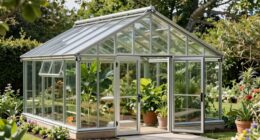
To create an effective peat-free mix for your greenhouse, focus on combining compost, coir, or coconut fiber for water retention and aeration, along with organic amendments like bark or wood fiber to improve drainage and structure. Test your soil’s pH and nutrient levels regularly, and adjust with lime or sulfur as needed. Avoid dense materials and overwatering. Continuing with this guide will help you fine-tune your soil for healthy, sustainable plant growth.
Key Takeaways
- Use well-aged compost, coconut coir, and perlite for balanced moisture, drainage, and aeration in peat-free mixes.
- Incorporate organic matter like bark or wood fiber to improve soil structure and nutrient retention.
- Regularly test and adjust soil pH between 6.0-7.0 for optimal plant nutrient uptake.
- Avoid dense, poorly-draining materials; focus on organic amendments that promote microbial activity.
- Gradually phase out peat, replacing it with sustainable components to maintain soil health and plant growth.
Why Switch to Peat-Free Soil? Benefits for Plants and Environment

Have you ever wondered why switching to peat-free soil is gaining popularity? It’s because sustainable gardening is more important than ever, and peat-free options support soil conservation. Peat extraction damages delicate ecosystems, releases stored carbon, and reduces biodiversity. By choosing peat-free mixes, you help protect natural habitats and promote healthier soil in your garden. These soils often contain organic materials that improve nutrient retention and drainage, encouraging stronger, more resilient plants. Additionally, peat-free soils are typically more environmentally sustainable, reducing the depletion of natural resources. Plus, using peat-free soil minimizes your environmental impact, making your gardening practices more eco-friendly. It’s a simple change that benefits both your plants and the planet, aligning your gardening habits with conservation efforts and sustainable principles. Switching to peat-free soil truly makes a positive difference for future generations, especially as Free Floating ecosystems play a vital role in maintaining overall environmental balance.
What Ingredients Make a Good Peat-Free Mix? A Complete Guide

Choosing the right ingredients is key to creating a high-quality peat-free soil that supports healthy plant growth. Start with compost quality—look for compost that’s rich in organic matter, well-aged, and free from contaminants. Good compost provides essential nutrients and improves soil structure. Additionally, understanding soil amendments can help you optimize your mix for specific plant requirements. Selecting the right organic materials can further enhance the sustainability and effectiveness of your peat-free soil. Using appropriate amendments can also improve the overall quality of your soil mix, and considering soil testing can help tailor your blend to particular plants’ needs. It’s also helpful to learn about soil structure to ensure proper drainage and aeration for your plants.
How Can You Tell What Your Greenhouse Plants Need? Nutritional Assessment Tips

To make certain your greenhouse plants stay healthy, you need to recognize signs of nutrient deficiencies and observe their growth patterns carefully. Simple soil tests can also help you determine what nutrients might be lacking. By paying attention to these indicators, you can adjust your feeding routine to meet your plants’ specific needs. Additionally, understanding the specific net worth of influential figures can provide insights into the importance of personal branding and financial management in the gardening industry. Monitoring plant nutrition closely can help you optimize growth conditions and prevent deficiencies before they become severe. Recognizing the nutrient deficiencies early on allows for timely intervention, ensuring your plants thrive and remain vibrant. Employing proper automotive repair techniques can also prevent costly issues that might hinder your gardening efforts, especially if you rely on powered tools or equipment. Staying informed about emerging AI cybersecurity jobs can also help protect your gardening data and digital assets from potential threats.
Recognizing Nutrient Deficiencies
How can you tell if your greenhouse plants are lacking essential nutrients? The key is careful symptom identification. Look for signs like yellowing leaves, which may indicate nitrogen deficiency, or stunted growth suggesting phosphorus shortages. Pale or discolored leaves can also point to potassium deficiency. Be alert to irregular spotting or blotches, which often signal micronutrient issues. Recognizing these fertilizer deficiencies early helps you respond promptly, preventing long-term damage. Keep a record of changes in plant appearance and growth patterns. Remember, each deficiency has distinct symptoms, so accurate symptom identification allows you to tailor your fertilization approach effectively. Regular observation and understanding of these signs are crucial for maintaining healthy, thriving greenhouse plants.
Observing Plant Growth Patterns
Monitoring your greenhouse plants closely reveals much about their nutritional health. Watch for growth patterns—stunted or leggy plants may signal nutrient deficiencies, while overly lush foliage could indicate excess fertilization. Support Breakfast Consistent observation helps you identify signs early, guiding your nutritional adjustments. During plant propagation, healthy, vigorous growth suggests proper nutrition, but poor development may mean nutrients are lacking. Keep an eye out for pest management issues too, as pests can stress plants, impair nutrient uptake, and distort growth patterns. Noticing uneven or unusual growth can alert you to underlying problems, allowing for targeted care. Regularly observing these patterns enables you to fine-tune your feeding schedule, prevent deficiencies, and maintain overall plant resilience, ensuring your greenhouse thrives with healthy, productive plants. Additionally, understanding the importance of Net+ Certification Benefits can help you acquire the knowledge needed to optimize your plant care techniques and stay updated with the latest horticultural standards. Being aware of plant nutrition fundamentals further supports your efforts in maintaining a balanced and effective feeding regime. Moreover, paying attention to seasonal flavor trends can inform your fertilization practices to enhance plant health during different times of the year. Recognizing that proper essential oil use can also support plant health by reducing stress and promoting growth is an additional benefit to consider.
Conducting Simple Soil Tests
Understanding your greenhouse plants’ nutritional needs starts with simple soil tests you can do yourself. First, check the soil pH using a testing kit to see if it’s too acidic or alkaline for your plants. Adjustments can boost nutrient availability. Next, observe microbial activity by looking for healthy soil life, such as earthworms or beneficial fungi. You can also perform a basic microbial test by mixing a small amount of soil with water and watching for bubbling or cloudiness, indicating active microbes. Regular testing helps you identify deficiencies or imbalances early, ensuring your plants get the nutrients they need. Additionally, choosing the right garbage disposal can aid in maintaining soil health by reducing organic waste buildup. By paying attention to soil pH and microbial activity, you can fine-tune your greenhouse mix for ideal growth and health.
Which Natural Materials Are Best for Peat-Free Soil? Top Choices Explained

Choosing the right natural materials is key to creating healthy, peat-free soil. Organic compost offers essential nutrients and improves soil structure, making it a popular choice. You should also consider coir and coconut fiber, which help with water retention and aeration in your mix. For added durability and moisture management, incorporating water-resistant materials can enhance your soil’s resilience in various conditions.
Organic Compost Benefits
Have you ever wondered which natural materials boost soil health without relying on peat? Organic compost is a top choice, providing essential nutrients and improving soil structure. By following proper composting practices, you can turn kitchen scraps, garden waste, and other organic materials into rich, fertile soil. Compost acts as a natural fertilizer, releasing nutrients slowly and reducing the need for chemical alternatives. It enhances water retention, aerates the soil, and encourages beneficial microbial activity. Using organic compost in your peat-free mix guarantees a sustainable, eco-friendly approach that supports healthy plant growth. It’s versatile and cost-effective, making it an ideal foundation for your greenhouse soil. Incorporating compost consistently helps maintain fertility and promotes a thriving, resilient garden environment. Healthy soil is the foundation of any successful gardening system, ensuring plants can flourish naturally. Additionally, incorporating diverse organic materials can further boost microbial diversity and soil vitality, mirroring principles found in deep-sky imaging techniques that maximize observational clarity through variety and proper calibration. Proper composting techniques also ensure that organic matter is broken down efficiently, resulting in higher-quality soil amendments.
Coir and Coconut Fiber
Looking for a sustainable alternative to peat that boosts soil structure and moisture retention? Coconut husks and coir pellets are excellent options. Coconut husks, the fibrous outer shell of coconuts, are natural and biodegradable, providing excellent aeration and water retention when added to soil. Coir pellets, made from compressed coconut fiber, are compact but expand when soaked, creating a lightweight, moisture-retentive medium. Both materials are renewable, durable, and environmentally friendly. Coir improves drainage and aeration, reducing root rot risks, while coconut husks add organic matter to enrich your soil. These natural materials are versatile for greenhouse use, helping plants thrive without relying on peat. Incorporating coconut husks or coir pellets ensures your soil remains healthy, sustainable, and peat-free. Vetted options ensure you choose reliable and effective materials for your greenhouse needs. Additionally, their ease of use makes them popular among gardeners seeking quick and effective soil enhancements. Using sustainable resources like coconut fiber minimizes environmental impact and supports eco-friendly gardening practices.
How Do You Mix and Prepare Peat-Free Soil for Healthy Growth? Step-by-Step

To guarantee healthy plant growth, you need to properly mix and prepare your peat-free soil before planting. Start by selecting the right fertilizer choices to ensure your plants get essential nutrients; composted manure or organic blends work well. Next, check the soil’s pH level using a testing kit, and adjust it if necessary to match your plants’ needs—most thrive in slightly acidic to neutral soil. Combine your base ingredients, such as compost, coconut coir, and perlite, in a large container or wheelbarrow. Mix thoroughly to distribute nutrients evenly. If needed, add lime or sulfur to balance the pH. This step-by-step approach creates a nutrient-rich, well-balanced environment that promotes healthy growth and robust root development.
Troubleshooting Peat-Free Soil: Water Retention, Nutrients, and Common Issues

If your peat-free soil isn’t holding enough water or drains too quickly, you might face retention problems. Noticing yellowing leaves or stunted growth can signal nutrient deficiencies, while other issues may stem from soil imbalance. Addressing these common concerns helps make certain your plants stay healthy and thrive.
Water Retention Challenges
Have you noticed that some peat-free soils struggle to hold enough water for your plants? This is a common water retention challenge. To address it, you should adjust your watering schedules based on moisture monitoring. Regularly check the soil’s dampness to prevent both overwatering and dehydration. If the soil dries out quickly, consider adding organic amendments like coconut coir or composted bark, which improve water retention. Conversely, if the soil stays too wet, reduce watering frequency and ensure proper drainage. Proper moisture monitoring helps you find the right balance, preventing stress on your plants. Remember, consistent watering habits combined with soil amendments tailored to your mix can considerably improve water retention, leading to healthier, more resilient plants in your greenhouse.
Nutrient Deficiency Signs
Nutrient deficiency signs are often the first clues that your peat-free soil isn’t providing enough essential elements for healthy plant growth. Recognizing these deficiency symptoms helps you diagnose nutrient imbalance early. Look for:
- Yellowing leaves, which indicate nitrogen deficiency.
- Stunted growth, often caused by insufficient phosphorus.
- Pale or scorched leaf edges, signs of potassium imbalance.
- Poor flowering or fruiting, linked to calcium or magnesium deficiency.
These symptoms signal that your plants aren’t getting the right nutrients in adequate amounts. Addressing deficiency symptoms promptly ensures your plants thrive. Keep in mind that nutrient imbalance can mimic other issues, so observe carefully and adjust your fertilization accordingly. Regular testing and proper fertilization help prevent these problems and promote healthy growth.
Common Soil Issues
Peat-free soils can present unique challenges that affect plant health, especially regarding water retention, nutrient availability, and overall stability. Poor soil aeration can lead to root rot and stunted growth, so ensuring good airflow is essential. You might need to improve aeration by mixing in coarse materials like perlite or grit. Additionally, peat-free soils often have pH imbalances, making pH adjustment necessary to optimize nutrient uptake. Regular testing helps identify whether your soil is too acidic or alkaline, and amendments like lime or sulfur can correct these issues. Addressing common soil problems proactively keeps your plants healthy and thriving. By managing water retention, ensuring proper aeration, and adjusting pH as needed, you create a balanced environment that supports vigorous growth in your greenhouse.
What Are the Best Peat-Free Growing Media Options? A Comparison of Top Products

Choosing the right growing media is essential for healthy plants without relying on peat. Top peat-free options include coir, composted bark, coconut husk, and wood fiber. These materials offer good aeration and water retention, supporting plant growth. When selecting a product, consider how it affects fertilizer choices and pest management—some media may require additional nutrients or be more resistant to pests.
- Coir: Sustainable, good water retention, and pH neutral
- Composted bark: Improves drainage, adds organic matter
- Coconut husk: Durable, retains moisture, eco-friendly
- Wood fiber: Lightweight, enhances aeration, low pest risk
Choosing the best depends on your specific plants and greenhouse setup.
How Can You Maintain Soil Health in a Peat-Free Greenhouse? Expert Tips

Maintaining soil health in a peat-free greenhouse is essential for promoting vigorous plant growth and sustainable gardening practices. To do this, focus on pH balancing and supporting microbial activity. Regularly test your soil to ensure ideal pH levels—aim for slightly acidic to neutral (6.0-7.0). Amend the soil with organic matter like compost or well-rotted manure to boost microbial populations. Keep the soil consistently moist but not waterlogged, which encourages beneficial microbes. Avoid compaction by gentle aeration. Here’s a quick guide:
| Action | Purpose | Tips |
|---|---|---|
| pH testing | Maintain optimal nutrient availability | Use a reliable pH meter |
| Organic amendments | Support microbial activity | Add compost regularly |
| Proper watering | Promote healthy microbes | Keep soil moist, avoid overwatering |
| Aeration | Prevent compaction and enhance microbes | Loosen soil gently periodically |
What Should You Avoid in Peat-Free Mixes? Common Mistakes and How to Prevent Them

While focusing on building healthy soil in your peat-free mix, it’s equally important to recognize common pitfalls that can undermine your efforts. One mistake is neglecting proper pest management, which can lead to infestations that harm your plants. Overwatering or inconsistent watering techniques can cause root rot and reduce soil aeration. Using unsuitable materials, like overly dense compost, hampers drainage and plant growth. Additionally, ignoring soil testing may result in imbalanced nutrients, making plants vulnerable to pests and diseases. To prevent these issues, monitor moisture levels carefully, apply pest management strategies early, select well-draining ingredients, and regularly test your soil’s health. Staying vigilant helps ensure your peat-free mix remains vibrant and productive.
How Do You Transition Your Existing Soil to a Peat-Free System?

Switching your existing soil to a peat-free system requires careful planning to improve its structure and nutrient balance. Begin by evaluating your current soil and incorporating composting methods to enrich it naturally. Mix in well-rotted compost to boost organic matter and nutrients, gradually transforming your soil over time. To eliminate pests and pathogens, consider soil sterilization using solarization or controlled heating, especially if your soil has issues. This step helps create a clean slate for your new peat-free mix. As you progress, blend your existing soil with fresh peat-free components like coir, composted bark, or green compost to gradually phase out peat. Patience is key—these steps will help ensure a successful, sustainable switch to a healthier, peat-free growing system.
Frequently Asked Questions
How Long Does It Take for Peat-Free Mixes to Mature?
Peat-free mixes typically take about 4 to 6 weeks to reach compost maturity, depending on ingredients and conditions. You’ll notice improved soil stabilization as the mix composts, providing a stable environment for plants. During this period, guarantee proper moisture and aeration to promote healthy decomposition. Patience is key; giving your mix time allows beneficial microbes to develop, resulting in a nutrient-rich, stable medium ideal for greenhouse growth.
Can Peat-Free Soil Support All Types of Greenhouse Plants?
Like planting seeds of doubt, you might wonder if peat-free soil can support all greenhouse plants. While it’s generally suitable, there are suitability concerns—certain plants demand richer nutrients that peat-free mixes might lack initially. You’ll need to supplement with fertilizers and choose the right mix for specific needs. With some adjustments, peat-free soil can nurture a diverse range of plants, but keep an eye on each plant’s unique nutrient requirements.
Are There Eco-Friendly Alternatives to Peat for Organic Gardening?
Yes, there are eco-friendly alternatives to peat for organic gardening. You can explore compost options like well-rotted manure, coconut coir, or leaf mold, which are sustainable resources. These options improve soil health without harming the environment. By choosing these sustainable resources, you support eco-friendly gardening practices and reduce reliance on peat, helping to protect peatlands and promote a healthier planet while maintaining healthy plants in your greenhouse.
How Often Should I Amend Peat-Free Soil for Optimal Growth?
You should amend your peat-free soil every 4 to 6 weeks to maintain ideal growth. This helps guarantee soil nutrition stays balanced, supporting healthy plant development. Keep an eye on your plants; if they show signs of nutrient deficiency, increase amendment frequency. Regularly adding organic compost or slow-release fertilizers can boost soil vitality and prevent depletion, ensuring your greenhouse plants thrive throughout the season.
What Are the Cost Differences Between Peat-Based and Peat-Free Mixes?
Peat-free mixes often cost more upfront than peat-based options, creating a visible contrast like a vibrant, costly bouquet next to a simple, affordable bunch. While the initial expense might seem higher, consider the long-term benefits and environmental impact. Your budget considerations should weigh the environmental value against short-term costs, as peat-free mixes can save money over time through better sustainability and healthier plant growth, making them a smart investment in the long run.
Conclusion
Switching to peat-free soil not only benefits your plants but also helps protect our planet. Did you know that peat extraction releases as much carbon as 10 million cars annually? By choosing the right ingredients and proper techniques, you can create healthy, sustainable greenhouse environments. Every small change counts—your efforts can make a real difference in reducing environmental impact while nurturing vibrant, thriving plants. Start today and be part of the positive change!