Choosing peat-free mixes is a smart way to care for your seedlings while protecting the environment. These mixes avoid damaging ingredients like peat, which harms ecosystems and releases carbon. Instead, they use sustainable materials like compost, coconut coir, or bark, offering similar water retention and plant support. Making the switch is easier than you think, and understanding how to do it can boost your gardening success—if you keep exploring, you’ll discover more tips to grow healthier plants sustainably.
Key Takeaways
- Peat-free mixes use sustainable materials like compost, coir, or bark, reducing environmental harm.
- They provide comparable water retention and aeration to traditional peat-based soils.
- High-quality peat-free mixes are nutrient-rich, supporting healthy seedling growth.
- Transitioning involves gradual replacement and proper drainage to avoid plant shock.
- Troubleshooting common issues ensures optimal seedling development with peat-free alternatives.
What Are Peat-Free Mixes: And Why Are They Important?
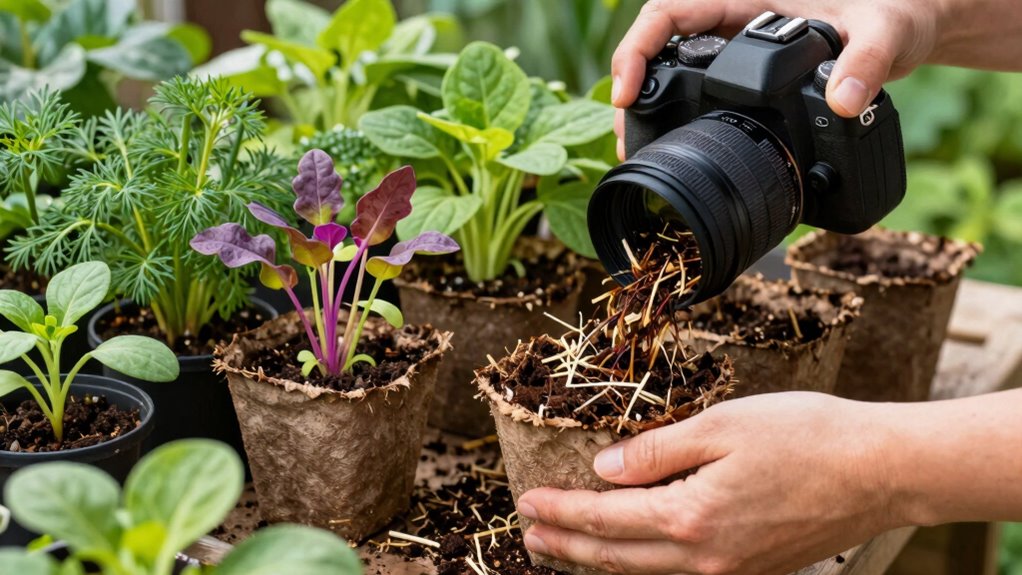
Peat-free mixes are gardening soils made without peat, a common but environmentally damaging ingredient. Peat harvesting involves extracting organic material from peat bogs, which takes centuries to form and damages delicate ecosystems. This process releases stored carbon, contributing considerably to greenhouse gas emissions and climate change. Using peat-free mixes helps reduce this environmental impact by avoiding the destruction of these essential habitats. Instead of peat, these mixes incorporate sustainable materials like compost, coconut coir, or bark, which have less ecological footprint. Choosing peat-free options supports conservation efforts and promotes healthier, more sustainable gardening practices. By switching to peat-free mixes, you play a part in protecting peat bogs and minimizing the long-term environmental damage caused by traditional peat harvesting.
How Do Peat-Free Soil Mixes Compare to Traditional Peat-Based Options?
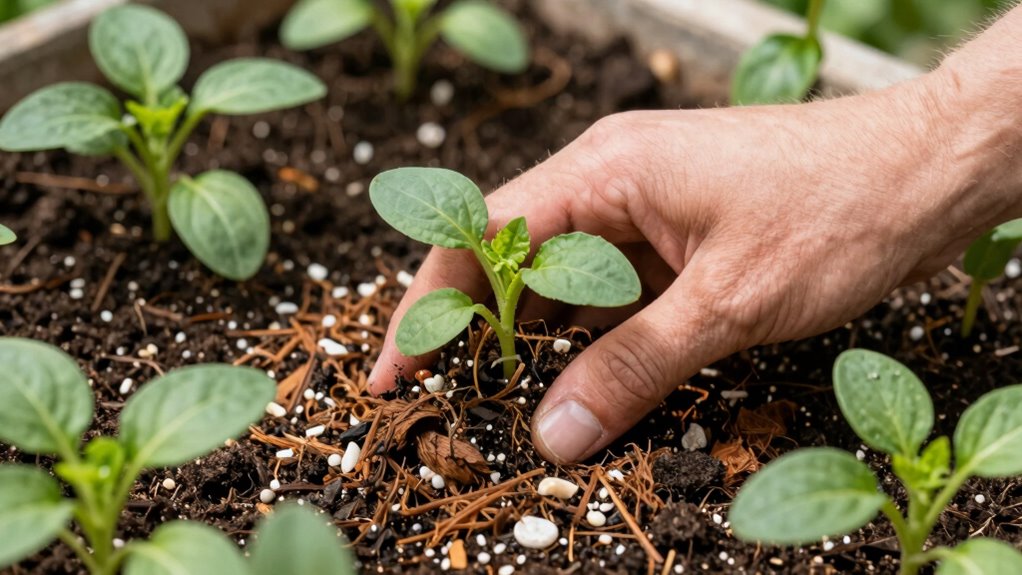
Traditional peat-based mixes have long been the standard in gardening because of their excellent water retention and aeration properties. When comparing nutrient levels, peat-based soils often provide consistent, though limited, nutrients. Peat is relatively low in nutrients itself, so you usually need to supplement with fertilizers. Peat-free mixes, on the other hand, often include organic materials like compost or coconut coir that can enhance nutrient content naturally. Evaluating water retention, peat retains moisture effectively, reducing the risk of drying out. Peat-free options may vary in water-holding capacity depending on their ingredients, but many are designed to match peat’s performance. Additionally, environmental sustainability is a key factor driving gardeners to choose peat-free mixes, as peat harvesting can damage delicate ecosystems. Overall, peat-free mixes can deliver comparable water retention and improved nutrient profiles, making them a sustainable and effective alternative for healthy seedlings.
What Ingredients Make a High-Quality Peat-Free Seedling Mix?
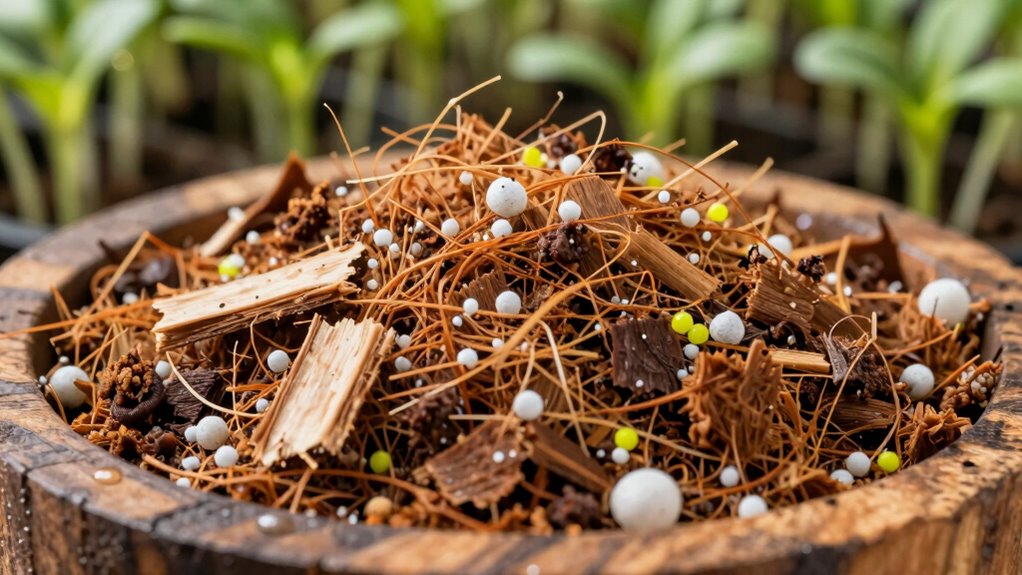
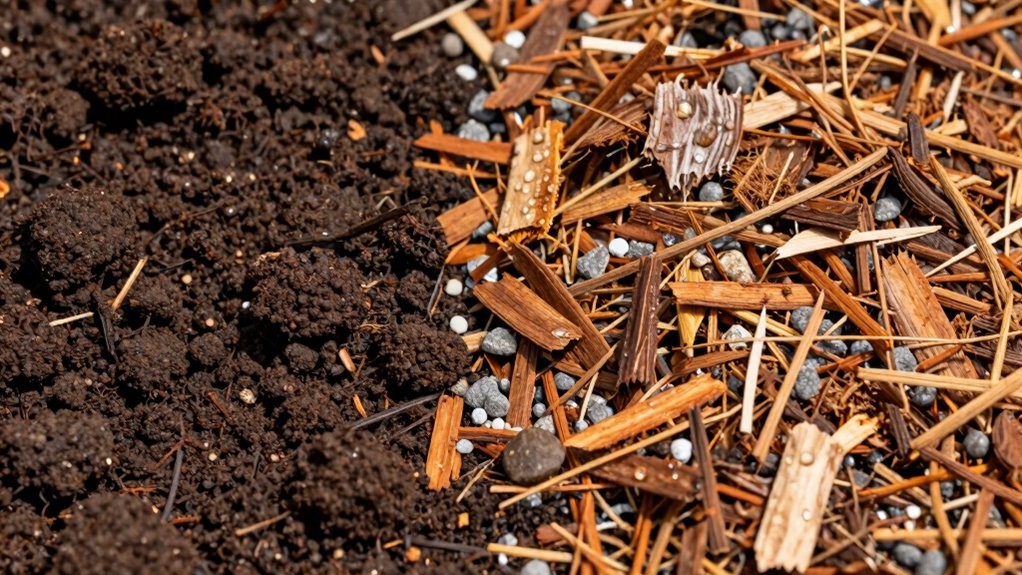
A high-quality peat-free seedling mix combines several carefully selected ingredients to promote healthy growth. Look for compost ingredients rich in nutrients and organic certification to ensure sustainability and safety. The key components include composted plant matter, which boosts fertility, and inert materials like coconut coir or wood fibers for aeration and moisture retention. These ingredients work together to create a balanced environment for roots to develop. Incorporating sound healing science principles can also help create a calming environment for your seedlings, promoting overall health.
How Can You Transition to Using Peat-Free Mixes in Your Garden?
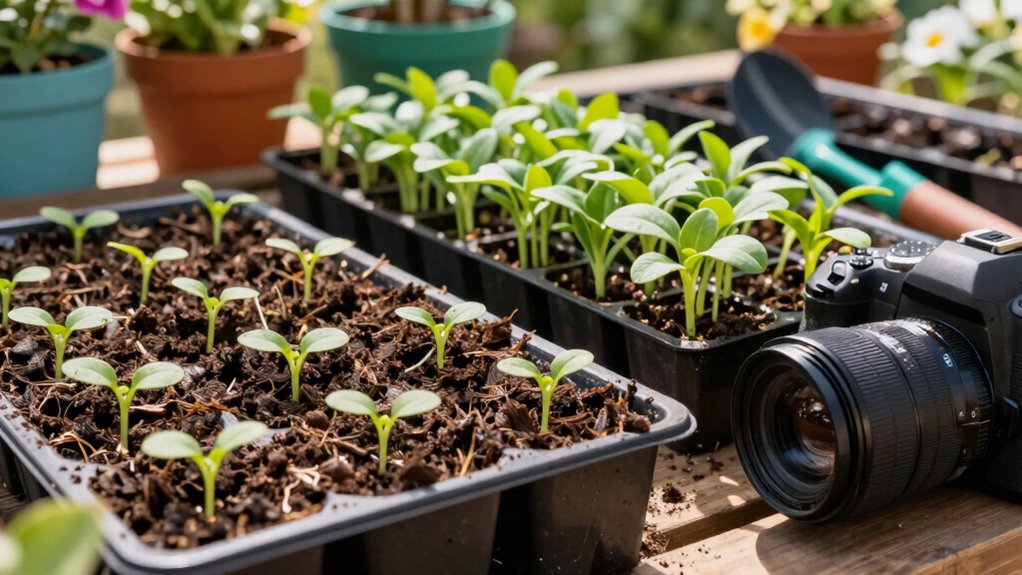
Switching to peat-free mixes in your garden is a straightforward process that can improve sustainability and soil health. Start by gradually replacing traditional soil or compost application with peat-free alternatives to give your plants time to adjust. When choosing containers, opt for those with good drainage and size appropriate for your plants’ growth. Shift slowly by mixing peat-free compost into your existing soil or potting mix, increasing the proportion over time. This approach minimizes shock and helps your plants adapt smoothly. Use different container choices based on plant needs, ensuring they aren’t overcrowded. By making these small adjustments, you’ll support healthier soil and reduce environmental impact without risking your seedlings’ success. Incorporating free floating landscaping ideas can further enhance your garden’s ecological balance and visual appeal.
Troubleshooting Common Problems With Peat-Free Mixes
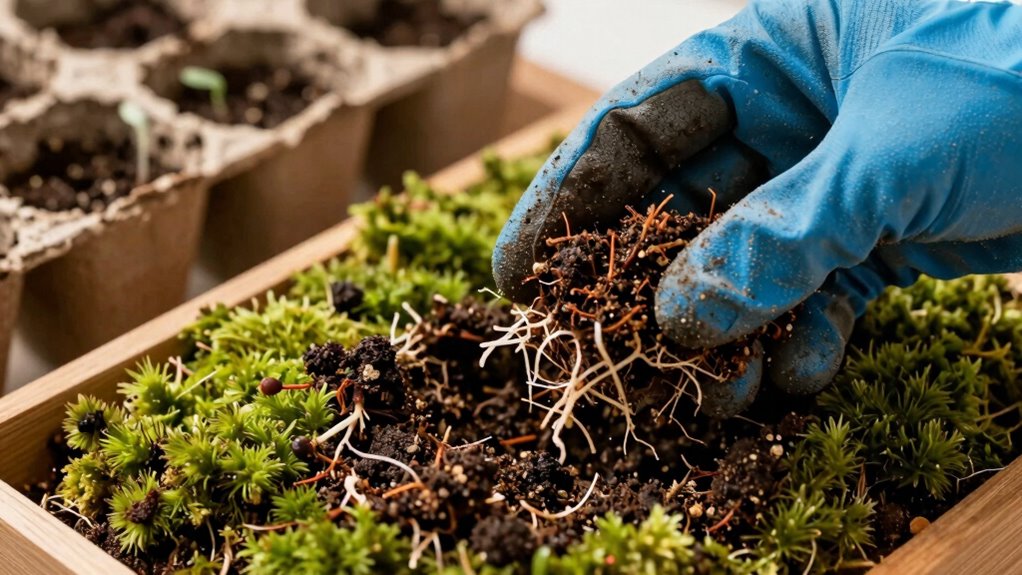
Although peat-free mixes offer many environmental benefits, they can sometimes present challenges that require troubleshooting. Common issues include watering problems and nutrient deficiencies. You might find your seedlings drying out quickly or staying waterlogged. To fix this, check your watering schedule and ensure proper drainage. Nutrient deficiencies may cause stunted growth or pale leaves; supplement with organic fertilizers or compost. Here’s a quick visual:
| Problem | Solution |
|---|---|
| Overwatering | Improve drainage, water less frequently |
| Underwatering | Water thoroughly, check moisture levels |
| Nutrient deficiencies | Add compost or organic fertilizer |
| Poor drainage | Amend mix with coarse material like perlite |
| Wilting or yellowing | Adjust watering, feed with balanced nutrients |
Additionally, understanding the types of organic matter used in peat-free mixes can help you choose the right amendments for your plants. Address these issues promptly for healthy, thriving plants.
Frequently Asked Questions
Are Peat-Free Mixes Suitable for All Types of Plants?
Peat-free mixes are generally suitable for most plants, but their plant compatibility varies. They often have a different nutrient content compared to traditional mixes, so you might need to supplement nutrients for certain plants. For delicate or nutrient-demanding species, check the specific mix’s composition and adjust accordingly. Overall, peat-free mixes support healthy growth and are eco-friendly, making them a smart choice for a wide range of gardening needs.
How Long Do Peat-Free Mixes Typically Last Before Needing Replacement?
Your peat-free mix typically lasts about one to two growing seasons before it needs replacing. Thanks to its slow decomposition rate, it holds up longer and maintains structure, but beware of nutrient depletion over time. After this period, your soil might become less fertile, making your plants groan for extra feeding or fresh mix. So, keep an eye on it and refresh when nutrients run low or structure breaks down.
Can Peat-Free Mixes Be Reused or Recycled?
Yes, you can reuse or recycle peat-free mixes. To do so, consider compost recycling to break down old plant material and enrich the soil. It is crucial to sterilize the mix before reuse, which kills pathogens and pests. Simply mix it with compost or organic matter and let it sit in a warm, moist environment. This process ensures your mix stays healthy and sustainable for future seedlings.
Do Peat-Free Mixes Require Different Watering Schedules?
You’ll find that peat-free mixes don’t need a magic watering schedule—they actually require more attentive care. Because of their superior moisture retention, you might water less often, maybe every few days, but always check the topsoil for dryness. Unlike traditional mixes, they keep moisture steady longer, reducing watering frequency and preventing overwatering. Keep a close eye on your seedlings’ needs, and you’ll nurture healthier plants with less fuss.
What Certifications Should I Look for When Choosing Peat-Free Products?
When choosing peat-free products, look for certification standards like the FSC or PEFC, which guarantee sustainable sourcing. Eco label markings, such as the Soil Association Organic or EU Ecolabel, indicate environmentally friendly practices. These certifications help you select products that meet strict sustainability criteria, ensuring you’re making eco-conscious choices. Always check for clear labels, so you can confidently support brands committed to reducing environmental impact and promoting responsible gardening.
Conclusion
Switching to peat-free mixes is like planting seeds in fresh, nourishing soil—you’re helping the environment grow alongside your garden. When I made the switch, my seedlings thrived, and I felt good knowing I was making a positive impact. Just as healthy roots support strong plants, choosing sustainable options supports a healthier planet. Every small change, like swapping out peat, adds up—proving that even simple acts can help cultivate a greener future for all.