You can grow more responsibly by making small eco-friendly changes that don’t add to your workload. Use natural methods like composting kitchen scraps, planting native species, and mulching to conserve water and support soil health. Opt for biodegradable pots and natural pest deterrents, saving resources and reducing waste. By adopting these simple practices, you promote a resilient, sustainable garden without it feeling harder—discover more ways to make your gardening eco-smart and effortless.

Get garden gear delivered free — and shop member deals
- Fast, free delivery on millions of items
- Access to Prime Big Deal Days deals on October 6–7
- Prime Video, Amazon Music and more included
Key Takeaways
- Use native plants and drought-tolerant species to reduce water and maintenance needs.
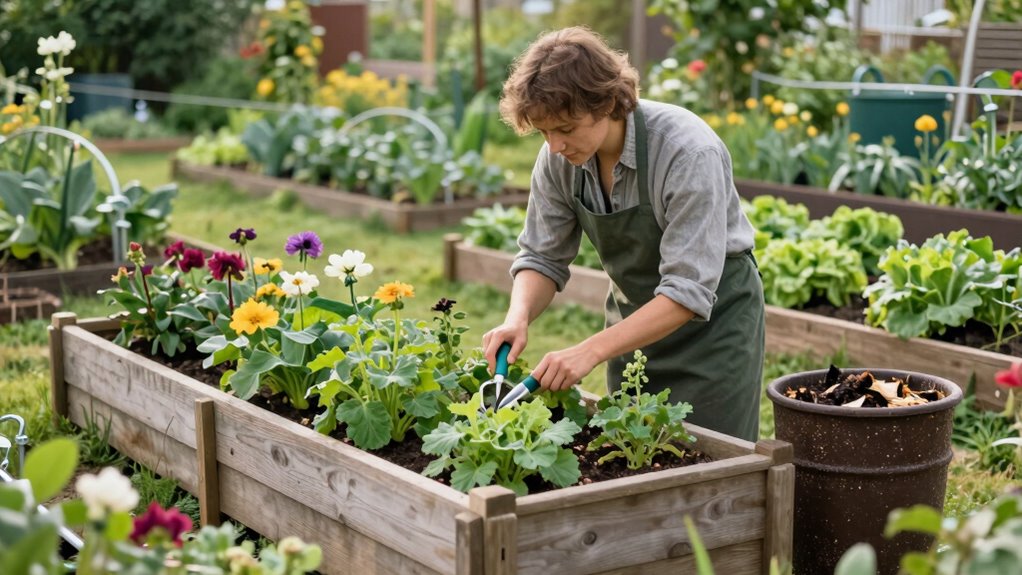
- Incorporate composting and organic practices to boost soil health naturally.
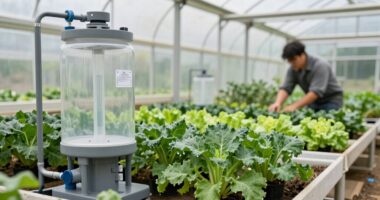
- Collect rainwater and mulch to conserve water and minimize effort.
- Opt for eco-friendly tools and biodegradable materials to lower environmental impact.
- Practice crop rotation and companion planting to naturally improve garden resilience.
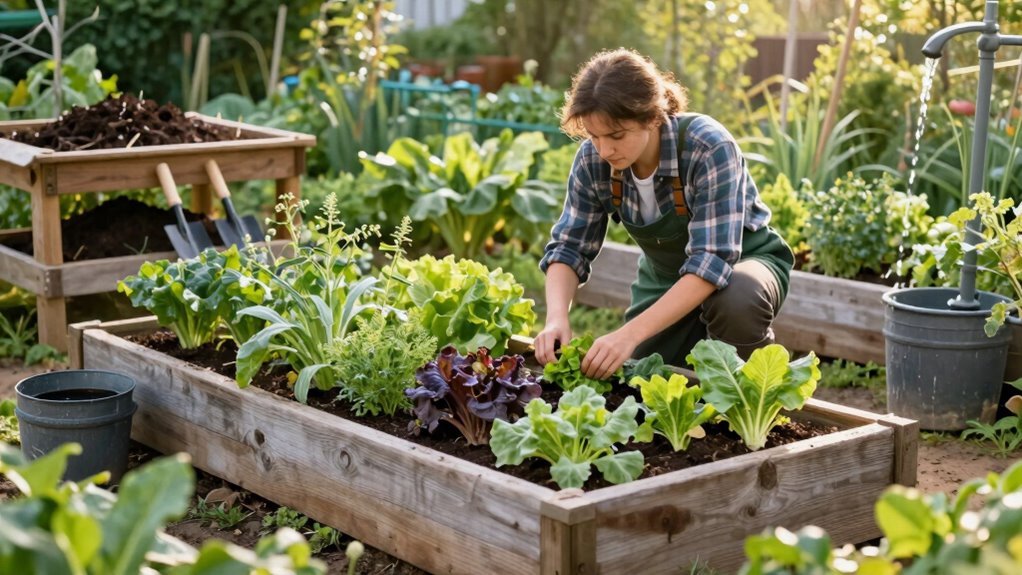
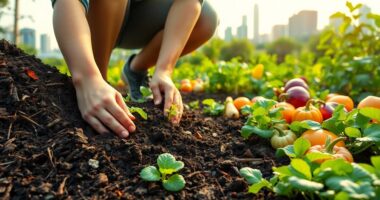
Growing more responsibly isn’t just about increasing your yields; it’s about making mindful choices that protect the environment, support local communities, and guarantee sustainable practices. When you adopt eco-friendly methods, you minimize harm to the planet while still enjoying a thriving garden. Small adjustments, like composting kitchen scraps or choosing organic seeds, can make a significant difference without complicating your routine. Sustainable practices focus on creating a balanced ecosystem, so your garden thrives naturally, reducing the need for chemical fertilizers or pesticides that can damage the environment. By integrating these methods, you not only grow healthier plants but also contribute to a healthier planet.
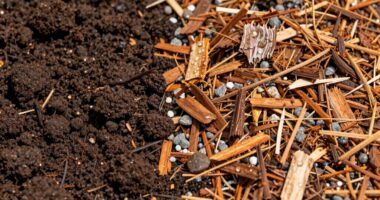
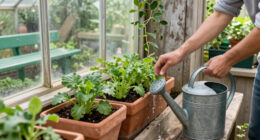
You can start by practicing water conservation, such as collecting rainwater or watering early in the morning to reduce evaporation. These simple steps make watering more efficient and less resource-intensive. Mulching around your plants helps retain soil moisture, suppress weeds, and regulate soil temperature—saving you time and effort while supporting eco-friendly methods. Using organic mulches like straw or wood chips is a sustainable choice that adds nutrients back into the soil as it decomposes, further reducing your reliance on chemical inputs. Incorporating biodiversity into your garden design by planting a variety of species creates a resilient ecosystem that naturally deters pests and supports pollinators. Additionally, selecting native species that are well-suited to your environment further enhances this natural resilience and reduces maintenance needs. Incorporating soil health practices can also improve overall garden vitality, making your efforts more sustainable over time.
Another way to grow more responsibly is to plant native species that are adapted to your local climate. Native plants require less water, fertilizer, and pest control, making your garden more sustainable and less labor-intensive. Additionally, practicing crop rotation and companion planting enhances soil health naturally, reducing the need for synthetic additives. These methods foster a resilient garden ecosystem, where pests and diseases are kept in check by natural balance, decreasing your dependence on pesticides. Incorporating climate adaptability can further improve your garden’s resilience to changing weather patterns and environmental stresses. Moreover, understanding and supporting local ecosystems can help you choose plants that are more compatible with your environment, enhancing sustainability.
You can also incorporate sustainable practices by choosing eco-friendly tools and materials. For example, opt for biodegradable plant pots and natural pest deterrents instead of synthetic chemicals. When it’s time to harvest, compost your plant waste to create nutrient-rich soil for future planting, closing the garden’s ecological loop and reducing waste. These small but impactful choices make gardening easier and more aligned with environmental principles.
As an affiliate, we earn on qualifying purchases.
Frequently Asked Questions
How Can I Reduce Water Use in My Garden?
To reduce water use in your garden, start by installing rainwater harvesting systems to collect free, natural water. Choose drought-tolerant plants that thrive with less watering, reducing your overall consumption. Mulch around plants to retain moisture and minimize evaporation. Water early in the morning or late in the evening, and avoid overwatering. These steps make your garden more sustainable while keeping it healthy and vibrant.
What Are Eco-Friendly Pest Control Options?
Like a knight fighting off pests, you can use eco-friendly pest control options. Rely on natural repellents such as neem oil or garlic spray, which deter unwanted bugs without harming your garden. Attract beneficial insects like ladybugs and lacewings, which naturally keep pest populations in check. Combining these methods creates a balanced, sustainable approach that keeps your garden healthy while reducing reliance on chemical pesticides, making gardening easier and more responsible.
How Do I Choose Sustainable Gardening Tools?
To choose sustainable gardening tools, focus on eco-conscious shopping by selecting tools made from recycled or sustainably sourced materials. Look for brands committed to eco-friendly practices and durability. Practice sustainable tool maintenance by cleaning, sharpening, and storing tools properly to extend their lifespan. This reduces waste and the need for frequent replacements. By making mindful choices, you’ll support environmentally responsible gardening while enjoying reliable, long-lasting tools that make gardening easier and greener.
How Can I Compost Effectively at Home?
To compost effectively at home, start by choosing a suitable compost bin and maintaining it regularly. Balance green and brown materials to enhance soil enrichment and promote healthy decomposition. Turn the compost occasionally to aerate and speed up the process, and monitor moisture levels—keeping it damp but not soggy. Proper compost bin maintenance guarantees your organic waste turns into nutrient-rich compost, boosting your garden’s health without extra effort.
What Native Plants Are Best for My Region?
Choosing native plants is like finding old friends in your garden—they thrive naturally. Focus on wildflower selection suited to your region, which supports local ecosystems. Incorporate soil enrichment techniques like composting to boost plant health without extra effort. Native plants require less water and care, making gardening more sustainable and enjoyable. Start with native options, and you’ll create a resilient, beautiful landscape that benefits both you and the environment.
Conclusion
By adopting these responsible gardening practices, you’ll find that caring for your garden becomes more rewarding and less of a chore. Remember, slow and steady wins the race, so don’t rush the process. Keep learning, stay mindful of your environment, and enjoy the journey. With patience and a thoughtful approach, you’ll nurture a thriving garden that benefits both you and the planet. After all, a little care goes a long way in making gardening easier and more fulfilling.
Fall yard work Picks
leaf blowers
As an affiliate, we earn on qualifying purchases.