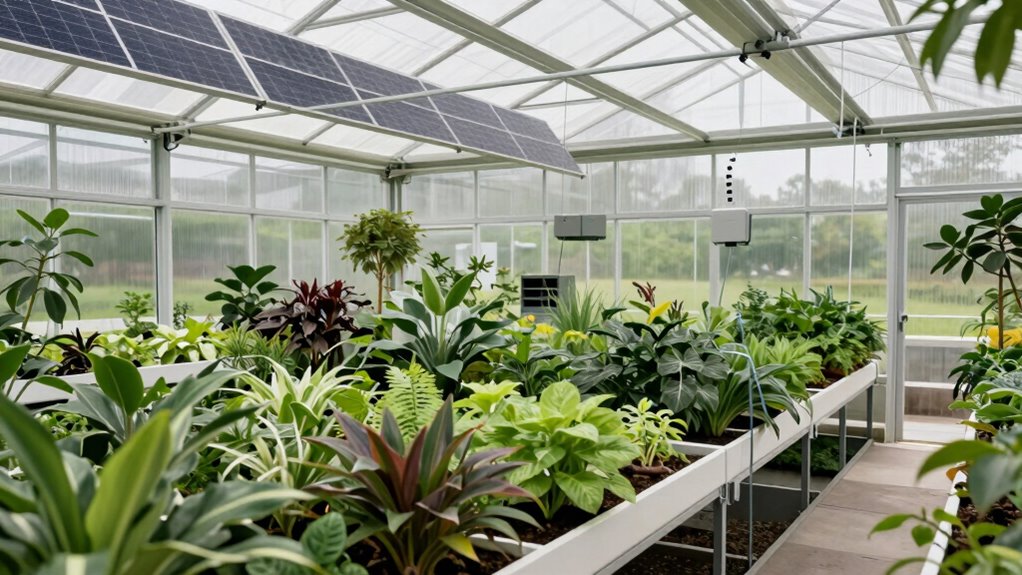

To support resource-saving habits in your greenhouse, opt for renewable energy sources like solar panels to lower operational costs and environmental impact. Incorporate passive solar design and insulation to reduce heating and cooling needs naturally. Use efficient ventilation systems and climate controls to maintain ideal conditions without wasting energy. Implement water conservation techniques such as drip irrigation and rain harvesting. Choosing sustainable materials and focusing on eco-friendly practices can make your greenhouse more resource-efficient—you’ll discover more smart strategies as you continue exploring.
Key Takeaways
- Incorporate renewable energy systems like solar panels to reduce reliance on external power sources.
- Design with passive solar principles and proper insulation to minimize heating and cooling energy needs.
- Utilize automated ventilation and climate control systems for efficient environmental regulation.
- Implement water-saving techniques such as drip irrigation, moisture sensors, and rainwater harvesting.
- Use sustainable, energy-efficient materials to enhance insulation and reduce overall resource consumption.

Choosing the right greenhouse system is crucial for guaranteeing ideal plant growth and maximizing your gardening success. When you consider the various options, it’s important to prioritize systems that support resource-saving habits. These systems not only help reduce your environmental footprint but also lower your long-term operational costs. By focusing on sustainable energy and water conservation, you can create a more eco-friendly and efficient gardening setup.
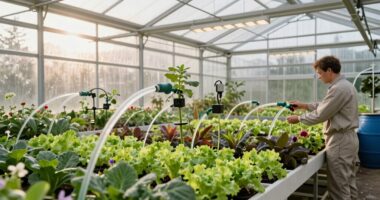
One of the most effective ways to promote sustainability is by integrating renewable energy sources into your greenhouse. Solar panels are a popular choice because they harness the sun’s power to generate electricity needed for lighting, heating, and ventilation. This reduces reliance on fossil fuels and cuts down your energy bills. Additionally, passive solar design techniques, such as orienting your greenhouse to maximize sunlight exposure and using thermal mass materials, help maintain consistent temperatures without excessive energy use. These approaches guarantee that your greenhouse remains warm during cooler months and cool during hotter periods, all while minimizing energy consumption. Incorporating energy-efficient glazing materials like double-pane polycarbonate or low-emissivity glass can improve insulation and reduce heat loss. This not only supports sustainable energy practices but also enhances water conservation by maintaining ideal internal temperatures with less heating or cooling effort. Ventilation systems designed for minimal energy use, such as automated roof vents or exhaust fans with timers, further optimize airflow while conserving electricity. Employing water-saving irrigation techniques, such as drip irrigation or moisture sensors, can significantly reduce water waste. Using drought-tolerant plant varieties can also lessen overall water needs, aligning with your goal of reducing water usage. Additionally, employing rainwater harvesting systems can further supplement water needs and promote resource efficiency. Moreover, selecting smart climate control systems that adapt to environmental conditions can help optimize energy and water usage dynamically, creating a more sustainable greenhouse environment.
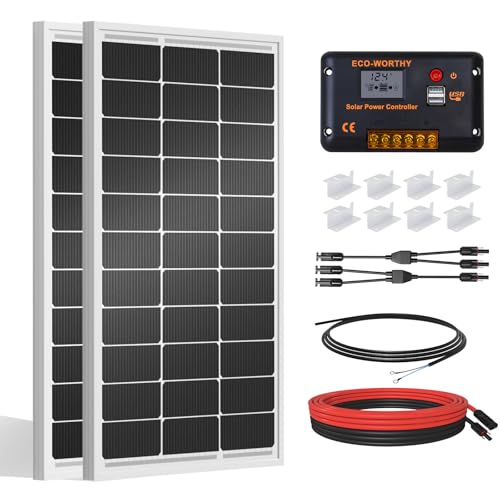
ECO-WORTHY 200 Watts 12 Volt/24 Volt Solar Panel Kit with High Efficiency Monocrystalline Solar Panel and 30A PWM Charge Controller for RV, Camper, Vehicle, Caravan and Other Off Grid Applications
- Wide Application: Suitable for RV, Marine, Off-Grid use
- High Efficiency Cells: Up to 21.5% efficiency with monocrystalline cells
- Durable Construction: Corrosion-resistant aluminum frame, IP65 rated
As an affiliate, we earn on qualifying purchases.
As an affiliate, we earn on qualifying purchases.
Frequently Asked Questions
How Do Greenhouse Systems Impact Overall Energy Consumption?
Greenhouse systems considerably impact your overall energy consumption by optimizing efficiency through renewable energy integration and advanced insulation technology. With renewable energy sources like solar panels, you reduce reliance on traditional power, lowering your carbon footprint. Insulation technology helps maintain consistent temperatures, decreasing the need for extra heating or cooling. Together, these choices make your greenhouse more energy-efficient, saving you money while supporting sustainable practices.
What Maintenance Is Required for Eco-Friendly Greenhouse Systems?
Your eco-friendly greenhouse demands relentless attention! You’ll need to regularly monitor soil health, ensuring it’s rich and balanced to support vigorous plants without harmful chemicals. Pest management becomes a delicate dance, relying on natural predators and organic solutions instead of harmful pesticides. Consistent cleaning and system checks are crucial to prevent disease and optimize efficiency. With dedication, your greenhouse thrives, conserving resources and nurturing a sustainable, lush paradise.
Are There Cost Differences Between Sustainable and Traditional Greenhouse Options?
You’ll find that sustainable greenhouse options often have a higher initial cost due to eco-friendly materials and advanced technology. However, a solid cost comparison shows that these investments yield long-term benefits through energy savings, reduced water use, and lower maintenance costs. Over time, the investment benefits outweigh the upfront expense, making sustainable systems more economical, especially as energy prices rise and environmental incentives become more accessible.
How Do Greenhouse Systems Influence Water Conservation Practices?
Greenhouse systems promote water conservation by integrating rainwater harvesting and soil moisture monitoring. You can collect rainwater to reduce reliance on external water sources, ensuring sustainable use. Soil moisture sensors help you avoid overwatering, maintaining ideal conditions for plants while conserving water. By actively managing water through these methods, you minimize waste, lower costs, and support eco-friendly practices, making your greenhouse more efficient and environmentally responsible.
Can Greenhouse Systems Be Customized for Specific Plant Types?
Like a tailor fitting a suit, you can customize greenhouse systems for specific plant types. You’ll find tailored greenhouse features that optimize conditions such as temperature, humidity, and light, ensuring each plant gets what it needs to thrive. Plant-specific customization allows you to adjust watering schedules, ventilation, and shading, creating an ideal environment. This personalized approach boosts plant health, conserves resources, and maximizes yields, making your greenhouse highly efficient and effective.
Conclusion
So, next time you’re pondering greenhouse options, remember: saving resources is *so* last season’s trend, right? Just toss in the biggest, most energy-hungry system you can find—after all, who needs sustainability when you can have instant results? Or, you know, you could choose wisely, support eco-friendly habits, and actually make a difference. But hey, if wasting resources is your thing, go ahead and ignore all that green advice. Your future self will thank you—probably with a photocopy of your carbon footprint.