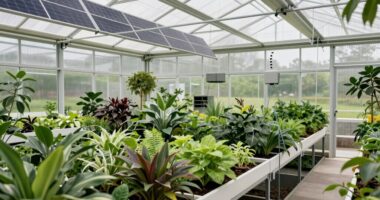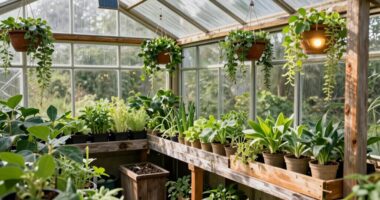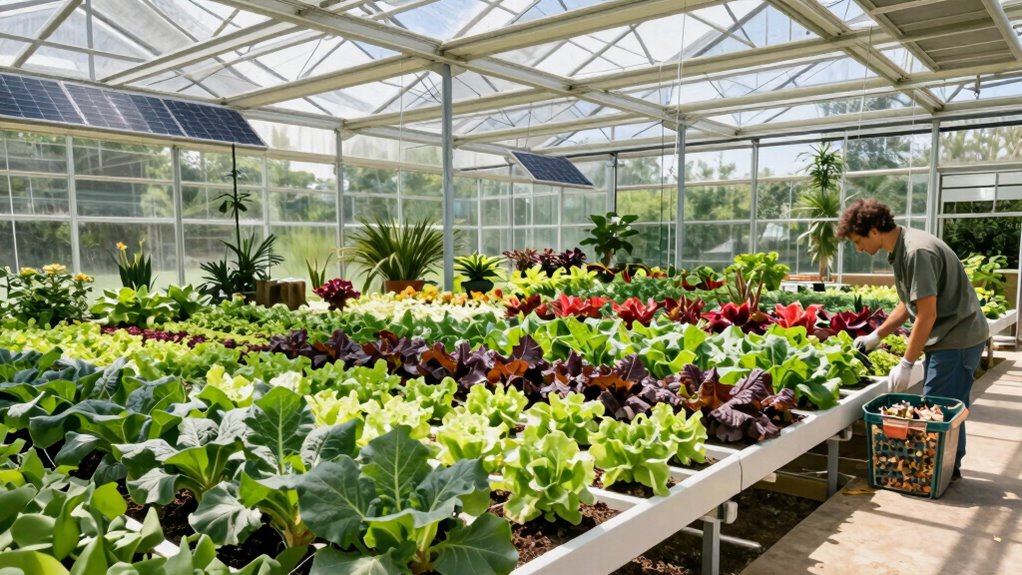
By starting daily checks of your greenhouse’s temperature, humidity, and soil moisture, you immediately optimize plant health and prevent stress issues. Regular soil assessments and pest prevention keep your environment healthy and resilient. These ongoing practices help you adjust watering and fertilization in real time, boosting productivity and sustainability right away. Keep up these habits, and you’ll discover more ways to enhance your greenhouse’s long-term success.
Key Takeaways
- Regularly monitor and adjust environmental conditions to ensure optimal plant growth and immediate health benefits.
- Conduct frequent soil assessments to promptly address nutrient deficiencies and improve soil vitality.
- Implement proactive pest management strategies by maintaining soil and environmental health to prevent infestations.
- Consistently control soil moisture levels to enhance plant resilience and reduce stress-related issues.
- Practice crop rotation and cover cropping to quickly improve soil structure and reduce long-term pest pressures.
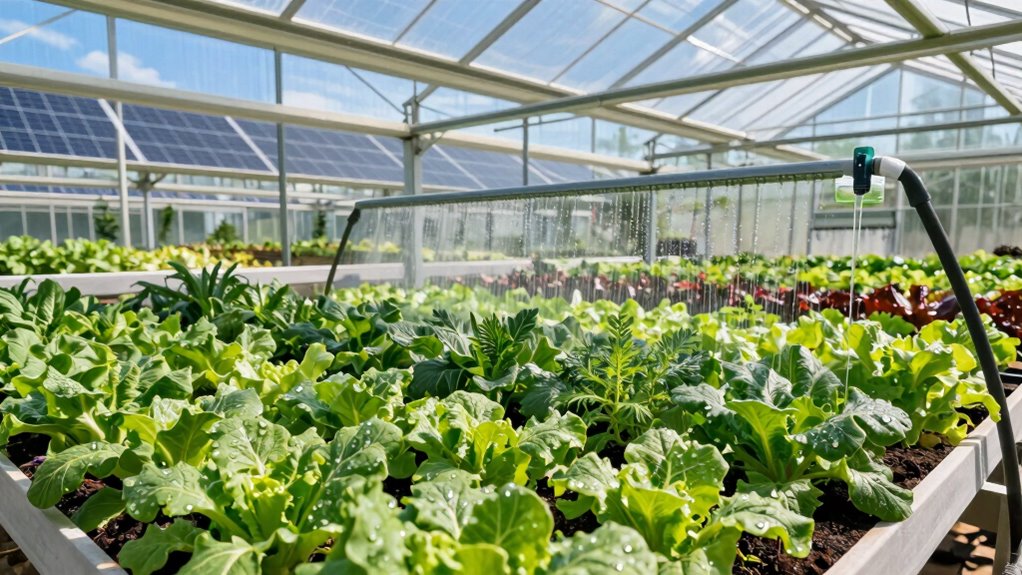
Starting a daily habit of monitoring your greenhouse’s temperature and humidity might seem small, but it can lead to significant improvements in plant health and yield. When you pay close attention to these environmental factors, you create a stable environment that supports ideal growth. But it’s equally important to focus on the health of your soil, which is the foundation of thriving plants. Healthy soil provides essential nutrients, improves water retention, and fosters beneficial microorganisms that help your plants resist pests and diseases. By incorporating regular soil assessments into your daily routine, you can catch issues early, such as nutrient deficiencies or soil compaction, and address them before they impact plant health. Additionally, understanding soil microbiome diversity can help you optimize soil health strategies for better plant resilience.
Consistent monitoring also enhances your pest management strategy. Pests often take advantage of stressed or unhealthy plants, so by maintaining crucial conditions, you reduce the likelihood of infestations. When you keep a close eye on soil health, you can identify signs of pest activity more quickly—such as unusual holes or discolored leaves—and react swiftly. Incorporating organic soil amendments, like compost or biological controls, becomes easier when you understand your soil’s current state. This proactive approach minimizes the need for chemical interventions, supporting a sustainable and eco-friendly greenhouse environment. Understanding soil health indicators can further guide your management practices and improve your overall pest prevention efforts.
Additionally, tracking soil moisture levels and adjusting watering schedules accordingly prevents overwatering or drought stress, both of which can weaken plants and attract pests. Proper soil management directly influences plant vigor, making them less susceptible to pests and diseases. Your daily habit of checking soil conditions also encourages you to rotate crops and implement cover cropping strategies, which break pest cycles and improve soil structure. These practices not only boost plant resilience but also contribute to long-term soil well-being, reducing the need for chemical pest controls. Regular soil testing can reveal nutrient imbalances, helping you fine-tune your fertilization schedule for better crop outcomes. Moreover, understanding how soil amendments affect soil health can support sustainable growth practices that benefit both your plants and the environment.

TempPro TP50 Digital Hygrometer Indoor Thermometer Room Thermometer
- Wellness Indicator: Air condition status with icons
- High Accuracy & Fast Updates: ±2-3%RH and ±1°F, updates every 10 seconds
- Record High & Low: Displays temperature and humidity extremes
As an affiliate, we earn on qualifying purchases.
As an affiliate, we earn on qualifying purchases.
Frequently Asked Questions
What Types of Plants Thrive Best in Sustainable Greenhouses?
You’ll find that succulents, herbs, and leafy greens thrive best in sustainable greenhouses. Focus on plant selection that suits your climate and growing conditions, and optimize sunlight by arranging plants for maximum exposure. These plants require less water and energy, making them ideal for sustainability. By choosing the right plants and ensuring good sunlight, you’ll see faster growth and better yields, making your greenhouse more efficient and eco-friendly.
How Much Initial Investment Is Needed for a Green Greenhouse Setup?
You’ll need an initial investment ranging from $5,000 to $20,000 for a sustainable greenhouse setup, depending on size and materials. Conduct a thorough cost analysis to understand expenses like structure, climate control, and irrigation. Consider funding sources such as grants, eco-friendly loans, or crowdfunding to offset costs. Planning carefully guarantees you allocate resources wisely, making your green greenhouse both sustainable and financially viable from the start.
Can Sustainable Greenhouses Be Used in Urban Environments?
Yes, sustainable greenhouses work well in urban environments. You can integrate them into urban agriculture projects, utilizing limited space efficiently. They often incorporate green building techniques, like solar panels and recycled materials, reducing environmental impact. By designing compact, energy-efficient greenhouses, you support local food production and promote eco-friendly living. These greenhouses help urban areas become more self-sufficient while contributing to a healthier, greener cityscape.
What Are Common Mistakes to Avoid When Starting a Green Greenhouse?
Think of your greenhouse as a delicate dance. Avoid common mistakes like neglecting proper composting techniques, which can invite pests and disrupt balance. Overwatering or poor ventilation can lead to mold, while ignoring pest management allows unwanted guests to take over. Stay vigilant, monitor conditions closely, and adapt quickly. By doing so, you’ll keep your greenhouse thriving, ensuring your plants flourish and your sustainable efforts pay off from day one.
How Do I Measure the Environmental Impact of My Greenhouse?
You measure your greenhouse’s environmental impact by tracking energy efficiency and water conservation. Install energy meters to monitor electricity use and compare it to your production output. Use water meters to gauge consumption and identify areas for improvement. Regularly evaluate your systems, like ventilation and irrigation, to guarantee you’re minimizing waste. Keeping detailed records helps you see progress and adjust practices for a more sustainable, eco-friendly greenhouse operation.
Conclusion
By embracing this sustainable greenhouse habit, you might think the benefits take time to show. But unlike traditional methods, you’ll start seeing quick results—cost savings, healthier plants, and a greener footprint—almost immediately. It’s a surprising contrast: patience is usually required for environmental change, yet here, action pays off right away. So, why wait? Start today and watch your efforts bloom into tangible, instant rewards that make a real difference.