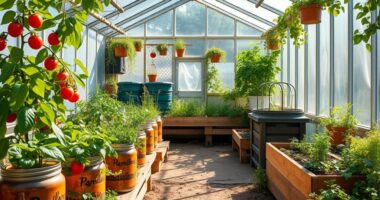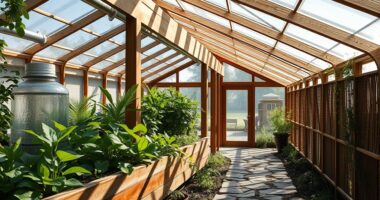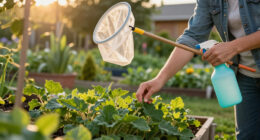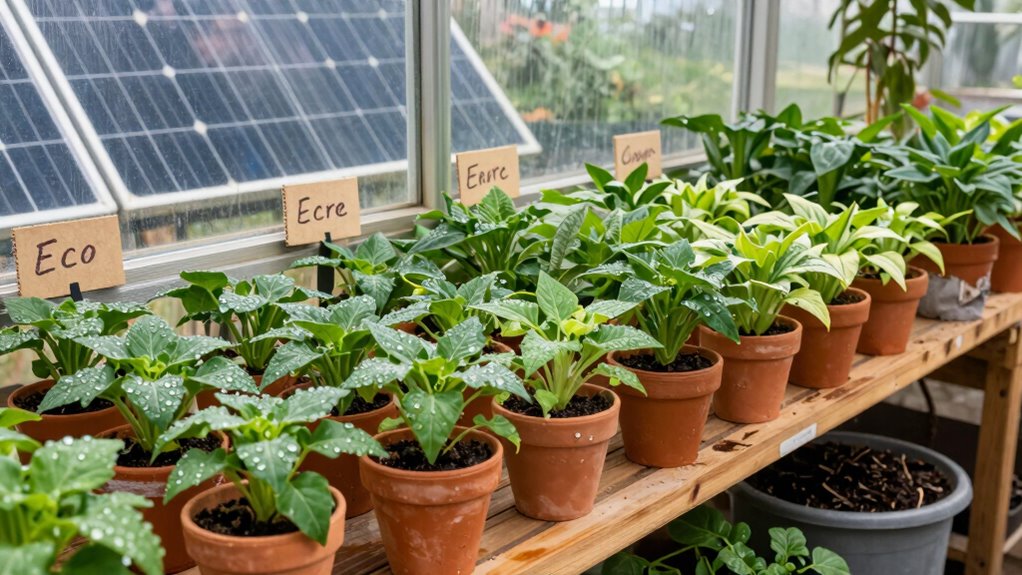

You can make your greenhouse more responsible by choosing small, everyday actions like sealing leaks around doors and windows, switching to energy-efficient LED grow lights, and using programmable thermostats to save energy. Water wisely by collecting rainwater and watering plants during cooler times. Opt for organic fertilizers and locally sourced materials to reduce your environmental impact. Stay mindful of your resource use and support renewable energy options. Keep these sustainable habits in mind to create a greener, more responsible greenhouse environment.
Open a free Amazon Business account
Business pricing, bulk buying and tax-exempt orders.
As an affiliate, we earn on qualifying purchases.
Key Takeaways
- Use energy-efficient equipment and renewable energy sources to reduce the greenhouse’s carbon footprint.
- Implement water-saving techniques like rainwater harvesting and drip irrigation for sustainable watering.
- Choose biodegradable pots, organic fertilizers, and eco-friendly supplies to minimize environmental impact.
- Regularly monitor energy and water use to identify areas for ongoing efficiency improvements.
- Support local suppliers and source materials locally to lower transportation emissions and strengthen community ties.
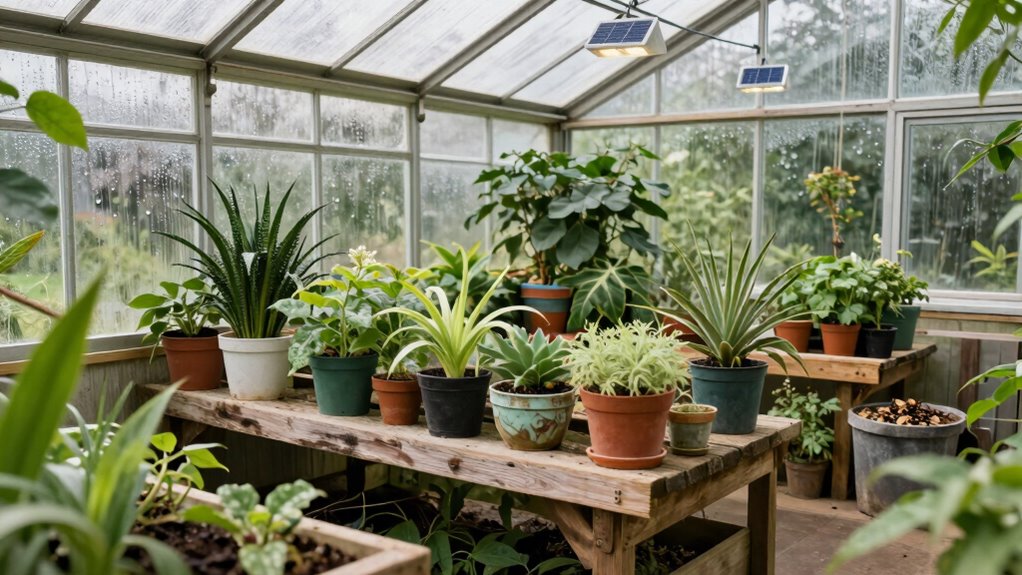
Greenhouses can be more sustainable when you make simple, mindful choices every day. Small actions add up, and focusing on sustainable practices can considerably reduce your environmental impact. One of the most effective ways to do this is by improving energy efficiency. When you prioritize energy efficiency, you reduce the amount of power needed to maintain ideal growing conditions, which benefits both your greenhouse and the planet. Simple steps like sealing leaks around windows and doors prevent heat from escaping, meaning you won’t have to run your heating system as often. Installing programmable thermostats allows you to control temperatures precisely, ensuring the space stays warm when needed and saving energy during off-peak hours.
Another key aspect of sustainable practices is choosing energy-efficient equipment. Switch to LED grow lights, which use less electricity and produce less heat than traditional lighting, reducing your cooling needs. When possible, invest in solar panels or solar-powered systems to generate your own renewable energy. These investments may seem substantial upfront, but they pay off over time by decreasing reliance on grid electricity and lowering your carbon footprint.
Water conservation also plays a critical role in making a greenhouse feel more responsible. Collect rainwater with a rain barrel and use it for watering plants, reducing dependence on municipal water supplies. When watering, do so early in the morning or late in the evening to minimize evaporation, ensuring your plants get the most out of every drop. Using drip irrigation systems can further conserve water by delivering it directly to the roots, avoiding unnecessary runoff and waste.
You can also adopt sustainable practices by choosing eco-friendly materials for your greenhouse furnishings and supplies. Opt for biodegradable pots, organic fertilizers, and pest control methods that don’t harm beneficial insects or contaminate the environment. Composting plant waste turns what would be trash into valuable soil amendment, closing the loop in your resource management and enriching your soil naturally.
Finally, consider the broader impact of your choices by sourcing materials locally whenever possible. Supporting local suppliers reduces transportation emissions and contributes to the community’s economy. Regularly monitoring your energy and water use helps you identify areas for improvement and stay committed to your sustainability goals. Incorporating renewable energy sources like solar power can significantly decrease your greenhouse’s carbon footprint. By integrating these mindful, deliberate actions into your daily routine, you make your greenhouse not just a productive space but also a responsible one—showing that caring for the environment is a continuous, achievable effort.

Briignite Grow Light Bulbs, LED Grow Light Bulb A19 Bulb, Full Spectrum
- Full Spectrum Natural Light: Replicates sunlight for all plant stages
- Bright & Energy Efficient: 180° 1000LM output, consumes 11W
- High Light Transmission: Enhances plant absorption with balanced spectrum
As an affiliate, we earn on qualifying purchases.
As an affiliate, we earn on qualifying purchases.
Frequently Asked Questions
How Can I Reduce Water Usage in My Greenhouse?
To reduce water usage in your greenhouse, start by implementing rainwater harvesting systems to collect and store rainwater. Use drip irrigation to deliver water directly to plant roots, minimizing waste. Monitor soil moisture levels regularly to avoid overwatering, and consider mulching to retain moisture. These practices help conserve water, lower your bill, and promote sustainable gardening. Embracing rainwater harvesting and drip irrigation makes your greenhouse more environmentally responsible.
What Sustainable Materials Are Best for Greenhouse Construction?
You should choose sustainable materials like eco-friendly glazing options, such as recycled polycarbonate or low-emissivity glass, to maximize energy efficiency. For insulation, opt for sustainable insulation materials like sheep’s wool or recycled denim, which provide excellent thermal properties. These choices help reduce your greenhouse’s environmental footprint, lower energy costs, and promote eco-conscious building practices, making your greenhouse more responsible and sustainable from the ground up.
How Do I Compost Effectively in a Greenhouse Setting?
Did you know composting reduces waste by 30%? To compost effectively in your greenhouse, set up a compost bin with a mix of greens and browns to balance the decomposition process. Turn the bin regularly to aerate it, speeding up decomposition. Keep it moist but not soggy, and layer food scraps with dry leaves or straw. This way, you’ll create rich compost that benefits your plants and reduces waste.
What Are Eco-Friendly Pest Control Options?
You can use eco-friendly pest control by implementing biological control methods, like introducing beneficial insects such as ladybugs and predatory mites to naturally reduce pest populations. Additionally, apply natural repellents like neem oil or garlic spray to deter pests without harming your plants or the environment. These approaches help maintain a healthy, sustainable greenhouse ecosystem while minimizing chemical use, supporting responsible gardening practices.
How Can I Monitor Energy Efficiency Easily?
Imagine your greenhouse as a living, breathing entity, whispering secrets about its energy use. You can monitor efficiency easily with smart meters that track your energy consumption in real time. Incorporate renewable energy sources like solar panels, and use insulation techniques to keep warmth in. These tools act as your greenhouse’s heartbeat, helping you stay in tune with its energy health and make smarter, greener choices daily.
Conclusion
By making simple, responsible choices daily—like reducing waste, conserving water, and choosing eco-friendly materials—you can notably impact your greenhouse’s sustainability. Did you know that greenhouses account for about 10% of global energy use? Small changes, like using energy-efficient lighting or recycling plant waste, add up over time. Every decision you make helps create a greener future, proving that even the smallest actions can lead to big environmental benefits.
Flea & tick season Picks
flea and tick prevention
As an affiliate, we earn on qualifying purchases.