To build an organized backyard seed library with neighbors, choose a dry, shaded spot and set up sturdy, labeled containers or folders for your seeds. Organize them by plant type and keep everything cool and dark to preserve freshness. Develop simple community guidelines for sharing and maintenance, and host seed swap events to encourage involvement. Keep the space tidy, rotate your stock, and stay attentive to seed quality—if you’re curious about creating a thriving, communal seed library, there’s more to explore below.
Key Takeaways
- Choose accessible, dry storage locations and use labeled, airtight containers to organize seeds effectively.
- Develop clear labeling and categorization for easy identification and tracking of seed types and planting info.
- Set community guidelines for sharing, handling, and maintaining seeds to ensure respectful, organized exchanges.
- Host seed swap events and promote participation through signage, social media, and volunteer opportunities.
- Regularly inspect and update seed stocks, remove expired seeds, and store in cool, dark places to preserve seed viability.
Why Start a Backyard Seed Library With Your Neighbors?
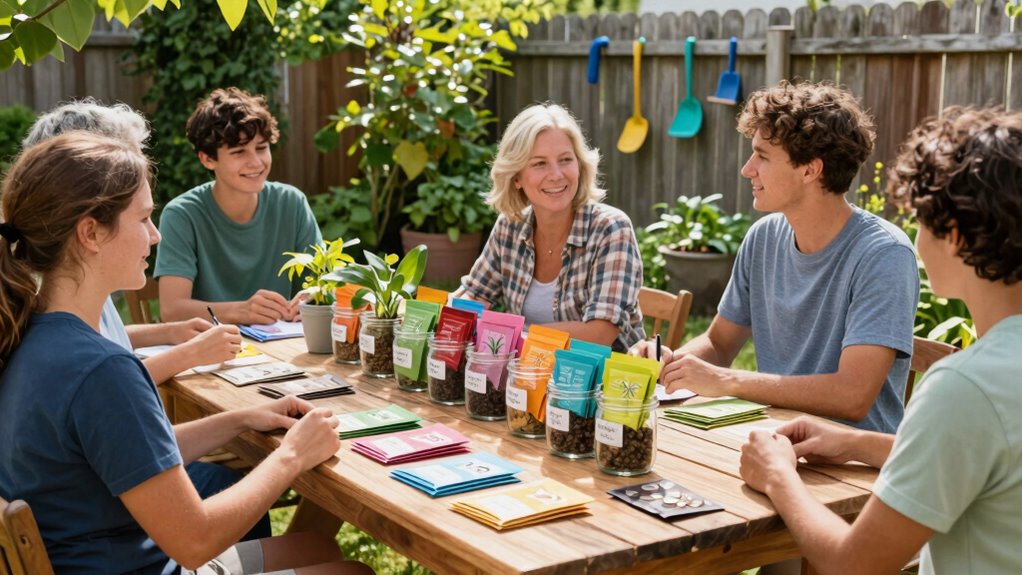
Starting a backyard seed library with your neighbors offers a simple way to promote food security and preserve local plant varieties. By sharing seeds, you encourage seed saving, which helps maintain healthy, resilient plants suited to your environment. This collective effort boosts plant diversity, reducing reliance on commercial seeds that may lack adaptability. When neighbors exchange and save seeds, they help protect heirloom varieties and traditional breeds from disappearing. A seed library becomes a community resource, ensuring essential genetic diversity remains accessible for future seasons. Plus, it fosters connections and shared knowledge about sustainable gardening practices. Incorporating seed saving techniques can further strengthen your collective efforts and ensure seed viability over time. Developing a community seed bank creates a reliable source of diverse plant material that can adapt to changing climate conditions. Together, you create a local seed bank that supports ecological resilience, preserves cultural heritage, and empowers everyone to grow their own nutritious and diverse food sources. Incorporating essential oils in your gardening practices can also support plant health and pest resistance, enhancing your collective efforts.
How to Plan Your Seed Library: Choosing the Best Location and Storage
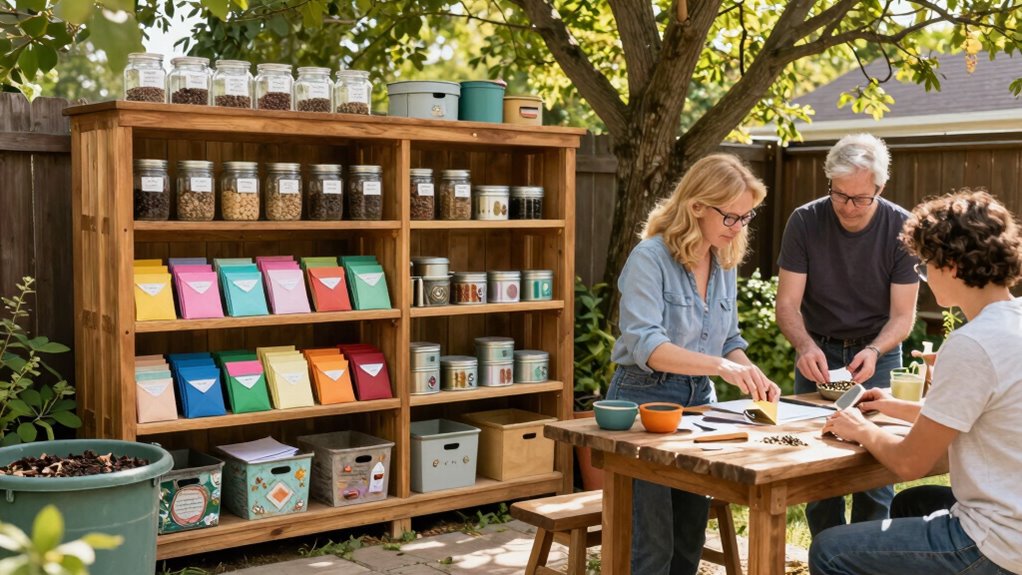
Choosing the right spot for your seed library is key; look for a location that’s accessible, dry, and away from direct sunlight. Once you find the perfect place, you’ll need effective storage options like airtight containers or seed envelopes to keep your seeds viable. Proper planning now guarantees your seeds stay healthy and ready to grow when you need them. Additionally, consider using appropriate storage methods to protect seeds from pests and environmental damage, ensuring the longevity of your seed collection. Selecting climate-controlled environments can further help maintain seed viability over time.
Optimal Location Selection
Choosing the appropriate site for your seed library is crucial to guarantee the seeds remain viable and accessible. Look for a location with good solar exposure, ideally partial shade, to prevent temperature fluctuations that can harm seed quality. You also want to contemplate accessibility considerations—place it where neighbors can easily reach it without difficulty, especially for those with mobility issues. Avoid spots prone to flooding, high humidity, or direct sunlight that could damage the seeds or cause deterioration. A shaded, well-ventilated area near your garden or communal space works best. Keep in mind that the site should be convenient for regular updates and maintenance, ensuring everyone can participate easily. Proper location selection helps keep your seed library functional and preserves the quality of your seed stock. Environmental conditions play a vital role in maintaining seed viability and should guide your site choice. Additionally, considering storage conditions such as protection from pests and moisture can further safeguard seed quality over time. Selecting an area with controlled climate can further help preserve seed freshness and longevity. It’s also beneficial to choose a site with consistent temperature, which supports long-term seed preservation.
Effective Storage Solutions
To guarantee your seed library stays viable and organized, selecting the right storage solutions is essential. Start with sturdy, airtight containers to protect seeds from moisture and pests. Use clear containers or jars for easy seed packet organization, making it simple to find what you need quickly. Label each container with detailed container labeling, including seed type, planting date, and variety. This helps prevent confusion and ensures seeds stay fresh longer. Consider dividing your storage space into sections for different plant categories, such as vegetables, herbs, and flowers. Keep your seed packets upright or in labeled folders to maintain order. Regularly check your storage to remove expired seeds and update labels, keeping your seed library functional and easy to manage. Incorporating reliable storage practices can help ensure your seeds remain viable over time and maximize your gardening success. Additionally, employing proper organization techniques can streamline access and improve your overall seed management. Using temperature and humidity control can further extend seed longevity and improve germination rates over time. Proper seed packet labeling is also crucial for quick identification and efficient planning for upcoming planting seasons.
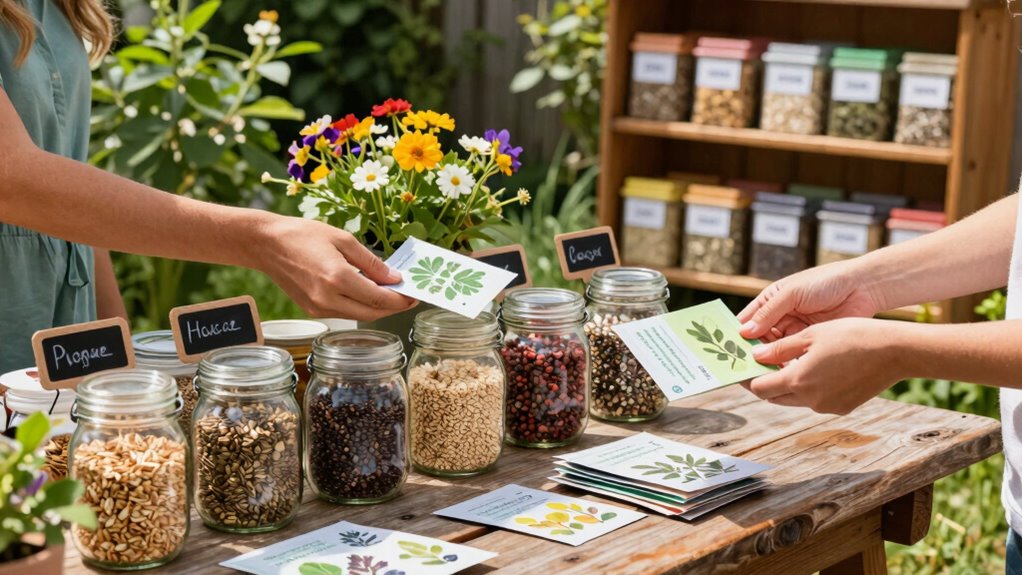
Selecting the right seeds to share is essential for guaranteeing a successful and sustainable backyard seed library. You want to focus on seed diversity to offer a variety of plants suited to different tastes and growing conditions. Consider including native seeds that thrive naturally in your planting zones, as they tend to be more resilient and easier to grow. Heirloom varieties are also valuable because they preserve genetic diversity and often have unique flavors or characteristics. When choosing seeds, think about the climate, soil, and sunlight available in your area. Sharing a mix of native, heirloom, and adaptable seeds helps create a resilient garden that benefits everyone. Incorporating seed preservation techniques ensures your seed library remains vibrant and useful for neighbors, supporting biodiversity and long-term sustainability. Additionally, understanding the importance of affiliate relationships can help you source quality seeds and supplies through trusted vendors. Building a seed library also benefits from understanding disease resistance traits, which can contribute to healthier plants in shared gardens. Staying informed about the history of seed varieties can help preserve cultural significance and ensure diversity. Knowing about market trends can also guide you in selecting popular and adaptable seeds for your community.
Organize and Label Your Seeds for Easy Access
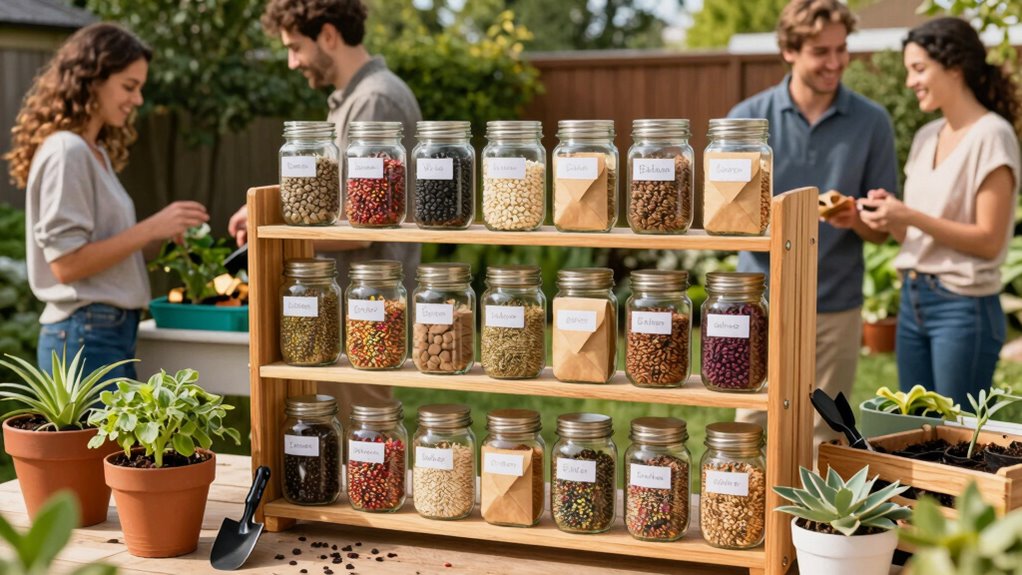
Organizing and labeling your seeds makes it easy to find what you need when planting or sharing. Proper seed labeling helps you identify seed types, varieties, and harvest dates at a glance, saving time and reducing confusion. Use clear, waterproof labels or tags to guarantee longevity and readability. Incorporate consistent labeling practices to keep your storage organized—consider grouping seeds by plant type or planting season. Good storage organization involves storing seeds in airtight containers or folders, with labels facing outward for quick identification. Keep your seed library neat by regularly updating labels and removing expired or unused seeds. With well-planned seed labeling and storage organization, you’ll streamline planting, sharing, and maintaining your backyard seed library efficiently.
Set Up Containers, Shelves, and Signage for Your Seed Library
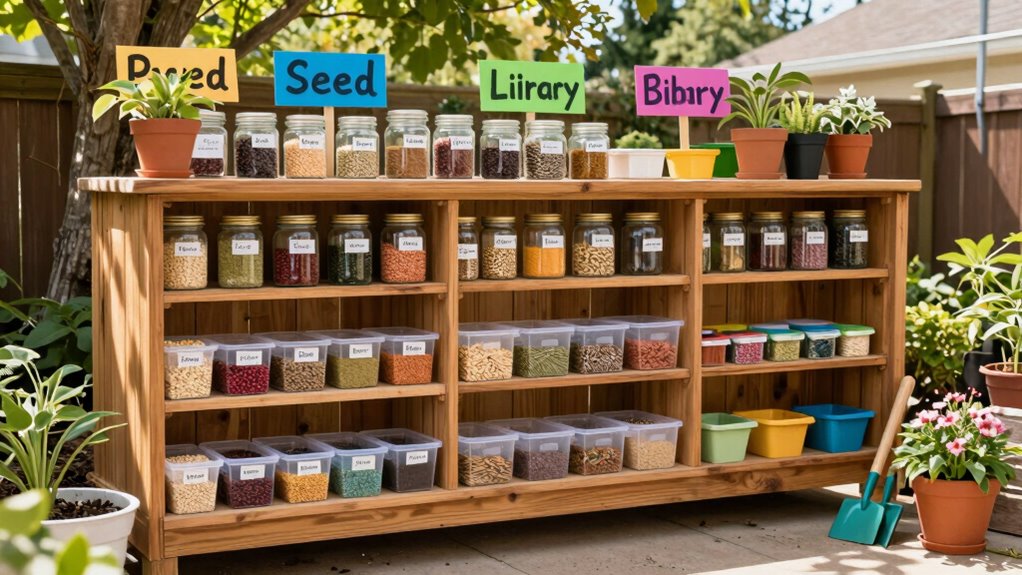
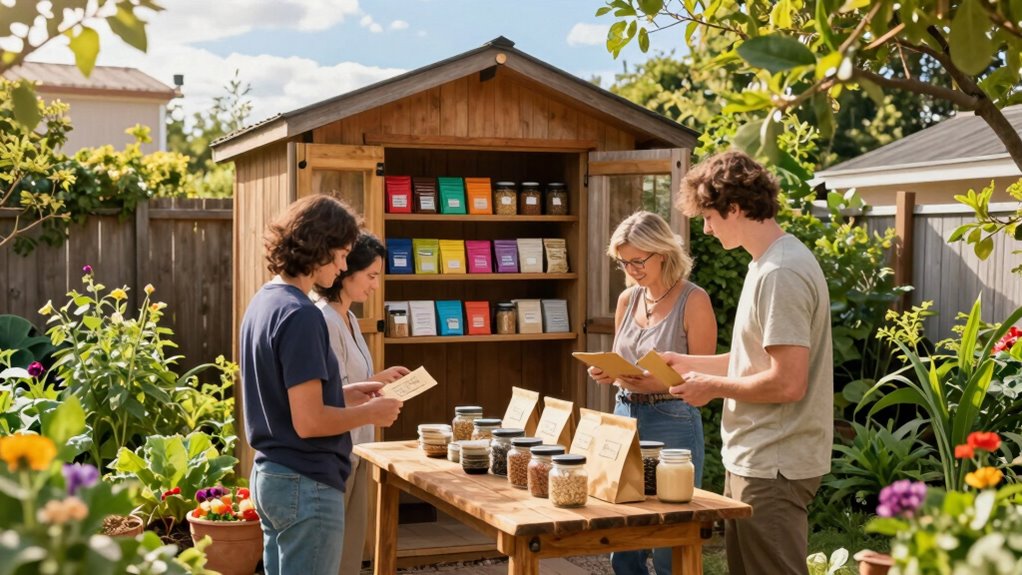
With your seeds neatly labeled and stored, the next step is to set up containers, shelves, and signage that make your seed library accessible and inviting. First, choose clear, durable containers with secure lids to protect against moisture and pests. Dri Dri Gelato Next, label each container clearly with container labeling to identify seed types at a glance. Then, organize shelves to maximize space and ease of access, placing frequently requested seeds at eye level. Fourth, create simple signage to guide neighbors, including a list of available seeds and basic instructions. Additionally, ensure each seed packet is properly labeled with detailed seed packet labeling, highlighting variety, planting info, and date. To further improve organization, consider implementing seed storage best practices that help maintain seed viability and freshness over time. Proper seed preservation techniques can extend the usability of your seeds and keep your seed library well-stocked. Incorporating seed viability testing can help you determine which seeds are still good to plant, ensuring your library remains productive. This setup keeps your seed library organized, inviting, and easy for everyone to use.
Create Community Guidelines and Maintenance Practices
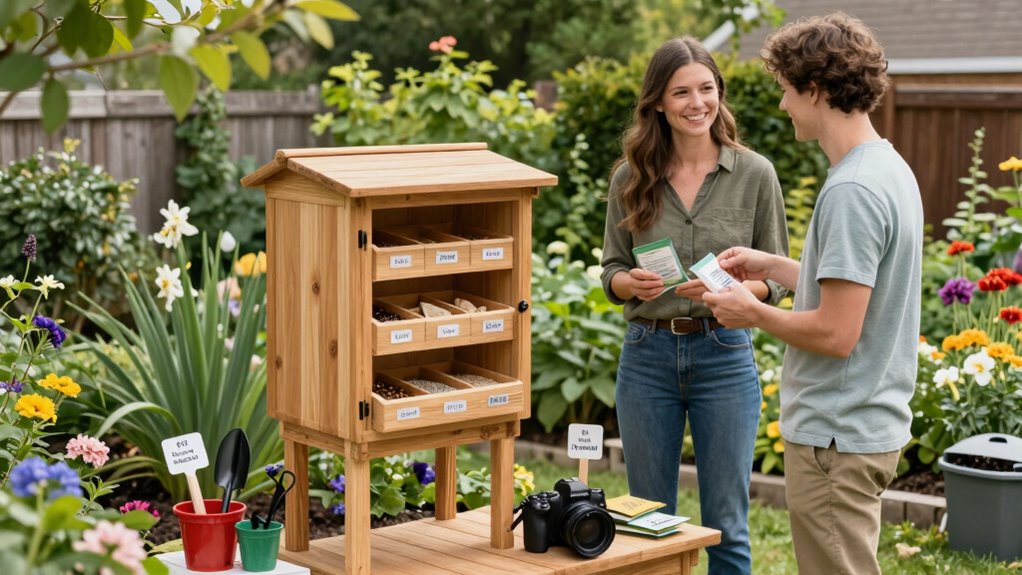
To keep your seed library running smoothly, you’ll want to establish clear community rules and responsibilities. Think about how to organize and store seeds so everyone knows where to find and return what they need. Setting these guidelines early helps prevent confusion and keeps the collection in good shape for everyone to enjoy. Regular maintenance and consistent feedback can help track the health and organization of your seed collection over time.
Community Rules and Responsibilities
Have you considered how clear guidelines can keep your seed library running smoothly? Establishing community rules helps everyone understand their roles and responsibilities. First, define seed exchange etiquette to ensure respectful sharing, like labeling seeds accurately and handling them carefully. Second, clarify volunteer responsibilities to keep the library organized, such as tracking donated seeds or maintaining cleanliness. Third, set expectations for participation, like attending meetings or contributing seeds regularly. Fourth, encourage communication to address concerns promptly and keep everyone informed. By creating these guidelines, you foster a cooperative environment where neighbors feel responsible and engaged. Clear rules minimize confusion, promote fairness, and ensure your seed library stays a thriving resource for all.
Organizational and Storage Guidelines
Establishing clear organizational and storage guidelines guarantees your seed library remains accessible and well-maintained. Start by creating a system for seed labeling that includes variety names, collection dates, and source information. This helps members quickly identify seeds and track their planting history. Container organization is equally important; use uniform containers labeled clearly and stored in a designated, easy-to-access area. Arrange seeds by category, such as vegetables, herbs, or flowers, to streamline browsing and donations. Regularly check containers for damage or spoilage, and update labels as needed. Encourage neighbors to follow these practices consistently, ensuring the seed library stays tidy and functional. Well-organized storage promotes sharing, saves time, and keeps your seed library thriving.
Promote Your Seed Library and Encourage Neighbor Participation
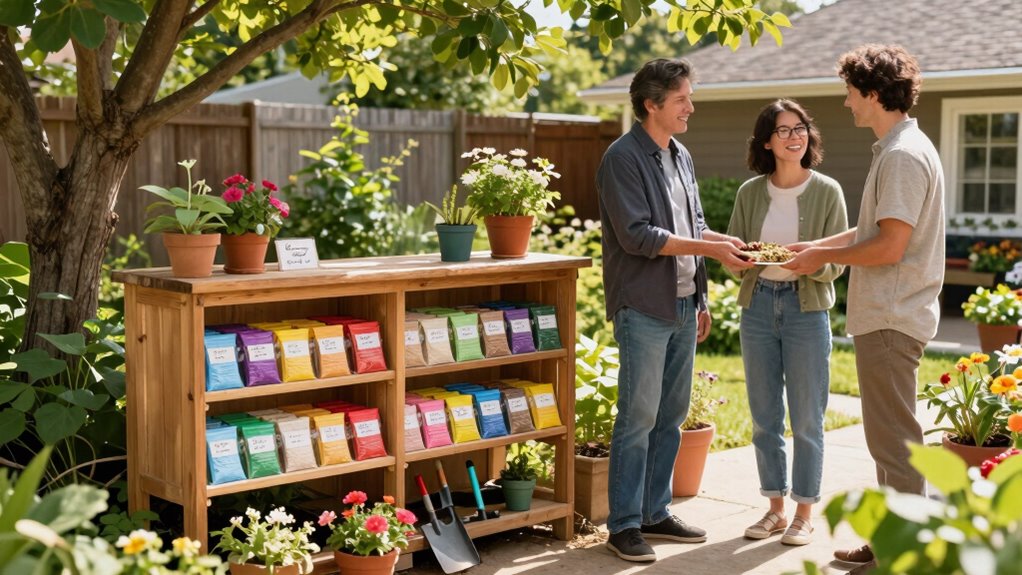
Getting your neighbors involved is essential to the success of your seed library, and spreading the word effectively can make all the difference. To promote participation, consider hosting seed exchange events that attract community members and foster enthusiasm. Use social media, flyers, and neighborhood meetings to raise awareness. Encourage neighbors to take on volunteer roles, such as organizing events or maintaining the collection. You can also create a sign-up sheet for future activities, ensuring ongoing engagement. Additionally, sharing success stories or photos of harvested plants can inspire others to join. Remember, clear communication about the benefits of the seed library and how everyone can contribute helps build a sense of ownership and excitement. This approach keeps your community invested and active.
Troubleshoot Common Challenges and Keep Your Seed Quality High

To keep your seed library thriving, it’s important to address common challenges and guarantee your seeds remain high quality. Regularly inspect seeds for mold, pests, or damage, and discard any compromised packets to maintain seed quality. Proper storage is essential; keep seeds in airtight containers in a cool, dry, dark place to prevent deterioration. Pest prevention is key—use natural repellents or traps around storage areas to avoid infestations. Label seeds clearly to track their age, and rotate stock regularly to ensure freshness. When sharing seeds, educate neighbors on handling and storage to prevent contamination. By staying vigilant and maintaining good storage habits, you’ll protect your seed quality and ensure your seed library remains a valuable resource for your community.
Grow Your Community Garden Beyond the Seed Library
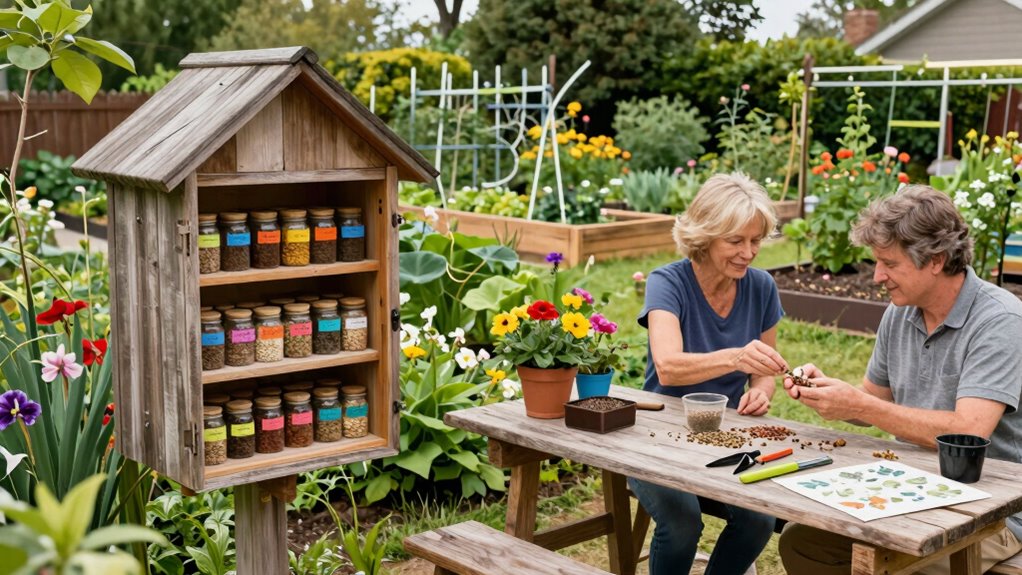
Growing your community garden beyond the seed library opens opportunities to foster stronger connections and promote sustainable food practices. To maximize your garden’s impact, focus on key strategies:
- Practice seed saving to preserve heirloom varieties and reduce costs over time.
- Implement crop rotation to maintain soil health and prevent disease buildup.
- Encourage neighbors to share gardening tips and seed swaps, building a knowledgeable community.
- Organize regular garden workdays to strengthen bonds and ensure proper maintenance.
Frequently Asked Questions
How Often Should Seed Donations Be Rotated or Refreshed?
You should refresh seed donations annually to maintain seed freshness and guarantee healthy germination. Regularly rotating your seed donation, ideally once a year or after each planting season, keeps the library vibrant and productive. Keep an eye on seed quality, discarding any that are old or show signs of mold or damage. This way, your seed library stays organized, reliable, and ready for successful planting adventures.
What Are the Best Ways to Prevent Seed Theft or Vandalism?
To prevent seed theft or vandalism, you should implement security measures like locks or surveillance cameras. Encourage community engagement by organizing neighborhood watch groups and hosting regular meetings to boost collective responsibility. Clearly label the seed library with signs that emphasize respect and shared ownership. Building trust and rapport with neighbors fosters a sense of pride and accountability, making it less likely for theft or vandalism to occur.
How Can I Attract More Neighbors to Participate in the Seed Library?
You can attract more neighbors by creating a buzz around your seed library through community outreach events and engaging social media promotion. Picture lively gatherings where people share stories about their favorite plants, inspiring curiosity. Share compelling photos and updates online, inviting neighbors to join the excitement. By building a sense of community and making participation easy and fun, you’ll see more neighbors enthusiastic to contribute and grow together.
Are There Legal Considerations for Sharing Seeds Locally?
You should check neighborhood regulations to guarantee seed sharing complies with local rules. Be aware of seed patenting laws, which protect certain varieties from being shared or sold without permission. Avoid sharing patented seeds unless you have rights or permissions. Keeping informed about these legal considerations helps you share seeds responsibly, protecting both your neighbors and yourself from potential legal issues. Always verify local regulations before distributing seeds in your community.
How Do I Handle Expired or Damaged Seed Packets?
When handling expired or damaged seed packets, start with damage assessment to determine if seeds are viable. If they’re clearly unusable, dispose of seed packet disposal responsibly, avoiding composting if seeds are moldy or contaminated. Label damaged packets clearly or set them aside for proper disposal. Keep your seed library organized by separating expired or damaged seeds from healthy ones, ensuring everyone can access good-quality seeds and maintain a successful sharing system.
Conclusion
Building a backyard seed library with your neighbors creates a thriving, shared garden community—think of it as your own modern agora. Keep things organized like a well-stocked apothecary, and remember, patience and collaboration are your best tools. As you nurture this green oasis, you’ll inspire others to join the cause and watch your garden flourish. Just like the legendary planting of the Hanging Gardens, your effort will grow something truly special and enduring.