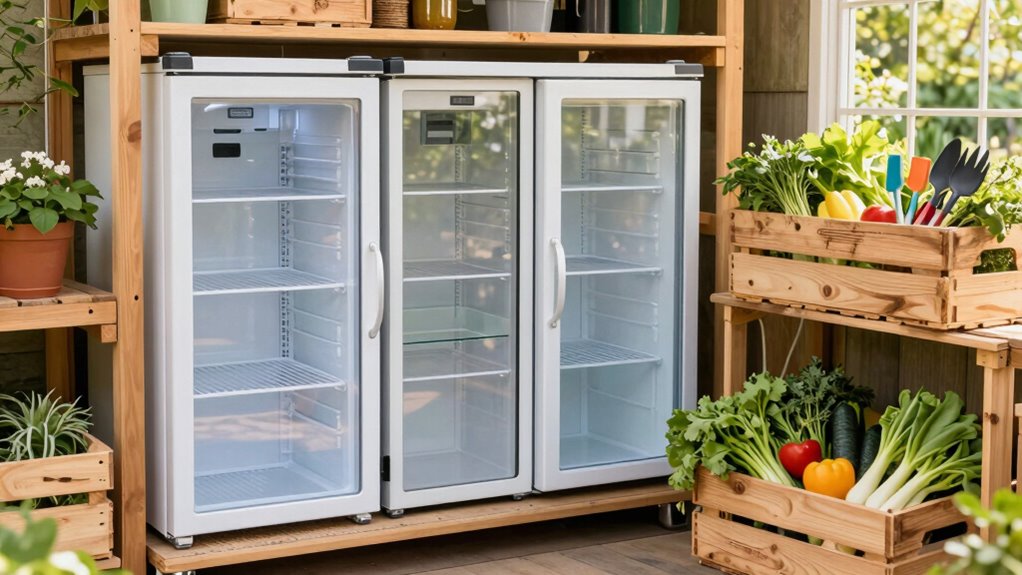

As a gardener, you care about freezers, dryers, and storage because they help you preserve your harvest, prevent waste, and protect your tools and supplies. Proper storage keeps produce fresh longer, maintains flavors, and saves money by reducing replacements. Using these methods makes your gardening more efficient and sustainable. If you want to discover more ways to maximize your garden’s bounty and keep everything organized, there’s plenty more to learn.
Get ready for Prime Big Deal Days — try Prime free
Exclusive member deals on October 6–7, plus fast free delivery. Cancel anytime.
As an affiliate, we earn on qualifying purchases.
Key Takeaways
- Freezers and dryers preserve harvests longer, reducing waste and extending seasonal availability of garden produce.
- Proper storage protects tools and supplies, ensuring they remain effective and ready for use.
- Organized storage environments improve efficiency, saving time and effort during planting, harvesting, and maintenance.
- Maintaining optimal storage conditions ensures food safety, flavor, and nutrient retention over extended periods.
- Smart storage solutions support sustainable gardening by minimizing energy use and maximizing resource efficiency.
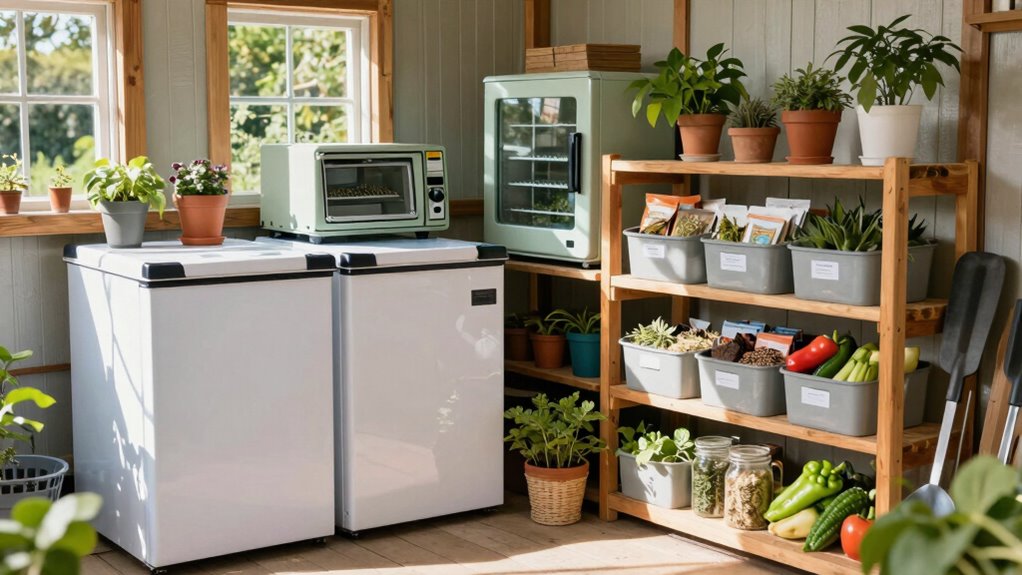
If you want your garden tools and supplies to last longer and stay organized, proper storage is essential. Gardeners understand that how you store your harvest and tools can make or break your success. One of the most effective ways to preserve your bounty is through root cellars, which provide a cool, humid environment perfect for seasonal preservation. Root cellars allow you to keep root vegetables, tubers, and other produce fresh for months without relying on electricity or modern refrigeration. This traditional method preserves flavors, nutrients, and texture, enabling you to enjoy your garden’s bounty well into the off-season. You’ll appreciate the simplicity and reliability of a root cellar, especially when you’re trying to minimize energy consumption and maintain food quality naturally. Proper storage isn’t just about keeping your harvest fresh; it also extends the life of your gardening tools and supplies. Storing items like fertilizers, seeds, and pruning equipment in an organized manner prevents damage and contamination. When tools are stored properly—either in sheds, cabinets, or designated containers—they stay sharper, rust-free, and ready for use when planting season rolls around. This reduces the need for replacements and saves you money in the long run. Additionally, a well-organized storage space makes it easier to find what you need quickly, saving you time and frustration during busy gardening periods. Incorporating energy-efficient preservation methods like root cellars and dehydrators can further enhance your sustainability efforts. Freezers and dryers play a vital role in your overall storage strategy. Freezing is an excellent method for preserving fruits, herbs, and prepared meals, especially when you’ve had a bumper crop. It allows you to enjoy fresh flavors long after harvest, and it’s quick and convenient. Using modern refrigeration options such as freezers ensures your produce stays fresh longer, especially during unpredictable weather. Food dehydrators, or dryers, are equally valuable—they help you create dried herbs, fruits, and vegetables that can be stored for months in airtight containers. Drying reduces volume, prevents spoilage, and keeps flavors intact, making it easier to stockpile your harvest for future use. Using airtight containers is crucial for maintaining dried foods’ quality and preventing moisture from causing spoilage. Regularly maintaining and cleaning your storage equipment, including freezers and dehydrators, is also vital to prevent bacterial contamination and ensure food safety. Proper temperature and humidity control, as part of a storage environment, can significantly extend the shelf life of your preserved foods. These methods complement traditional root cellar storage, giving you versatile options for seasonal preservation. In the end, garden storage isn’t just about tidiness; it’s about maximizing your harvest, reducing waste, and ensuring that your hard work pays off throughout the year. Whether you’re using root cellars for bulk storage, freezers for quick access, or dryers for long-term preservation, each method contributes to a more sustainable, efficient gardening routine. When you prioritize smart storage, you protect your investments, enjoy your produce longer, and keep your gardening experience both rewarding and enjoyable.
As an affiliate, we earn on qualifying purchases.
Frequently Asked Questions
How Do I Prevent Freezer Burn on Garden Produce?
To prevent freezer burn on your garden produce, use freezer-safe packaging that’s sturdy and airtight. Proper sealing techniques are essential—squeeze out excess air and seal tightly to prevent moisture loss. Wrap items tightly or use vacuum-sealing bags for ideal protection. Label everything with dates, so you use older produce first. This way, your garden harvest stays fresh longer, and freezer burn becomes less of a concern.
What Is the Best Way to Organize Garden Tools in Storage?
You should organize your garden tools with tool racks and storage bins to keep everything accessible and tidy. Hang shovels, rakes, and hoes on wall-mounted racks for easy reach, and store smaller tools like gloves and trowels in labeled storage bins. This setup prevents clutter and damage, making your gardening sessions more efficient. Regularly clean and check your tools to make certain they stay in good condition.
How Long Can I Store Harvested Herbs in a Freezer?
You can typically store harvested herbs in your freezer for up to 12 months, ensuring herb preservation at its best. Remarkably, herbs like basil and cilantro tend to lose flavor after just 6 months, so timing matters. To maximize freezer longevity, use airtight containers or ice cube trays for easy portioning. Proper storage not only keeps herbs fresh longer but also preserves their flavor and nutritional value.
Are There Specific Dryers Suitable for Drying Garden Seeds?
Yes, there are suitable drying appliances for drying garden seeds. You should look into seed drying techniques that involve low heat and gentle airflow to preserve seed viability. Suitable drying appliances include dehydrators with adjustable temperature controls or specialized seed dryers. These tools help guarantee your seeds dry evenly without damage, making them ready for storage and future planting. Always follow manufacturer instructions for the best results.
How Do I Maintain Optimal Humidity in Garden Storage Areas?
Think of your garden storage like a delicate dance—balance is key. To maintain ideal humidity, use a hygrometer to monitor moisture levels regularly, aiming for around 50-60%. Incorporate dehumidifiers or silica gel packets to control humidity and prevent mold. Proper ventilation also helps keep the air fresh. By mastering humidity control, you’ll protect your seeds and plants, ensuring they stay healthy and ready for planting season.
Conclusion
Think of your freezer as your garden’s best friend, keeping your harvest fresh until you’re ready to enjoy it. For example, Sarah, a dedicated gardener, freezes her tomatoes at peak ripeness, so she has homemade sauce year-round. When you invest in good storage solutions, you’re not just preserving produce—you’re extending your garden’s bounty and savoring the fruits of your labor long after harvest. Proper storage makes every seedling, blossom, and harvest worth the effort.
Fall Picks
fall essentials
As an affiliate, we earn on qualifying purchases.