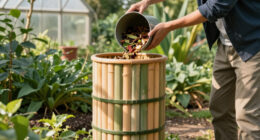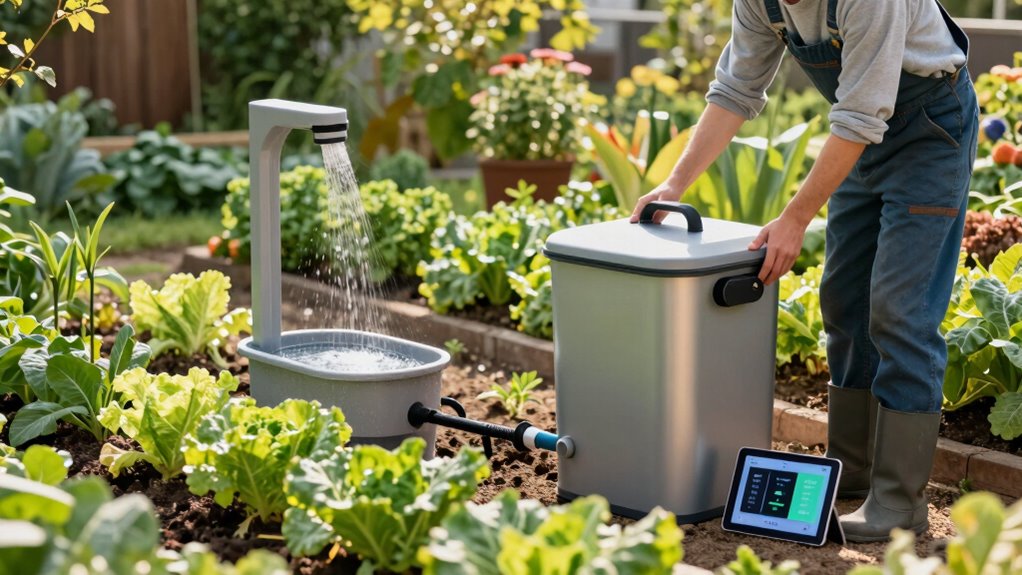
Implementing home systems like indoor composting and rainwater harvesting helps you waste less by recycling kitchen scraps into nutrient-rich compost and reducing landfill waste. Rainwater collection decreases reliance on municipal water, lowering your bills and conserving natural resources. These systems are easy to maintain, space-efficient, and eco-friendly. By adopting them, you support sustainability and improve your garden’s health. Stay tuned to discover how these methods can make a real difference in your gardening journey.
Key Takeaways
- Indoor composting recycles kitchen waste into nutrient-rich soil, reducing landfill contributions and organic waste.
- Rainwater harvesting provides gardeners with free, chemical-free water, decreasing reliance on municipal supplies.
- Both systems minimize environmental impact by conserving resources and lowering greenhouse gas emissions from waste and water use.
- Proper composting techniques and waste separation enhance soil health and reduce contamination, promoting sustainable gardening.
- Integrating composting and rainwater collection systems fosters eco-friendly habits, reducing waste and conserving valuable natural resources.
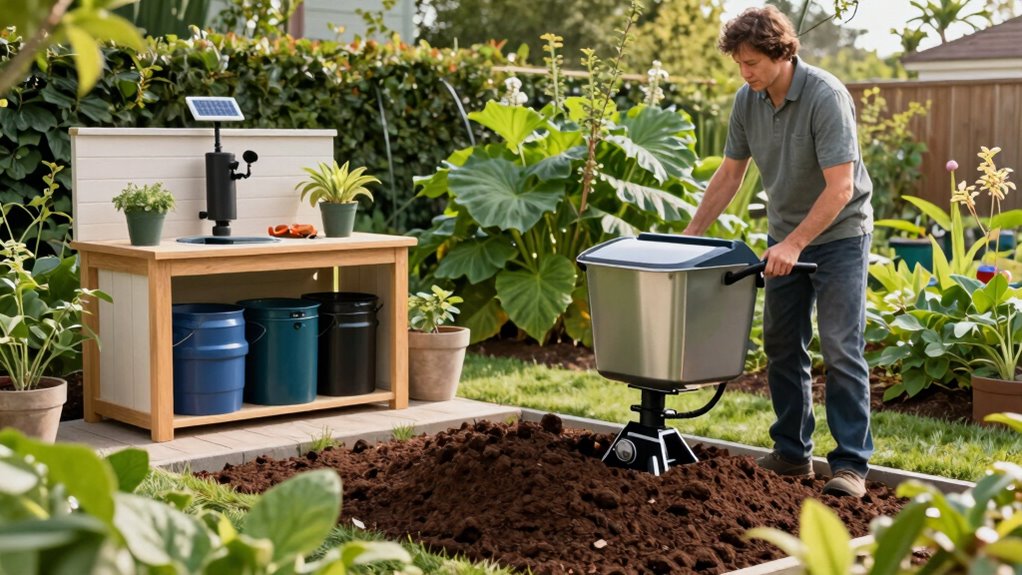
Creating an efficient home system for your garden can substantially enhance your gardening experience. When you implement strategies like indoor composting and rainwater harvesting, you not only reduce waste but also create a sustainable environment that benefits your plants and your wallet. Indoor composting allows you to recycle kitchen scraps—vegetable peels, coffee grounds, eggshells—right inside your home, without worrying about odors or pests. This method keeps organic waste out of landfills and produces nutrient-rich compost that you can use to fertilize your garden. The process is straightforward: you set up a compost bin in your kitchen or basement, add your waste, and turn it regularly. Over time, it transforms into dark, crumbly compost that enhances your soil’s health and structure, reducing your need for chemical fertilizers. Understanding composting techniques can help you optimize the process and maximize nutrient recovery. Additionally, choosing the right composting method, such as vermicomposting or Bokashi, can further improve your compost’s quality and speed up decomposition. Incorporating proper composting techniques ensures you get the most benefit from your efforts. Plus, practicing waste separation can make composting more efficient and reduce contamination in your compost bin.
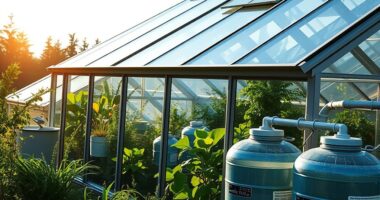
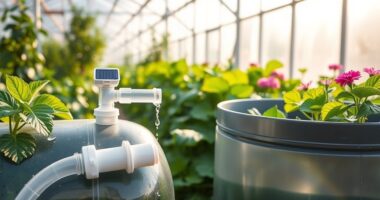
Rainwater harvesting is another essential component of a smarter home system. Instead of relying solely on municipal water, you collect rainwater from your roof using gutters and downspouts, directing it into storage barrels or tanks. This stored water can be used for watering your garden, washing outdoor tools, or even flushing toilets if you set up the appropriate plumbing. By doing so, you cut down on your water bills and lessen your reliance on treated tap water, which often contains chemicals that aren’t ideal for plants. Rainwater harvesting also ensures you have a supply of soft, mineral-free water that’s better for sensitive plants and seedlings. Plus, it’s a simple way to make use of natural resources that would otherwise go to waste. Incorporating water conservation practices into your routine can further amplify the benefits of rainwater harvesting and promote overall sustainability. Being mindful of your water use can also lead to additional savings and environmental benefits.
Both indoor composting and rainwater harvesting are easy to integrate into your daily routine. They require minimal space and maintenance but offer remarkable benefits in waste reduction and sustainability. When you compost indoors, you keep organic waste out of trash bins and reduce methane emissions from landfills. Harvesting rainwater reduces your dependence on municipal water, alleviating pressure on local water systems and conserving a precious resource. These systems also foster a deeper connection to your environment, encouraging you to think more consciously about waste and resource management.
indoor compost bin for kitchen scraps
As an affiliate, we earn on qualifying purchases.
As an affiliate, we earn on qualifying purchases.
Frequently Asked Questions
How Do Home Systems Detect Soil Moisture Levels Automatically?
Home systems detect soil moisture levels automatically through soil sensors that monitor moisture in real-time. These sensors, placed in your garden, send data to a moisture monitoring system, which analyzes the levels continuously. When the soil gets too dry, the system triggers your irrigation to water only when needed. This precise monitoring helps you reduce water waste, ensuring your garden gets just the right amount of moisture without overwatering or waste.
Can Home Systems Be Integrated With Existing Garden Irrigation?
Yes, home systems can be seamlessly synchronized with your existing garden irrigation. You’ll find that garden sensor compatibility makes integration simple, allowing your smart system to monitor soil moisture and weather conditions. This irrigation automation integration guarantees your garden receives just the right water, reducing waste and promoting healthy growth. With a little setup, you enjoy efficient watering while conserving resources, making your garden smarter and more sustainable.
What Is the Average Maintenance Required for These Home Systems?
You’ll typically need to perform maintenance on garden systems about once a month, depending on usage and weather conditions. This maintenance frequency helps guarantee your system functions efficiently, maximizing garden system benefits like water conservation and healthier plants. Regularly checking for clogs, cleaning filters, and updating software (if applicable) keeps your system running smoothly, reducing waste and saving you time and resources in the long run.
Are There Eco-Friendly or Solar-Powered Options Available?
Yes, there are eco-friendly systems and solar options available for gardeners. You can choose solar-powered water timers, irrigation controllers, and composting units that reduce energy use and minimize environmental impact. These eco-friendly systems harness renewable energy, helping you cut down on electricity bills and carbon footprint. Installing solar options guarantees your gardening tools operate sustainably, making your gardening efforts more eco-conscious and efficient without sacrificing performance.
How Secure Are Smart Home Systems From Hacking or Data Breaches?
Smart home systems are generally secure, but cybersecurity risks and data privacy concerns can worry you. You might think hackers could access your devices, but manufacturers use encryption and regular updates to protect your information. By choosing reputable brands and enabling strong passwords, you reduce vulnerabilities. Staying informed about cybersecurity risks helps you enjoy the convenience of smart systems while keeping your data private and secure.
Conclusion
By upgrading your home systems, you can greatly reduce waste and boost your gardening success. Imagine installing a smart irrigation system that adjusts watering based on weather, saving water and ensuring your plants thrive. Take Sarah’s garden, for instance—after switching to a moisture sensor system, she cut water use by 30% and saw her plants flourish. Small changes like these make a big difference, helping you garden more sustainably while enjoying lush, healthy plants.