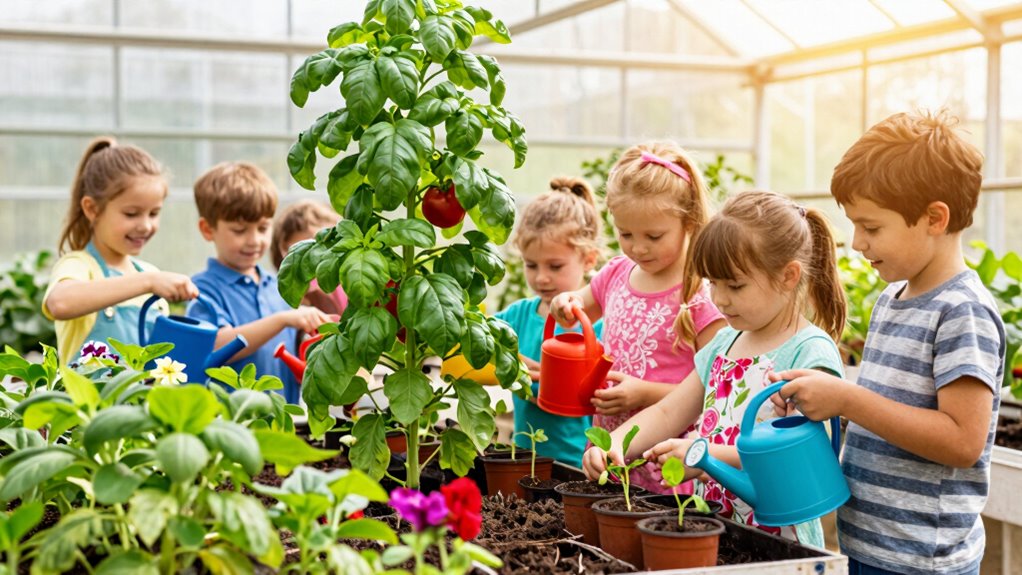

To teach kids plant science using a greenhouse without lectures, focus on hands-on activities like seed germination, observing plant growth, and exploring photosynthesis with visual tools. Create a safe, engaging space where children can handle plants, experiment with light and water, and ask questions. Incorporate simple experiments and encourage curiosity through exploration. For more ideas on making your greenhouse a fun learning environment, keep exploring the strategies that turn science into an exciting adventure.

Get garden gear delivered free with Prime
- Fast, free delivery on millions of items
- Prime Video, Amazon Music and more included
- Member-only deals all year
Key Takeaways
- Use hands-on activities like seed germination and mini greenhouses to foster experiential learning without relying on lectures.
- Create a safe, engaging environment with child-friendly tools, proper ventilation, and supervision to promote natural exploration.
- Incorporate observation, questioning, and discussion prompts to stimulate curiosity and critical thinking about plant processes.
- Demonstrate concepts like photosynthesis and light absorption through simple experiments with filters, prisms, and grow lights.
- Connect greenhouse activities to real-world experiences, such as plant swaps or community gardening, to reinforce learning and foster ownership.
As an affiliate, we earn on qualifying purchases.
Why a Greenhouse Is the Best Hands-On Classroom for Kids

Have you ever wondered why a greenhouse makes such an excellent classroom for kids? It’s because greenhouse design offers a controlled environment that highlights plant adaptation firsthand. Kids can observe how plants adjust to different conditions, such as light, temperature, and humidity, fostering curiosity and understanding. You can showcase how plants adapt through features like adjustable shading, ventilation, and irrigation systems. This real-time observation makes plant science engaging and tangible for children. Additionally, a greenhouse’s climate control systems provide optimal growing conditions, making it easier for kids to see the direct impact of environmental factors on plant health. These systems also demonstrate the importance of environmental management in maintaining healthy plant growth. Moreover, the thoughtful integration of sustainable practices in greenhouse design can teach children about eco-friendly gardening and conservation. The ability to manipulate these systems demonstrates the crucial role of climate regulation in plant growth. Understanding these environmental factors helps children appreciate the complexity of ecosystems. With a well-designed greenhouse, students see the direct relationship between environment and plant health, deepening their appreciation for nature’s resilience and diversity. This setup turns abstract concepts into unforgettable learning experiences.
How to Set Up a Safe and Child-Friendly Greenhouse Environment

Making sure your greenhouse is safe starts with proper ventilation to prevent overheating and keep the air fresh. You also want to choose child-safe materials that won’t cause harm if touched or accidentally ingested. By focusing on these key points, you’ll create a secure environment where kids can explore and learn confidently.
Ensuring Proper Ventilation
Ensuring proper ventilation is essential for creating a safe and healthy greenhouse environment for kids. Good air circulation prevents the buildup of excess humidity and reduces the risk of mold or plant diseases. It also helps control odors, keeping the space fresh and inviting. To achieve this, install adjustable vents or windows that can be opened easily by children under supervision. Use fans if necessary to promote consistent airflow throughout the greenhouse. Regularly check that vents are functioning correctly to maintain ideal conditions. Proper ventilation not only keeps the environment comfortable but also provides kids with a valuable lesson in maintaining healthy plant growth. By prioritizing air circulation and odor control, you create a safe space where kids can explore and learn confidently. Additionally, incorporating ventilation systems can further enhance air quality and comfort in the greenhouse.
Using Child-Safe Materials
Creating a safe and child-friendly greenhouse begins with selecting the right materials. Use non-toxic materials for all surfaces, containers, and tools to prevent accidental poisoning or allergic reactions. Choose child-safe tools that are specifically designed for young hands, such as small shovels, trowels, and watering cans with secure grips. Avoid sharp or heavy equipment that could cause injuries, and ensure all equipment is age-appropriate. Regularly inspect materials for damage or wear, replacing any that could pose risks. Label containers clearly to prevent confusion, and keep hazardous substances like fertilizers or pesticides out of reach. By prioritizing non-toxic options and child-safe tools, you create an environment where kids can explore, learn, and enjoy gardening safely. Additionally, incorporating pool safety practices such as securing hazardous chemicals and supervising children at all times helps maintain a safe greenhouse environment. Ensuring proper ventilation and considering sauna heater safety can also contribute to a safer setup for young gardeners. Incorporating plant science education through hands-on activities further enhances safety by fostering awareness of safe handling practices. Regularly teaching children about safe tool use helps reinforce proper handling and reduces the risk of accidents. Educating children about hazard recognition is also important for developing their awareness of potential dangers in the greenhouse environment.
Simple Greenhouse Plant Science Activities Kids Will Love
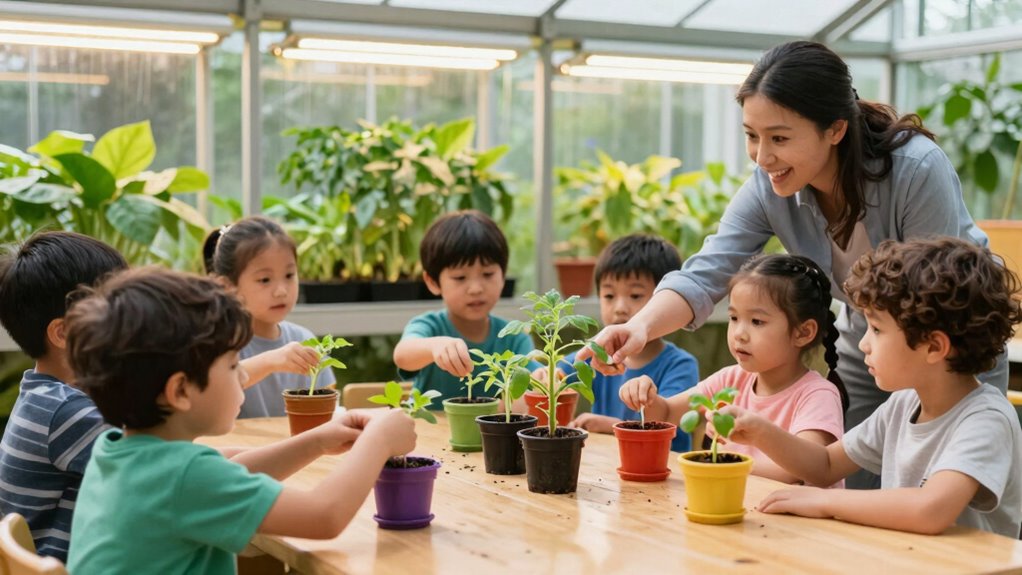
Get your kids excited about plant science with simple activities like seed growth experiments, where they can watch plants sprout and develop. You can also demonstrate photosynthesis in action by using colorful leaves or making a mini greenhouse to observe how plants produce food. These hands-on activities make learning about plants fun and easy to understand for young learners. Introducing them to the concept of photosynthesis process can also help deepen their understanding of how plants and nature are represented in different cultures and creative expressions. Additionally, engaging children in discussions about plant biology can foster curiosity about how plants adapt to their environments and their vital role in ecosystems. Incorporating evidence‑based guidance into these activities ensures that children learn accurate and meaningful information about plant science. Understanding plant adaptation helps children appreciate the diversity of plant life and its significance in various habitats.
Seed Growth Experiments
Have you ever wondered how a tiny seed turns into a thriving plant? Seed growth experiments are perfect for exploring seed germination and understanding the plant cycle firsthand. To start, give kids several seeds—like beans or radishes—and have them plant each in small containers with moist soil. Observe daily as they watch for sprouting, noting the seedling’s emergence. This activity helps kids see how seed germination kicks off the plant cycle, transforming a dormant seed into a growing plant. Encourage them to record their observations, compare growth rates, and ask questions about what influences germination, such as water, light, or temperature. These simple experiments make the science of plant growth tangible and exciting, fostering curiosity and a deeper understanding of how plants develop from seeds. Understanding plant development is essential for nurturing healthy, pest-free gardens. Additionally, discussing the conditions necessary for germination can deepen their appreciation for plant needs and environmental factors, including the role of environmental factors in seed sprouting and growth.
Photosynthesis in Action
Ever wonder how plants turn sunlight into energy? That’s where photosynthesis in action comes in. You can show kids how chlorophyll function is essential for light absorption. Chlorophyll captures sunlight, converting it into chemical energy the plant uses to grow. To make this real, set up a simple activity with leaves placed in sunlight and shade. Observe how the leaves in the sun stay green and healthy, while shaded ones might change. Explain that chlorophyll’s role is to absorb light, especially blue and red wavelengths, which fuels the process. Kids can even use a prism or colored filters to see how different light colors affect absorption. This hands-on approach helps kids understand how plants turn sunlight into the energy they need to thrive. Incorporating modern kitchen technology like automated grow lights can also demonstrate how controlled environments optimize photosynthesis in urban gardening projects. Additionally, using appropriate tools can help monitor plant health and improve the learning experience. Understanding battery reconditioning methods can be beneficial for maintaining renewable energy systems used in sustainable gardening setups. Exploring light spectrum analysis with simple tools can deepen their understanding of how different wavelengths impact photosynthesis and plant growth.
Furthermore, discussing plant biology concepts helps solidify their grasp of the process.
Encouraging Kids to Ask Questions and Explore in the Greenhouse
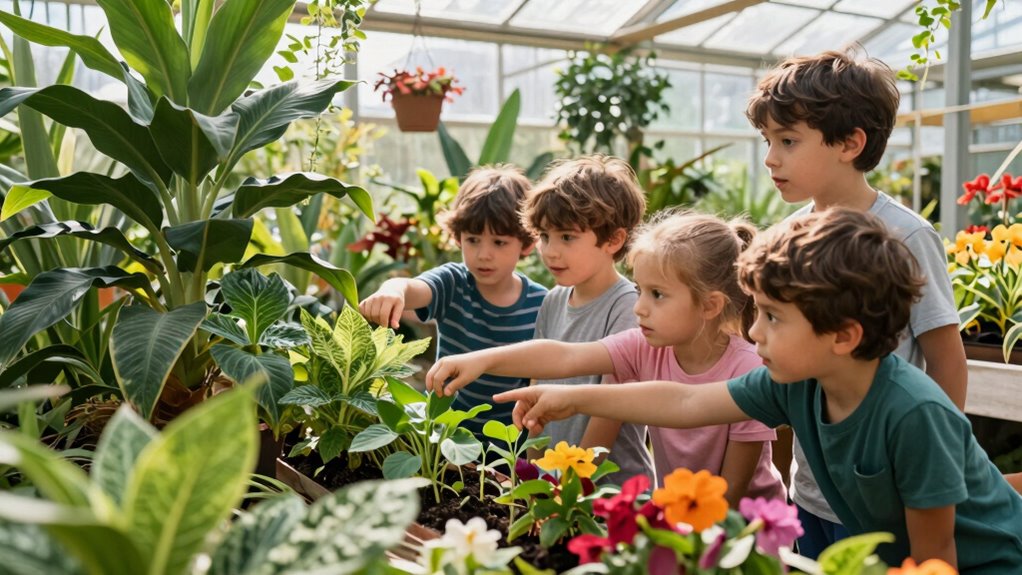
Creating a space where kids feel comfortable asking questions and exploring is key to sparking their curiosity in the greenhouse. Encourage plant curiosity by offering question prompts like “Why do some leaves turn yellow?” or “What makes a plant grow tall?” These prompts inspire kids to observe closely and think critically. Let them handle the plants, touch the soil, and investigate different textures. When they ask questions, guide them to find answers through hands-on exploration rather than providing immediate solutions. Celebrate their curiosity and ideas, fostering a sense of discovery. This open environment helps kids develop a natural interest in plants and science, making learning engaging and memorable without relying on lectures. Incorporating visual and auditory cues can further enhance their understanding and engagement during exploration.
Easy Ways to See What Kids Are Learning Without Lectures
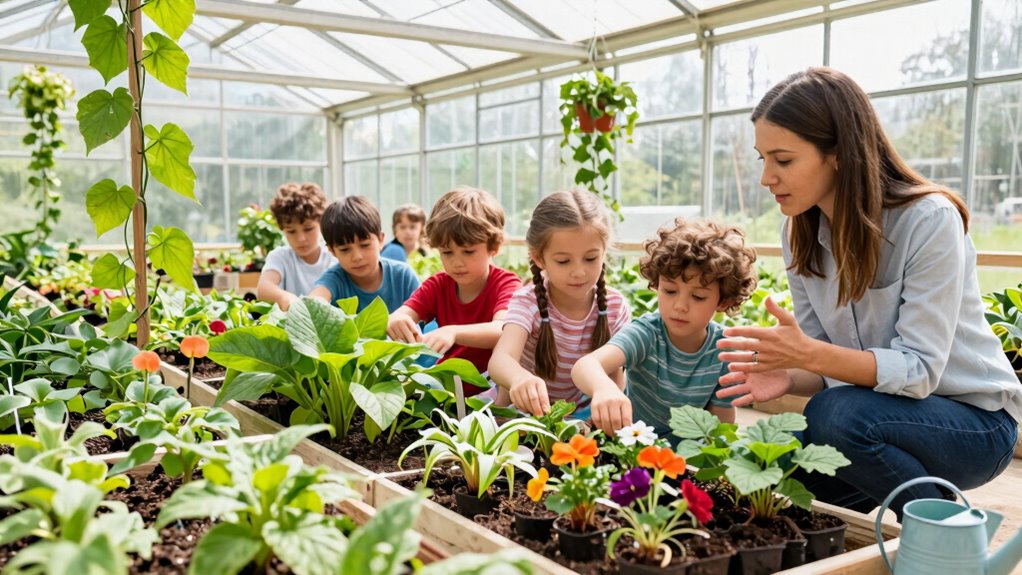
Finding simple, non-judgmental ways to assess what kids are learning can make the teaching process more effective and enjoyable. Interactive observation is a powerful tool—you can watch how children engage with plants and activities, giving you immediate insight into their understanding. Encourage hands-on learning by asking kids to explain their observations or demonstrate how they care for plants. Look for signs that they grasp concepts, like correctly watering or identifying plant parts. Instead of tests, use their actions and questions as indicators of learning. This approach creates a relaxed environment where kids feel comfortable exploring and sharing what they know, making the assessment process natural and fun. It helps you tailor your teaching to their needs, fostering deeper engagement.
Taking Greenhouse Lessons Home and Into the Community
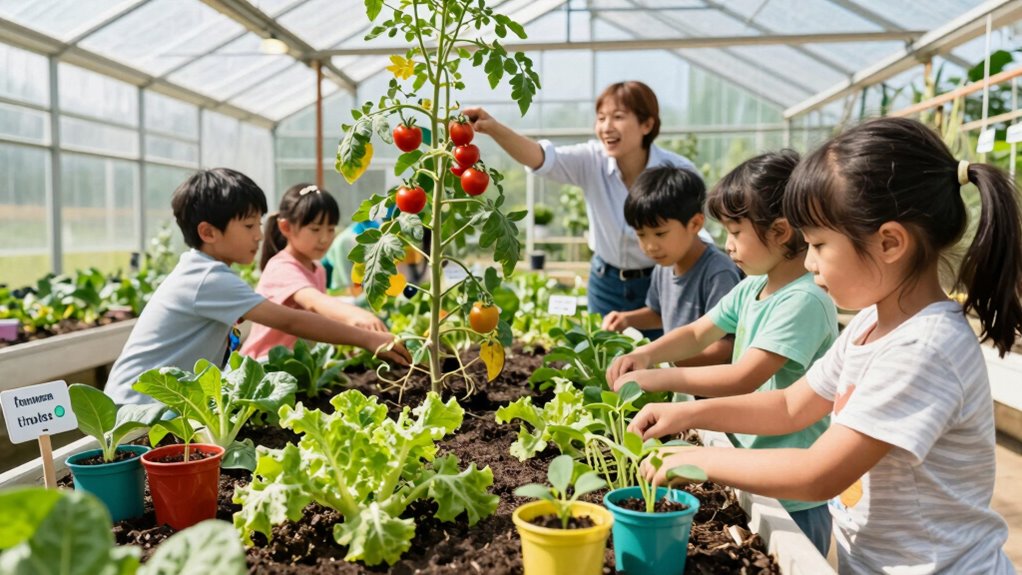
Bringing greenhouse lessons home and into the community extends learning beyond the classroom, allowing kids to connect with plants in familiar environments. You can encourage community outreach by organizing local plant swaps or garden days, giving children opportunities to share their knowledge and passion. Involving families in planting activities at home helps reinforce concepts learned in the greenhouse, making science tangible and meaningful. Invite parents to participate in planting, watering, and caring for plants, fostering family involvement and teamwork. Sharing seedlings or harvests with neighbors promotes community bonding and highlights the importance of sustainable practices. These activities turn greenhouse lessons into lasting experiences, inspiring kids to see themselves as active contributors to their community while deepening their understanding of plant science.
Frequently Asked Questions
How Can I Adapt Greenhouse Activities for Different Age Groups?
You can adapt greenhouse activities for different age groups by including age-appropriate activities and hands-on adaptations. For younger kids, simplify tasks like planting seeds and focus on sensory experiences. Older kids can handle more complex experiments like measuring plant growth or exploring photosynthesis. Use visual aids and interactive tools to engage each age group effectively. Adjust the complexity and depth of activities to match their developmental levels, ensuring everyone stays interested and learns.
What Are Common Challenges When Teaching Kids Plant Science?
Think of teaching kids plant science as nurturing a tiny forest—challenges often sprout up. Common issues include difficulties with seed starting, where kids may lose patience, and pest management, which can be tricky to handle without overwhelming them. You might find it hard to balance hands-on activities with safety and engagement. Embrace these hurdles as opportunities to teach resilience, patience, and problem-solving, turning obstacles into valuable lessons.
How Do I Assess Children’s Understanding Without Formal Tests?
You can assess children’s understanding through informal assessments and observational techniques. Watch how they engage with plant activities, ask open-ended questions, and encourage them to explain their observations. Take note of their curiosity, problem-solving skills, and ability to connect concepts. This hands-on approach helps you gauge their comprehension naturally, fostering a supportive learning environment without the pressure of formal tests, while giving you valuable insights into their progress.
Are There Recommended Safety Precautions for Younger Children?
Imagine a gentle breeze guiding your child’s hand as you supervise them closely in the greenhouse. To guarantee safety, always keep children under constant supervision, watching for hazards like sharp tools or toxic plants. Keep greenhouse doors secure, restrict access to dangerous areas, and teach kids about plant safety. Regularly inspect the environment, and remind kids to wash hands after handling plants, creating a safe and engaging learning space.
How Can I Involve Parents and Community in Greenhouse Learning?
You can boost community engagement and parental involvement by inviting parents to participate in greenhouse activities, such as planting days or harvest events. Share progress through newsletters or social media updates, encouraging families to visit and learn together. Organize workshops or volunteer days where community members can help with greenhouse maintenance. These efforts foster a sense of ownership, inspire ongoing support, and create a vibrant learning environment for kids and families alike.
Conclusion
A greenhouse transforms learning into an adventure where curiosity blooms, and questions grow like plants. By creating a safe, engaging space, you turn science lessons into hands-on discoveries kids will cherish. Remember, the best lessons often happen when you step back and let kids explore—like opening a door to endless possibilities. With each seed they plant and question they ask, you’re nurturing not just plants, but lifelong wonder and love for learning.
Fall yard work Picks
leaf blowers
As an affiliate, we earn on qualifying purchases.