TL;DR

Get garden gear delivered free with Prime
- Fast, free delivery on millions of items
- Prime Video, Amazon Music and more included
- Member-only deals all year
Gardening Know How describes a fall trench-composting method that buries kitchen scraps directly in empty garden beds, where they can break down over winter. The suggested mix includes six ingredients, but the report presents it as a flexible personal method, not a tested formula; it says to cover scraps deeply and keep them away from established plants.
Gardening Know How has outlined a fall trench-composting method that puts chopped kitchen scraps directly into empty garden beds instead of a compost bin. The report’s author says the buried material can break down over winter and add organic matter before spring planting, but presents the six-ingredient mix as a personal approach—not a precise or independently tested recipe.
The suggested mix centers on uncooked fruit and vegetable scraps, with used coffee grounds, finely crushed eggshells, plain rolled oats, a small amount of cinnamon and, if available, flat beer. The author gives approximate amounts for some additions: about one cup of coffee grounds, a quarter cup of oats, half a teaspoon of cinnamon and half a cup of leftover beer. The report says gardeners can omit ingredients they do not have and does not recommend substituting other items.
The author advises chopping larger scraps into pieces around one inch long, letting coffee grounds cool, and rinsing and drying eggshells before crushing them. Scraps with oil, sauce or dressing are excluded, as are meat, fish, bones and dairy. The report describes coffee grounds and eggshells as slow to break down, and cautions that the small amount of cinnamon should not be treated as a solution to an existing garden problem.
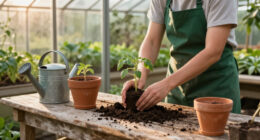
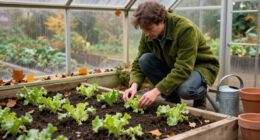
For placement, the method calls for a trench about 12 to 18 inches deep in an empty bed. After the scraps are mixed with some soil, the trench is refilled so there is at least six to eight inches of soil over the food waste. The author’s rough guide is about one gallon of mixed scraps for a four-by-four-foot bed, spread along a short trench; the report says this is not a strict measurement. It also suggests mixing in shredded leaves when available and avoiding digging near established plants or beds intended for immediate planting.
A Bin-Free Route to Fall Soil Building
The approach offers gardeners a way to reuse some household food waste without buying or maintaining a separate compost bin. Because scraps are buried where they will eventually be used, the method may be convenient for people with empty raised beds in fall and enough time before spring planting.
The limits matter as much as the convenience. The report does not provide a controlled comparison showing how much the mixture improves soil, how quickly each ingredient breaks down, or whether the additions produce measurable benefits. Its strongest practical guidance is about moderate quantities, deep coverage and placement: those steps reduce the chance that exposed food waste will attract animals and help avoid disturbing plant roots.
As an affiliate, we earn on qualifying purchases.
How the Fall Trench Method Works
The article describes an ongoing process rather than one large seasonal batch. The author keeps a kitchen caddy for acceptable scraps, empties it into a shallow trench every few days, and uses another spot in the bed as needed until the ground freezes. The method is intended for empty beds; it is not presented as a way to add raw food waste around actively growing plants.
The report explains that fruit and vegetable scraps supply much of the mix’s volume and return organic matter as they decay. It also notes that coffee grounds contain small amounts of nutrients and organic compounds, while eggshells contain calcium but break down slowly. Claims that oats support root growth or that cinnamon acts as a fungicide, rooting aid or pest deterrent are described as popular gardening ideas, not as proven effects of this buried recipe.
““The exact amount isn’t a strict recipe.””
— Gardening Know How report author
Benefits and Breakdown Rates
The report does not establish that all six ingredients are needed, or that the mixture performs better than burying ordinary vegetable scraps or using other soil-improvement methods. It gives no measured results for changes in soil nutrients, plant growth or the time required for the different materials to break down. The author also says the proposed benefits of cinnamon and oats are not a reason to rely on small amounts to address a specific plant or pest problem.
Results will depend on conditions such as soil, weather, ingredient size and how much material is buried. The report does not specify a universal amount for every garden or say exactly when a treated bed will be ready for planting. Its guidance is to use a modest amount, cover it thoroughly and avoid beds that will be planted immediately.
Before Spring Planting
Gardeners following the method would add suitable scraps to empty beds through fall, stopping when the ground freezes, then allow the buried material time to break down before planting. The source does not give a fixed waiting period or promise a particular soil result. Anyone trying it should follow the report’s placement guidance and check the bed’s condition before spring planting.
The article offers no follow-up trial or new data measuring the recipe’s results. For now, the development is a practical gardening recommendation attributed to its author, with its claimed soil benefits and ingredient-specific effects remaining unquantified.
Key Questions
Does the method require a compost bin?
No. The report describes burying kitchen scraps directly in an empty garden bed, so a separate compost bin is not required.
Which food scraps does the report exclude?
It advises against scraps covered in oil, sauce or dressing, as well as meat, fish, bones and dairy.
How deeply should the scraps be buried?
The suggested trench is about 12 to 18 inches deep, with at least six to eight inches of soil covering the scraps after the trench is refilled.
Is the six-ingredient mix a proven formula?
The source presents it as the author’s flexible personal method, not a precise or independently tested recipe. It provides no measured results for soil improvement or plant growth.
Can scraps be buried near growing plants?
The author advises using empty beds, avoiding areas close to established plants where digging could disturb roots, and not burying waste in beds intended for immediate planting.
Source: rss
Halloween Picks
halloween
As an affiliate, we earn on qualifying purchases.