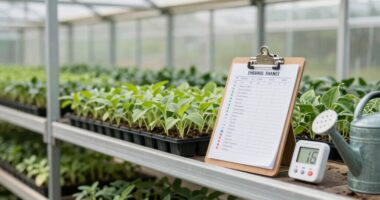
Some plants thrive in greenhouses because their needs for high humidity, warmth, and consistent light are easily met, creating their ideal environment. Others struggle without careful control of factors like moisture and pests, which can lead to diseases or stress. By managing these conditions, you help sensitive plants flourish while tougher ones may need different settings. Want to discover how to optimize your greenhouse setup to support a wide variety of plants? Keep exploring to uncover more tips.
Key Takeaways
- Plants like orchids and ferns thrive in high humidity and stable warmth typical of greenhouses.
- Proper environmental control, including humidity and temperature, suits specific plant needs.
- Greenhouses facilitate pest management, reducing stress and damage to sensitive plants.
- Some plants prefer drier conditions and may struggle with excess moisture in greenhouses.
- Balancing ventilation and moisture levels prevents fungal diseases, supporting healthy plant growth.
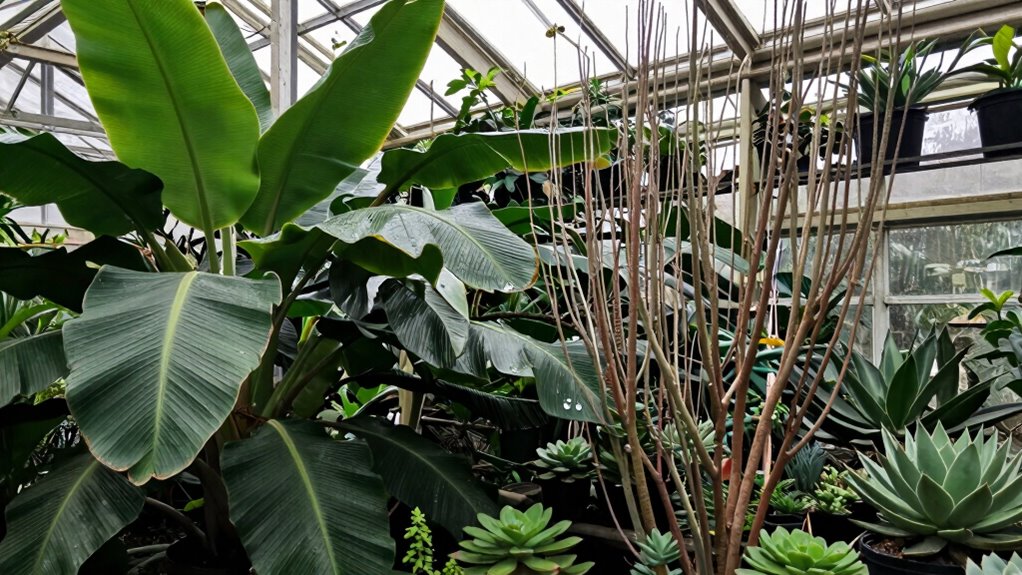
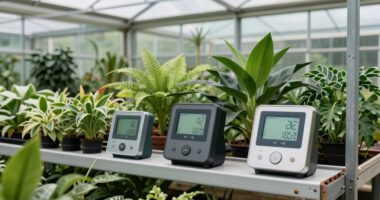
Have you ever wondered how gardeners keep delicate plants thriving year-round? It’s all about creating the right environment inside a greenhouse. When you understand the importance of factors like humidity control and pest management, you’ll see why some plants flourish under cover while others struggle. Greenhouses give you the power to regulate moisture levels, ensuring plants aren’t exposed to extreme dryness or excess humidity. For delicate tropical plants, maintaining consistent humidity is vital because fluctuations can cause stress, leaf drop, or disease. By using humidifiers or adjusting ventilation, you control the moisture in the air, giving these plants a stable environment that mimics their natural habitat.
Pest management is another critical element that makes or breaks a plant’s success in a greenhouse. Without proper control, pests like aphids, spider mites, or whiteflies can quickly infest and damage fragile plants. Greenhouses allow you to implement integrated pest management strategies effectively, such as introducing beneficial insects or using targeted organic treatments. Since you’re working within a controlled space, it’s easier to spot pests early and prevent widespread outbreaks. This level of vigilance helps keep your delicate plants healthy and thriving, especially those that are more susceptible to pest damage. Proper pest prevention techniques are essential to maintaining a healthy greenhouse environment. Additionally, understanding the microclimate within your greenhouse can help you better anticipate and prevent pest issues.
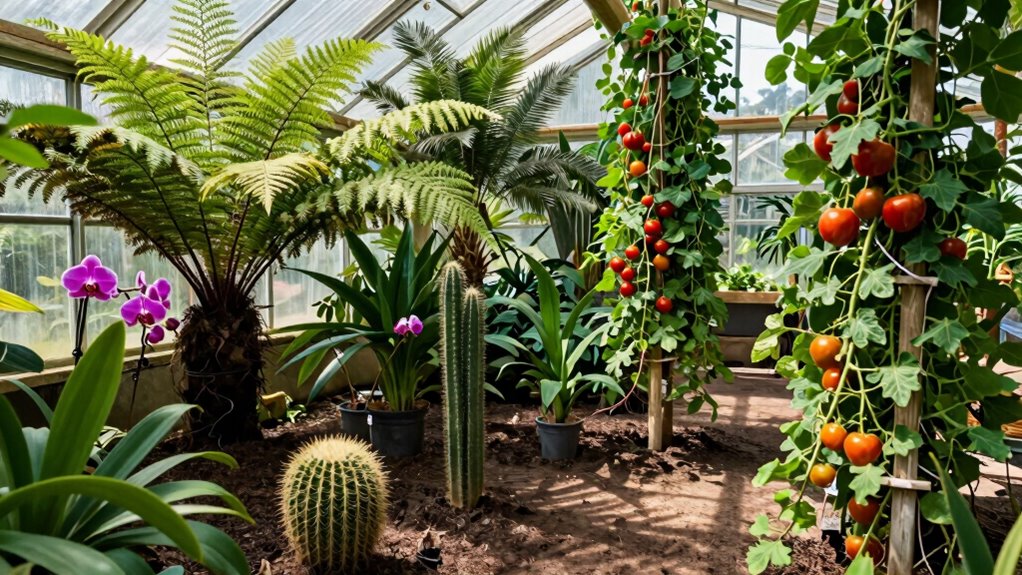
Certain plants thrive in greenhouses because their specific needs align perfectly with the environment you can provide. For example, orchids and ferns require high humidity and consistent warmth, which you can maintain easily in a greenhouse setting. You can fine-tune the temperature, light, and moisture levels to suit their unique requirements, giving them the best chance to grow lush and vibrant. Conversely, plants that prefer drier conditions or are more resistant to pests might struggle inside the greenhouse if humidity is kept too high or if pests aren’t managed properly. Overly humid environments can promote fungal diseases, and if pest management isn’t rigorous, even resilient plants can become compromised. Understanding the environmental needs of different plants helps you adapt your greenhouse practices more effectively. Moreover, proper ventilation is crucial to prevent excess humidity and fungal issues, especially for plants that prefer drier conditions.
Ultimately, your success with greenhouse gardening hinges on your ability to manage these environmental factors. When you keep humidity levels stable and stay vigilant against pests, you create an ideal space for the plants that need a controlled environment. It’s not just about shelter; it’s about fine-tuning the conditions to match each plant’s natural preferences. This way, you’ll see some plants thrive beautifully while others may need different conditions outside the greenhouse. Knowing how to balance these factors empowers you to cultivate a diverse, healthy collection of plants that flourish under your care. Recognizing the importance of environmental control helps you optimize your greenhouse setup for success.
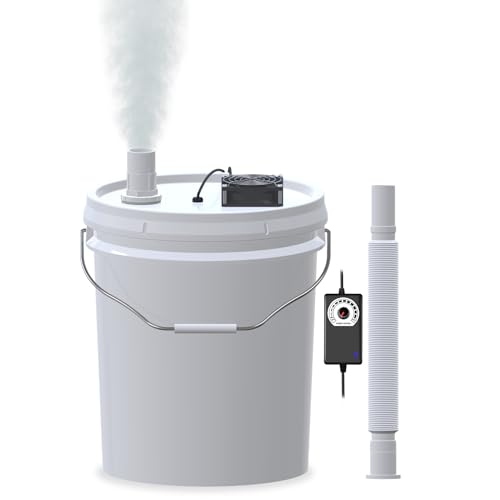
19L Large Capacity DIY Humidifier Kit – for Plants, Mushrooms, Grow Tents, Terrarium | Turns a 5 Gallon Bucket into Cool Mist Humidifier, Extendable Hose, High Output, Long Runtime (1 Fogger Kit)
Large Capacity & Long Runtime: Transform any 5-gallon bucket into a powerful humidifier, Runs over 3 days (72…
As an affiliate, we earn on qualifying purchases.
As an affiliate, we earn on qualifying purchases.
Frequently Asked Questions
How Do Greenhouse Pests Differ From Outdoor Pests?
Greenhouse pests differ from outdoor pests mainly in habitat and behavior. You’ll find greenhouse pests thrive in warm, humid environments, making pest habitat differences essential. They often reproduce faster and are more concentrated, so pest control methods must be targeted and consistent. In contrast, outdoor pests face natural predators and weather challenges. To protect your plants, use integrated pest management, focusing on sanitation, biological controls, and barriers specific to each environment.
Can Greenhouse Plants Survive Winter Without Heating?
You can keep greenhouse plants alive through winter without heating if you choose winter-hardy, cold-tolerant species. Think of your greenhouse as a cozy fortress, where winter insulation shields delicate plants from icy winds. By selecting resilient plants and adding extra insulation, you create a microclimate that withstands the cold. While some plants might need a heater, many can thrive in these protected conditions, turning your greenhouse into a winter oasis.
What Are the Best Watering Practices for Greenhouse Plants?
You should water your greenhouse plants carefully by using drip irrigation to deliver consistent moisture directly to the roots. Always monitor moisture levels regularly with moisture monitoring tools to prevent overwatering or underwatering. Adjust your watering schedule based on plant needs, humidity, and temperature. This approach keeps your plants healthy, encourages steady growth, and reduces water waste, ensuring your greenhouse environment stays ideal for your plants’ thriving.
How Do Greenhouse Plants Respond to Artificial Lighting?
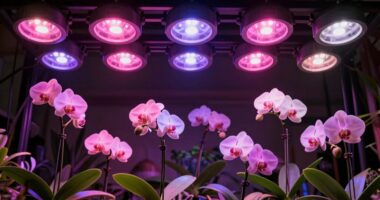
Greenhouse plants respond positively to artificial lighting, especially when you select the right artificial light spectrum. By providing the ideal spectrum, you enhance photosynthesis efficiency, helping plants grow healthier and faster. Adjust the light intensity and duration to mimic natural conditions, ensuring the plants receive enough light for their specific needs. Properly managed artificial lighting can extend growing seasons and improve overall plant robustness under cover.
Are There Specific Plants That Thrive Only in Greenhouse Conditions?
Think of greenhouses as nurturing sanctuaries where certain plants, like tropical varieties and succulents, truly thrive. Tropical plants, symbolizing lush rainforests, rely on warm, humid conditions only found in greenhouses. Succulent varieties, representing resilience and adaptation, flourish with controlled warmth and light. If you want these plants to flourish, providing the ideal greenhouse environment isn’t optional—it’s essential for their growth and survival.

Earth's Ally 3-in-1 Insecticide, Miticide, Fungicide for Plants – Copper Fungicide & Neem Oil Spray Alternative – Insect Repellent & Pest Control for Indoor Outdoor Organic Gardening – 32 Oz Conc.
3-IN-1 GARDEN SPRAY – Earth’s Ally 3-in-1 Plant Spray is an insecticide, miticide and fungicide. The houseplant pest…
As an affiliate, we earn on qualifying purchases.
As an affiliate, we earn on qualifying purchases.
Conclusion
So, next time you step into a greenhouse, remember that it’s not just luck whether plants thrive or struggle—it’s all about the delicate balance you provide. Sometimes, a simple change, like adjusting humidity or light, can turn your struggling plants into vibrant beauties. It’s funny how a little extra care can make all the difference, isn’t it? When you pay attention to their needs, you’ll find that success often comes down to the tiniest, most unexpected details.

TempPro Hygrometer Thermometer for House, Bluetooth Room Indoor Greenhouse Thermometer Monitor Up to 260FT, Backlit Humidity Meter Temperature Sensor with 2-Year Data Export(Previously ThermoPro)
App Control:This bluetooth digital hygrometer helps you easily monitor temp and humidity changes from up to 260FT away…
As an affiliate, we earn on qualifying purchases.
As an affiliate, we earn on qualifying purchases.

Amico 12" Smart Shutter Exhaust Fan with Thermostat & 8 Speed, 1282 CFM (Up To 1600 Sq.Ft), 25W Energy Saving Brushless DC Motor, Wall Mount Garage/Attic/Greenhouse Vent Fan, Plug & Play, FCC
【Massive 1282 CFM Airflow & Wide Coverage】Dominate the heat with a powerful 1282 CFM airflow capability. Driven by…
As an affiliate, we earn on qualifying purchases.
As an affiliate, we earn on qualifying purchases.