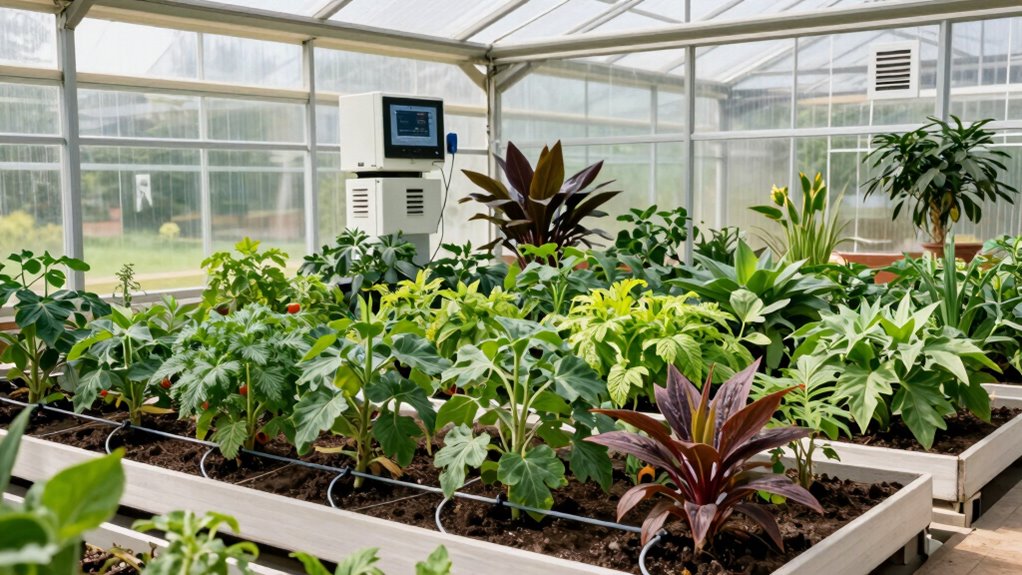
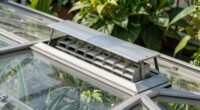
In a greenhouse, climate control keeps your plants happy by managing temperature, humidity, and airflow. Ventilation systems with exhaust fans, vents, and windows help circulate fresh air and remove excess moisture, preventing mold and mold-related problems. Automated systems adjust these components based on real-time data, creating a stable environment. When you understand how ventilation works alongside shading and heating, you’ll have an easier time maintaining healthy plants. Keep exploring to discover more simple ways to improve your greenhouse.
Key Takeaways
- Greenhouse climate control manages temperature, humidity, and airflow to keep plants healthy.
- Ventilation systems include fans and vents that exchange stale air for fresh air.
- Air exchange is the process of replacing old air to maintain a stable environment.
- Automated systems use sensors to adjust vents and fans automatically for consistent conditions.
- Ventilation works with shading, heating, and cooling to create a balanced growing environment.
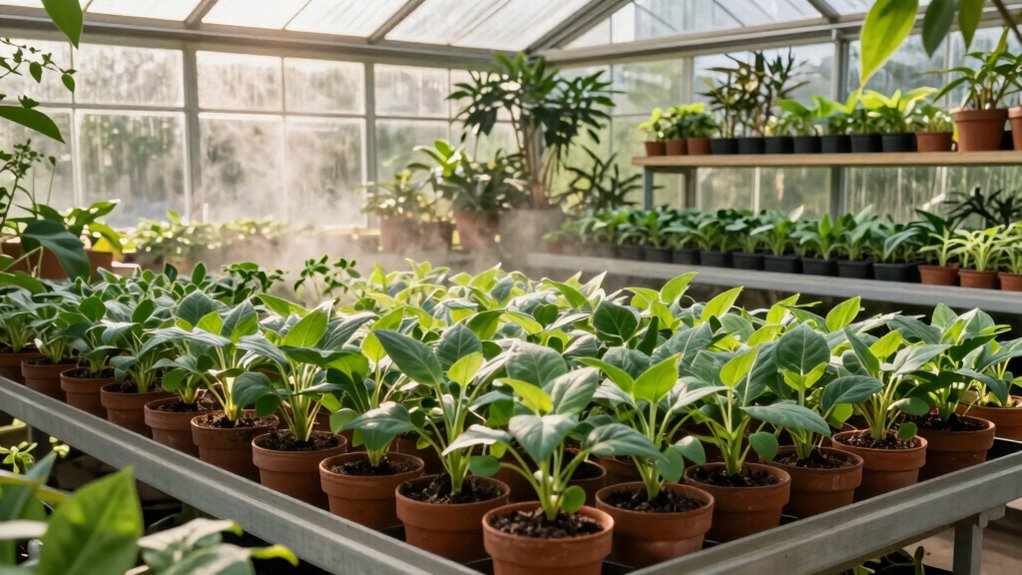
Ever wondered what all those specialized words in greenhouse gardening mean? If you’re new to the world of greenhouses, it can feel overwhelming trying to understand all the technical terms. But don’t worry—once you get familiar with some basics, it becomes much clearer. One of the most vital aspects of maintaining a healthy greenhouse is climate control, which guarantees your plants stay in the ideal environment. Climate control involves managing temperature, humidity, and airflow, so your plants don’t suffer from extremes. To do this effectively, you’ll rely heavily on ventilation systems. These systems are designed to circulate air, regulate temperature, and remove excess humidity, creating an ideal growing environment.
Ventilation systems come in various forms, but their primary goal is to exchange stale, warm air with fresh, cooler air from outside or from within the greenhouse. This keeps the climate stable and prevents problems like mold, fungal diseases, or heat stress. You might have heard terms like exhaust fans, intake vents, or louvered windows. Exhaust fans pull hot air out of the greenhouse, while intake vents allow cooler outside air to flow in. Louvered windows or roof vents work similarly, opening and closing automatically based on temperature sensors. These components work together as part of your ventilation system, ensuring continuous airflow and preventing stagnation. Proper air circulation is essential for maintaining a healthy environment, especially in enclosed spaces like greenhouses. Additionally, understanding the air exchange process helps optimize your ventilation setup for the best results. Having a good grasp of greenhouse climate management can significantly improve plant health and productivity.
Ventilation systems exchange stale air with fresh air to keep your greenhouse climate stable and healthy.
Good ventilation is essential because it directly impacts your greenhouse’s climate control. If your ventilation isn’t adequate, your greenhouse could become too hot during summer or too humid during spring, harming your plants. That’s why understanding these systems helps you maintain a steady environment. Many greenhouses also incorporate automated systems that adjust vents and fans based on real-time data, making climate control easier and more precise. This automation allows you to focus on other gardening tasks, knowing that the ventilation will respond to changing conditions. Properly functioning ventilation systems are crucial for preventing issues like mold and fungal diseases, which thrive in poor air circulation.
In essence, ventilation systems are the lungs of your greenhouse, breathing fresh air in and pushing stale air out. When combined with other climate control methods like shading, heating, or cooling systems, they help create a balanced environment that promotes healthy plant growth. So, by understanding these key terms, you’re better equipped to manage your greenhouse effectively. It’s about creating the right conditions for your plants to thrive, and knowing how ventilation systems work is a big step toward that goal.

iLIVING 12" Wall Mounted Shutter Exhaust Fan, Automatic Shutter, with Thermostat and Variable Speed controller, 0.6A, 960 CFM, 1400 SQF Coverage Area Silver (ILG8SF12V-ST)
POWERFUL AIR VENTILATOR – 960 CFM, 115V, 0.6A, 1/20 Horse Power, 1650 RPM, Coverage up to 1400 square…
As an affiliate, we earn on qualifying purchases.
As an affiliate, we earn on qualifying purchases.
Frequently Asked Questions
How Do I Choose the Right Greenhouse Size for My Needs?
To choose the right greenhouse size, consider your planting goals and available space. Think about seasonal size adjustments—you might need more room during peak growing seasons. Keep budget considerations in mind, balancing cost with functionality. Start small if you’re new, then expand later as your needs grow. Measure your space carefully, and choose a size that allows for efficient airflow and easy maintenance, ensuring your plants thrive year-round.
What Are the Best Materials for Constructing a Greenhouse?
You might think any material works, but for plant propagation and proper greenhouse ventilation, choose durable, UV-resistant polycarbonate or glass. These materials withstand weather, keep plants warm, and allow sunlight to thrive inside. Metal framing offers strength, while aluminum resists rust. Ironically, cheaper options like plastic or thin panels may save money initially but compromise ventilation and longevity, risking your plants’ health and making your investment less than green.
How Can I Improve Airflow Inside My Greenhouse?
To improve airflow inside your greenhouse, you should focus on ventilation techniques like installing exhaust fans and opening side vents regularly. Use adjustable vents to control airflow and prevent overheating. Position fans strategically to promote airflow optimization, ensuring fresh air circulates evenly. Additionally, consider installing roof vents or windows that can be opened during warmer days. These methods help maintain consistent temperature and humidity, creating a healthier environment for your plants.
What Is the Typical Lifespan of a Greenhouse?
A greenhouse typically lasts between 10 to 25 years, depending on its materials and maintenance. Proper climate control and regular upkeep can extend its lifespan, helping your plant growth thrive. You should inspect and repair any damage promptly, clean the structure, and replace worn parts. Investing in durable materials and effective ventilation guarantees your greenhouse remains functional longer, providing a stable environment for healthy plant growth over the years.
How Do I Prevent Pests in My Greenhouse Environment?
To prevent pests in your greenhouse, start by choosing pest-resistant plants, which naturally deter common invaders. Keep your environment clean, removing dead leaves and debris that attract pests. Use natural pest control methods like introducing beneficial insects, such as ladybugs or predatory mites, to keep pest populations down. Regularly inspect plants for early signs of pests, and act swiftly to prevent infestations from spreading, ensuring a healthy, pest-free greenhouse environment.
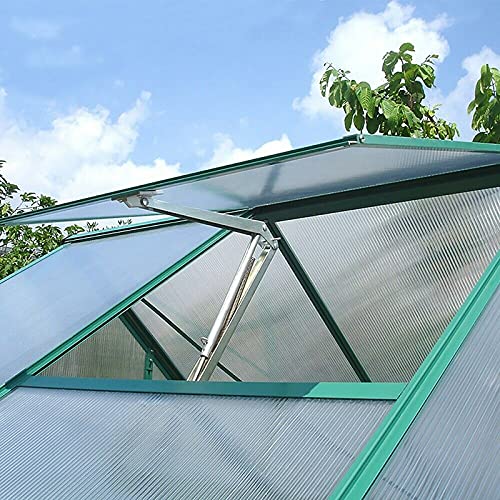
Auto Vent Opener Automatic Greenhouse Window Opener Cylinder Roof Vent Opener Autovent Kit Solar Heat Sensitive Agriculture Gardening Tools Automatic Greenhouses Supplies (Single Spring Lifts 15 Lbs)
【Optimal Ventilation System】Your plants are optimally ventilated through temperature-controlled opening and closing. Depending on the temperature, the piston…
As an affiliate, we earn on qualifying purchases.
As an affiliate, we earn on qualifying purchases.
Conclusion
Think of understanding greenhouse terms like tending a garden; each word is a seed that helps your garden grow. With clear terms, you’re the gardener nurturing your plants, knowing exactly when to water, prune, or shield them from the storm. As your knowledge blossoms, your greenhouse becomes a vibrant oasis, flourishing with healthy plants. Keep learning these terms, and you’ll cultivate confidence and success—your personal greenhouse of growth that thrives with every new word you master.

Inkbird ITC-308 Digital Temperature Controller 2-Stage Outlet Thermostat Heating and Cooling Mode Carboy Homebrew Fermenter Greenhouse Terrarium 110V 10A 1100W
【Easy to use】 Supports °C/°F display.
As an affiliate, we earn on qualifying purchases.
As an affiliate, we earn on qualifying purchases.

erifyng Solar Powered Fan, Solar Fan for Shed, Chicken Coop, Greenhouse, Outside with Two IPX7 Waterproof 5In Fans 13Ft On/Off Switch Cable Exhaust Intake Mounting Way and Installation Kits
Keep Space Cool and Fresh: The solar fan is the latest design with large solar panel installation kit…
As an affiliate, we earn on qualifying purchases.
As an affiliate, we earn on qualifying purchases.