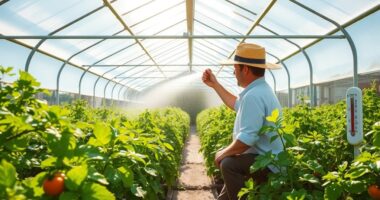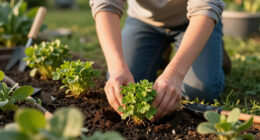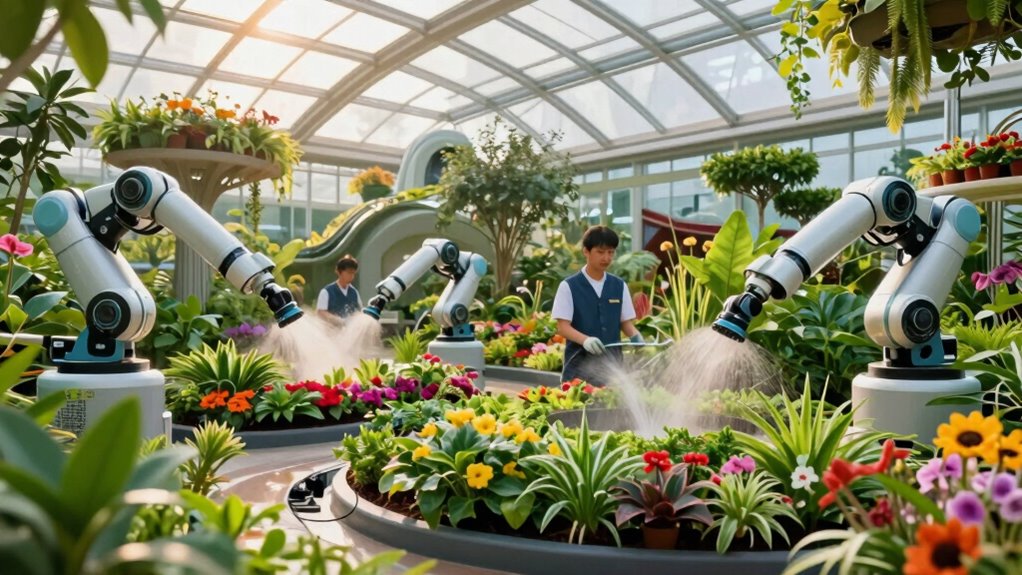

Smart gardeners automatically adjust their maintenance routines with the seasons to keep their gardens thriving. They increase compost turning and protect plants from cold in winter, while boosting watering and pest control efforts during hot months. They prune, deadhead, and manage soil health based on seasonal needs. By observing natural rhythms and biodiversity, they fine-tune practices for peak growth and pest resistance. Continue exploring to discover how these shifts can transform your gardening success.
Key Takeaways
- Adjust compost turning frequency based on seasonal temperatures to optimize decomposition rates.
- Modify watering schedules according to seasonal moisture needs to prevent disease and promote plant health.
- Increase pest monitoring and natural deterrents during peak pest activity in spring and summer.
- Prune and deadhead plants seasonally to encourage healthy growth and prolonged blooming.
- Incorporate beneficial microorganisms and biodiversity practices aligned with seasonal conditions to enhance soil health.
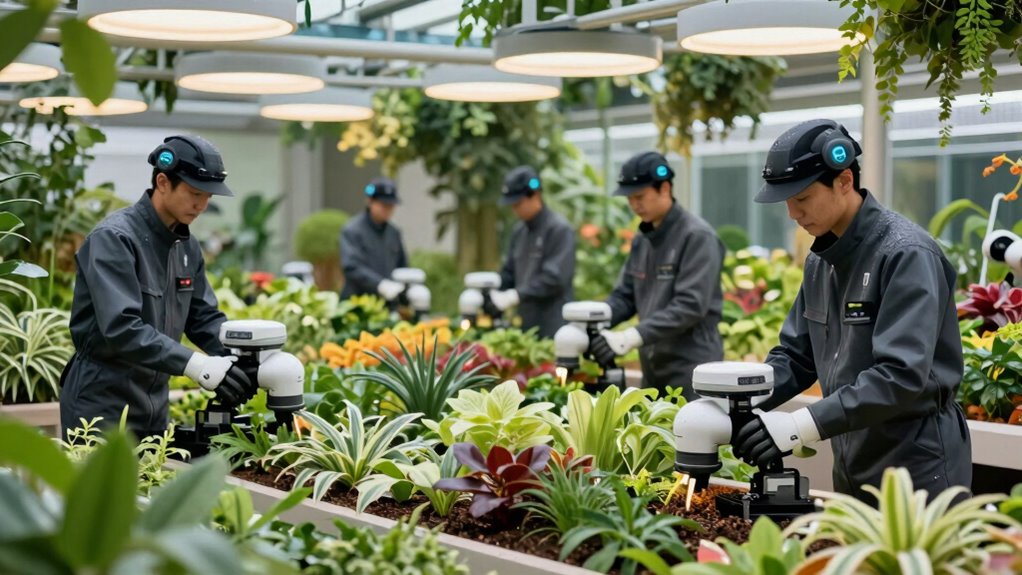
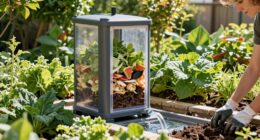
Have you ever wondered why your garden looks its best during certain seasons? It’s not just luck; it’s the result of smart adjustments you make automatically as the seasons change. As the weather shifts, so do your gardening needs, and recognizing these natural rhythms helps you keep your garden thriving. One key to this is understanding how to adapt your composting tips and pest control strategies. During warmer months, you might focus on speeding up compost decomposition by turning the pile more frequently, ensuring nutrients are available for your plants when they need them most. In cooler seasons, you might slow down the process or protect your compost from the cold to prevent it from freezing, maintaining a steady supply of organic matter for future planting. Being aware of biodiversity in your garden can also help you select beneficial insects and plants that naturally support pest control and ecosystem health.
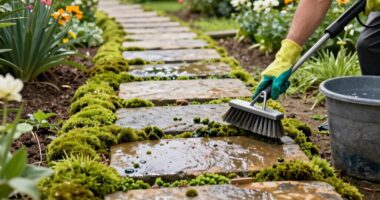
When it comes to pest control, your approach should shift with the seasons. In spring and early summer, pests are just waking up, so you might increase your vigilance—using natural deterrents or introducing beneficial insects to keep harmful bugs at bay. As summer progresses, you’ll likely observe more pest activity, prompting you to implement targeted measures like companion planting or organic sprays that respect the delicate balance of your garden ecosystem. Come fall, pests tend to retreat, but it’s essential to clean up fallen leaves and debris that can harbor overwintering pests or diseases. This seasonal cleaning reduces the chances of infestations returning in spring, especially when you consider how seasonal changes influence pest behavior and plant health. Incorporating climate considerations can further optimize your pest and plant management strategies. Understanding the soil microbiome can also enhance your composting efficiency and plant health, as beneficial microorganisms play a vital role in nutrient cycling.
Your automatic adjustments also extend to watering and pruning routines. In hot, dry months, you water more frequently, ensuring your plants stay healthy and resilient against pests and diseases. Conversely, in cooler, wetter seasons, you cut back on watering to prevent root rot and fungal issues. Pruning also shifts; you cut back dead or overgrown branches in late winter or early spring to promote healthy growth, and by summer, you might deadhead flowers to encourage more blooms. These small, automatic shifts help your garden stay balanced and productive across seasons.

Compost Turning Tool,Compost Stirring Tool,Compost Aerator Tool Turner and Mixing Tool for Outdoor Compost Tumbler Bins Bags
- Height and Width: 33.4 inches tall, 5.9-inch wide spiral
- Durable Material: Rust and corrosion resistant
- Easy to Clean: Smooth surface for quick cleaning
As an affiliate, we earn on qualifying purchases.
As an affiliate, we earn on qualifying purchases.
Frequently Asked Questions
How Do Smart Gardens Adjust Watering Schedules Automatically?
Smart gardens adjust watering schedules automatically by monitoring soil moisture levels and integrating weather forecasting data. When soil moisture drops below a set threshold, the system triggers watering. If rain is forecasted, it delays watering to conserve water. This dynamic adjustment guarantees your plants get the right amount of water, reducing waste and promoting healthy growth, all without manual intervention.
Can Seasonal Maintenance Be Customized for Different Plant Types?
Yes, seasonal maintenance can be customized for different plant types. You can adjust watering schedules based on specific needs, incorporate composting techniques suited for each plant, and apply targeted pest control methods. For example, some plants may require more frequent watering or specific compost blends, while others benefit from natural pest repellents. Customizing these aspects guarantees your garden stays healthy and productive throughout the seasons.
What Sensors Are Used in Automatic Garden Maintenance Systems?
You see sensors like soil moisture sensors and pest detection sensors working together in automatic garden maintenance systems. Soil moisture sensors monitor water levels, ensuring your plants get just the right amount of hydration. Pest detection sensors identify unwelcome pests early, helping you prevent damage. These sensors continuously gather data, enabling your smart garden to respond promptly—watering, alerting, and protecting your plants without your constant input.
How Energy-Efficient Are Automated Seasonal Garden Updates?
Automated seasonal garden updates are quite energy-efficient because they optimize plant growth and soil health without wasting resources. You’ll notice systems adjusting watering schedules based on weather, reducing water and energy use. Sensors monitor soil moisture and plant needs, ensuring precise care. This targeted approach minimizes unnecessary energy consumption, helping your garden thrive while conserving resources, making your gardening more sustainable and environmentally friendly.
Are There Any Safety Concerns With Automated Garden Systems?
Yes, automated garden systems pose safety concerns, including chemical hazards from fertilizers or pesticides and privacy concerns from data collection. You should regularly monitor chemical levels and guarantee secure data handling. Keep safety protocols in mind—protect yourself from chemical exposure, safeguard your personal information, and stay vigilant about system updates. By staying informed and cautious, you can enjoy the benefits of automation while minimizing risks.
Conclusion
By embracing these seasonal maintenance habits, you become the steady captain steering your garden through the changing seas of the year. Each task is like adjusting your sails—pruning, planting, and tidying—guiding your garden toward health and beauty. When you stay proactive and adapt with the seasons, your garden thrives as a vibrant, flourishing ship sailing smoothly across time’s tides. In this way, your care transforms your garden into a resilient, ever-blooming paradise.