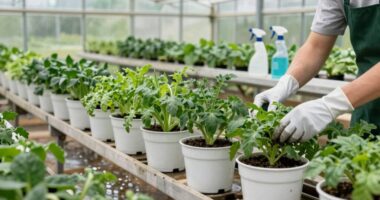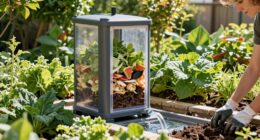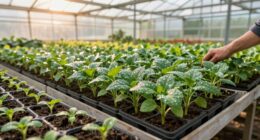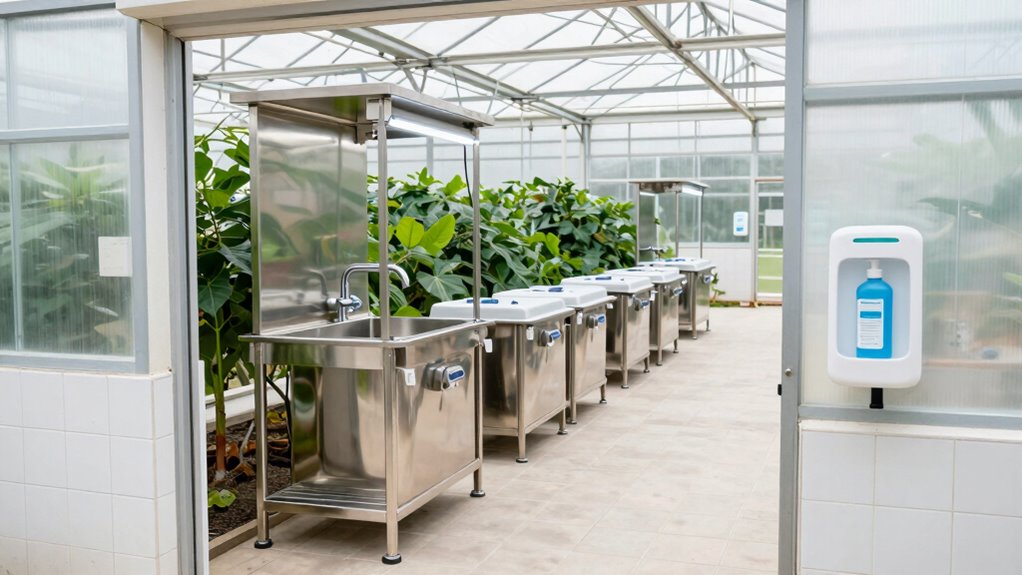

To start fixing problems in a greenhouse, focus on soil sterilization and strict sanitation routines. Use methods like solarization to eliminate pests, diseases, and pathogens from the soil. Keep plants and surfaces clean by regularly removing dead material and disinfecting equipment. Physical barriers and routine inspections help prevent infestations. These upgrades create a healthier environment and make pest control easier. Continue exploring to discover additional strategies that can further improve your greenhouse’s health and productivity.
Key Takeaways
- Implement soil solarization to eliminate soil-borne pests and pathogens effectively.
- Establish a regular cleaning schedule for surfaces, tools, and equipment to prevent contamination.
- Install physical barriers like insect screens on vents and doors to reduce pest entry.
- Remove dead plant material promptly to decrease disease and pest habitats.
- Incorporate routine soil sterilization, such as steam treatment, to create a healthier growing environment.
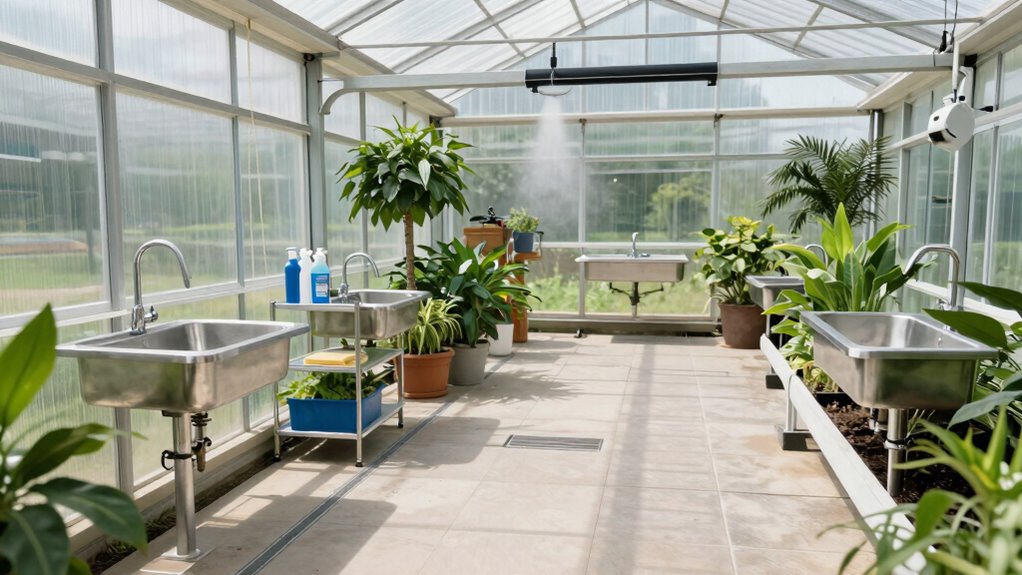
Have you considered how recent sanitation upgrades can markedly boost your greenhouse’s productivity and plant health? One of the most effective first steps is to focus on soil sterilization. Over time, soil can harbor pests, diseases, and harmful pathogens that undermine plant growth. By implementing soil sterilization techniques, you eliminate these threats at their source, creating a healthier environment for your plants. You might use methods like solarization—covering soil with clear plastic to trap heat and kill pests and spores—or consider steam sterilization if you have the right equipment. These approaches reduce the need for chemical treatments later and promote a cleaner, more controlled growing medium.
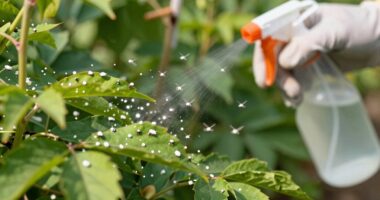
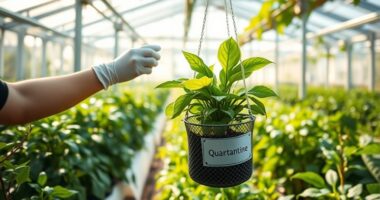
Along with soil sterilization, pest control strategies should be a top priority. Pests are a common problem in greenhouses, especially when sanitation isn’t maintained properly. Start by regularly inspecting plants for signs of infestation—early detection is key. Establish a routine cleaning schedule that includes removing dead plant material, cleaning tools, and disinfecting surfaces to eliminate pest breeding sites. Use physical barriers like insect screens on vents and doors to prevent pests from entering. When pests do appear, opt for targeted control methods, such as introducing beneficial insects or applying organic pest control solutions, rather than harsh chemicals that can harm your plants or beneficial organisms.
These sanitation upgrades aren’t just about reacting to problems—they’re preventative measures that set the foundation for a healthier greenhouse environment. Soil sterilization reduces the likelihood of persistent soil-borne diseases that can devastate entire crops if left unchecked. Incorporating proper sanitation practices** can significantly lower the risk of pest outbreaks, which are often linked to poor sanitation and harboring pests in neglected areas. Regular sanitation routines also help create a cleaner growing environment, which is essential for preventing the spread of pests and pathogens. Implementing regular sanitation routines can also help detect and address issues early, preventing larger problems down the line. Consistent sanitation practices not only eliminate existing pests but also break the cycle of pests and pathogens, making future control easier and more effective. Effective pest control strategies minimize the chance of infestations spreading rapidly, which can severely impact your yields. Incorporating sanitation practices** can lead to long-term improvements in plant health and overall greenhouse productivity.

Augshy 4 PCS 11.8in Plant Pot Grid Soil Cover Guard Cuttable Plastic
- Set of 4 soil covers: Protects indoor plants from cats
- Durable plastic material: Resistant to deformation and damage
- Cuttable grid design: Adjusts to various pot sizes and shapes
As an affiliate, we earn on qualifying purchases.
As an affiliate, we earn on qualifying purchases.
Frequently Asked Questions
How Often Should Sanitation Upgrades Be Performed in a Greenhouse?
You should perform sanitation upgrades regularly, ideally every few weeks or after any major problem. Focus on soil sterilization and equipment sterilization to prevent diseases. Consistently cleaning and sterilizing tools, containers, and growing surfaces helps keep pathogens at bay. Frequent sanitation ensures a healthy environment, minimizes pest issues, and promotes plant health. Adjust the schedule based on your greenhouse’s specific conditions and the severity of problems you encounter.
What Are the Costs Associated With Initial Sanitation Upgrades?
You’ll typically spend between $500 and $3,000 on initial sanitation upgrades, depending on your greenhouse size and needs. These costs cover cleaning protocols, new equipment, and staff training. Remember, investing in proper cleaning protocols and equipment maintenance is essential for long-term health and productivity. While upfront expenses might seem high, they prevent costly disease outbreaks, ultimately saving you money and ensuring your greenhouse runs smoothly.
Are There Environmentally Friendly Sanitation Options Available?
Yes, eco-friendly cleaning options are available for your greenhouse. You can use sustainable disinfectants made from natural ingredients like vinegar, hydrogen peroxide, or essential oils, which are effective yet gentle on the environment. These options reduce chemical runoff and pollution, helping you maintain a healthy, sustainable space. Switching to eco-friendly cleaning not only protects the environment but also promotes a safer environment for your plants and workers.
How Do Sanitation Upgrades Impact Plant Health and Yield?
Sanitation upgrades act as a shield, boosting plant health like a fortress defending against unseen threats. They improve contamination control and disease prevention, allowing plants to thrive without stress. By keeping pathogens at bay, you’ll see healthier growth, stronger yields, and fewer setbacks. Cleanliness becomes your secret weapon, transforming your greenhouse into a sanctuary where plants flourish, free from the silent sabotage of disease and contamination.
Can Sanitation Upgrades Prevent All Types of Greenhouse Pests?
Sanitation upgrades like Pest resistant coatings and organic cleaning agents markedly reduce pest problems, but they can’t prevent all types of greenhouse pests. Pests can still find ways to infiltrate, especially if other vulnerabilities exist. You should combine these upgrades with regular inspections, proper ventilation, and integrated pest management strategies to maximize protection. These steps create a more resilient environment, but no method alone guarantees complete pest prevention.
Conclusion
Think of your greenhouse as a thriving garden; if you don’t tend to its health, weeds and pests can take over. By prioritizing sanitation upgrades—like cleaning tools, removing debris, and sterilizing surfaces—you’re planting seeds for a healthier, more productive environment. These small steps act as the roots that strengthen your greenhouse’s foundation, ensuring it remains resilient against problems. With consistent care, you’ll watch your greenhouse flourish like a well-tended garden in full bloom.