To optimize your greenhouse across seasons, adjust your shade cloth and insulation accordingly. In summer, add more shade to block excess heat and reduce cooling costs, while in winter, remove or reposition shade cloth to maximize sunlight and keep warmth in. Insulate walls and roof during colder months to retain heat and use thermal mass to balance temperatures. Proper ventilation adjustments help prevent overheating or condensation. Continuing with these strategies helps create a stable environment year-round.
Key Takeaways
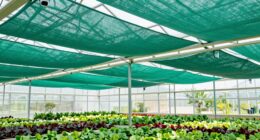
- Increase shade cloth coverage in summer to reduce heat and protect plants, and reduce or remove it in winter to maximize sunlight.
- Insulate walls and roof during colder months to retain heat, while adjusting ventilation to prevent condensation.
- Use thermal mass elements to absorb heat during the day and release it at night for seasonal temperature regulation.
- Adjust ventilation strategies seasonally—enhance airflow in summer to prevent overheating, and minimize it in winter to conserve warmth.
- Select shading and insulation materials based on seasonal needs to optimize energy efficiency and create a stable greenhouse environment.

If you’re looking to improve comfort and energy efficiency in your outdoor spaces or home, shade cloth and insulation are indispensable solutions. These tools help regulate temperature, reduce energy costs, and create a more comfortable environment. To maximize their benefits, you should consider how ventilation strategies and thermal mass work together with shading and insulation. Proper ventilation ensures fresh air circulation, preventing heat buildup and humidity, especially during warmer months. When you install shade cloth, think about how it interacts with natural ventilation. For example, positioning shade to block direct sunlight while allowing airflow can keep temperatures down without trapping stale air. Insulation, on the other hand, helps maintain indoor temperatures by resisting heat transfer. Combining insulation with ventilation strategies allows you to create a balanced environment, where hot air escapes and cooler air enters, reducing the need for mechanical cooling.
Thermal mass plays an essential role in this balance. By incorporating materials with high thermal mass—like concrete, brick, or water features—you can absorb excess heat during the day and release it slowly at night. This natural heat regulation minimizes temperature swings, especially when paired with shade cloth that reduces solar gain during peak sunlight hours. When you use shade cloth effectively, it shields thermal mass surfaces from direct sunlight, preventing them from heating up excessively. This synergy means your outdoor or greenhouse space stays cooler during the day and warmer at night, reducing reliance on fans or air conditioning. Additionally, understanding the market demand for different types of materials can influence your choice of shading and insulation options for optimal efficiency.
In a greenhouse setting, adjusting shade cloth and insulation based on seasonal needs is key. During summer, you can add more shade to protect plants from intense sunlight and reduce cooling costs, while in winter, removing or repositioning shade cloth allows more sunlight in, warming the space naturally. Insulation around the greenhouse walls and roof helps retain this warmth, especially when combined with thermal mass elements inside. Ventilation strategies, like vents or exhaust fans, should be used to replace hot, stale air with fresh outdoor air, preventing overheating and humidity buildup. During colder months, you might reduce ventilation to keep warmth inside, but still ensure airflow to prevent condensation issues.
Frequently Asked Questions
How Do I Choose the Right Shade Cloth for Different Crops?
To select the appropriate shade cloth for various crops, consider crop-specific shading needs and material durability. For delicate plants, opt for lighter fabric that reduces sun exposure without overheating, while hearty crops can handle more shading. Check the fabric’s UV resistance and strength to guarantee longevity. By matching shading level and durability to your crop’s requirements, you’ll optimize growth and protect your plants effectively.
What Are the Best Insulation Materials for Extreme Weather Conditions?
In extreme weather, your greenhouse needs armor stronger than a fortress. Use thermal curtains to trap heat during cold spells and reflective films to bounce back scorching sun rays. These materials create a nearly impenetrable barrier, maintaining stable temperatures no matter what Mother Nature throws at you. Combining thermal curtains and reflective films gives your plants the perfect shield, ensuring they thrive even in the harshest conditions.
How Often Should I Adjust Shading and Insulation Throughout the Year?
You should make seasonal adjustments to shading and insulation based on your climate considerations, typically every three to six months. In winter, increase insulation to retain heat, and in summer, add shading to prevent overheating. Regularly monitor your greenhouse conditions, especially during transitional seasons, to guarantee your plants stay healthy. Staying proactive helps you adapt efficiently to changing weather patterns and maintain ideal growing conditions year-round.
Can Shade Cloth and Insulation Be Used Together Effectively?
Think of using shade cloth and insulation together like layering clothing for winter—you stay warmer overall. Yes, combined techniques work well, especially in seasonal planning, to optimize temperature control. I once helped a grower use both during fall, and their plants thrived despite fluctuating temps. By adjusting these materials seasonally, you create a more stable environment, ensuring your greenhouse remains productive year-round.
Are There Eco-Friendly Options for Shading and Insulating Greenhouses?
Yes, you can choose eco-friendly options for shading and insulating your greenhouse. Look for sustainable materials like bamboo or recycled fabrics for shade cloths, and biodegradable insulation options such as wool or cellulose. These materials offer effective shading and insulation while reducing environmental impact. By selecting biodegradable options, you help protect the environment and promote sustainability in your gardening practices.
Conclusion
By adjusting your shade cloth and insulation seasonally, you can create the perfect environment for your greenhouse year-round. Imagine stepping inside on a scorching summer day, feeling cool and comfortable thanks to smart shading, or cozy during winter’s chill with insulation keeping the warmth in. Don’t let worries about complexity hold you back—these simple tweaks make all the difference, ensuring your plants thrive no matter the weather. Your green oasis awaits, ready to flourish with just a few thoughtful adjustments.