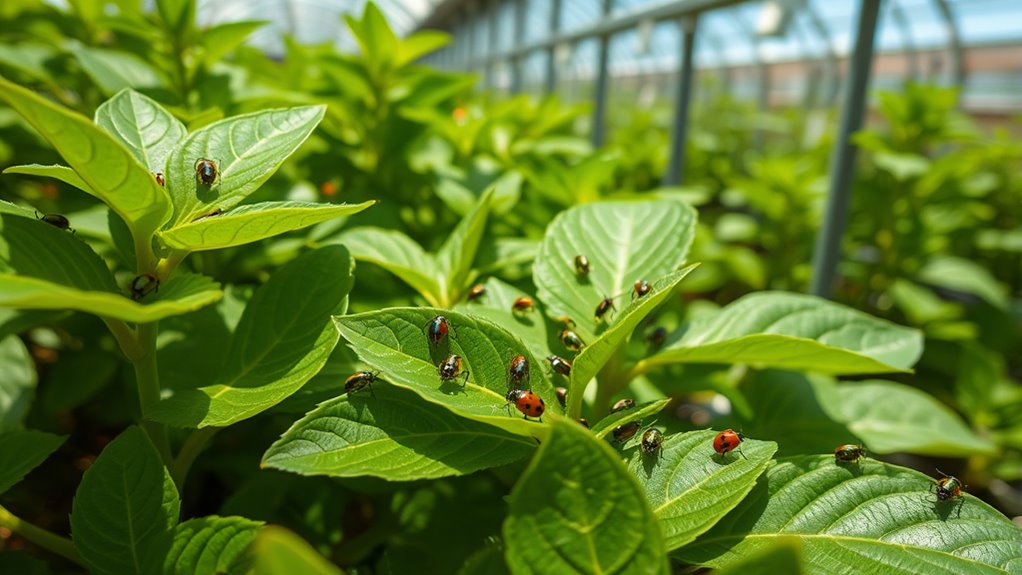

Using beneficial insects is a great way to naturally control pests in your greenhouse. By releasing predators like lady beetles, lacewing larvae, and predatory mites, you can reduce pest populations such as aphids, whiteflies, and thrips. Creating a friendly environment and monitoring pest levels help optimize their effectiveness. Avoid chemicals that harm beneficial insects, and you’ll enjoy healthier plants—and discover how to manage pests sustainably in your greenhouse.

Get garden gear delivered free with Prime
- Fast, free delivery on millions of items
- Prime Video, Amazon Music and more included
- Member-only deals all year
Key Takeaways
- Introduce beneficial insects like lady beetles and lacewings early to prevent pest outbreaks.
- Monitor pest and beneficial insect populations regularly to determine the need for additional releases.
- Maintain optimal environmental conditions, such as humidity and temperature, to support beneficial insect survival.
- Avoid broad-spectrum insecticides that can harm beneficial insects and disrupt biological control.
- Combine multiple beneficial species for comprehensive pest suppression tailored to specific pests.
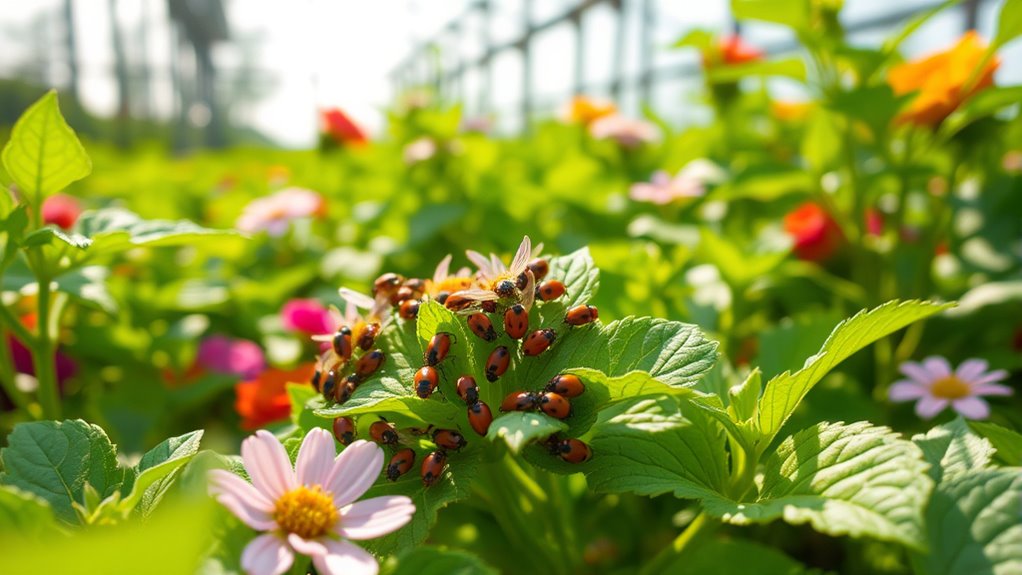
In greenhouses, pests can quickly become a major problem, but beneficial insects offer an eco-friendly and effective solution. When tackling pest issues, implementing Integrated Pest Management (IPM) is essential. IPM combines various control methods to minimize chemical use while maintaining healthy crops. One of the most sustainable and targeted approaches within IPM is biological control strategies, which involve releasing or encouraging beneficial insects to naturally suppress pest populations. This method reduces reliance on pesticides, protecting your plants, environment, and crop quality.
Implementing biological control strategies reduces pesticide reliance and promotes healthy, pest-free greenhouse crops.
You might consider introducing predatory insects such as lady beetles, lacewing larvae, or predatory mites. These beneficial insects are natural enemies of common greenhouse pests like aphids, whiteflies, and thrips. By releasing lady beetles, for example, you can quickly control aphid infestations because they feast on these pests and multiply rapidly in favorable conditions. Lacewing larvae are also excellent because they actively hunt various soft-bodied pests, providing broad-spectrum pest suppression. Incorporating these beneficial insects as part of your biological control strategies aligns with IPM principles, allowing you to maintain pest levels below damaging thresholds without resorting to chemical interventions.
For these strategies to succeed, you need to understand the pests you’re targeting and select the appropriate beneficial insects accordingly. Proper timing is essential; releasing beneficial insects early in the pest infestation can prevent populations from reaching damaging levels. Additionally, creating a hospitable environment is key—avoid broad-spectrum insecticides that could harm your beneficial insects and disrupt the natural balance. Instead, focus on maintaining ideal humidity, temperature, and plant health, which support the survival and activity of your biological control agents. Understanding the beneficial insects and their roles can greatly enhance your pest management success.
Monitoring pest and beneficial insect populations regularly helps you adjust your approach and ensures that biological control strategies are effective. Keep track of pest levels and observe beneficial insect activity to determine if additional releases are necessary or if other control measures should complement your efforts. Remember, combining multiple biological agents can offer comprehensive pest management, but always ensure they are compatible and won’t compete or harm each other.
Products Worth Considering

Jocoevol 6 x 8 ft Walk-In Greenhouse with Polycarbonate Panels

EAGLE PEAK 8 × 6 ft Walk-In Pop-Up Greenhouse, Green and White

AMERLIFE 34 x 10 x 7 ft Walk-In Tunnel Greenhouse with Watering System
As an affiliate, we earn on qualifying purchases.
Frequently Asked Questions
How Do I Introduce Beneficial Insects Without Harming My Plants?
You can introduce beneficial insects safely by choosing species compatible with your plants and ensuring plant safety. Carefully follow release instructions, and release insects during cooler parts of the day to minimize stress. Avoid applying pesticides beforehand, as they can harm beneficials. Regularly monitor your plants to check insect activity and plant health. This way, you promote a balanced ecosystem without risking damage to your plants or disrupting insect compatibility.
Are Beneficial Insects Effective Against All Greenhouse Pests?
You might think beneficial insects are a silver bullet, but they aren’t effective against all greenhouse pests. Their success depends on plant compatibility and pest specificity. Some insects target specific pests and may not work on others. Make sure to match beneficial insects with your plants and pests for best results. Proper identification and understanding pest behavior are key—otherwise, you might find yourself chasing your tail.
What Is the Cost Comparison Between Beneficial Insects and Chemical Pesticides?
You’ll find that beneficial insects often have a higher initial cost than chemical pesticides, but a thorough cost analysis shows significant pesticide savings over time. While pesticides require repeated applications, beneficial insects provide ongoing pest control naturally, reducing chemical use and labor costs. Ultimately, investing in beneficial insects can lead to lower long-term expenses and a more sustainable greenhouse operation, making them a cost-effective pest management solution.
How Long Does It Take to See Results Using Beneficial Insects?
Imagine watching tiny allies quietly patrol your greenhouse. Usually, you’ll start seeing pest reduction within 3 to 7 days, but it can take up to 2 weeks for full results. The time to see these changes depends on pest populations and environmental conditions. Patience pays off as beneficial insects work efficiently to reduce pests naturally, creating a healthier, more balanced greenhouse ecosystem over time.
Can Beneficial Insects Establish Permanent Populations in My Greenhouse?
Yes, beneficial insects can establish permanent populations in your greenhouse. By promoting urban biodiversity, you create a sustainable environment that supports these insects. They can break the pest lifecycle, reducing the need for chemical controls. To guarantee long-term success, provide a suitable habitat, avoid pesticides, and maintain a balanced ecosystem. Over time, your beneficial insects will adapt, thrive, and help keep pest levels in check naturally.
Conclusion
By using beneficial insects to control greenhouse pests, you’re embracing nature’s own solutions. These helpful allies can reduce chemical use and promote a healthier environment for your plants. Remember, “A penny saved is a penny earned,” so investing in natural pest control pays off in the long run. Keep fostering these beneficial insects, and you’ll create a thriving, pest-free greenhouse where your plants can flourish with minimal effort.