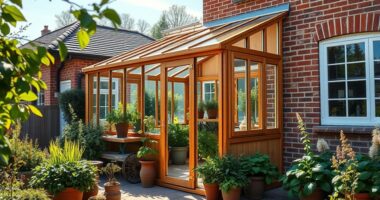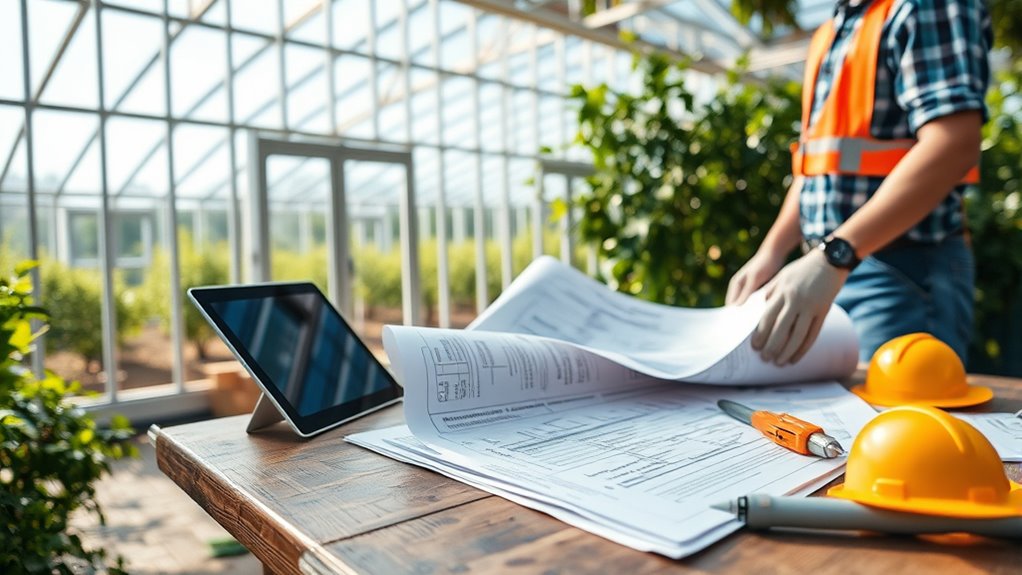

Before building a greenhouse, you need to check local permits and regulations to stay compliant. Start by reviewing building codes, zoning restrictions, and environmental rules that may affect your project’s size, location, or design. Make sure you understand solar access rules to maximize natural light for your plants. It’s also important to get any necessary permissions before starting construction. Continue exploring to learn detailed steps for managing permits and guaranteeing your greenhouse meets all requirements.
Key Takeaways
- Verify local zoning laws to determine structure size, placement, and setback requirements for greenhouses.
- Obtain necessary building permits before construction, ensuring compliance with safety and structural standards.
- Check solar access regulations to ensure adequate natural light and avoid shading restrictions.
- Review environmental and historic district restrictions that may affect greenhouse location and design.
- Confirm building code requirements for foundation, safety standards, and whether permits are needed for small or non-permanent structures.
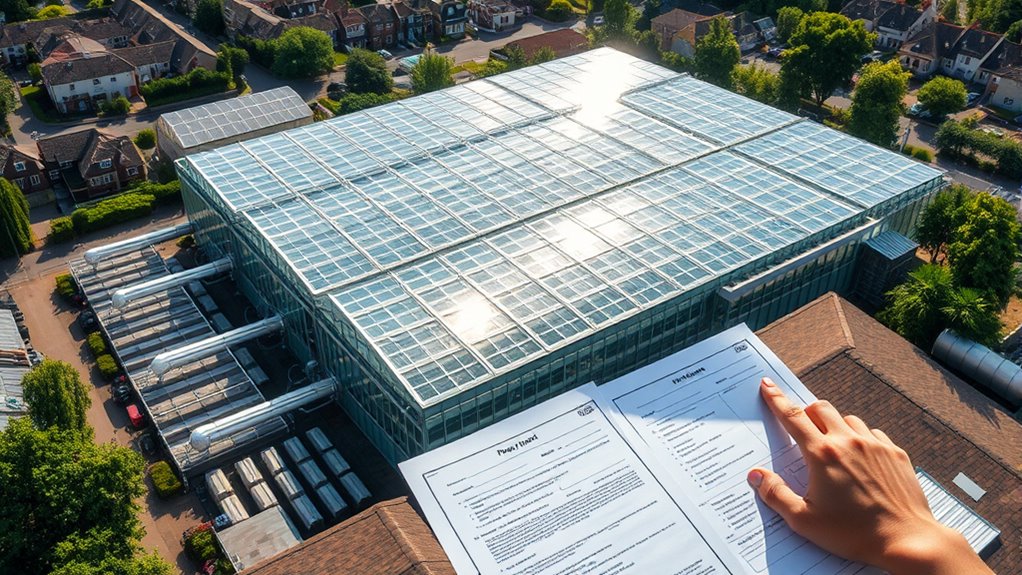
Building a greenhouse often requires obtaining the proper permits before starting construction. One of the first things you need to consider are the solar requirements for your structure. Solar access is essential because it determines how much natural light your plants will receive, directly impacting their growth. Local regulations may specify the minimum amount of sunlight your greenhouse must get, especially if you plan to use it for commercial purposes or if it’s situated near taller buildings or trees. You’ll want to check whether there are any restrictions on how much your greenhouse can block or alter the natural sunlight in your area, as some jurisdictions have rules to prevent excessive shading that could affect neighboring properties. Understanding solar requirements early guarantees your greenhouse will be both functional and compliant, avoiding costly modifications later on. Additionally, rendering lard knowledge of local building codes and restrictions can help ensure your project aligns with safety standards and environmental considerations. Another critical aspect to review is zoning limitations. Zoning laws control what types of structures you can build, their size, and their placement on your property. These regulations vary widely depending on where you live and can include restrictions on building height, setbacks from property lines, or even whether you can have a greenhouse at all. Some areas classify greenhouses as accessory structures, which come with specific size and location rules, while others might have more stringent restrictions. Failing to adhere to zoning limitations can lead to fines, the need to dismantle your greenhouse, or delays in your project. Before you start construction, it’s wise to visit your local zoning office or review their guidelines online to understand exactly what’s permitted. This step helps you plan your greenhouse’s size and location accordingly. In addition to zoning limitations and solar requirements, you should also be aware of any building codes that may apply. These codes often specify safety standards, foundation requirements, and structural integrity, especially for larger greenhouses. Sometimes, a permit isn’t required unless your greenhouse exceeds a certain size or involves permanent foundations. It’s essential to clarify these points with local authorities to avoid surprises. Also, consider whether your property is subject to historic district regulations or environmental restrictions that could further impact your building plans.

DIY Kit Company, LLC Greenhouse. Build Your Own DIY Greenhouse Bracket Kit. Includes Brackets and Complete Set of Plans. Expandable. Made in The USA. No Angled Cuts
- DIY Greenhouse Kit: Build your own greenhouse
- Complete Hardware Set: Includes brackets, base plates, and plans
- Expandable Design: Customize sizes with multiple kits
As an affiliate, we earn on qualifying purchases.
As an affiliate, we earn on qualifying purchases.
Frequently Asked Questions
Do Permits Vary by Greenhouse Size or Type?
Yes, permits do vary by greenhouse size and type. Larger or more complex greenhouses often require higher permitting fees and more detailed inspection requirements. For smaller structures, the process might be quicker and less costly. You should check local regulations, as permitting fees and inspection requirements can differ markedly depending on your greenhouse’s dimensions and design. Always confirm with your city or county to ensure compliance before starting construction.
Are There Specific Zoning Restrictions for Greenhouse Locations?
You need to check zoning codes and setback requirements before placing your greenhouse. Zoning codes specify where you can build, and setback requirements determine the distance from property lines, roads, or neighbors. These restrictions vary by location, so contacting your local planning department helps make sure your greenhouse complies with all regulations. Ignoring these rules could lead to fines or having to move your greenhouse later.
How Long Does the Permit Approval Process Typically Take?
Permit approval timelines vary, but you should expect permitting timelines to span from a few weeks to several months. You can reduce approval delays by submitting complete, accurate paperwork and following local guidelines closely. Keep in mind, permitting timelines depend on your project’s complexity and local workload. Stay proactive, follow up regularly, and be prepared for approval delays, which are common in the permitting process.
Are There Any Environmental Impact Assessments Required?
You need to check if environmental impact assessments are required for your greenhouse project. This is part of ensuring environmental compliance, which varies by location and project size. Impact assessments evaluate potential effects on local ecosystems, air, and water quality. If your project might considerably impact the environment, authorities may require detailed assessments before granting permits. Always consult local regulations to determine specific requirements for impact assessments and environmental compliance.
What Are Common Reasons for Permit Application Rejections?
You may face permit rejections due to incomplete applications, high application fees, or failure to meet zoning requirements. Sometimes, authorities reject permits if they suspect environmental concerns or safety issues. If your application is denied, you can file permit appeals to challenge the decision. Double-check all required documents and make certain your project aligns with local regulations to reduce rejection chances and streamline the approval process.
Conclusion
Remember, “the early bird catches the worm,” so don’t delay in checking your local regulations before building your greenhouse. Securing the proper permits and understanding the rules now saves you headaches later and guarantees your project runs smoothly. Stay informed, follow the guidelines, and you’ll enjoy a thriving, compliant greenhouse. With a little preparation, you’ll be cultivating your green thumb with confidence and peace of mind. Happy building!