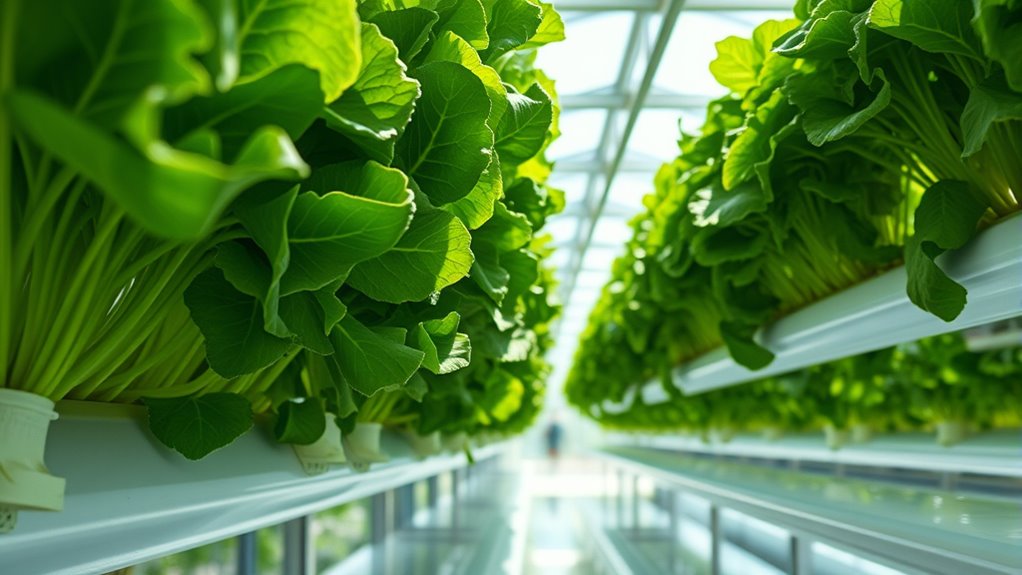
By setting up a hydroponic system in your greenhouse, you can achieve quick yields of fresh, vibrant lettuce and greens. These systems deliver nutrient solutions directly to the roots, speeding up growth and reducing soil-related pests. You control all environmental factors, which promotes faster development and higher-quality crops. Regular monitoring and pest management ensure healthy plants. Keep exploring how to optimize your setup, and you’ll uncover even more tips for maximizing your hydroponic harvests.
Key Takeaways
- Hydroponic systems provide tailored nutrient solutions that promote rapid lettuce and greens growth.
- Direct root exposure to nutrient-rich water accelerates plant development and yields.
- Maintaining optimal environmental conditions and pest control ensures healthy, quick-growing crops.
- Using controlled environments reduces pests and diseases, enabling faster harvest cycles.
- Precise mineral management enhances plant vitality, resulting in lush greens in just weeks.
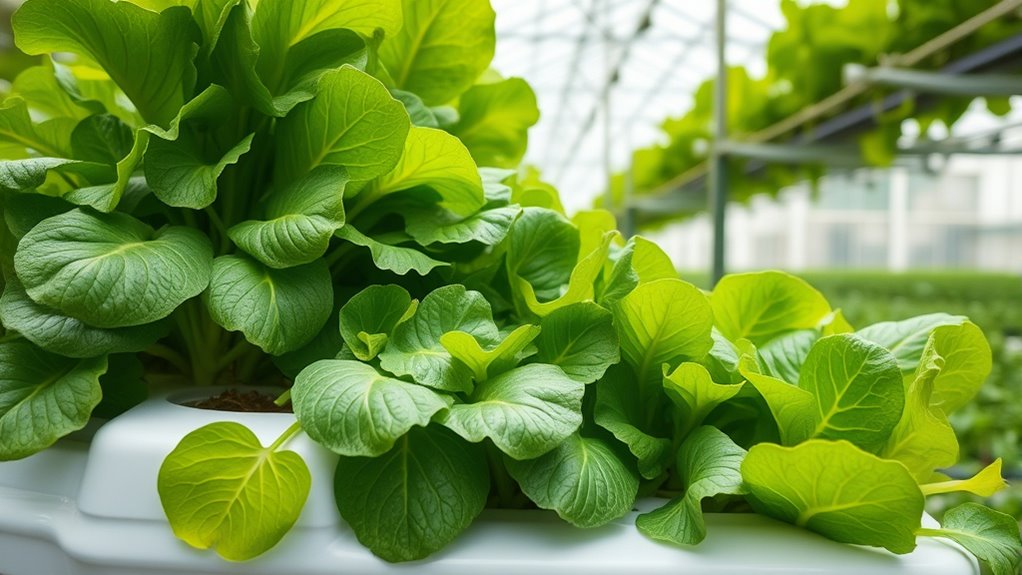
Have you ever wondered how you can grow fresh lettuce and greens without soil? Hydroponic systems make this possible, offering a clean, efficient way to produce healthy, vibrant plants inside your greenhouse. Instead of planting in soil, you rely on nutrient solutions—carefully balanced water mixtures that supply all the essential minerals your greens need to thrive. These solutions are tailored to the growth stage of your plants, ensuring they get the right amount of nitrogen, phosphorus, potassium, and trace elements. Using nutrient solutions means you can control exactly what your plants absorb, leading to faster growth and higher yields compared to traditional soil methods.
One of the biggest advantages of hydroponic lettuce and greens is how quickly they mature. Because the roots are directly exposed to nutrient-rich water, they can absorb nutrients more efficiently than in soil. This accelerated uptake results in rapid growth cycles, often allowing you to harvest in just a few weeks. You’ll notice how healthy, lush, and vibrant your greens look, thanks to the optimized environment you create. Plus, because there’s no soil, you considerably reduce the risk of soil-borne diseases and pests.
However, managing pest control remains essential in a hydroponic setup. While you don’t have soil pests, pests like aphids, whiteflies, and spider mites can still find their way onto your plants. The key is maintaining a clean and monitored environment. Regularly inspecting your greens and using integrated pest management strategies—such as introducing beneficial insects or applying organic pest control solutions—can keep infestations at bay. Some growers also use physical barriers like insect screens to prevent pests from reaching their crops. Since hydroponic systems are highly controlled, you have the advantage of quickly addressing pest issues before they spread, minimizing damage and reducing the need for chemical pesticides.

Ahopegarden Indoor Garden Hydroponics Growing System: 10 Pods Plant Germination Kit Herb Vegetable Growth Lamp Countertop with LED Grow Light – Hydrophonic Planter Grower Harvest Lettuce
- High Planting Efficiency: Faster, healthier growth with hydroponic system
- 10 Pods & Water Level Window: Includes 10 planting stations and water indicator
- Dual Growing Modes: Switch between vegetable and flower/fruit lighting
As an affiliate, we earn on qualifying purchases.
As an affiliate, we earn on qualifying purchases.
Frequently Asked Questions
What Are the Best Varieties of Lettuce for Hydroponic Systems?
You should choose leafy varieties like Butter lettuce, Romaine, and Oak Leaf for hydroponic systems. These varieties offer crisp textures and grow quickly, making them ideal for rapid harvests. They adapt well to controlled environments, ensuring consistent quality. By selecting these types, you’ll enjoy fresh, crunchy greens in less time, boosting your yield and satisfying your customers or family with delicious, healthy salads.
How Do I Prevent Pests in a Hydroponic Greenhouse?
Did you know that integrated pest management can reduce pesticide use by up to 90%? To prevent pests in your greenhouse, focus on biological pest control methods like introducing beneficial insects. Maintain excellent greenhouse sanitation by cleaning tools, removing plant debris, and sealing cracks to prevent pest entry. Regular monitoring and early intervention are key, ensuring a healthy, pest-free environment for your hydroponic greens.
What Is the Ideal Nutrient Concentration for Lettuce Growth?
You should aim for a nutrient concentration of around 1.5 to 2.0 mS/cm, guaranteeing the pH balance stays between 5.5 and 6.5. Regularly monitor and adjust your nutrient dosing to maintain these levels, which promotes healthy lettuce growth. Precise control of pH and nutrient concentration helps prevent deficiencies and ensures your plants develop quickly and vigorously. Keep testing and tweaking as needed for ideal results.
How Often Should I Change the Nutrient Solution?
Think of your nutrient solution as the lifeblood of your plants; you should change it every two weeks to keep it fresh. Regularly monitor pH balancing to maintain ideal nutrient uptake and prevent root health issues. If you notice sluggish growth or root problems, consider more frequent changes. Keeping your nutrient solution clean ensures your greens stay vibrant, healthy, and ready for harvest.
Can Hydroponic Greens Be Grown Year-Round Indoors?
Yes, you can grow hydroponic greens year-round indoors. To achieve this, use season extension techniques like installing artificial lighting and maintaining ideal temperature and humidity levels. These methods allow you to simulate natural conditions, ensuring continuous growth regardless of outside weather. With proper lighting schedules and climate control, you’ll enjoy fresh greens all year, making indoor hydroponics a reliable and efficient way to produce healthy, quick-yielding greens consistently.
Conclusion
Ready to enjoy fresh, fast-growing greens right in your greenhouse? Hydroponic lettuce and greens offer quick yields with less mess and more control. With minimal space and water, you can have a constant supply of nutritious, tasty greens all year round. Why wait weeks for traditional crops when you can harvest in just days? Start your hydroponic journey today and watch your garden flourish—aren’t fresh, home-grown greens worth it?