If you’re looking to extend your growing season, protect plants from bad weather, and increase your harvests, a greenhouse can be a smart choice. It offers a controlled environment that shields sensitive plants from pests, storms, and temperature fluctuations. Plus, it lets you experiment with different crops year-round. While it requires some investment and maintenance, the benefits often outweigh the costs for serious gardeners or farmers. Keep exploring to see if a greenhouse fits your gardening goals.
Key Takeaways
- Greenhouses extend growing seasons, enabling year-round cultivation and higher crop yields.
- They protect plants from harsh weather, pests, and diseases, ensuring healthier growth.
- Ideal for sensitive or exotic plants that require controlled environments.
- Increase productivity and plant diversity through reliable, intensive cultivation practices.
- Consider costs and maintenance needs to determine if a greenhouse aligns with your gardening goals.
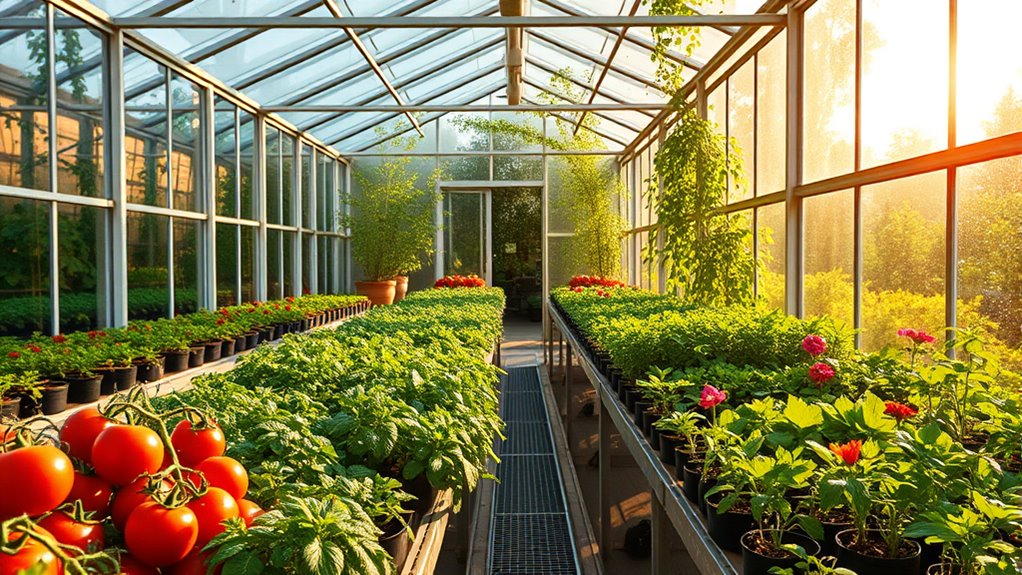
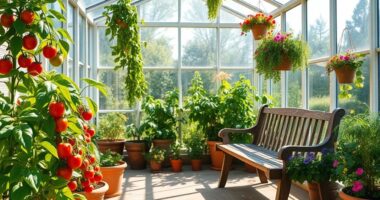
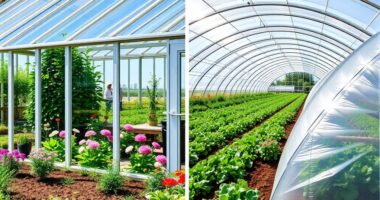
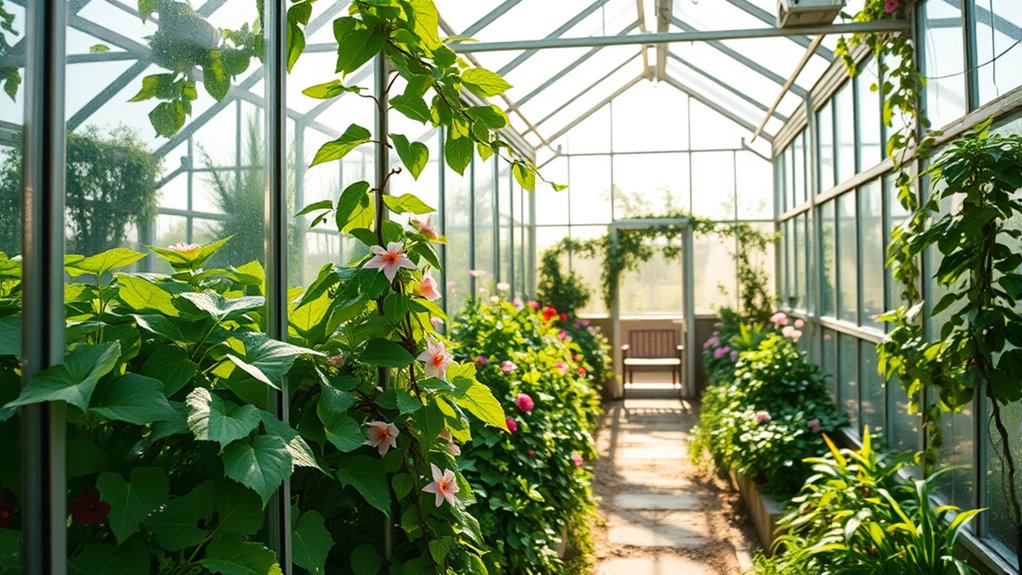
A greenhouse can be a game-changer for any gardening enthusiast or farmer, offering a controlled environment that extends growing seasons and improves plant health. When you invest in a greenhouse, you create a protected space where plants are shielded from harsh weather, pests, and diseases. This means you have better plant protection, allowing your crops to thrive regardless of outside conditions. Whether it’s early spring or late autumn, a greenhouse gives you the ability to start planting earlier and continue later into the year, effectively extending your growing season. With more time to grow, you can experiment with a wider variety of plants, from delicate flowers to seasonal vegetables, increasing your harvest and diversity.
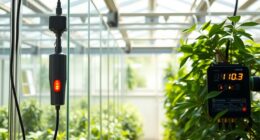
One of the key advantages of a greenhouse is its ability to provide essential conditions for plant growth. You can regulate temperature, humidity, and light levels, creating an environment tailored to your plants’ needs. This control not only boosts plant health but also reduces stress and susceptibility to pests and diseases. As a result, you might find fewer pesticide applications and healthier plants overall. Plus, by extending the growing season, you can make the most of each planting cycle, maximizing your productivity without rushing or risking crop failure due to unpredictable weather. Additionally, greenhouses can incorporate climate control systems, further optimizing conditions for optimal growth.
Plant protection is especially vital if you’re growing sensitive or exotic species that don’t tolerate outside conditions well. A greenhouse acts as a barrier against frost, strong winds, heavy rains, and even insects. You can also implement additional measures, like shade cloths or supplemental heating, to fine-tune the environment further. This protection means fewer losses and healthier plants, saving you time and money in the long run. Furthermore, the extended growing season allows you to experiment with different crops throughout the year, which can be both rewarding and economically beneficial.
In essence, a greenhouse offers you the flexibility to cultivate plants more reliably and intensively. It’s an investment in your gardening or farming success, giving you control over the environment and the ability to produce high-quality plants year-round. While it requires some upfront costs and maintenance, the benefits—such as improved plant health, protected growth, and extended harvest periods—often outweigh the drawbacks. So, if you’re serious about maximizing your gardening or farming efforts, a greenhouse can be an invaluable tool to help you achieve your goals.
Frequently Asked Questions
What Is the Initial Cost of Building a Greenhouse?
The initial cost of building a greenhouse varies based on size, design, and material selection, with a typical range between $1,000 and $10,000. Your cost estimation depends on choosing durable materials like glass or polycarbonate panels and sturdy framing options. You’ll want to contemplate factors like location and features to refine your budget, ensuring you invest wisely in a structure that meets your gardening needs and lasts for years.
How Much Space Is Needed for a Greenhouse?
You’ll need at least 6 to 10 square feet per plant, but for a functional greenhouse, aim for a space that allows good solar orientation and ventilation systems. Make certain there’s enough room for your plants to grow comfortably and for airflow to prevent overheating. Consider the layout carefully, so you optimize sunlight exposure and air circulation, which are essential for healthy plant growth and efficient climate control inside your greenhouse.
Can a Greenhouse Be Used Year-Round?
Yes, you can use a greenhouse year-round, turning it into your personal climate-controlled oasis. It acts like a protective umbrella, allowing you to extend the growing season and boost plant diversity even in harsh winter months. Proper insulation and heating system help maintain consistent temperatures, ensuring your plants thrive throughout the seasons. With some planning, your greenhouse becomes a reliable haven for gardening, no matter what time of year it is.
What Are the Common Maintenance Requirements?
You need to regularly check your greenhouse to keep it in top shape. Climate control is vital; adjust vents, fans, and heaters to maintain ideal conditions. Pest management is also essential—inspect plants often and use organic methods or barriers to prevent invasions. Clean surfaces, remove debris, and monitor for signs of pests or diseases. Consistent maintenance guarantees a healthy environment, boosting plant growth and productivity year-round.
Is There Any Government Assistance Available?
Yes, government grants and subsidy programs can help you afford a greenhouse. You should research local, state, or federal initiatives designed to support sustainable gardening or agricultural projects. These programs often provide financial assistance or discounted resources. To access them, check government websites or contact relevant agencies. Taking advantage of these options can make building and maintaining your greenhouse more affordable, encouraging you to grow your own food or experiment with plants.
Conclusion
Deciding whether to build a greenhouse is like planting a seed—you need to nurture it with careful thought. When you weigh the benefits against the considerations, you’ll see if it’s the right fit for your gardening dreams. A greenhouse can be your personal oasis, extending your growing season and protecting your plants from the elements. With a little planning, you’ll be cultivating success, turning your gardening ambitions into a lush, thriving reality.