To eliminate cold corners, strategically place fans in key spots like near walls or corners, angling them to direct airflow across the room. Using multiple fans can create a more even breeze, breaking up cold spots and ensuring warm air circulates everywhere. Avoid obstructing airflow with furniture or clutter. Moving fans and adjusting their direction as the room changes will improve circulation even more. Keep exploring these tips to achieve a cozy, draft-free space.
Key Takeaways
- Place oscillating fans in corners or near walls, angled to direct airflow across the room for better circulation.
- Position fans at optimal heights and angles to promote even warm air distribution and eliminate cold spots.
- Use multiple fans strategically spaced to create uniform airflow and prevent stagnant, cold corners.
- Ensure air pathways are clear of obstructions like furniture or clutter for unobstructed circulation.
- Tilt ceiling fans clockwise in winter to push warm air downward and enhance overall room warmth.
Why Cold Corners Happen and How Fans Can Help
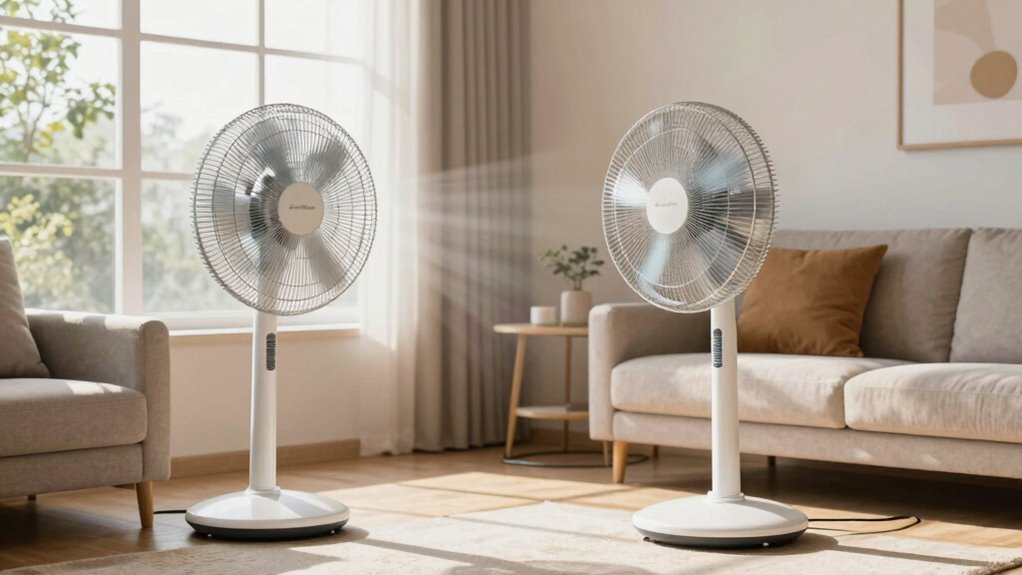
Have you ever noticed that the corners of a room tend to stay colder than the center? This happens because of uneven ventilation efficiency and poor air exchange. Cold air sinks and often collects in those corners, creating drafts and temperature gaps. Without proper airflow, warm air struggles to circulate evenly, leaving some areas cooler. Fans can help solve this problem by improving air movement. When positioned correctly, they promote better ventilation efficiency, encouraging fresh, warmer air to reach those chilly spots. By enhancing air exchange, fans break up stagnant air layers and distribute heat more evenly throughout the room. Proper air circulation is essential for maintaining consistent temperatures, and this simple adjustment can make a noticeable difference, ensuring no corner remains unnecessarily cold and your space feels more comfortable.
Find Cold Spots in Your Room and Understand Why

Identifying cold spots in your room starts with paying close attention to how the space feels at different points. You might notice certain areas remain chilly despite your efforts to warm the room. Common reasons include insulation issues that allow drafts or heat loss, or furniture placement that blocks airflow. For example:
- Corners with poor insulation where cold air pools
- Areas behind large furniture blocking warm air circulation
- Spots near windows or exterior walls prone to drafts
- Incorporating Free Floating elements can help improve overall air distribution and reduce these cold spots.
Choose the Best Fans to Improve Air Circulation
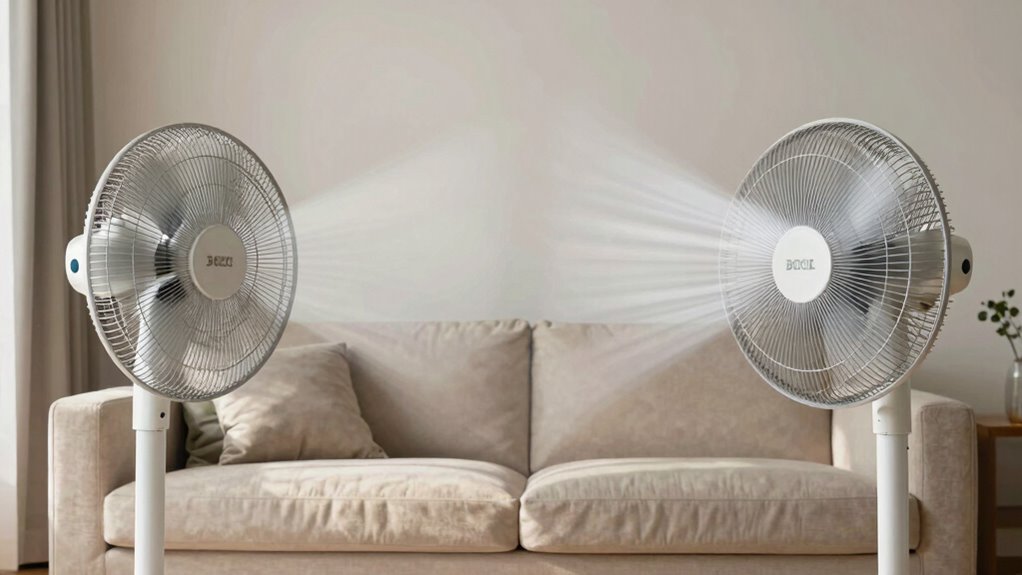
Choosing the right fans is key to improving air circulation in your space. You should consider different fan types and how to position them for maximum effect. By optimizing placement and selecting suitable fans, you can create a more comfortable and evenly cooled environment. Additionally, understanding airflow dynamics can help you make more informed decisions about fan placement and operation.
Select Appropriate Fan Types
Selecting the right fan types is essential for effectively improving air circulation in any space. Your goal is to choose fans that suit your room’s size and airflow needs. Consider different ceiling fan options, like models with adjustable speeds or reversible blades for seasonal use. Portable fan types, such as oscillating or tower fans, are great for targeted cooling and flexibility. Visualize a fan that blends into your decor, quietly circulating air without noise or disturbance. Think about a compact tower fan providing steady airflow in tight spots or a ceiling fan with multiple speed settings to optimize air movement. Picking the appropriate fan type guarantees efficient air mixing, eliminates cold corners, and keeps the entire space comfortable. Additionally, selecting energy-efficient fans aligns with sustainable cloud solutions to reduce overall power consumption and promote eco-friendly practices.
Optimize Fan Placement
To improve air circulation effectively, placing fans strategically is key. Start by choosing the right fans, including decorative fan options that blend style with function. Position oscillating fans in corners to push air across rooms, or place box fans in hallways to direct airflow where needed. Guarantee fans are at an ideal height and angle to promote even circulation. Regular fan maintenance tips, like cleaning blades and checking for loose parts, keep performance excellent. Avoid clutter around fans that could block airflow. Experiment with different placements until you find the sweet spot that eliminates cold corners. Proper placement combined with well-maintained fans maximizes air movement, creating a more comfortable, evenly heated space. Proper airflow management is essential for preventing stale air buildup and enhancing overall air quality.
Place Fans Strategically to Warm Every Corner
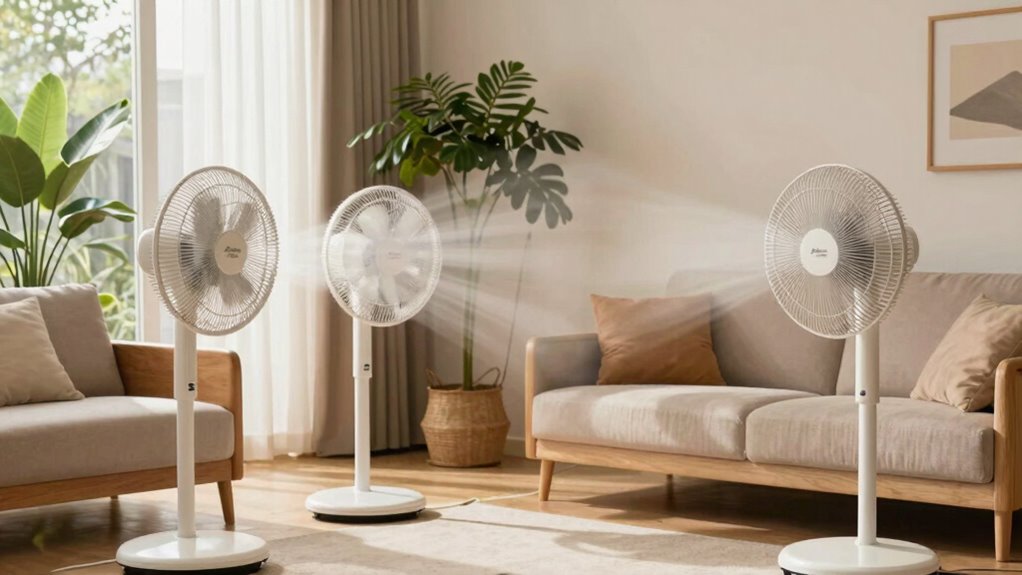
Placing fans strategically guarantees warm air reaches every corner of your space. By adjusting fan placement, you influence airflow patterns to break up temperature stratification, ensuring even warmth throughout. Position fans near walls or in corners, angled to direct airflow across the room. This encourages circular circulation, preventing cold spots. Consider placing a fan at the opposite end of a room to push warm air toward cooler areas. Using fans to disrupt temperature stratification helps maintain a consistent temperature, eliminating drafts and chilly corners. Visualize fans creating gentle currents that carry warm air into every nook, ensuring uniform comfort. Proper placement maximizes efficiency, so every part of your space stays cozy without overusing your heating system. Additionally, incorporating air circulation techniques can further enhance overall warmth and comfort.
Use Multiple Fans Effectively to Eliminate Cold Spots
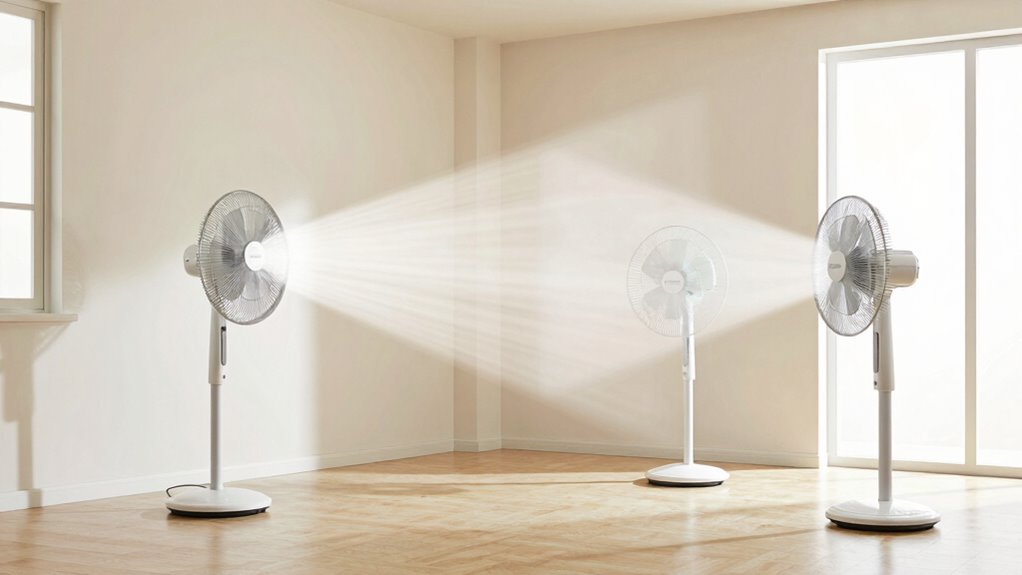
Using multiple fans simultaneously can considerably reduce cold spots in your space, especially when one fan alone isn’t enough to circulate warm air effectively. By positioning fans strategically, you create a more uniform airflow, preventing stagnant cold pockets. Keep in mind, though, that adding fans may increase fan noise, so choose quieter models if noise bothers you. Additionally, multiple fans can improve air quality by promoting better circulation, reducing dust and allergens that tend to settle in cold corners. To maximize effectiveness, avoid placing fans too close together, which can cause turbulence or uneven airflow. Instead, space them out to cover different areas. Properly coordinated fans will warm your space faster and eliminate those stubborn cold spots without sacrificing comfort or air quality. Incorporating expert voice actors in your planning can also help you understand the best strategies for effective airflow and comfort.
Adjust Fan Settings and Angles for Better Airflow

Adjusting your fan’s settings and angles can considerably enhance airflow throughout your space. By tweaking the fan speed, you control how much air circulates, preventing it from feeling stagnant. Changing the fan’s angle helps direct airflow where it’s needed most, reaching distant corners or mixing air effectively. For example, increasing fan speed creates a stronger breeze, while lowering it offers a gentle circulation. Adjusting the tilt ensures airflow reaches the farthest areas, improving airflow distance across the room. To visualize this, consider:
- Setting the fan to a higher speed during hot days
- Tilting the fan to direct air toward cold corners
- Lowering the angle for gentle, widespread circulation
These small adjustments optimize air movement, reducing cold spots and promoting even temperature distribution. Simple strategies can make managing airflow more effective and straightforward.
Common Fan Placement Mistakes to Avoid

One common mistake is blocking the airflow path with furniture or equipment, which can reduce fan efficiency. Another is placing fans in spots where airflow doesn’t reach the intended areas, making your setup less effective. To get the best results, you need to position fans correctly and keep the airflow clear of obstructions. Additionally, understanding precious metal investment options can help you make more informed decisions about your overall investment strategy.
Obstructing Airflow Path
When you block a fan’s airflow path, you considerably reduce its efficiency and can cause uneven air distribution. Vent obstructing objects or poorly placed furniture can create barriers that prevent proper airflow. This leads to cold spots and inconsistent temperature throughout your space.
To avoid this, ensure:
- No large furniture pieces sit directly in front of the fan, blocking its airflow.
- Avoid placing objects that obstruct vents or air channels.
- Keep pathways clear of clutter that could divert or hinder airflow movement.
Proper furniture placement helps the fan circulate air smoothly, preventing stagnant corners and cold spots. Be mindful of how your room’s layout influences airflow, and adjust furniture placement to maintain an open, unobstructed air path.
Misplaced Fan Position
Placing a fan in the wrong spot can considerably reduce its effectiveness and create uneven airflow. If your fan is misplaced, it won’t circulate warm air properly or support your winter decor, leading to cold spots and higher energy bills. Avoid common mistakes like placing fans too close to walls or windows, which blocks airflow. Instead, position fans where they can evenly distribute air across the room’s center. Here’s a quick guide:
| Mistake | Correct Placement |
|---|---|
| Near walls | In the middle of the room |
| Pointing directly at windows | Facing away from windows |
| Facing downward | Tilting upward for better circulation |
| Ignoring room layout | Adjust based on furniture and decor |
Proper placement enhances energy efficiency and keeps your winter decor warm and inviting.
Combine Fans and Heaters for Faster Warmth
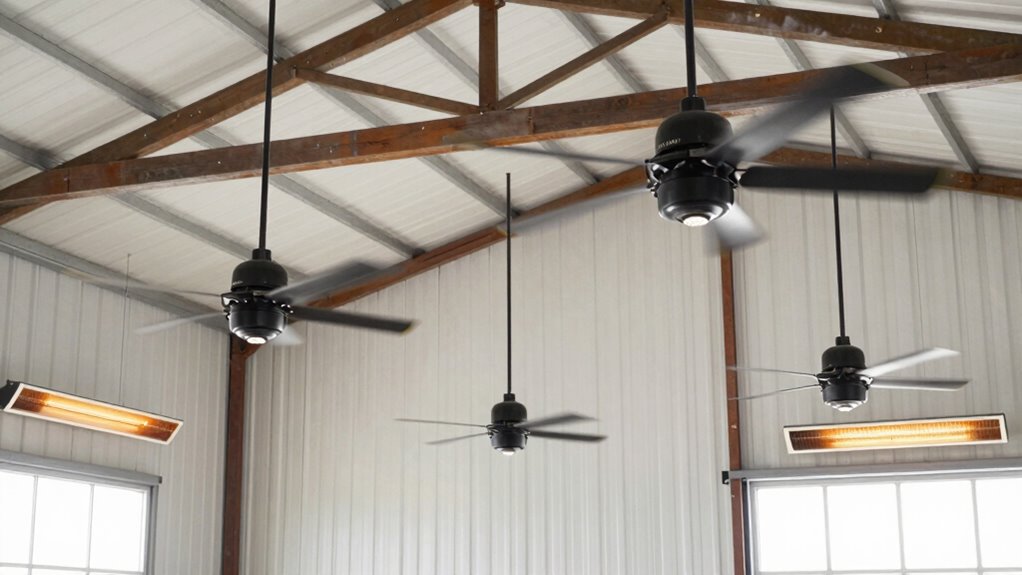
Have you ever wondered how to heat a space more quickly? Combining fans and heaters boosts airflow dynamics, distributing warm air faster throughout the room. When you turn on both, the fan circulates heated air evenly, preventing cold spots and creating a consistent temperature. To maximize efficiency, ensure proper fan maintenance—clean blades and check for obstructions—to keep airflow smooth. Consider these points:
- Position fans to promote ideal circulation and avoid stagnant zones
- Use oscillating fans to cover more area efficiently
- Adjust fan speed to match heater output for even warmth
- Regularly inspect and maintain your equipment to ensure optimal airflow and performance
This approach speeds up heating, saving energy and time. By optimizing airflow and maintaining your equipment, you ensure the warm air mixes thoroughly, eliminating chilly corners swiftly.
Troubleshoot Persistent Cold Corners

If you notice cold corners lingering, start by identifying what’s causing them. Then, adjust your fan directions to promote even airflow across the space. Finally, use strategic airflow patterns to break up stubborn cold spots and achieve consistent warmth throughout your room.
Identify Cold Spot Causes
Persistent cold corners often result from uneven air distribution within a space. To identify the causes, start by examining your ventilation design. Poorly placed vents can create stagnant areas where air doesn’t circulate properly. Check for insulation issues, as gaps or thin insulation can cause temperature drops in specific spots. Additionally, consider external influences like drafts or nearby windows that might disrupt airflow.
- Inadequate vent placement that directs air away from corners
- Insulation gaps allowing heat to escape or cold drafts to enter
- External factors like open windows or drafts affecting airflow patterns
Adjust Fan Direction
Adjusting the direction of your fans can considerably improve airflow and eliminate cold spots. For a ceiling fan, make sure it spins clockwise during winter to push warm air down along the walls and into colder corners. If your fan has adjustable blades, tilt them slightly to direct airflow toward problem areas. An oscillating fan can also help by redirecting air across different parts of the room; position it so it circulates air evenly rather than blowing directly into one spot. Avoid pointing fans directly at walls or corners, as this can worsen cold spots. Instead, aim to create a gentle, sweeping airflow that mixes warm and cool air effectively. Properly adjusting fan direction is a simple, effective way to enhance comfort and eliminate persistent cold corners.
Use Strategic Airflow Patterns
Strategic airflow patterns can effectively troubleshoot cold corners by directing air to circulate evenly throughout the room. By adjusting your fans to create a balanced airflow, you enhance fan efficiency and prevent cold spots. To achieve this, consider these tactics:
- Position fans to create cross-ventilation, pushing warm air into cold areas
- Use oscillating fans to distribute airflow smoothly across different zones
- Avoid directing airflow directly at walls or corners, which can cause uneven circulation
Implementing these airflow patterns encourages constant movement of air, eliminating stagnant cold pockets. Proper fan placement ensures warm air reaches all corners, improving overall comfort. When airflow patterns are optimized, your fan’s efficiency increases, reducing energy waste and creating a more uniform temperature throughout your space.
Reassess Fan Placement as Your Room Changes
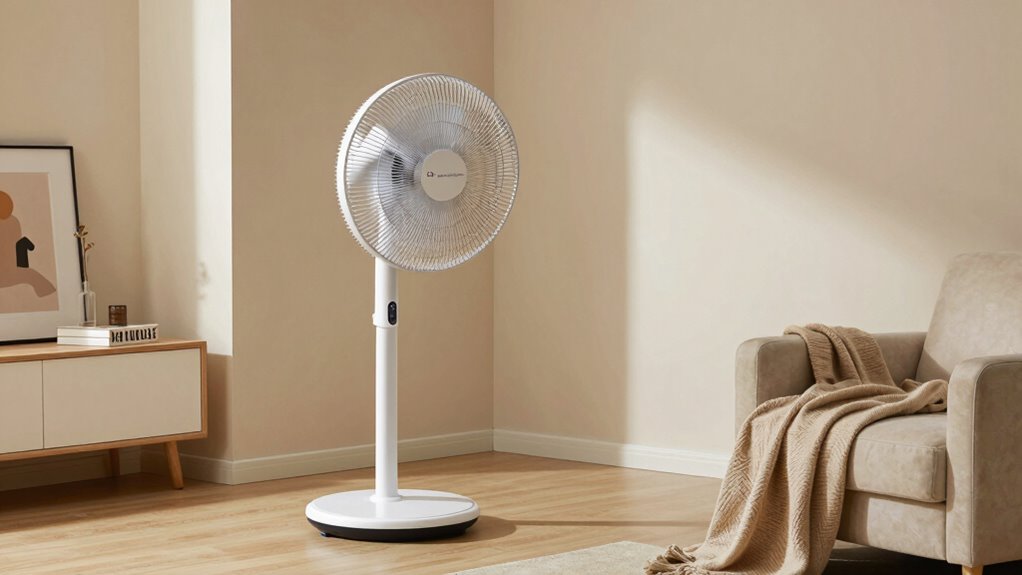
As your room layout or use changes, it’s important to reassess your fan placement to maintain ideal air circulation. Dynamic room layouts—like moving furniture or adding new zones—can disrupt your existing airflow patterns, creating cold spots or stagnant air. Seasonal fan adjustments are also necessary; what worked in summer may not suit winter needs. Regularly evaluate whether your fan is still positioned to promote even mixing, especially after major changes. Consider shifting fans to optimize airflow direction, ensuring they target new seating areas or open spaces. By staying proactive and adjusting fan placement as your room evolves, you’ll keep air moving efficiently, eliminating cold corners and enhancing comfort year-round.
Frequently Asked Questions
How Can I Tell if My Fan Placement Is Effective?
You can tell if your fan placement is effective by observing your room’s ventilation patterns and airflow efficiency. Notice if warm and cold spots disappear and the temperature feels evenly distributed. When your fan is positioned correctly, it promotes smooth airflow, reducing stagnant air and eliminating cold corners. Use a thermometer or simply feel the air circulation to guarantee your fan setup maximizes airflow efficiency and creates a comfortable, balanced environment.
Are There Specific Fan Types Better for Eliminating Cold Corners?
Yes, certain fan types work better for eliminating cold corners. Oscillating fans distribute air more evenly, making them ideal for strategic placement. Tower fans are great for reaching tight corners, while box fans offer powerful airflow that can be directed effectively. Use placement techniques like positioning fans high and near corners to maximize airflow. Combining the right fan types with proper placement guarantees cold spots vanish quickly and efficiently.
How Often Should I Reposition Fans During Winter?
You should reposition fans every few weeks during winter to maintain ideal airflow. Adjust fan rotation to guarantee consistent circulation, making sure the blades are moving clockwise for gentle, warm air distribution. Also, tweak the fan height if needed; raising it slightly can help spread warm air more effectively across cold corners. Regular adjustments prevent stagnation and keep your space evenly heated, saving you energy and increasing comfort.
Can Ceiling Fans Help Improve Overall Room Warmth?
You might think ceiling fans boost warmth, but they actually improve overall room warmth through better air circulation, enhancing ceiling fan efficiency. Proper fan placement tips, like setting the fan to run clockwise at low speed during winter, help push warm air downward. So yes, ceiling fans can help, but only if you use them correctly—otherwise, they just spin without making much difference.
What Safety Precautions Should I Follow When Placing Fans?
You should always prioritize ventilation safety and electrical precautions when placing fans. Make certain fans are on stable surfaces and away from water to prevent electrical hazards. Check cords regularly for damage and avoid overloading outlets. Keep fans out of reach of children and pets. Properly secure ceiling fans to ceiling joists, and follow manufacturer instructions. These steps help prevent accidents and ensure safe, efficient airflow in your space.
Conclusion
Now that you know the secrets to perfect fan placement, imagine walking into your room, feeling that even chill gone, replaced by consistent warmth. But what if a stubborn cold spot still lingers, hiding just out of sight? Keep experimenting, adjusting your fans, and staying alert to subtle changes. Your ideal, evenly warm space is within reach—are you ready to open it and banish cold corners forever? The solution might be closer than you think.