

To prevent constant bumping and spilling, guarantee your pathway widths are large enough based on foot traffic and usage. A key rule is providing sufficient space for smooth pedestrian flow, typically wider in busy areas, considering safety standards and accessibility needs. Consistent spacing and proper measurement are crucial for safety and comfort. If you keep these principles in mind, you’ll create safer, more efficient pathways. To learn how to apply this rule effectively, keep exploring these essential design details.
Key Takeaways
- Maintain a minimum pathway width of 4 feet (1.2 meters) to allow comfortable passing and reduce bumping.
- Ensure consistent spacing between pathways to prevent congestion and facilitate smooth pedestrian flow.
- Design wider paths in high-traffic areas, typically 6-8 feet (1.8-2.4 meters), to accommodate multiple users safely.
- Regularly measure and adjust pathway widths based on actual usage patterns to prevent spills and overcrowding.
- Incorporate signage and visual cues to guide pedestrian behavior and maintain safe, organized movement.
What Is the Pathway Width Rule and Why It Matters

Have you ever wondered why certain pathways are wider than others? It’s all about the pathway width rule, which guides how wide pathways should be to guarantee safety and efficiency. Proper width enhances pathway aesthetics by creating a clean, organized look that’s inviting and easy to navigate. Signage placement is also vital; clear signs help users understand where to go without crowding the space. When pathways are too narrow, bumping and spilling become common, leading to frustration and accidents. By following the pathway width rule, you create a balanced environment that accommodates foot traffic comfortably while maintaining visual harmony. Additionally, effective signage plays a crucial role in guiding movement and reducing congestion. Considering pathway design principles ensures that flow and safety are maintained even during peak usage times. Ultimately, this rule helps you design pathways that are both functional and attractive, preventing congestion and improving overall user experience.
How to Measure and Calculate Your Pathway Widths
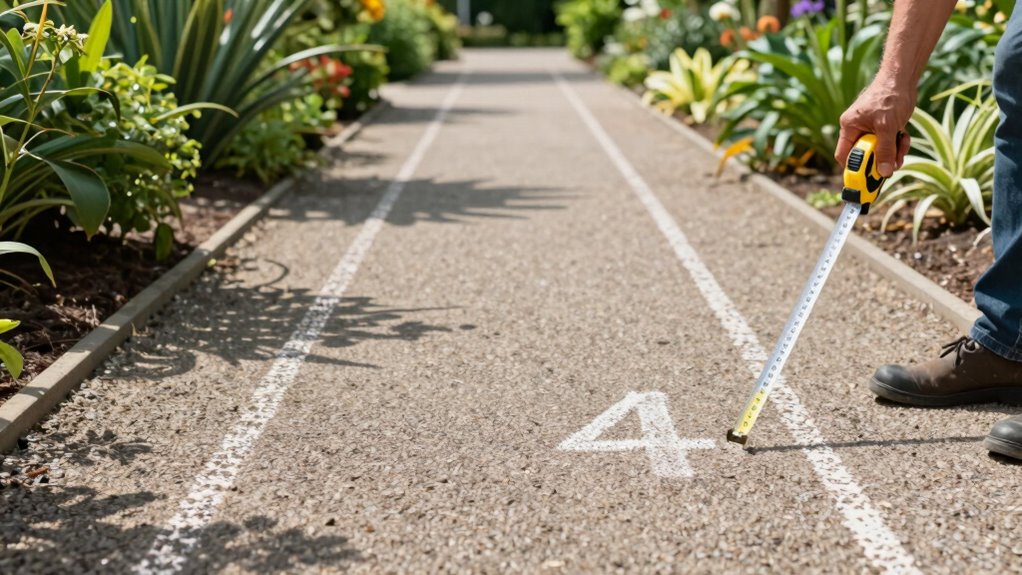
To properly measure and calculate your pathway widths, start by identifying the main points where the pathway needs to accommodate foot traffic comfortably. Consider the pathway aesthetics, ensuring the width complements the surrounding environment and maintains visual appeal. Use a measuring tape to determine the current width at various points, especially where congestion might occur. When calculating, account for the material selection, as different surfaces—such as gravel, pavers, or concrete—may influence the effective width needed for safe passage. Remember, wider pathways reduce bumping and spilling risks, so aim for consistent measurements that support smooth flow. Incorporating design considerations can also enhance both functionality and visual appeal. Additionally, understanding pathway width standards can ensure your design complies with safety guidelines and local regulations. Proper measurement techniques, including considering potential obstructions and ensuring even surfaces, are essential for accurate planning. Accurate measurement and thoughtful calculation help create a functional, attractive pathway that aligns with your design goals and safety standards. Moreover, consulting European cloud standards can provide insights into optimizing infrastructure for safety and efficiency.
Factors Affecting Safe Pathway Widths: Foot Traffic, Space, and Usage

The amount of foot traffic, available space, and intended usage directly influence the safe width of your pathway. High pedestrian flow requires wider pathways to prevent congestion and ensure smooth movement. If foot traffic is heavy, you’ll need to allocate more space for safety zones, allowing pedestrians to pass comfortably without bumping into each other. In areas with low traffic, narrower pathways might suffice, but safety zones still help prevent accidents. Consider how people will use the space—whether for walking, passing, or stopping—and adjust width accordingly. Properly accounting for these factors helps prevent spilling into adjacent areas and minimizes the risk of collisions. Additionally, understanding market regulations can influence pathway design, especially in settings where artwork needs protection from accidental bumps or spills. By evaluating pedestrian flow, space constraints, and intended usage, you can design pathways that promote safety and efficient movement, ultimately reducing collision risks and enhancing overall safety. Furthermore, incorporating clear signage can guide pedestrians and improve overall safety in busy pathways.
Science of Pathway Widths for Different Settings

Understanding the science behind pathway widths helps you design safe and functional routes for various environments. Research shows that wider pathways improve pedestrian safety by reducing congestion and minimizing bumping or spilling. In architectural design, the ideal width depends on the setting—urban streets require broader paths for heavy foot traffic, while parks or indoor spaces may need narrower routes to create intimacy or conserve space. Studies highlight that appropriate widths also account for movement speed and group size, ensuring flow remains smooth. When you tailor pathway widths based on these scientific insights, you create environments that are efficient and safe. Properly sized routes prevent crowding, enhance visibility, and support comfortable movement, ultimately improving the overall experience for everyone using the space. Designing for safety ensures that pathways accommodate different user needs and enhance overall functionality.
Practical Guidelines for Applying the Width Rule in Your Space

To make the most of the Width Rule, focus on choosing ideal width measurements that suit your space and traffic flow. Consistent spacing between pathways helps create a smooth, accessible environment. By applying these guidelines, you’ll guarantee your pathways are both functional and inviting. Additionally, considering smart design principles can enhance overall comfort and aesthetic appeal in your living spaces. Incorporating cost‑of‑ownership math into your planning can also ensure long-term affordability and maintenance efficiency. Understanding local craftsmanship can further elevate the uniqueness and cultural authenticity of your design choices. Recognizing how design consistency impacts user experience can help you create more harmonious environments, especially when paying attention to spatial planning to optimize flow and safety.
Optimal Width Measurements
Have you ever wondered how wide a pathway should be to guarantee smooth traffic flow and safety? The ideal width depends on your space’s purpose and expected traffic volume. For general pedestrian pathways, aim for at least 3 feet to balance accessibility and efficiency. If you want better pathway aesthetics and accommodate groups or mobility devices, consider widths of 4 to 5 feet. Durable materials also influence measurements; wider pathways reduce wear and tear, ensuring material durability over time. Keep in mind that narrower paths may look cleaner but can cause congestion, while wider ones promote comfort and safety. Measuring the optimal width carefully, factoring in your specific needs, can help you find the perfect balance that prevents bumping and spilling while maintaining a visually pleasing environment. Additionally, understanding proper measurement techniques ensures accurate planning and effective use of space. Recognizing the impact of material selection can further enhance pathway longevity and safety, especially when choosing materials that are suitable for heavy foot traffic or weather conditions. Choosing the right pathway width can also prevent unnecessary adjustments later, saving time and resources.
Applying Consistent Spacing
Applying consistent spacing between pathways and other features guarantees safety and accessibility. In your pathway design, maintaining uniform gaps helps prevent congestion and accidental bumping. Consistent spacing ensures that users can navigate smoothly without surprises, reducing safety risks. When planning, measure carefully and apply the same width throughout to uphold the pathway width rule. This approach not only improves flow but also meets safety considerations for all users, including those with mobility challenges. By standardizing spacing, you create a predictable environment that minimizes spill hazards and enhances overall accessibility. Regularly review your design to ensure consistency, correcting any deviations promptly. Measuring tools can help you achieve precise and uniform spacing in your space, especially when considering space planning principles for optimal layout. Applying these practical guidelines results in a safer, more functional space that accommodates everyone’s needs efficiently.
Common Mistakes to Avoid When Designing Pathways

One common mistake when designing pathways is overlooking the importance of proper width, which can lead to congestion and safety issues. If pathways are too narrow, pedestrians feel cramped, reducing comfort and making it harder to pass comfortably. Conversely, excessively wide paths can disrupt landscape aesthetics, making the area look unbalanced or overly sparse. Ignoring these factors can also cause bottlenecks during busy times, increasing the risk of accidents. To avoid this, always consider pedestrian flow and comfort, ensuring pathways are wide enough to accommodate expected foot traffic without overwhelming the surroundings. Proper width enhances safety, supports smooth movement, and maintains visual harmony, creating a more inviting and functional outdoor space for everyone.
Case Studies Showing the Impact of Proper Pathway Widths

Numerous real-world examples highlight how proper pathway widths considerably improve safety and user experience. When designed correctly, they optimize pedestrian flow and reduce accidents. Consider these cases:
Proper pathway widths enhance safety and efficiency for all users.
- In a busy shopping mall, wider walkways minimized congestion during peak hours, enhancing safety considerations and preventing bumping.
- At a university campus, proper pathway widths allowed smooth pedestrian flow, reducing spillover into vehicle areas and improving overall safety.
- A city park redesigned its paths with appropriate widths, resulting in fewer collisions and a safer environment for visitors.
These case studies prove that adhering to the right pathway widths directly impacts pedestrian flow and safety considerations, creating more efficient, secure spaces for everyone.
Maintaining and Adjusting Pathway Widths Over Time

To keep your pathways safe and functional, you need to regularly inspect their widths for signs of wear or congestion. If you notice issues, adjusting the widths adaptively guarantees continued proper use. Staying proactive with inspections and adjustments helps maintain ideal pathway performance over time.
Regular Pathway Inspections
Regular pathway inspections are essential to guarantee that widths remain safe and functional over time. By routinely checking your pathways, you ensure they stay aligned with proper pathway design and safety compliance standards. Here are three key actions to focus on:
- Assessing Wear and Tear: Look for erosion, cracks, or obstructions that could compromise safety or alter pathway width.
- Measuring Consistency: Use precise tools to verify that the pathway remains within the designated width parameters, adjusting if necessary.
- Documenting Changes: Keep detailed records of inspections, noting any adjustments made to maintain ideal pathway design and safety compliance.
Regular inspections help prevent issues before they escalate, ensuring pathways stay safe, accessible, and compliant over time.
Adaptive Width Adjustments
Adaptive width adjustments are essential for maintaining safe and functional pathways as conditions change over time. By embracing adaptive design, you can implement pathway customization that responds to varying usage patterns or environmental shifts. Regularly monitoring pathway traffic and wear allows you to identify when adjustments are needed. Increasing or decreasing pathway widths guarantees smooth flow, reduces congestion, and prevents bumping or spilling. These adjustments help maintain safety and efficiency, especially in dynamic environments. Adaptive width adjustments are a proactive approach, allowing you to optimize pathways without extensive reconstruction. By staying attentive and flexible, you ensure your pathways remain effective, accommodating evolving needs and maintaining the integrity of your design over time.
Bringing It All Together: Implementing the Pathway Width Rule

Implementing the Pathway Width Rule requires clear planning and precise execution to guarantee safety and functionality. You need to assure smooth traffic flow and address safety considerations effectively. Here are three key steps to bring it all together:
- Assess Traffic Patterns: Study peak hours and movement trends to determine ideal pathway widths that prevent congestion.
- Design with Safety First: Incorporate wider pathways where needed, accounting for emergency access and pedestrian safety.
- Test and Adjust: Implement your plan, then monitor traffic flow and safety outcomes, making adjustments as necessary for continuous improvement.
Frequently Asked Questions
How Does Pathway Width Influence Overall Safety and Accident Prevention?
Pathway width directly impacts safety by reducing congestion and allowing smooth pedestrian flow. When pathways are wide enough, you experience less bumping and spilling, which lowers the risk of accidents. Adequate width prevents congestion, keeps people moving efficiently, and minimizes conflicts or falls. By ensuring proper pathway dimensions, you create a safer environment that encourages steady movement and decreases the chances of collisions or injuries.
Are There Specific Guidelines for Emergency Evacuation Routes?
In maneuvering emergency evacuation routes, you should follow specific guidelines that prioritize safety and accessibility. Fire drills help identify potential issues, ensuring routes are clear and well-marked. Accessibility standards require pathways to be wide enough for everyone, including those with mobility aids. You’re encouraged to keep exits unobstructed and practice evacuation plans regularly, so everyone feels confident and prepared when it matters most.
How Do Different Materials Affect the Optimal Pathway Width?
Different materials impact the ideal pathway width because surface friction and material durability matter. For high-friction surfaces like rubber or textured concrete, you can narrow pathways safely since they reduce slipping risks. However, slick materials like polished stone or smooth tiles require wider paths to prevent accidents. Durable materials withstand heavy use without wear, maintaining safe widths over time. Always consider both surface friction and durability when designing pathways for safety and efficiency.
Can Adjustable or Modular Pathways Adapt to Changing Traffic Needs?
Yes, you can use adjustable or modular pathways to meet changing traffic needs. Think of them as the chameleon of infrastructure—flexible and adaptable. These dynamic design solutions allow for quick modifications, ensuring smooth flow without disruption. With adaptive construction, you can expand or narrow pathways effortlessly, accommodating peak times or special events. This approach keeps your space efficient, responsive, and ready for anything, turning static paths into living, breathing routes.
What Are the Cost Implications of Varying Pathway Widths in Large Projects?
Varying pathway widths in large projects can substantially impact your cost estimation and project budgeting. Wider pathways require more materials and labor, increasing expenses, while narrower ones may reduce costs but could compromise safety or functionality. You need to carefully analyze traffic flow and future growth to balance cost efficiency with user needs. Accurate planning ensures you allocate funds appropriately and avoid unexpected expenses as project scope evolves.
Conclusion
By following the pathway width rule, you can considerably reduce bumping and spilling, creating a smoother flow for everyone. Did you know that improper pathway widths can cause a 35% increase in congestion and accidents? Regularly assess and adjust your pathways to maintain safety and efficiency. When you prioritize proper measurements and thoughtful design, you’ll foster a more organized, safer space that adapts to changing needs effortlessly.