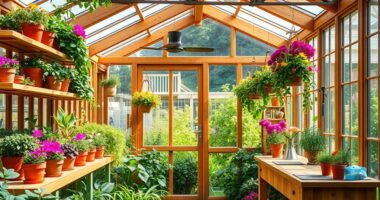
When setting up a high-tech greenhouse from the start, integrating IoT sensors and automated climate controls is key. These systems provide real-time data on soil, temperature, humidity, and light, allowing you to adjust conditions automatically for ideal plant growth. This seamless technology minimizes manual effort, conserves resources, and creates a stable environment. By prioritizing automation early on, you build a resilient, efficient grow space—stay tuned to learn how to implement these innovations effectively.
Key Takeaways
- Incorporate IoT sensors early to monitor soil conditions, light, temperature, and air quality for real-time data collection.
- Choose automated climate control systems that adjust temperature, humidity, and ventilation without manual intervention.
- Design the setup to enable seamless communication between sensors and controllers for quick environmental adjustments.
- Prioritize user-friendly, scalable technology that can expand with your greenhouse needs over time.
- Implement automation from the start to ensure consistent plant health, resource efficiency, and a resilient high-tech environment.

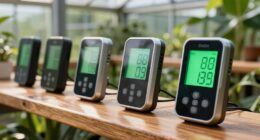
Setting up a greenhouse with modern technology can considerably boost your gardening success. When you incorporate advanced systems like automated climate control and IoT sensor integration from the start, you gain precise command over your growing environment. Automated climate control systems automatically adjust temperature, humidity, and ventilation, guaranteeing ideal conditions without constant manual intervention. This means you can maintain the perfect environment for a wide range of plants, reducing stress and increasing yield. IoT sensors play a vital role here, providing real-time data on soil moisture, temperature, light levels, and air quality. These sensors connect seamlessly to your control systems, giving you instant insights and allowing for quick adjustments. With IoT sensor integration, you don’t need to guess whether your plants are thriving—your system knows, and it can act accordingly.
Integrate automated climate control and IoT sensors from the start to optimize greenhouse conditions effortlessly.
Imagine waking up in the morning and checking your smartphone to see that the humidity is slightly off. Thanks to IoT sensors, your automated climate control system can respond automatically, activating humidifiers or dehumidifiers to restore balance. This seamless communication between sensors and controllers means you’re always in command, even if you’re away. Such precision creates an environment where plants can flourish, free from the stress of temperature swings or inconsistent watering. Plus, these systems are scalable; you can start with basic automation and expand as your needs grow, integrating additional sensors or controls without major overhauls.
The beauty of integrating modern tech from the outset is that it saves you time and energy in the long run. You won’t have to manually monitor conditions or guess when to vent or irrigate. Instead, your setup becomes a smart ecosystem that responds dynamically. Automated climate control paired with IoT sensors also helps conserve resources. For instance, sensors can detect when watering isn’t needed, preventing overwatering and reducing water waste. Similarly, climate systems can optimize energy use, turning on only when necessary, which lowers your utility bills. Additionally, understanding the importance of projector resolution can help you create a more immersive and visually appealing environment, whether for leisure or work purposes.
Getting started with these technologies might seem overwhelming initially, but most systems are user-friendly and customizable. With just a few installations, you’ll see immediate benefits—more consistent plant growth, less manual work, and increased confidence in your gardening. By prioritizing automated climate control and IoT sensor integration during setup, you create a high-tech greenhouse that’s efficient, responsive, and primed for success. This approach guarantees you’re not just growing plants but cultivating a smart, resilient environment where your gardening efforts are amplified by the power of modern technology.
Frequently Asked Questions
What Are the Initial Costs of Integrating Modern Technology?
The initial costs of integrating modern technology can vary widely, but you should expect a significant investment. Cost estimation depends on the types of technology you choose, such as automated climate control or smart lighting. You’ll need to budget for equipment, installation, and potential upgrades. This technology investment can range from thousands to tens of thousands of dollars, but it ultimately enhances efficiency and productivity in your greenhouse operation.
How Much Maintenance Do High-Tech Greenhouses Require?
You’ll find that high-tech greenhouses require moderate maintenance, especially for automation systems and pest control. Regular checks ensure sensors and climate controls operate smoothly, preventing costly breakdowns. Pest management also needs consistent attention, often using integrated digital solutions. While the technology reduces manual labor, staying on top of automation maintenance and pest control keeps your greenhouse thriving, making it essential to schedule routine inspections and updates.
Can Existing Greenhouses Be Upgraded With New Tech Easily?
Yes, existing greenhouses can be upgraded with new tech, but automation integration can pose retrofit challenges. You’ll need to assess your current systems and determine compatibility with modern technology. Upgrading may involve significant modifications, such as installing new sensors or control systems, which could require expert assistance. While it’s doable, plan for potential setbacks and make certain your upgrades align with your greenhouse’s infrastructure for smooth integration.
What Training Is Needed for Staff to Operate Advanced Systems?
You need to provide staff training focused on developing their technical expertise to operate advanced systems effectively. This includes hands-on workshops, tutorials, and ongoing support to make sure they understand automation, climate control, and data management. Equipping your team with the right knowledge boosts confidence and efficiency, allowing smooth operation of modern greenhouse technology. Regular refresher courses can also keep your staff updated on new features and best practices.
How Do Modern Technologies Impact Greenhouse Energy Consumption?
Modern technologies considerably reduce your greenhouse’s energy consumption by incorporating renewable energy sources like solar power and using smart sensors to optimize climate control. While it may seem costly upfront, these systems lower long-term expenses and environmental impact. You’ll see improved efficiency, less energy waste, and a smaller carbon footprint, making your greenhouse more sustainable and cost-effective over time. Embracing this tech transforms energy management into a seamless, eco-friendly process.
Conclusion
So, there you have it—your futuristic greenhouse, glowing like a spaceship ready for intergalactic farming. With sensors that whisper secrets to your plants and robots that tend to your crops, you’ll basically be the overlord of a sci-fi farm. Just don’t be surprised if your tomatoes start questioning their existence or your lettuce files a complaint about its digital diet. Welcome to the future—where even your plants get a high-tech upgrade!