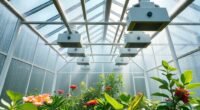
When setting up your first greenhouse, avoid neglecting climate control, pest management, and careful planning. Failing to monitor temperature, humidity, or airflow can stress plants or cause disease. Overlooking pests or not creating an organized layout can lead to infestations and maintenance chaos. Understanding your plants’ needs and maintaining a stable environment are key for success. Stay tuned to discover how addressing these common mistakes boosts your greenhouse’s health and productivity.
Key Takeaways
- Neglecting proper climate control monitoring leads to temperature and humidity fluctuations that stress plants.
- Failing to implement integrated pest management allows pests to establish and spread easily.
- Poor planning of plant placement and layout complicates maintenance and reduces growth efficiency.
- Inconsistent environment management increases disease risk and hampers healthy plant development.
- Overlooking specific plant requirements for light, water, and temperature can cause growth issues and reduce yields.

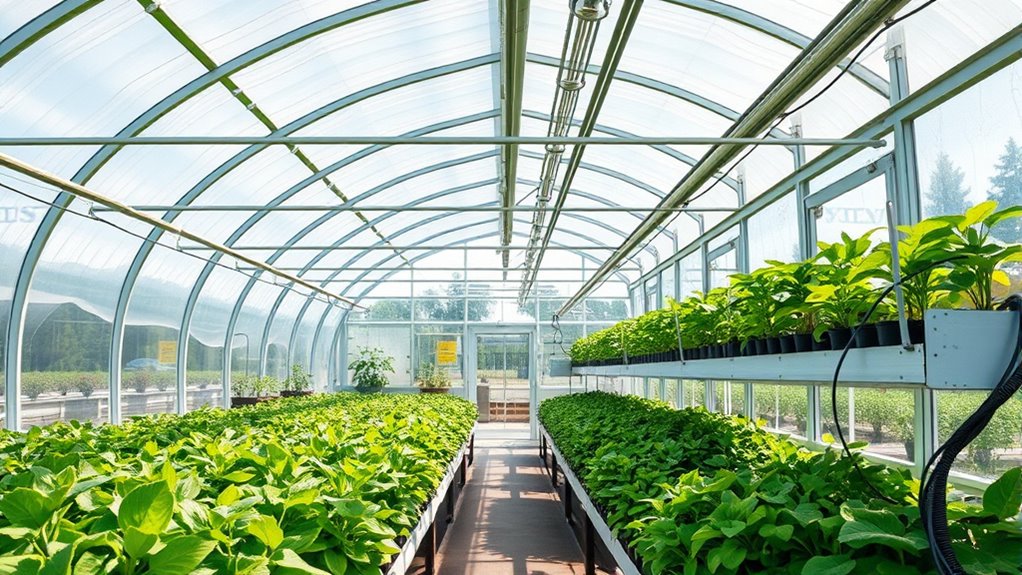
Starting a greenhouse can be exciting, but many beginners make simple mistakes that can hinder their success. One of the most common pitfalls involves overlooking proper climate control. If you don’t carefully monitor and regulate temperature, humidity, and airflow, your plants may struggle or even die. For example, failing to install or maintain heating and cooling systems can cause temperature swings that stress your plants. Without consistent climate control, you risk creating an environment that’s too hot, too cold, or too humid, which can stunt growth and promote disease. To avoid this, invest in a reliable thermostat and ventilation system. Regularly check and adjust your settings to match the needs of your plants and the changing seasons. Good climate control isn’t just about comfort; it’s about creating a stable environment that promotes healthy growth and minimizes stress. Additionally, using proper filtration systems can help maintain optimal air quality and prevent mold or airborne pests from affecting your plants.
Another mistake many beginners make is neglecting pest management. Pests like aphids, spider mites, and whiteflies can quickly become overwhelming if not caught early. It’s tempting to focus solely on plant growth and ignore pests until they become a serious problem, but proactive pest management is essential. Start by inspecting your plants regularly for signs of pests or disease, and remove any affected leaves immediately. Use integrated pest management strategies, such as introducing beneficial insects or applying organic treatments, rather than relying solely on chemical pesticides. Keeping your greenhouse clean and free of debris also helps reduce pest habitats. Remember, pests thrive in warm, humid environments, which makes climate control a key part of pest prevention. By maintaining a balanced environment and staying vigilant, you can prevent infestations from taking hold and damaging your crops.
Beyond climate control and pest management, many first-time greenhouse growers overlook the importance of planning. It’s tempting to jump into planting right away, but taking the time to design your space thoughtfully can save you trouble later. Consider the placement of plants based on their specific light, water, and airflow needs. Grouping plants with similar requirements makes maintenance easier and reduces the risk of pest spread. Also, plan for ease of access to watering systems, tools, and ventilation controls. Proper planning helps you stay organized and ensures your greenhouse operates smoothly, which ultimately leads to healthier plants and better yields. Avoid the mistake of rushing in without a plan—taking a little extra time to prepare can make all the difference in your greenhouse’s success. Moreover, understanding the specific plant requirements such as light, water, and temperature needs can greatly improve your overall success.
Frequently Asked Questions
How Do I Select the Best Location for My Greenhouse?
Choose a location that offers ideal sunlight, ensuring your greenhouse gets maximum sunlight throughout the day for healthy plant growth. Look for a spot with natural wind protection, such as trees or fencing, to prevent damage and maintain a stable environment. Avoid shaded areas or spots prone to strong winds. By prioritizing sunlight optimization and wind protection, you set your greenhouse up for success from the start.
What Are the Essential Tools for Beginner Greenhouse Gardening?
Think of your greenhouse tools as a gardener’s toolkit; without them, you’re lost. Essential tools include a watering can or hose for a proper watering schedule, and trowels or spades for soil preparation. These tools help you nurture plants effectively. Just like a chef needs knives, you need these basics to create a thriving greenhouse. Starting with the right tools guarantees you’re prepared for every stage of your gardening journey.
How Often Should I Monitor Temperature and Humidity Levels?
You should monitor temperature and humidity levels at least two to three times daily to guarantee ideal conditions. Regular temperature monitoring helps you adjust heating or cooling, while humidity control prevents mold and plant stress. Keep a close eye on these levels, especially during seasonal changes, to maintain a stable environment. Consistent monitoring allows you to catch issues early, supporting healthy plant growth and avoiding common mistakes in your first greenhouse.
What Are Cost-Effective Ways to Insulate My Greenhouse?
You can make your greenhouse cozy without breaking the bank by using thermal curtains, which trap heat efficiently, especially during chilly nights. Reflective insulation is another budget-friendly option; it bounces back heat, keeping temperatures stable. Combine these solutions with sealing gaps around vents and doors, and you’ll create a warmer environment. These simple, cost-effective methods help you conserve energy while ensuring your plants thrive comfortably.
How Can I Prevent Pests Without Chemicals?
To prevent pests without chemicals, you should use biological control methods like introducing natural predators such as ladybugs or predatory mites. Additionally, applying natural repellents like neem oil or garlic spray can deter pests effectively. Keep your greenhouse clean, remove diseased plants promptly, and ensure proper airflow to reduce pest habitats. These eco-friendly strategies help maintain a healthy environment while minimizing chemical use.
Conclusion
Starting your first greenhouse can be exciting, but watch out for common pitfalls. By avoiding these mistakes, you’ll set yourself up for success and enjoy your gardening journey. Remember, Rome wasn’t built in a day, so take your time learning and adjusting as you go. With patience and care, your greenhouse will flourish, and you’ll soon reap the rewards of your efforts. Keep your eyes on the prize and enjoy every step of the process!